Volvo R70 Rigid Hauler Makes European Debut at Bettenfeld Quarry
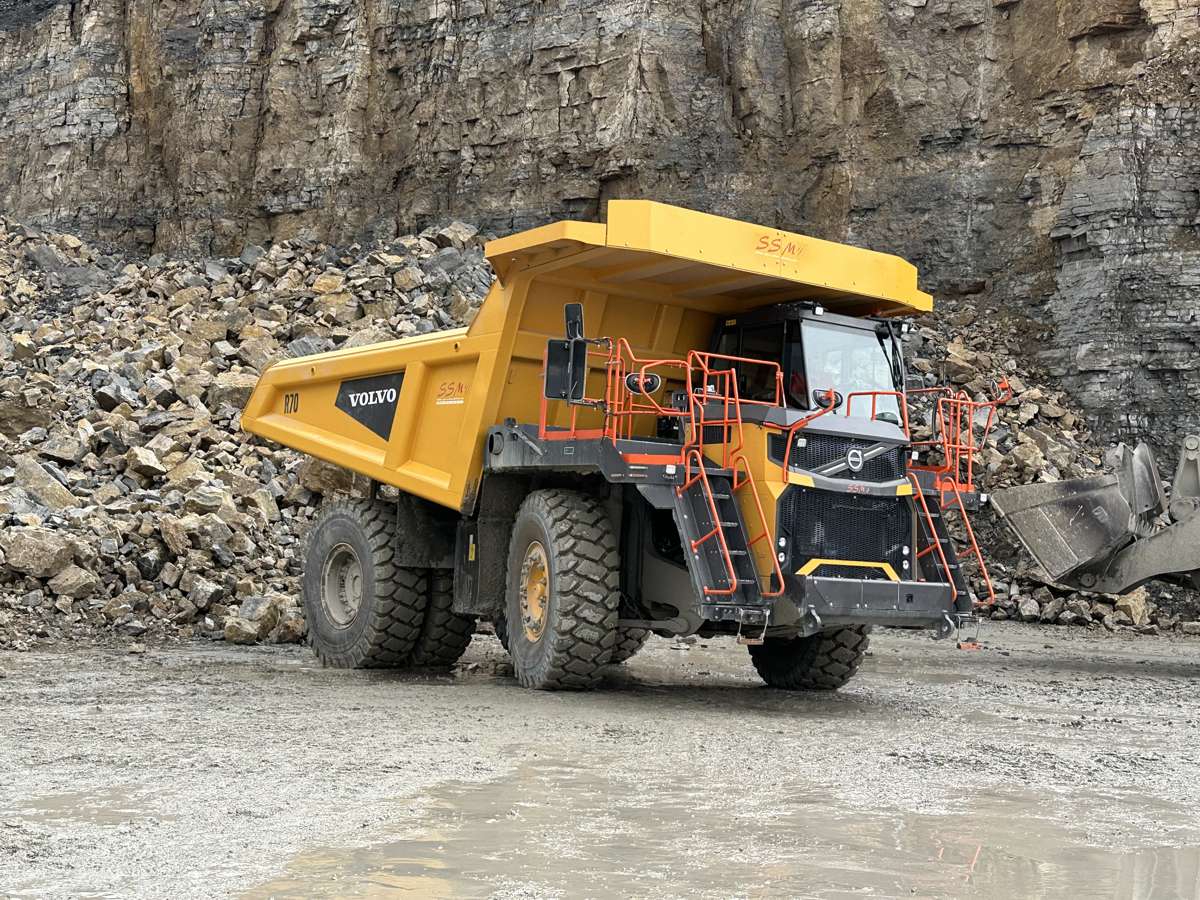
Europe’s first Stage V Volvo R70 rigid hauler has entered service at SHF Steinbruchbetriebe’s Bettenfeld Quarry in Germany, where rigid haulers routinely accumulate between 25,000 and 35,000 operating hours.
Built at Volvo Construction Equipment’s Motherwell facility in Scotland, the 65-tonne machine joins a quarry fleet with a long history of operating rigid haulers. SHF has used the machines since the late 1990s, including Terex models whose engineering lineage became part of Volvo CE when it acquired the Terex hauler business in 2014. The arrival of the R70 is therefore less of a leap into unfamiliar equipment than the latest stage in SHF’s experience with a machine family it already knows well.
That familiarity carries weight at Bettenfeld. With machines expected to remain productive for tens of thousands of hours, the purchasing calculation extends well beyond initial price. Fuel consumption, reliability, operator acceptance, maintenance and dealer support all accumulate over that length of service, particularly on a machine whose working day is built around repeated loaded haul cycles.
The R70 arrives with a 65,000 kg payload, a 42.49 m³ heaped body and 567 kW of gross engine power. With a gross operating weight of more than 111 tonnes when loaded, it sits firmly within the class of quarry machinery where relatively modest differences in cycle performance and operating cost can become substantial over the life of the machine.
Briefing
- The Volvo R70 at Bettenfeld is the first Stage V example operating with a customer in Germany and Europe.
- The rigid hauler has a 65-tonne payload and 42.49 m³ SAE 2:1 heaped body capacity.
- Power comes from a Stage V Cummins QSK19 engine rated at 567 kW gross.
- SHF typically operates rigid haulers for between 25,000 and 35,000 hours.
- The R70 is manufactured at Volvo CE’s Motherwell facility in Scotland.
A Working Quarry Rather Than a Demonstration
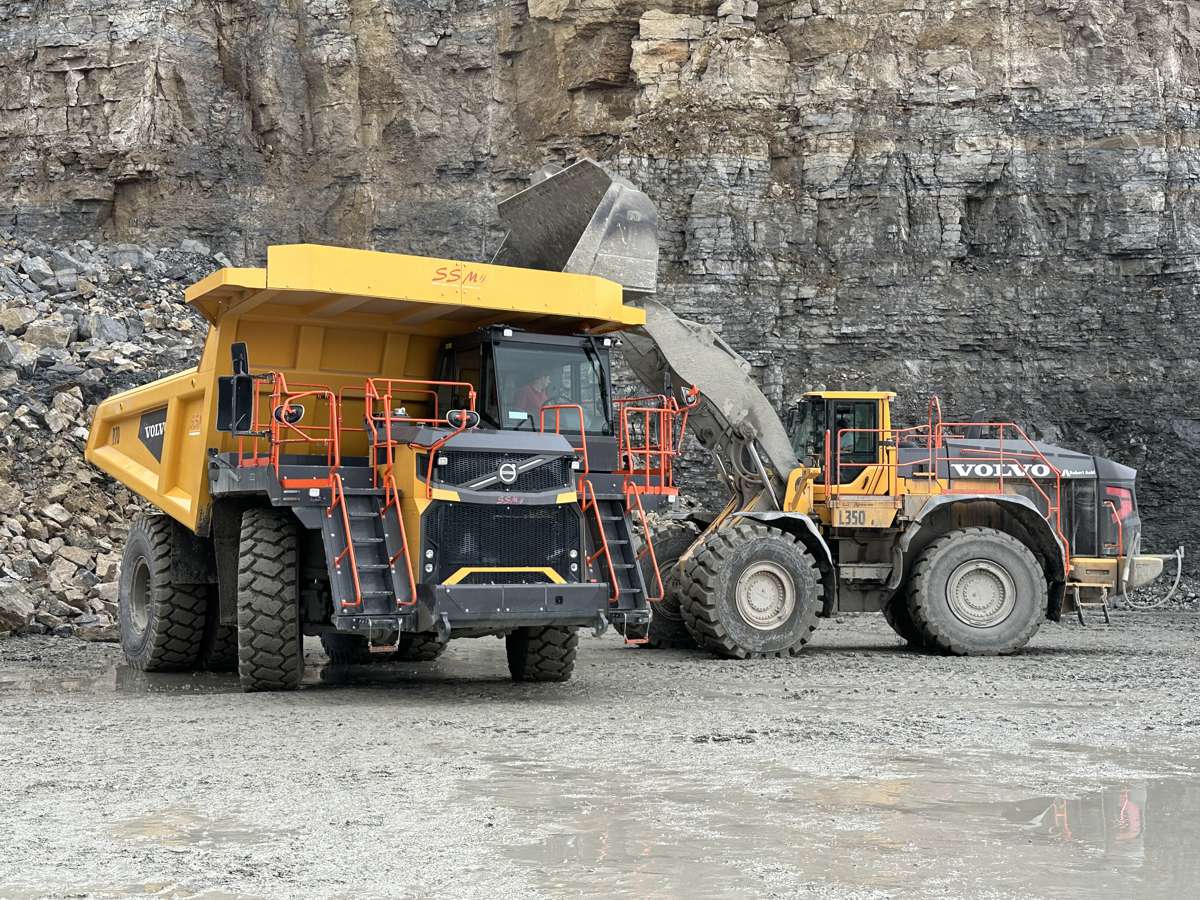
The Bettenfeld operation gives the R70 a suitably demanding European debut. SHF extracts thousands of tonnes of Muschelkalk limestone each year from an approximately 80-hectare site near Rothenburg ob der Tauber, producing material for roads, civil engineering, concrete, hydraulic engineering and agriculture. The deposit extends across a substantial limestone formation, while extracted rock is mechanically crushed and graded into products ranging from fine sand and aggregates to large armour stone.
The scale of individual production cycles provides some indication of the work involved. During a 2024 visit to the quarry by Rothenburg’s city council, one prepared blast released around 6,500 tonnes of stone, enough material to occupy the quarry’s wheel loaders and dump trucks for the following one to two working days before processing through the crusher.
Into that operation comes a machine designed around repetitive high-volume movement between the loading face and processing plant. Volvo rates the R70 for a maximum speed of 59 km/h and maximum gross torque of 3,084 Nm, although outright speed is only one element of quarry productivity. Traction on gradients, positioning beneath the loading machine, manoeuvring around constrained working areas and the time required to discharge each load all contribute to the cycle.
The R70 uses MacPherson steering geometry, with compact struts mounted at the top of the body and at the bottom of a single lower wishbone. Volvo says the arrangement improves manoeuvrability and ride comfort, particularly over the uneven haul roads typical of quarry operations. The V-shaped body is designed to support efficient loading and material discharge, with rapid lifting and lowering helping to keep the haul cycle moving.
“The customer was looking for a Volvo machine that could deliver both efficiency and performance,” said Volker Bonnke, Technical Product Specialist at Volvo CE. “The R70 has been designed to meet those expectations, combining high productivity with operator comfort and safety.”
Operator Comfort Over Thousands of Hours
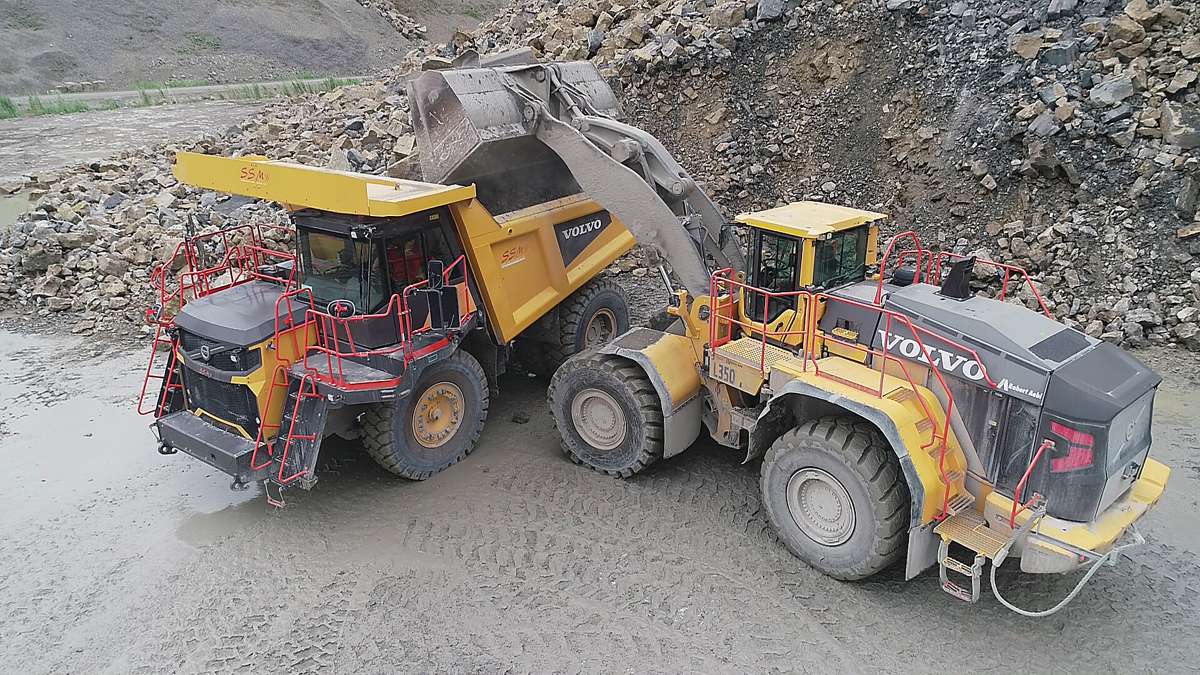
A quarry hauler may be specified around payload and cycle time, but the operator remains in the cab shift after shift, often over rough ground and through hundreds of repeated loading and tipping cycles. SHF’s initial experience with the R70 has therefore focused partly on the cab, particularly its seating position, visibility and relatively low noise levels.
The steering wheel and seat can be adjusted around the operator, while access is provided from both sides of the machine. The left-hand entrance remains the normal route into the cab, but the second access point provides another option for operators and maintenance personnel working around a machine of this scale.
“The seating position is very good and very ergonomic,” said Klaus Schneider, Managing Director at SHF. “The steering wheel and seat can be adjusted to suit the operator, and the cab itself makes a very positive impression. It is quiet, clear and designed with practical quarry operations in mind.”
Those details sit alongside the more obvious measures of payload, horsepower and fuel consumption. Operators still have to position a heavily loaded vehicle accurately beneath excavators and loaders, negotiate haul roads repeatedly and tip safely around crushers and stockpiles, making visibility, control response, noise and fatigue part of the machine’s everyday performance.
The Economics of a 35,000-Hour Machine
SHF’s expected service life for its rigid haulers provides some of the most useful context for the purchase. Over such long operating lives, small differences in fuel burn, maintenance requirements and availability have plenty of time to accumulate, while an unreliable truck can interrupt production well beyond the direct cost of repairing it.
“Fuel consumption is important to us, and so is the overall economic performance of the machine,” said Schneider.
Established machine lineage also carries weight in fleets expected to keep equipment for this long. SHF had already spent many years operating Terex rigid haulers before choosing the Volvo R70, giving the company experience with the engineering family from which Volvo’s rigid machines developed.
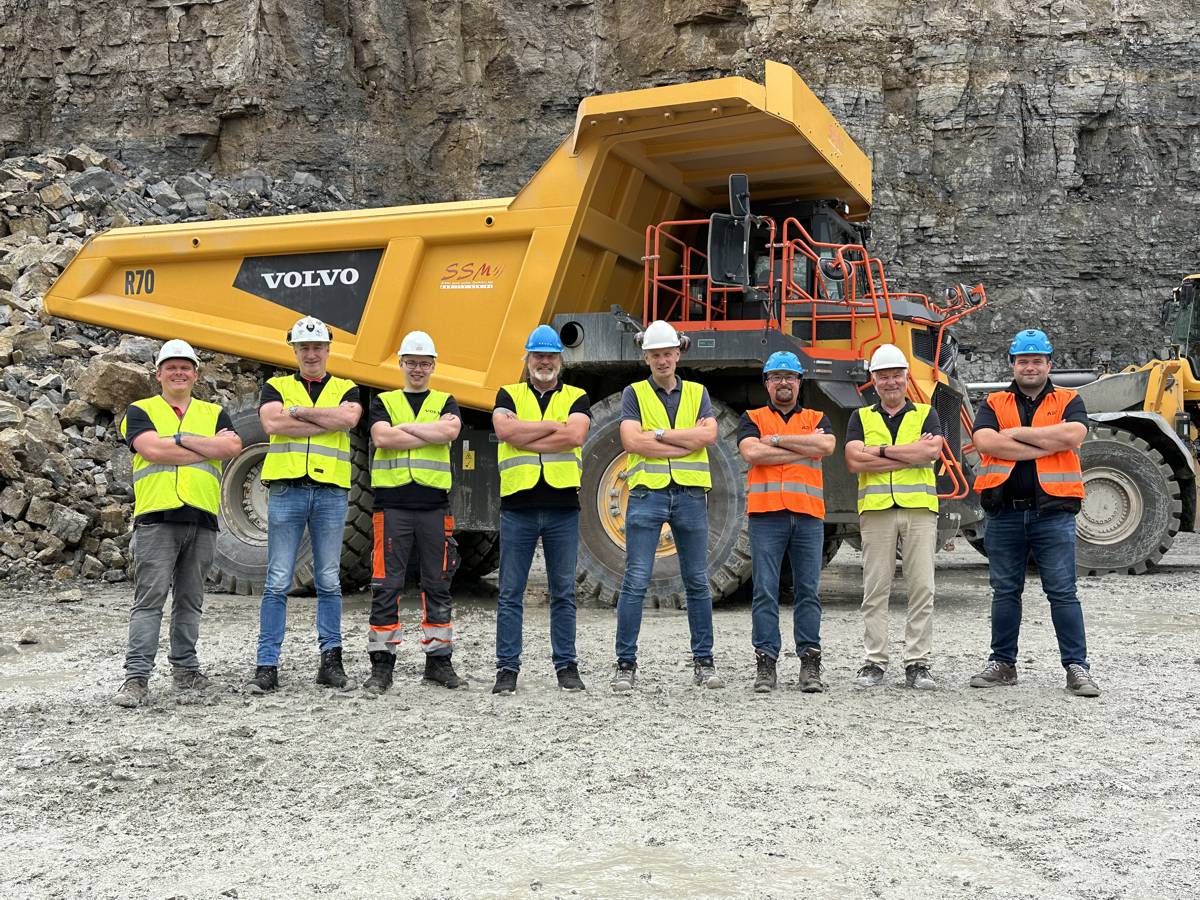
Long service lives also increase the importance of parts supply, dealer support and the manufacturer’s commitment to the product over time. Local support for SHF’s R70 is being provided by Volvo CE dealer Robert Aebi together with partner SSM, putting the local service organisation alongside Volvo’s manufacturing and engineering support.
From Terex Trucks to Volvo R70
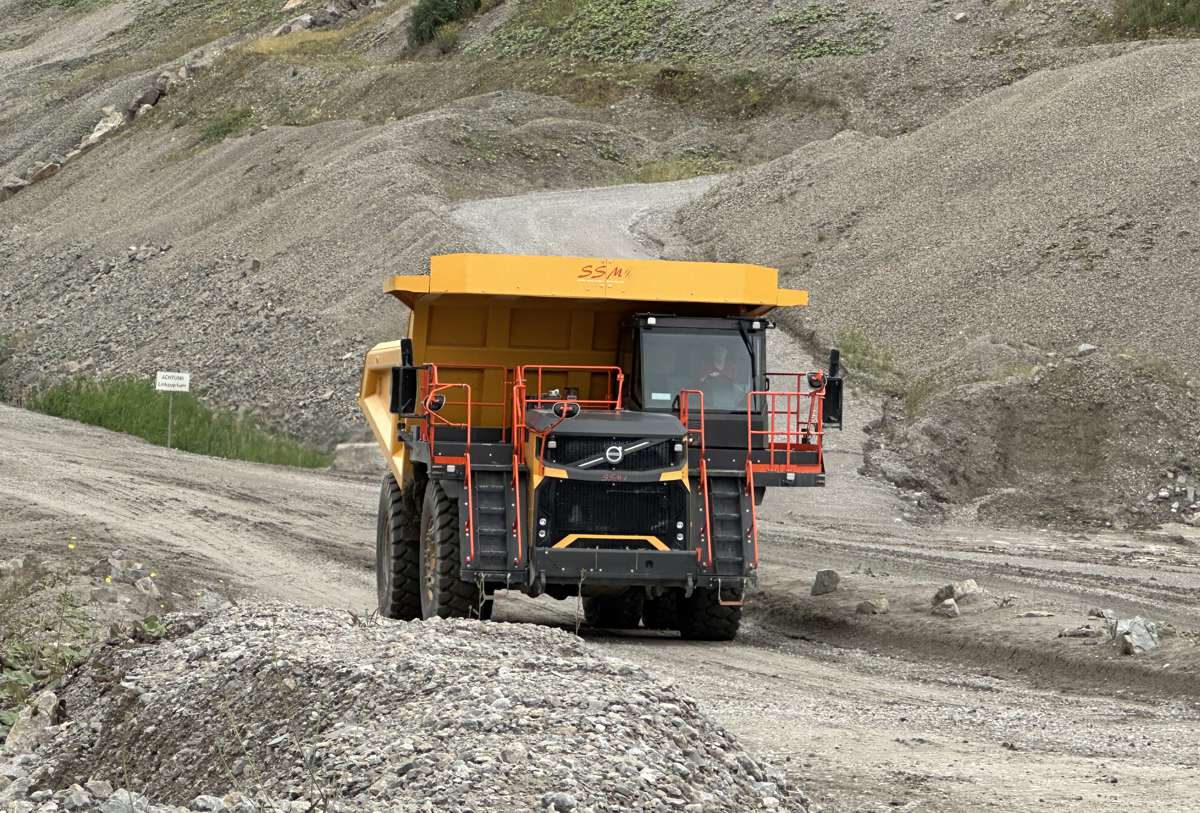
The history behind the R70 stretches considerably further back than the badge on its grille. Volvo CE acquired the Terex hauler business in 2014, gaining a product line and engineering operation with decades of experience in off-highway trucks. Four years later, the company formally launched its Volvo-branded rigid range at Motherwell, with the R45D, R60D and R70D developed from the established Terex TR-Series alongside the newly developed R100E.
That heritage has gained fresh relevance in 2026. Volvo announced in March that it would close the Rokbak articulated-hauler business, formerly Terex Trucks, after concluding that rising operating costs and global trade pressures had made it unsustainably profitable. Motherwell, however, is being retained as a centre for Volvo rigid-hauler development and manufacturing, with the company saying the Scottish facility will drive future product development in the segment.
Motherwell is therefore losing its articulated-hauler programme while retaining responsibility for Volvo’s rigid machines, concentrating the Scottish site’s future more closely around products such as the R70.
Volvo’s current European rigid range comprises the 55-tonne R60, 65-tonne R70 and 95-tonne R100, all offered in Stage V/Tier 4 Final configurations. The R70 occupies the middle of that line-up, providing considerably more payload than the R60 without moving into the size and supporting infrastructure required by the R100.
Proving the R70 in European Service
A European first provides a useful reference for Volvo, but Bettenfeld should now provide something more valuable: operating history. The R70 will accumulate cycles through changing weather, haul-road conditions and production demands while SHF measures tonnes moved, fuel consumed, availability and maintenance across the years ahead.
The machine also brings several strands of Volvo’s rigid-hauler programme together in one working quarry. It is built in Scotland using engineering descended from the Terex operation acquired more than a decade ago, carries Volvo’s current Stage V technology and is now operating with a German customer that already has years of experience with the machines that preceded it.
Europe’s first Stage V R70 has therefore moved quickly beyond its debut. At Bettenfeld, the photographs and specifications will matter rather less than the daily routine of loading, hauling and tipping limestone, shift after shift, as the machine begins accumulating the thousands of operating hours by which SHF will ultimately judge it.
Key Industry Questions
- What is the payload capacity of the Volvo R70? The R70 has a rated payload capacity of 65,000 kg, placing it between Volvo CE’s R60 and R100 rigid haulers.
- What engine powers the European Volvo R70? The current European specification uses a Cummins QSK19 engine meeting EU Stage V emissions requirements and producing 567 kW gross power.
- How large is the R70’s body? Volvo lists an SAE 2:1 heaped body capacity of 42.49 m³.
- Where is the Volvo R70 manufactured? The R70 is manufactured at Volvo CE’s Motherwell facility in Scotland, which remains a centre for the company’s rigid-hauler engineering and production.
- How is the R70 connected to Terex Trucks? Volvo CE acquired the Terex hauler business in 2014. Its original Volvo-branded R45D, R60D and R70D rigid haulers were subsequently developed from the established Terex TR-Series machines.
- How long does SHF operate its rigid haulers? SHF says its machines typically remain in service for between 25,000 and 35,000 operating hours.
- What material is extracted at Bettenfeld Quarry? The quarry produces Muschelkalk limestone that is processed into materials for roads, construction, concrete, hydraulic engineering, landscaping and agricultural applications.
- Who supports SHF’s Volvo R70? Local machine support is being provided by Volvo CE dealer Robert Aebi and partner SSM.
Strategic Takeaways
- SHF’s long equipment life makes whole-life operating cost considerably more relevant than purchase price alone.
- The R70 gives Volvo a European quarry reference customer for its current Stage V rigid-hauler generation.
- SHF’s previous experience with Terex machines provides continuity for assessing the Volvo-developed successor.
- Operator environment remains part of the productivity equation for machines spending tens of thousands of hours in repetitive quarry haul cycles.
- Volvo’s decision to retain Motherwell for rigid-hauler development gives the R70 programme additional strategic importance following the planned closure of Rokbak.