MAJOR Takes High-Vibration Screening into the Basalt Quarry at steinexpo
Screening equipment rarely receives the attention given to crushers, excavators and loaders in a quarry, yet comparatively small changes at the screen deck can have consequences throughout the production process. Blocked apertures restrict capacity, incorrectly sized material becomes carryover, abrasive rock accelerates wear and every shutdown for cleaning or replacement interrupts production.
Those conditions provide the practical backdrop to MAJOR’s appearance at steinexpo 2026, where the Canadian screen media manufacturer will demonstrate its OPTIMUMWIRE® and FLEX-MAT® technologies in one of Europe’s more unusual exhibition environments: the working basalt quarry at Homberg/Nieder-Ofleiden in Germany.
Running from 2 to 5 September, steinexpo places crushing, screening and earthmoving equipment inside the Mitteldeutsche Hartstein-Industrie quarry rather than on a conventional exhibition ground. MAJOR will exhibit alongside Haver & Boecker Niagara at Stand B7, putting its screen media into an environment where abrasion, material sizing and plant availability are everyday production considerations.
“There’s no better place to demonstrate our screen media solutions than in a real basalt quarry,” said Mike Offermans, MAJOR’s director of sales and market development in Europe. “As demand continues to grow across Europe, we’re committed to helping producers improve efficiency and profitability by demonstrating how our screening technologies reduce blinding and pegging while increasing throughput.”
Briefing
- MAJOR will exhibit OPTIMUMWIRE and FLEX-MAT screen media at steinexpo 2026 from 2 to 5 September.
- The exhibition takes place inside MHI’s basalt quarry at Homberg/Nieder-Ofleiden, Germany.
- FLEX-MAT uses independently vibrating wires bonded by polyurethane strips rather than conventional woven intersections.
- MAJOR states that FLEX-MAT wires can vibrate at approximately 6,000 to 10,000 strokes per minute.
- OPTIMUMWIRE and the more abrasion-focused OPTIMUMWIRE PLUS can be specified across tensioned and modular FLEX-MAT configurations.
Screening Difficult Material
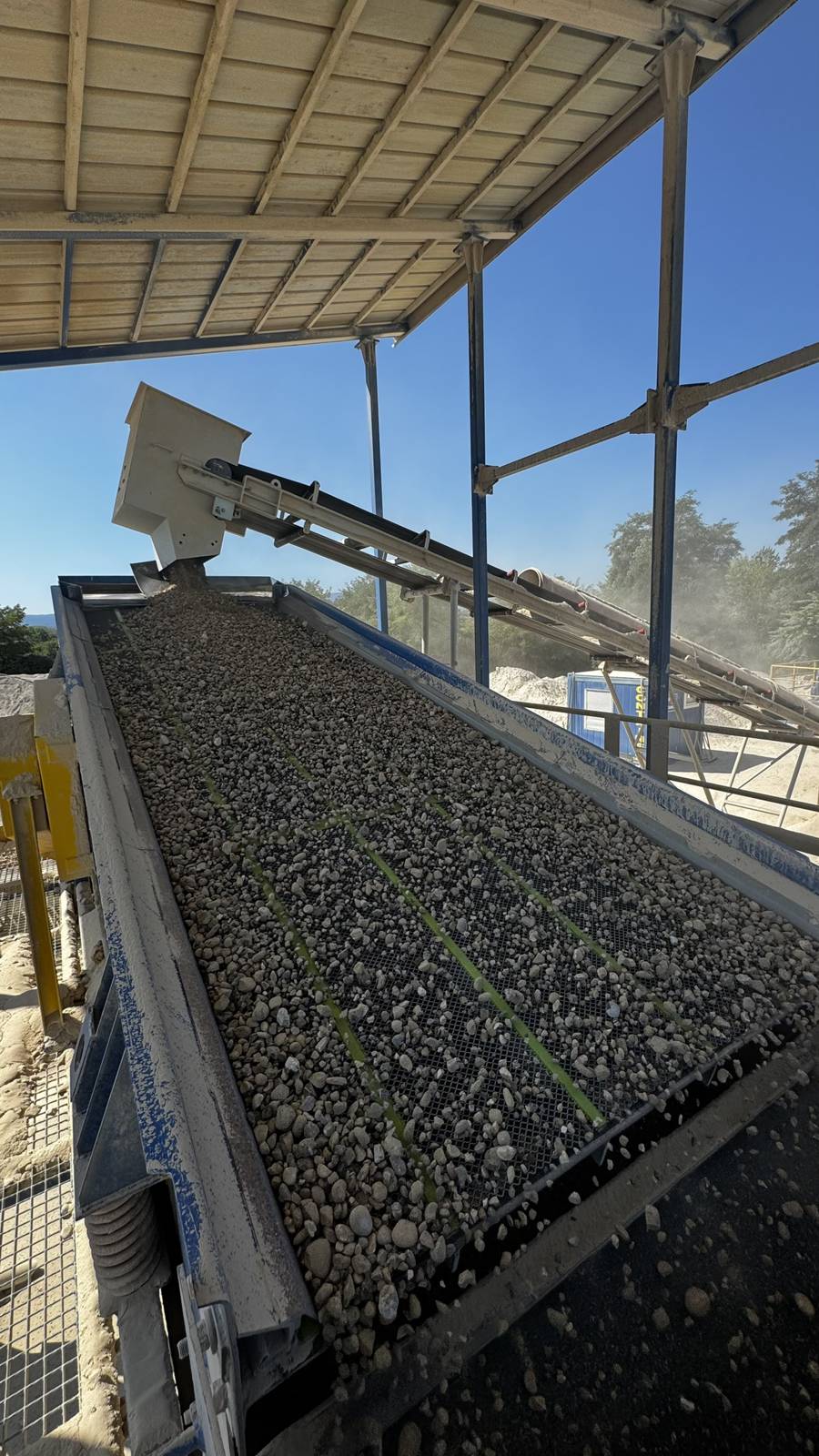
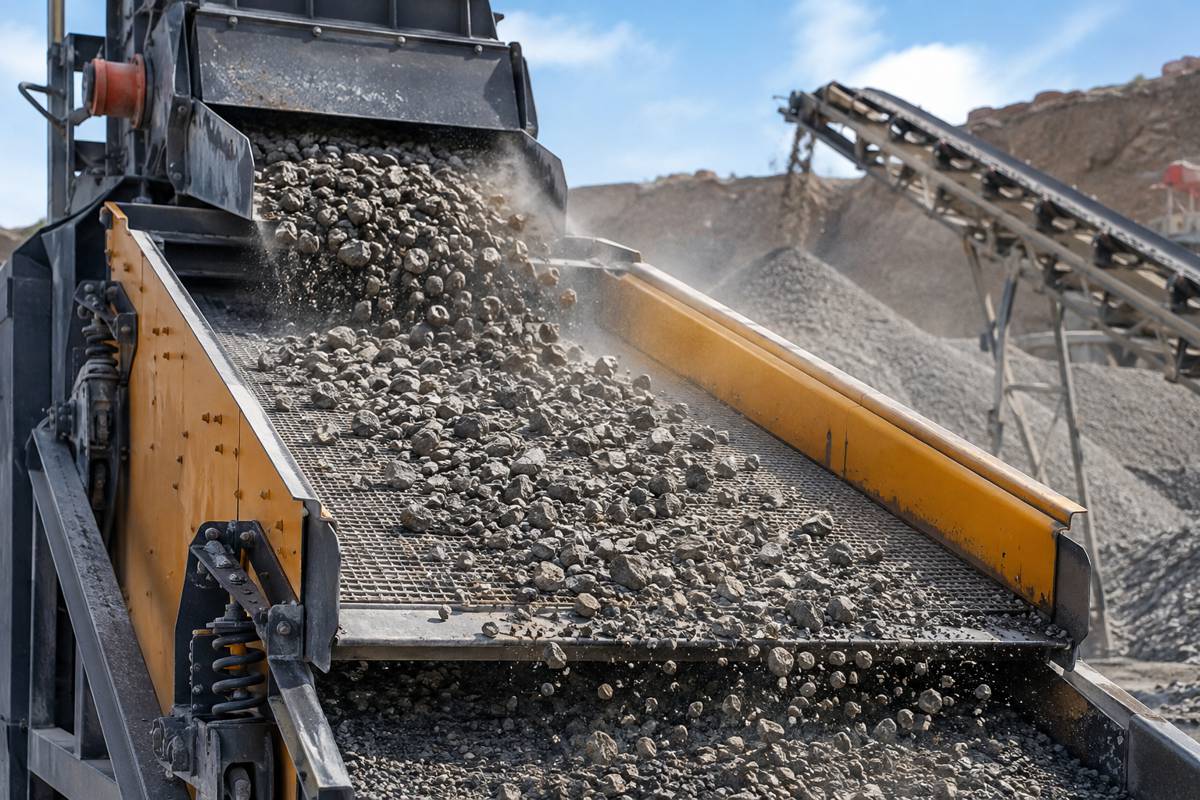
Aggregate screening depends on material travelling across a vibrating deck having sufficient time and opportunity to stratify, allowing smaller particles to move downwards towards the apertures while larger particles remain above them. Near-size particles can become lodged in apertures, producing pegging, while fine or damp material can build across openings and cause blinding. As the effective open area of the deck falls, material that should have passed through the screen can instead travel onwards with the oversize fraction.
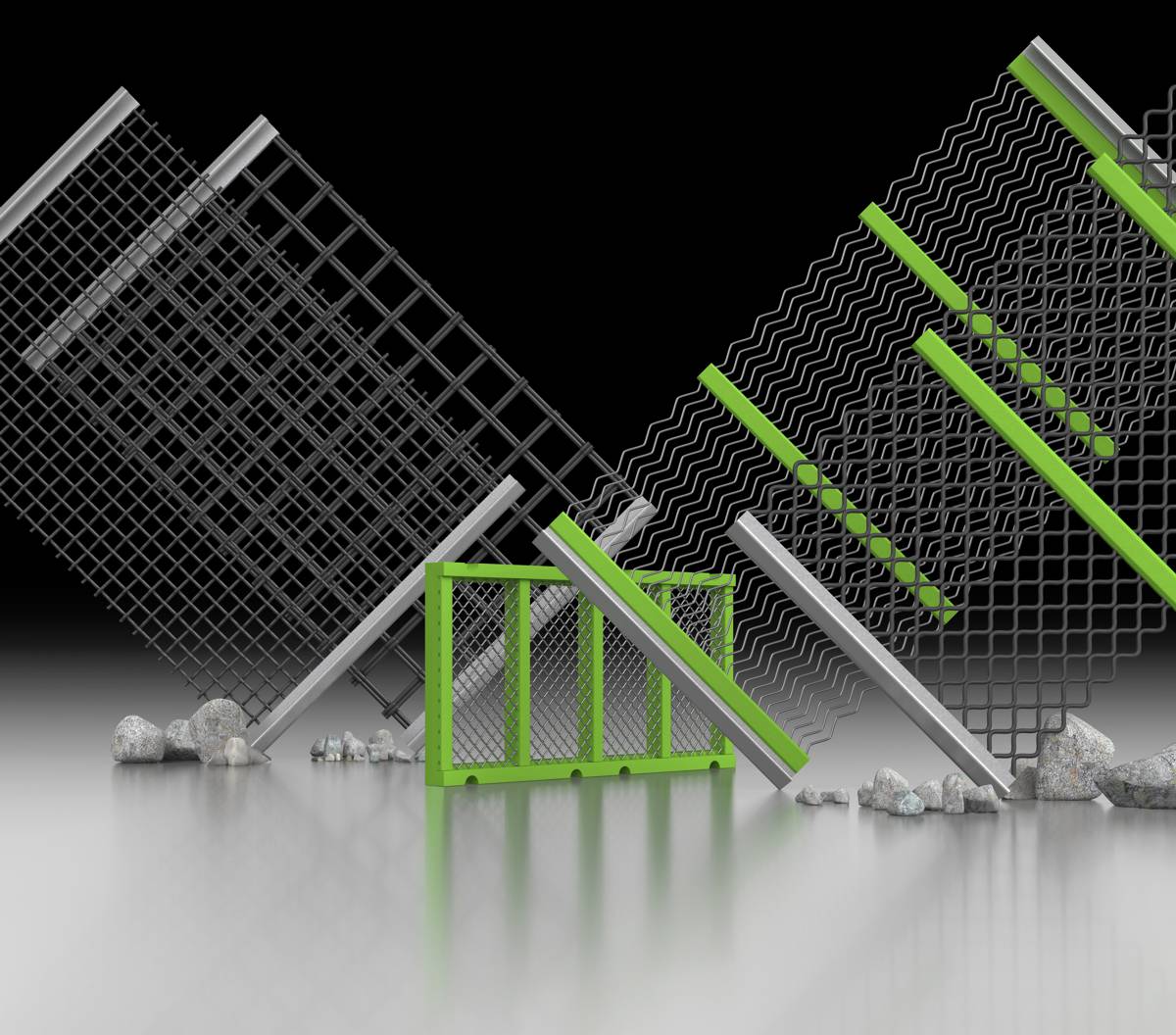
Conventional woven wire relies predominantly on movement generated by the screen box. FLEX-MAT changes the behaviour of the screening surface itself, with wires held by polyurethane strips rather than woven together at intersections, allowing individual wires to move independently under material contact. According to MAJOR’s technical information, a screen box typically operates at approximately 500 to 1,000 strokes per minute, while individual FLEX-MAT wires can vibrate at approximately 6,000 to 10,000 strokes per minute. The additional movement is intended to accelerate material stratification while helping prevent particles from remaining lodged in the openings.
Removing conventional woven intersections also changes the wear characteristics of the media. In woven wire, crimps and contact points can become concentrated areas of wear, while FLEX-MAT’s parallel wire arrangement removes those intersections and allows different wire diameters and configurations to be used according to the material and duty involved.
Wire, Wear and Screen Configuration
At steinexpo, MAJOR will place particular emphasis on OPTIMUMWIRE, its proprietary high-performance wire used across a number of its screening products. The company says the wire is manufactured using a patented process intended to alter its molecular structure, increasing hardness and tensile strength while improving resistance to breakage. For more aggressive applications, including granite and basalt, MAJOR also offers OPTIMUMWIRE PLUS, a heavier-duty wire available within its modular screen media.
Purchase price is only part of the calculation. Wear life has to be considered alongside available screening area, throughput, cleaning requirements, change intervals and the labour needed to maintain the deck. Feed characteristics, moisture, particle shape, impact loading, deck position and required finished product can all influence how a screening surface behaves in service.
“Every quarry has unique production goals and material characteristics, which is why there’s no one-size-fits-all screening solution,” said Matej Grm, MAJOR’s European territory manager. “When producers come to us with their requests, we work with them to evaluate their challenges and identify the proper screen media to best suit their operation.”
FLEX-MAT can be installed as tensioned media or incorporated into modular panels, giving operators different ways of balancing screening action against maintenance and wear. Tensioned media allows substantial movement across the screening surface, while modular systems make it possible to replace individual sections and configure different areas of the deck for different conditions. Depending on the configuration, FLEX-MAT can use OPTIMUMWIRE, OPTIMUMWIRE PLUS or stainless-steel wire.
Neither arrangement removes the need to understand the feed material. Abrasive basalt presents a different problem from wet sand, recycled asphalt, demolition material or fine mineral processing, while individual decks within the same screening plant can experience substantially different conditions. Incorrect tensioning or an unsuitable aperture configuration can compromise even specialised media.
A Small Component in a Large Process
Screen media occupies an unusual position in quarry economics. Compared with the capital value of crushers, screens, conveyors and mobile equipment, individual panels or tensioned sections are relatively modest components, yet virtually every tonne of saleable aggregate may eventually depend on them separating material at the required size. Reduced open area can appear elsewhere in the plant as lower throughput, recirculation, contamination of product sizes or additional crusher loading.
That makes the working quarry at steinexpo an appropriate setting for MAJOR’s products. Visitors will be surrounded by the drilling, loading, crushing and processing equipment that dominates quarry investment, while screen media addresses a much smaller part of the plant. Whatever machinery sits upstream, the rock ultimately still has to get through the right hole.
Key Industry Questions
- What is screen blinding? Blinding occurs when fine, sticky or damp material accumulates over screen apertures and prevents particles from passing through them. The result is a reduction in effective screening area and potentially lower throughput.
- What is screen pegging? Pegging occurs when near-size particles become trapped in individual screen openings. Sufficient pegging reduces the usable open area of the deck and can affect separation efficiency.
- How does FLEX-MAT differ from conventional woven wire? Rather than weaving perpendicular wires together, FLEX-MAT uses individual wires held by polyurethane strips. This allows the wires to vibrate independently under material movement.
- How quickly do FLEX-MAT wires vibrate? MAJOR states that individual wires can operate at approximately 6,000 to 10,000 strokes per minute, compared with approximately 500 to 1,000 strokes per minute for typical screen-box vibration.
- Why is stratification important in aggregate screening? Stratification allows smaller particles to move towards the screening surface while larger material rises above them, increasing the opportunity for correctly sized particles to reach and pass through the appropriate apertures.
- What is OPTIMUMWIRE? OPTIMUMWIRE is MAJOR’s proprietary screen wire. The company says a patented manufacturing process improves its hardness, tensile strength and resistance to breakage.
- What is OPTIMUMWIRE PLUS? OPTIMUMWIRE PLUS is intended for particularly abrasive applications, including materials such as granite and basalt, and is available in MAJOR’s modular screen media.
- Where is steinexpo 2026 being held? The exhibition takes place in the basalt quarry operated by Mitteldeutsche Hartstein-Industrie AG at Homberg/Nieder-Ofleiden, Germany, from 2 to 5 September 2026.
Strategic Takeaways
- Screen media performance is better assessed against total production cost than purchase price alone.
- Maintaining usable open area can influence both throughput and finished-product sizing.
- Independently moving wires provide a different approach to controlling pegging and blinding than conventional woven screening surfaces.
- Abrasiveness, moisture, particle geometry and required sizing influence the appropriate screen media configuration.
- Modular and tensioned systems offer different balances between screening action, wear characteristics and maintenance requirements.