Senegal Expands Agricultural Road Network with $140m Financing
Senegal is preparing another 275 kilometres of paved roads and laterite tracks through two agricultural corridors in the east of the country, extending a rural transport programme that has already constructed or upgraded 414 kilometres of roads.
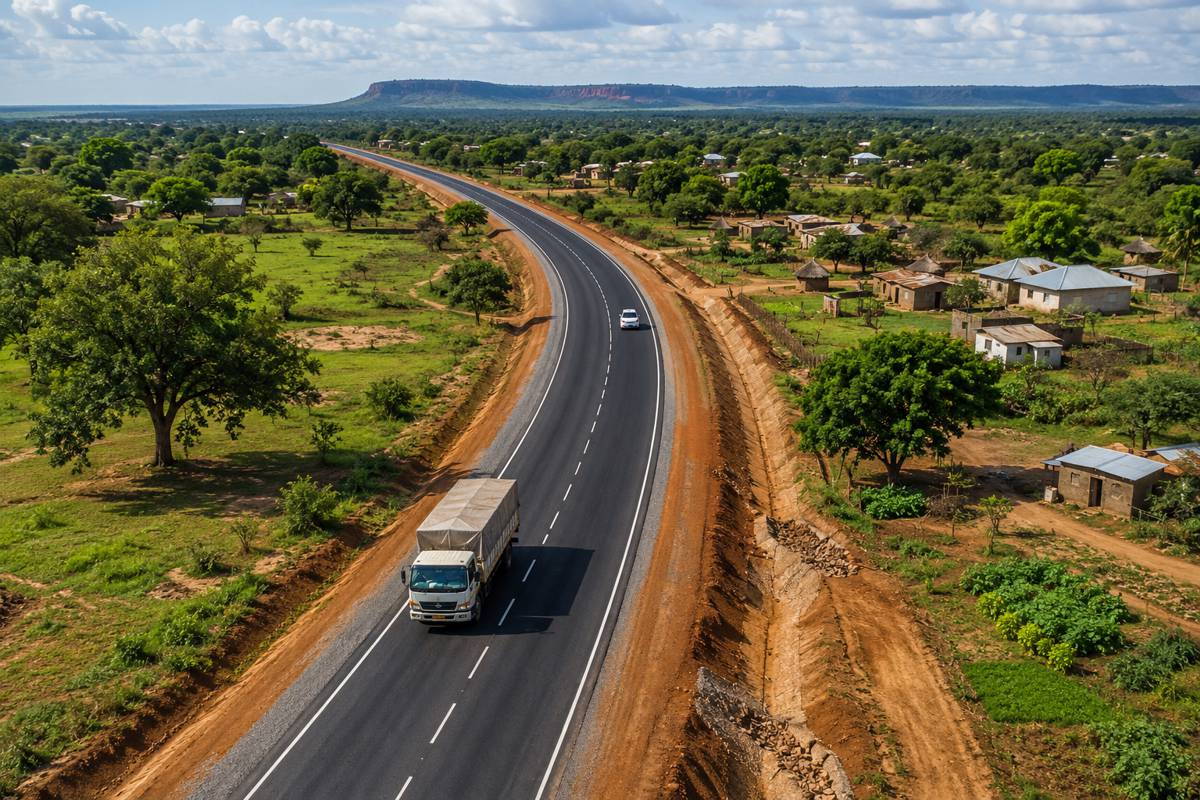
The latest phase will concentrate on the Koussanar-Koumpentoum and Tambacounda-Dianké Makha corridors, where farming and livestock production underpin much of the local economy. It will deliver 171 kilometres of paved roads and 104 kilometres of laterite tracks, alongside storage, processing, market, water, education and healthcare infrastructure serving communities close to the routes.
The work is backed by EUR 119.6 million, equivalent to $140 million, in additional financing from the World Bank’s International Development Association, together with a further $2 million from the Senegalese government. It is the second additional financing for the Enhancing Connectivity in the Northern and Central Agricultural Production Areas of Senegal Project, taking total investment to $470.8 million.
Around 221,000 people along the two new corridors are expected to gain improved connections to regional markets and essential services. Across the programme as a whole, approximately 570,000 people are expected to benefit.
Briefing
- The World Bank has approved EUR 119.6 million, equivalent to $140 million, in additional IDA financing for Senegal’s rural connectivity programme.
- Senegal’s government will contribute a further $2 million, taking total project investment to $470.8 million.
- The new phase includes 171 kilometres of paved roads and 104 kilometres of laterite tracks.
- Work will concentrate on the Koussanar-Koumpentoum and Tambacounda-Dianké Makha economic corridors.
- Around 221,000 people are expected to gain improved connections to markets and essential services through the additional financing.
Roads Built Around Agricultural Access
The programme began with $200 million of World Bank financing approved in 2022 and received a further $117 million in additional financing in 2023. Rather than selecting roads purely according to traffic demand, its planning has been closely tied to agricultural production and the ability of rural communities to reach markets and essential services.
The original project used multi-criteria analysis to identify road sections capable of improving connections between agricultural production areas and consumption markets. Route selection also considered the existing road network, proximity to all-weather roads and accessibility during flooding, with geospatial modelling used to examine how proposed interventions could affect market access under normal and severe flood conditions.
That planning has particular relevance in eastern Senegal, far from the country’s economically dominant Dakar region and across areas where agriculture and livestock remain central to local economic activity. Produce needs to move from farms to collection points, storage and processing facilities before reaching regional and urban markets, making the reliability of the connecting road network part of the agricultural supply chain itself.
The latest financing extends that approach beyond the carriageway. Community investments within five kilometres of the roads will include agricultural processing platforms for women, storage facilities, market areas and water points, together with school and healthcare facilities.
“When a road connects an agricultural production area to an urban market, it does more than shorten a journey: it helps farmers get more value from their harvests, women entrepreneurs reach new markets, and communities access greater economic opportunities. It also improves access to schools, health centers, and other essential services, thereby accelerating the human development of the communities it serves. This is the momentum that this financing aims to support,” said Djibrilla Issa, World Bank Division Director for Senegal, Mauritania, Cabo Verde, Guinea-Bissau, and The Gambia.
Climate Resilience and Road Management
Climate resilience is being incorporated into the 275 kilometres of roads and tracks planned under the additional financing, continuing an approach established in the wider programme. A road intended to open an agricultural production area loses much of its economic value if seasonal flooding interrupts access when produce needs to reach markets, which is why flood accessibility formed part of the earlier route-selection work.
The programme also extends beyond construction into management of the resulting network. Senegalese institutions will receive training and management and control tools intended to strengthen road safety and road asset management, adding maintenance and operational capability alongside the physical expansion of the network.
Implementation is being handled by Senegal’s Road Works and Management Agency under the supervision of the Ministry of Infrastructure.
Agricultural Corridors and AgriConnect
The road programme now sits alongside Senegal’s wider AgriConnect initiative, launched in February 2026 by the Senegalese government and World Bank Group. AgriConnect concentrates on grains, horticulture and livestock, combining agricultural infrastructure and services with policy changes and efforts to attract private investment.
The two programmes intersect physically along the new corridors. Roads and laterite tracks provide access to production areas, while the associated storage, processing platforms, markets and other community infrastructure are intended to improve the movement of agricultural products through local and regional value chains.
The World Bank has set out ambitions under AgriConnect to strengthen domestic food security and support the creation of 800,000 formal agricultural jobs by 2029. Whether those wider ambitions are achieved will depend on investment and economic activity well beyond the road programme, but reliable transport between farms, processing facilities and markets provides some of the basic infrastructure on which that development depends.
Building Out an Existing Network
The latest financing expands a programme with substantial physical works already completed. With 414 kilometres constructed or upgraded and another 275 kilometres of paved roads and laterite tracks planned, the network is increasingly being developed around agricultural production areas rather than as a collection of isolated road improvements.
Its economic results will depend on factors beyond construction. Better roads cannot guarantee successful agricultural businesses, higher farm incomes or viable processing enterprises, while the expanded network will need to be maintained long after the current construction programme ends. The inclusion of road asset management, community facilities and climate resilience alongside the civil works acknowledges some of those longer-term demands.
In rural infrastructure, kilometres constructed remain the easiest figure to count, but they tell only part of the story. Across Senegal’s northern and central agricultural production areas, the longer test will be what happens along those kilometres once the roads are open.
Key Industry Questions
- How much additional financing has been approved? The World Bank has approved EUR 119.6 million, equivalent to $140 million, through the International Development Association. Senegal’s government is contributing a further $2 million.
- What is the total value of the road connectivity programme? The second additional financing takes total project investment to approximately $470.8 million.
- How much road construction is included in the new phase? The programme includes 171 kilometres of paved roads and 104 kilometres of laterite tracks, giving a combined total of 275 kilometres.
- Which corridors are being targeted? The additional investment focuses on the Koussanar-Koumpentoum and Tambacounda-Dianké Makha corridors, serving agricultural and livestock-producing areas in eastern Senegal.
- How much road infrastructure has already been delivered? The World Bank reports that 414 kilometres of roads have already been constructed or upgraded through the programme.
- Does the project fund infrastructure other than roads? Yes. Investments are planned in communities within five kilometres of the improved roads, including agricultural processing platforms, storage facilities, market areas, water points, schools and healthcare facilities.
- How is climate resilience incorporated? Climate-resilience measures are being integrated into road construction, while earlier project planning used geospatial analysis to examine accessibility during flooding when assessing potential road interventions.
- What is AgriConnect? AgriConnect is a Senegalese government and World Bank Group initiative focused on developing grains, horticulture and livestock value chains through infrastructure, policy reform and private investment.
- Who is implementing the road project? Implementation is entrusted to Senegal’s Road Works and Management Agency under the supervision of the Ministry of Infrastructure.
Strategic Takeaways
- Senegal is linking road investment directly with agricultural production areas and market access rather than treating rural connectivity as an isolated transport objective.
- Locating processing, storage, markets and community infrastructure around improved corridors could increase the economic utility of the road investment.
- Flood resilience has influenced both route assessment and infrastructure design, reflecting the need to maintain dependable access to agricultural areas.
- Road asset management and institutional capability form part of the programme alongside physical construction, addressing the maintenance requirements created by network expansion.
- Alignment with AgriConnect places the transport programme within Senegal’s wider effort to strengthen agricultural production and value chains.