Can Spherical Tokamaks Make Fusion Power More Affordable?
A 10.4-tonne magnet arriving on a flatbed truck might appear an unlikely symbol of compact engineering. Yet the central magnet bundle delivered to the Princeton Plasma Physics Laboratory in June 2026 sits at the heart of one of fusion energy’s most important design questions: does a commercially viable fusion power plant need to be enormous?
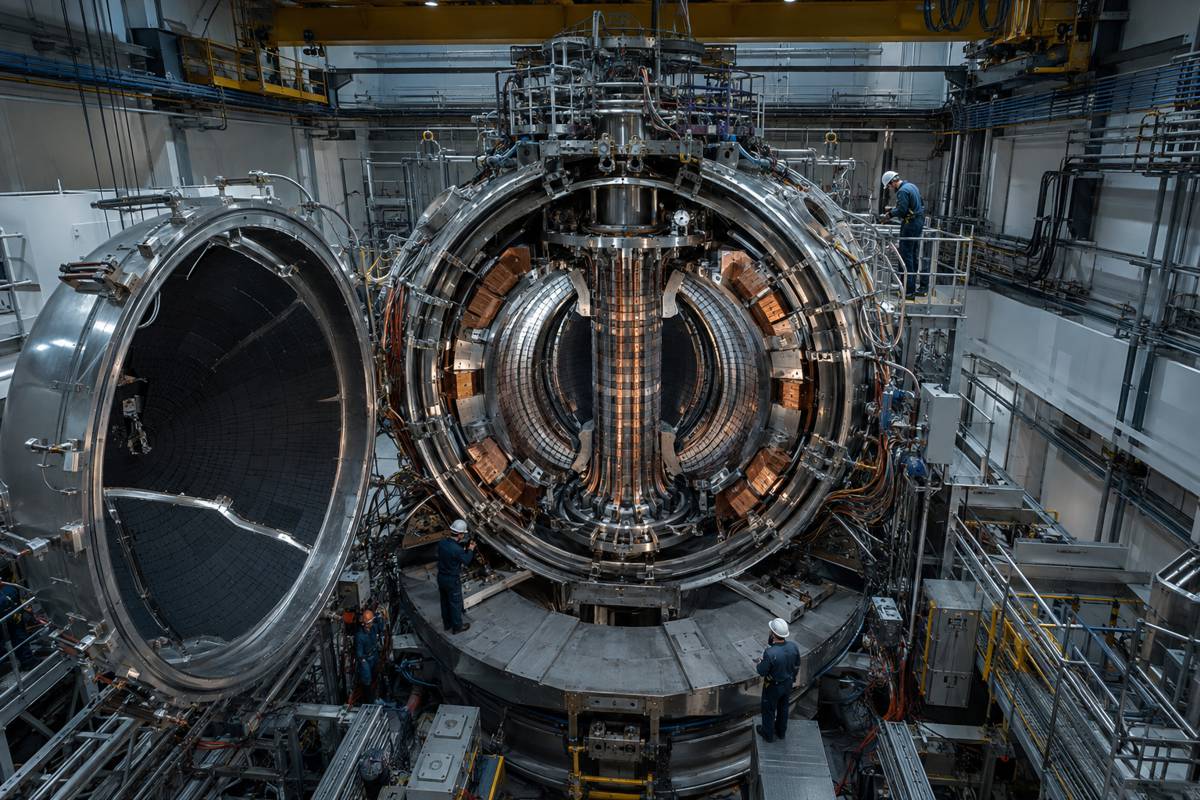
The National Spherical Torus Experiment-Upgrade, better known as NSTX-U, compresses the familiar doughnut-shaped tokamak until it resembles a cored apple. This tighter geometry allows a comparatively large volume of plasma to occupy a smaller machine and may generate greater plasma pressure from a more modest magnetic field.
If that performance can be carried into a power plant, it could lead to smaller buildings, lower material requirements and less dependence on extremely powerful magnets. Compactness, however, concentrates immense electrical, thermal and mechanical loads into less space, leaving limited room for shielding, fuel-breeding systems and maintenance access.
NSTX-U is being rebuilt to discover where the physical advantages end and the engineering penalties begin.
Briefing
- NSTX-U will test whether spherical tokamaks can sustain the high-pressure, efficiently confined plasma needed for commercially credible fusion power.
- Princeton Plasma Physics Laboratory reports that the machine’s recovery and reconstruction programme is 93% complete, with experiments expected to resume in 2027.
- Its new 10.4-tonne central magnet bundle will carry currents of up to four million amperes inside the narrow centre column that defines the spherical-tokamak concept.
- Compact geometry could reduce magnet, structural and building requirements, but leaves less space for neutron shielding, cooling, fuel breeding and maintenance access.
- Results will complement research at the UK’s MAST Upgrade and inform the wider assessment of spherical-tokamak concepts being pursued through programmes such as STEP.
When Geometry Becomes an Economic Question
Fusion progress is usually described through temperatures, plasma duration and energy gain. These remain essential scientific measures, but a power station will eventually be judged by a less spectacular set of numbers: construction cost, operating efficiency, component life, maintenance time and the amount of electricity generated across the plant’s working life.
The geometry of the reactor influences them all. A conventional tokamak uses magnetic fields to contain an intensely hot plasma within a toroidal, or doughnut-shaped, vacuum vessel. Its central opening provides space for magnetic coils, while the surrounding structure accommodates additional magnets, heating equipment, shielding, diagnostics, cooling systems and maintenance access.
Increasing the machine’s size can improve aspects of plasma confinement and create more room for the systems around it. Larger dimensions may also spread thermal and mechanical loads across a wider area, but they bring bigger reactor buildings, longer components, more structural material and heavier requirements for excavation, foundations, transport and lifting.
A spherical tokamak changes those proportions. Its low aspect ratio means the device’s overall radius is relatively small compared with the radius of the plasma chamber, allowing the plasma to occupy more of the available volume and wrap tightly around a narrow central column.
Part of the attraction lies in its ability to achieve relatively high beta, a measure comparing plasma pressure with the magnetic pressure used to confine it. A high-beta plasma extracts more performance from a given magnetic field, potentially easing one of the most expensive demands in tokamak design.
This improves one part of the cost equation rather than settling the commercial argument. The decisive question is whether the advantage remains once shielding, power conversion, fuel production and long-term maintenance are arranged around the plasma chamber.
Conventional tokamaks have accumulated decades of experimental evidence and form the basis of major international projects, most prominently ITER. Spherical tokamaks are less mature, but their possible combination of efficient confinement, high plasma pressure and compact dimensions has secured a place in the debate over what should follow today’s experimental machines.
NSTX-U Tests the Scaling Assumption
The National Spherical Torus Experiment-Upgrade is the largest spherical tokamak in the United States and is designed to become the most powerful machine of its type. It is operated by Princeton Plasma Physics Laboratory, which Princeton University manages for the US Department of Energy’s Office of Science.
NSTX-U will use high-energy neutral particle beams and radio-frequency systems to create and heat plasma to approximately 100 million degrees Celsius. An extensive suite of diagnostics will measure temperature, density, stability, energy confinement and other aspects of plasma behaviour during each experimental pulse.
The purpose is greater than reaching another headline temperature. Researchers want to know whether the favourable confinement observed in spherical tokamaks continues to improve as the plasma moves towards more demanding conditions.
Fusion performance depends on a combination of plasma temperature, density and energy-confinement time, commonly expressed through the triple product. A reactor must reach sufficient temperature and density while retaining its energy long enough for fusion reactions to become self-sustaining.
Spherical tokamaks benefit from the way magnetic-field lines curve and pass through their tightly shaped plasma. More of the field can present a favourable convex curvature, helping suppress some of the large-scale instabilities that allow energy to escape.
Plasma rotation may provide a further advantage. Neutral particle beams used for heating can drive different parts of the plasma at different speeds, creating a shearing action that stretches and disrupts smaller turbulent structures before they transport substantial heat away from the core.
NSTX-U will examine whether these benefits persist as performance rises. If energy confinement continues to improve, the case for spherical tokamaks becomes stronger. If it reaches a plateau, future machines may need greater dimensions, more powerful magnets or operating conditions that reduce the anticipated economic advantage.
The experiment will also help determine how compact a useful machine should be. The lowest possible aspect ratio may not produce the best power plant; the optimum could lie at a less extreme point where favourable plasma behaviour is balanced against the space required for magnets, shielding and maintainable engineering.
A Magnet at the Heart of the Machine
The newly delivered central magnet bundle embodies both the promise and the difficulty of the design. Manufactured by Elytt Energy in Bilbao, Spain, it measures approximately 6 metres long, weighs around 10,400 kilograms and incorporates elements of two magnetic systems within a single narrow assembly.
The toroidal-field system creates the magnetic field running around the machine and supplies much of the confinement needed to stabilise the plasma. The ohmic-heating system induces an electrical current through the plasma, contributing heat and an additional magnetic field.
Manufacturing involved combining 36 copper conductors, each approximately 5.8 metres long, into the toroidal-field assembly. Glass-fibre tape, resin and vacuum-pressure impregnation were used to insulate and bind the components before conductors for the ohmic-heating coils were wound around the structure.
Once installed, the bundle will carry currents of up to four million amperes and generate a magnetic field of approximately one tesla. It must deliver this performance from the narrow column running through the machine, where restricted space intensifies the demands of insulation, structural restraint, electrical connection and cooling.
The component’s journey also reveals the emerging industrial geography of fusion. Toroidal-field conductors originating in Finland passed through several American engineering companies for machining, drilling and welding before being sent to Spain for final fabrication. The completed bundle crossed the Atlantic by air and travelled from Newark Liberty International Airport to Princeton on a flatbed truck.
Even at experimental scale, fusion depends on an international network of specialist metalworking, electrical engineering, composites, logistics and precision-assembly expertise. The companies involved are producing low-volume components for highly individual machines, often through manufacturing sequences spread across several countries.
A commercial fusion sector would require a different level of maturity. Components would need to move from bespoke scientific production towards repeatable manufacturing, supported by consistent tolerances, predictable delivery times and documented quality. The ability to reproduce magnets, vacuum vessels, shielding modules and remote-maintenance equipment may ultimately matter as much as the performance of any individual component.
A Failed Coil Became a Full Reconstruction
NSTX-U produced its first plasma in 2015 following an earlier upgrade, but was taken offline in 2016 after a magnetic coil failed. The resulting investigation extended well beyond replacing one component and developed into a comprehensive reassessment of the machine.
Engineers reviewed design decisions, manufacturing records, assembly procedures and quality-control arrangements across hundreds of parts. Essential components were redesigned or replaced, while the standards applied to analysis, fabrication, inspection and testing were strengthened.
Princeton Plasma Physics Laboratory now reports that the recovery programme is 93% complete. Experimental operations are expected to begin in 2027, although substantial assembly and commissioning work remains.
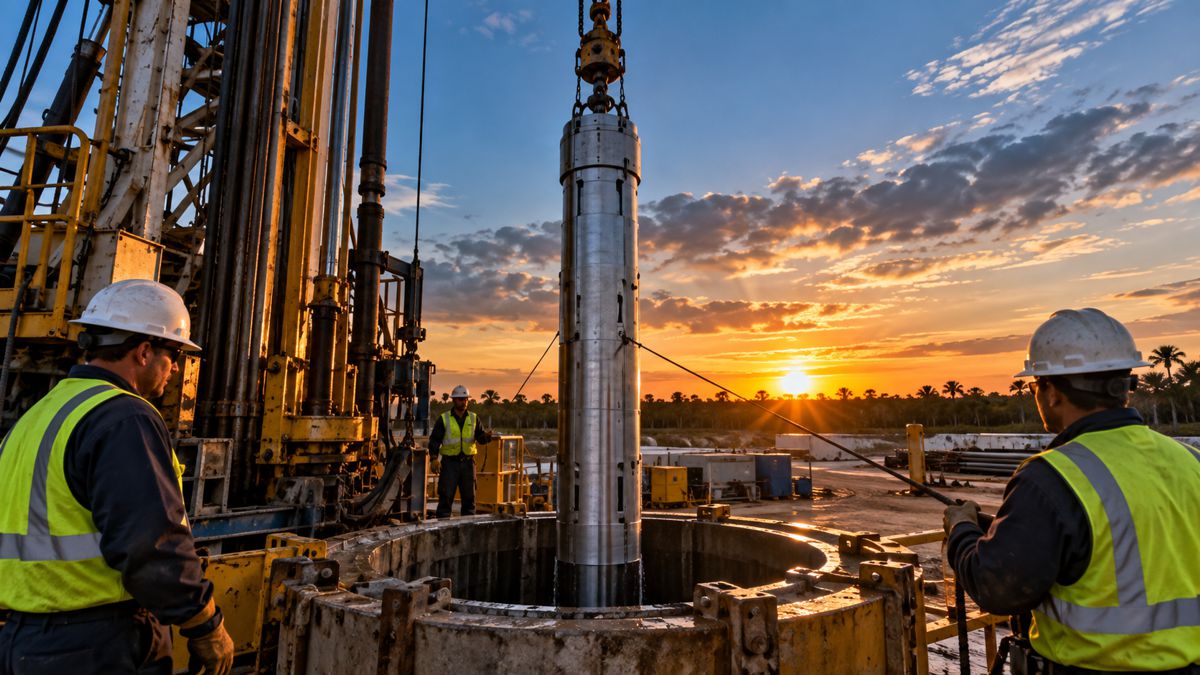
The central magnet bundle must first be enclosed within a protective casing fitted with heat-resistant carbon tiles. After preparatory adjustments, it will be raised into a vertical position, moved into the NSTX-U building and lifted above the machine by the facility’s main crane before being lowered through an opening in the vacuum vessel.
A total of 72 curved electrical connectors known as flexbuses will link the bundle to the wider magnetic system while accommodating movement and mechanical loading. Cooling connections, internal tiles and a bakeout system must also be completed. The bakeout equipment will heat internal surfaces to remove contaminants that might interfere with plasma operation.
Commissioning will begin only after the physical installation is finished, allowing engineers to test whether the machine’s electrical, magnetic, vacuum, heating, cooling, diagnostic and control systems function together as intended.
The length of the shutdown is uncomfortable evidence for a sector built around ambitious deployment schedules. A commercial power station could not tolerate a deeply embedded failure that led to years of investigation and reconstruction.
NSTX-U is an experimental machine, and identifying weaknesses before power plants are built is part of its value. Its history still demonstrates the consequences of concentrating critical components inside a tightly integrated structure. Savings achieved by reducing the machine’s dimensions could quickly be eroded if inspection and replacement require extensive disassembly.
Maintainability must therefore become a primary design condition. Access routes, lifting arrangements, removable modules, robotic equipment and component-replacement sequences need to be developed alongside the plasma configuration, not added after the machine has already taken shape.
Compact Reactors Still Need Full-Scale Systems
The prospect of smaller reactor buildings and reduced material quantities gives spherical tokamaks an obvious infrastructure appeal. A compact design may also lend itself more readily to standardisation, factory production and replication than the immense experimental facilities associated with fusion’s earlier development.
The equipment required to turn a plasma experiment into a power station does not shrink at the same rate as the vacuum vessel.
Most proposed first-generation fusion plants are expected to use deuterium and tritium as fuel. Deuterium is widely available, but tritium is radioactive, scarce and held in only limited quantities. A commercial plant would therefore need to produce much of its own supply by exposing lithium-containing materials to the neutrons released during fusion.
That process requires a breeding blanket around the plasma chamber. The blanket must capture neutrons, generate tritium, absorb heat and transfer that energy into a system capable of producing electricity. It must also allow the fuel to be extracted and processed while remaining compatible with the surrounding structure.
Neutron shielding creates another substantial spatial demand. High-energy neutrons damage materials, alter their properties and activate components. Magnets and sensitive equipment must be protected if they are to operate reliably for commercially useful periods.
The narrow centre column is especially difficult to shield. It must accommodate magnets, electrical systems, structural material and cooling within an area exposed to intense neutron, thermal and electromagnetic loads. Adding protection increases the column’s diameter and may weaken the geometric advantage that made the machine attractive.
Copper magnets, including those used by NSTX-U, are established technology but consume considerable electricity and generate heat that must be removed. High-temperature superconducting magnets offer stronger fields with lower electrical losses, and their development has encouraged several compact fusion concepts.
Superconductors bring their own engineering requirements. They need cryogenic cooling, structural support, protection against sudden loss of superconductivity and sufficient shielding from radiation. Their performance must also remain reliable through the repeated operating cycles and maintenance periods expected of a power station.
Heat exhaust presents a further difficulty. Energy leaving the plasma becomes concentrated on plasma-facing components, particularly around the divertor, where helium ash and impurities are removed from the machine. These surfaces must tolerate extreme heat while remaining capable of replacement.
Reducing the reactor’s dimensions does not reduce these loads uniformly. A compact machine could direct severe heat onto a comparatively restricted area, increasing the importance of divertor design, advanced materials and modular internal components.
The economic calculation must therefore encompass the complete nuclear island and its supporting infrastructure. A small plasma vessel surrounded by extensive shielding, maintenance cells, fuel-processing systems, cooling equipment and power conversion may not produce a proportionately small facility.
An International Programme Takes Shape
Princeton is not investigating spherical tokamaks in isolation. The United Kingdom Atomic Energy Authority has operated the original MAST experiment and its successor, MAST Upgrade, at the Culham Campus in Oxfordshire.
MAST Upgrade addresses plasma and engineering questions that complement the NSTX-U programme. Its work includes the Super-X divertor, which extends the route travelled by exhaust plasma before it reaches the divertor target. Spreading the energy across a larger area and increasing the opportunity for cooling could reduce the heat imposed on plasma-facing materials.
This is central to the commercial discussion. Producing fusion reactions attracts attention, but controlling the exhaust heat may prove equally important to plant life and availability. Materials that require frequent replacement will increase downtime, radioactive waste and recurring maintenance costs.
The UK’s STEP programme moves the spherical-tokamak proposition towards power-plant integration. STEP is intended to develop a prototype capable of demonstrating net electricity while addressing fuel breeding, heat extraction, component maintenance and the other systems required around the plasma.
NSTX-U, MAST Upgrade and STEP occupy different positions along the same development path. NSTX-U will investigate confinement, stability, scaling and control at higher spherical-tokamak performance. MAST Upgrade is contributing evidence about plasma exhaust and operating configurations, while STEP must attempt to bring those lessons together within an integrated plant.
Private developers are pursuing compact fusion concepts of their own, encouraged by progress in superconducting magnets, computation, materials and precision manufacturing. Their schedules are often more aggressive than those of public programmes, but they face the same requirements for durable components, regulatory approval, fuel security and maintainable plant architecture.
Public research facilities provide evidence that can extend beyond one commercial design. NSTX-U is intended to operate as a national user facility, allowing universities, public organisations and private companies to propose experiments and use its capabilities.
That shared role matters in a sector where commercial claims are difficult to compare. Experimental data can help distinguish performance demonstrated on an operating machine from results projected through simulations and future designs.
The Industrial System Will Decide the Outcome
NSTX-U will generate large volumes of information from every experimental pulse. Artificial intelligence is expected to help analyse that data, recognise developing instabilities and improve real-time control of the plasma.
A power plant will need to monitor thousands of interacting conditions while responding to changes that occur faster than human operators can manage. Predictive systems could adjust magnetic fields, heating and fuelling before an instability grows into a disruption capable of damaging internal components.
Trust will be as important as speed. A control model trained on a limited set of experiments may perform well within familiar conditions but become unreliable when the plasma enters an unseen state. NSTX-U can provide controlled evidence across a wider operating range and allow researchers to compare algorithmic decisions with measured physical behaviour.
Control is only one layer of a much larger industrial system. Fusion plants will combine high-voltage equipment, cryogenics, vacuum engineering, nuclear materials, fuel processing, cooling circuits, power conversion and remotely operated maintenance machinery.
Their delivery will demand heavy civil works, substantial grid connections and specialist buildings designed around radiation protection and major component replacement. Foundations must carry large static and dynamic loads, while internal structures must accommodate powerful magnetic forces and tightly controlled tolerances.
Transport and assembly strategies will influence the degree to which plants can be standardised. Very large components may need to be manufactured close to the site, while modular systems could be produced in regional factories and moved along established heavy-haul routes. The chosen architecture will determine crane capacities, access openings and the sequence in which each facility is assembled.
Regulation will evolve with the technology. Fusion does not present the same chain-reaction risks as nuclear fission, but it involves radioactive tritium, activated materials and powerful energy systems. Developers will need to demonstrate effective confinement, worker protection, waste management and credible recovery from abnormal events.
The strongest fusion concept will be the one that integrates plasma performance with construction, regulation, maintenance and supply-chain reality. Exceptional laboratory results will have limited commercial value if the resulting plant cannot be built, licensed or serviced economically.
NSTX-U will not resolve that entire challenge. Its role is narrower but fundamental: to establish whether compact spherical geometry provides enough physical advantage to justify the engineering required around it.
If confinement continues to improve and high-beta operation proves controllable, spherical tokamaks could support smaller, less material-intensive fusion plants. If the centre column, heat exhaust and maintenance requirements overwhelm those gains, the experiments will have identified the limits before they are embedded in far more expensive infrastructure.
The magnet delivered to Princeton completes neither the machine nor the commercial argument. It gives researchers the instrument needed to test whether changing the shape of a tokamak can genuinely change the economics of fusion.
Key Industry Questions
- Why could a spherical tokamak be cheaper than a conventional tokamak? A spherical tokamak fits a relatively large plasma volume within a smaller overall structure and can sustain high plasma pressure for a given magnetic-field strength. If that behaviour continues at reactor scale, future plants could use smaller magnets, less structural material and more compact reactor buildings. Those savings cannot be calculated from the vacuum vessel alone. A commercial facility must accommodate neutron shielding, a tritium-breeding blanket, cooling, heat extraction, fuel processing and remote maintenance. The economic advantage will depend on whether the whole plant becomes smaller and simpler.
- What will NSTX-U contribute to commercial fusion development? NSTX-U will test whether favourable spherical-tokamak confinement continues as plasma conditions become more demanding. Researchers will investigate plasma pressure, stability, energy retention, turbulence, heat loads and the most effective relationship between the machine’s major and minor radii. The facility will also provide data for materials research, diagnostics and real-time control. It will not generate electricity or demonstrate a complete fuel cycle, but it can test several physical assumptions on which future spherical-tokamak power plants would depend.
- Why has NSTX-U remained offline since 2016? A magnetic coil failure led to the machine being taken offline and prompted a wider investigation into its design, fabrication and assembly. Engineers subsequently reviewed hundreds of components, redesigned or replaced essential systems and introduced more extensive testing and quality controls. The duration of the recovery illustrates the consequences of failure within a tightly integrated machine. Although an experimental facility is intended to reveal engineering weaknesses, a commercial plant would require much faster inspection, removal and replacement of critical components.
- What makes the central magnet bundle so important? The bundle combines elements of the toroidal-field and ohmic-heating systems within the narrow column at the centre of NSTX-U. It will carry currents of up to four million amperes, provide the principal field running around the machine and help induce the electrical current used to heat and confine the plasma. It also embodies the principal engineering compromise created by spherical geometry. Powerful electrical and magnetic systems must occupy a restricted space while withstanding substantial mechanical, thermal and electromagnetic loads. A future reactor would add severe neutron exposure to those demands.
- What is the greatest obstacle to a spherical-tokamak power plant? The narrow centre column leaves limited room for magnets, cooling and neutron shielding. High-energy neutrons produced by deuterium-tritium fusion would gradually damage materials and threaten nearby magnetic systems unless sufficient protection were provided. Increasing the column’s size could improve shielding and component life, but it would raise the machine’s aspect ratio and weaken some of the advantages associated with spherical geometry. Designers must find a workable compromise between plasma performance, component protection and maintainability.
- Could high-temperature superconductors solve the magnet problem? High-temperature superconductors can generate strong magnetic fields with lower electrical losses than copper magnets. They may allow compact machines to achieve greater performance without a corresponding increase in dimensions or electricity consumption. They do not remove the need for cryogenic cooling, structural support, fault protection and neutron shielding. Their commercial value will depend on whether complete magnet systems can be manufactured consistently, protected from radiation and replaced within an economically acceptable maintenance programme.
- How do NSTX-U, MAST Upgrade and STEP fit together? NSTX-U and MAST Upgrade are experimental facilities addressing complementary questions about spherical-tokamak plasma behaviour. NSTX-U will investigate high-performance confinement and scaling, while MAST Upgrade contributes research into plasma exhaust and advanced divertor configurations. STEP is attempting to integrate this developing knowledge into a prototype power-plant design incorporating fuel breeding, heat extraction, maintenance and electricity generation. Results from the experimental machines can reduce some of the uncertainty surrounding that larger engineering undertaking.
- When could fusion become a meaningful construction market? Experimental fusion projects already create demand for specialist buildings, precision engineering, heavy lifting, high-capacity electrical systems and complex cooling infrastructure. The present market remains centred on individual research machines and prototype facilities. A broader construction market would require developers to converge on credible plant designs and begin ordering multiple facilities. Standardised components, mature licensing frameworks, reliable fuel strategies and repeatable delivery methods will be necessary before fusion resembles an established power-infrastructure programme.
Strategic Takeaways
- The commercial value of spherical tokamaks will be determined by the cost and availability of the complete power plant, rather than the compact dimensions of the plasma vessel.
- NSTX-U’s prolonged recovery demonstrates why component access, replacement routes and remote maintenance must influence fusion architecture from the beginning.
- The narrow centre column remains the concept’s defining trade-off, combining favourable plasma geometry with severe constraints on magnets, shielding and cooling.
- Fusion suppliers must progress from internationally sourced bespoke components to repeatable industrial production before compact reactors can deliver meaningful construction economies.
- NSTX-U, MAST Upgrade and STEP represent successive layers of development, moving from plasma evidence towards the integration required for dependable electricity generation.