Pegasus Lunar Rover Turns to LiDAR for Autonomous Moon Mobility
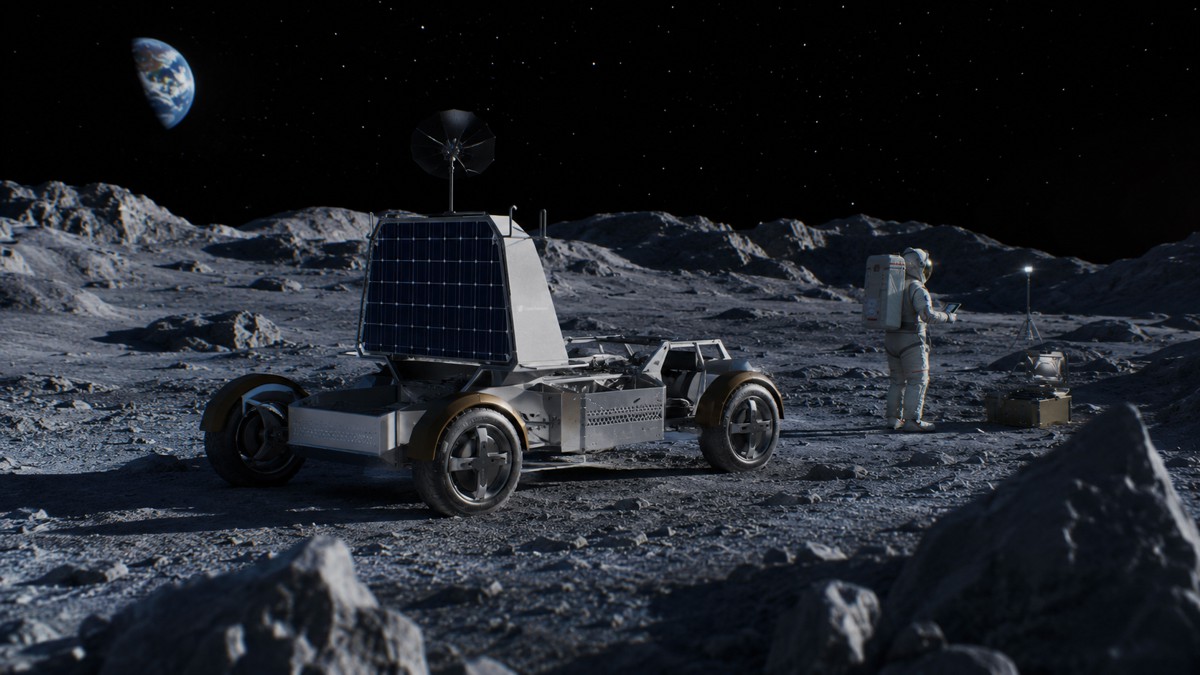
AEye’s Apollo long-range lidar is heading for the Moon. Lunar Outpost has selected the solid-state sensor for Pegasus, the Lunar Terrain Vehicle being developed to carry Artemis astronauts across the Moon’s South Pole region.
The multi-million-dollar agreement puts Apollo aboard a vehicle programme for which NASA awarded Lunar Outpost $220 million in May 2026. The lidar will support terrain perception, obstacle detection and autonomous navigation as Pegasus moves across an environment where equipment must contend with vacuum, severe temperature variation, vibration and tight constraints on mass, volume and power.
Pegasus is also intended to work when astronauts are not sitting in it. NASA describes the new generation of Lunar Terrain Vehicles as combining crewed transport with autonomous and remotely operated capability. A perception system therefore becomes part of the vehicle’s working architecture rather than simply an aid to its human driver.
Briefing
- Lunar Outpost has selected AEye’s Apollo solid-state long-range lidar for its Pegasus Lunar Terrain Vehicle.
- AEye describes the agreement as a multi-million-dollar contract and its first commercial move into space mobility.
- Apollo will support terrain perception, obstacle detection and autonomous navigation aboard Pegasus.
- NASA awarded Lunar Outpost $220 million in May 2026 to build and deliver the first phase of Pegasus, with lunar deployment planned for 2028.
- Pegasus is being designed for crewed, autonomous and teleoperated operation at the lunar South Pole.
Perception Beyond the Road
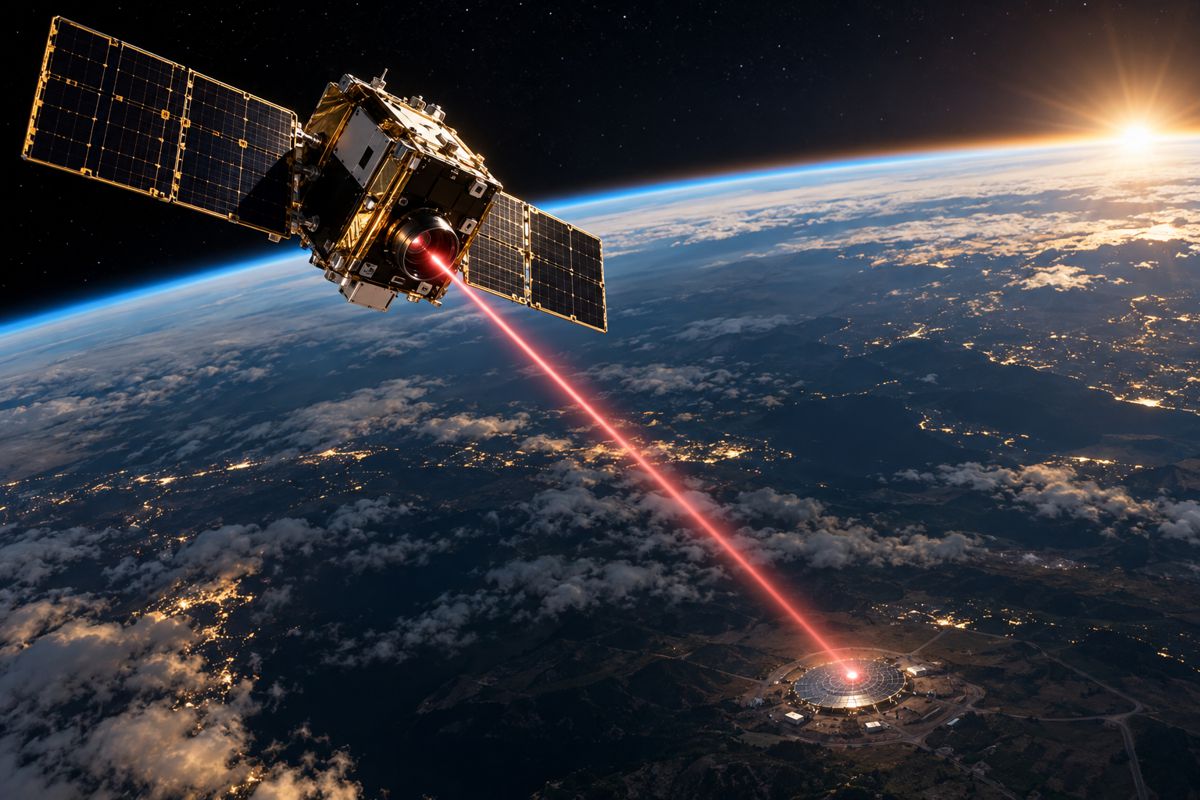
Apollo comes from a technology family developed around a familiar terrestrial problem: allowing machines to build an accurate picture of their surroundings quickly enough to act upon it. AEye’s approach is software-defined, allowing aspects of the lidar’s scanning behaviour and performance to be configured through software rather than relying entirely upon a fixed scanning architecture.
On Pegasus, Lunar Outpost says Apollo will contribute to terrain perception, obstacle detection and autonomous navigation. Its solid-state construction was selected partly for the ruggedness required to operate without the possibility of field repair, while the sensor’s compact form reduces demands on a rover whose components ultimately have to be transported from Earth and landed on the lunar surface.
AEye says Apollo can detect objects at distances of up to one kilometre in terrestrial applications. That headline range should not be read as its eventual operational detection range on Pegasus, which has not been specified by the companies. Lunar performance will depend on the vehicle configuration, target characteristics, operating conditions and the way the sensor is integrated and tuned.
Software-configurable scanning could also allow the sensor to be adapted to different vehicle operations. A crewed traverse, remote scientific work and autonomous relocation do not necessarily place identical demands on a perception system.
AEye chairman and chief executive Matt Fisch said the software-defined architecture had allowed Apollo’s performance to be tuned for the mission: “Apollo’s™ software-defined architecture enabled us to tune its performance for exactly what this mission required, with the same adaptability and durability we have proven in defense, now validated in the harshest environment there is.”
Public information accompanying the announcement does not provide qualification data, test regimes or detailed performance specifications for the lunar version of Apollo, so the engineering evidence behind that assertion cannot yet be independently assessed.
Pegasus and NASA’s Lunar Mobility Programme
NASA initially selected Lunar Outpost, Intuitive Machines and Venturi Astrolab in April 2024 under its Lunar Terrain Vehicle Services programme. The original indefinite-delivery/indefinite-quantity contract had a combined maximum potential value of $4.6 billion across the awards, with the companies beginning work through feasibility studies and preliminary design development.
NASA subsequently tested the three companies’ rover concepts at Johnson Space Center, including work using the Active Response Gravity Offload System to reproduce aspects of the Moon’s one-sixth gravity environment.
Pegasus has now moved from competitive development into a funded vehicle programme. In May 2026, NASA awarded Astrolab $219 million and Lunar Outpost $220 million to build and deliver the first phase of their respective LTVs. The firm-fixed-price, performance-based task orders are intended to put crewed and uncrewed mobility systems onto the lunar surface by 2028, with Blue Origin separately selected to provide delivery services.
Lunar Outpost describes Pegasus as an evolution of its earlier Eagle rover programme. NASA says the vehicle is designed to operate for up to a year and exceed 9 mph, with manual, autonomous and teleoperated driving modes. Lunar Outpost is targeting delivery of the rover to NASA in November 2027 ahead of its planned 2028 launch.
NASA wants LTVs capable of carrying two suited astronauts and cargo between locations, but the vehicles are also expected to operate without a crew. Autonomous and teleoperated operation would allow mobility assets already sitting on the Moon to undertake work between human missions rather than remaining parked until the next astronauts arrive.
Lunar Outpost chief strategy officer Forrest Meyen said: “As Lunar Outpost works to establish a sustained human presence at the Moon’s South Pole, we need partners who can scale with us. Apollo™ gives Pegasus enhanced perception to traverse safely, perform advanced autonomous operations, and begin building NASA’s Moon Base.”
Operating Between Crewed Missions
NASA’s current Moon Base architecture envisages the lunar South Pole being developed progressively through robotic and human missions. Surface vehicles are expected to contribute beyond astronaut transportation, with future mobility capabilities potentially supporting logistics, robotic manipulation, regolith handling, site preparation and the deployment of infrastructure such as power cables.
NASA already describes LTVs as platforms capable of remote science during periods without crews. The vehicles can transport payloads and logistics, support scientific activity and gather imagery as well as carrying astronauts.
A rover operating this way begins to resemble autonomous industrial equipment more than the Lunar Roving Vehicles left behind by Apollo 15, 16 and 17.
Safe autonomous navigation depends upon more than lidar. Perception, localisation, computing, control and the underlying vehicle architecture all contribute, and neither AEye nor Lunar Outpost has publicly detailed the complete Pegasus autonomy stack in this announcement.
Apollo nevertheless provides an example of technology developed for terrestrial autonomous systems moving into lunar machinery as commercial Moon programmes progress from concepts towards operating hardware.
A New Supply Chain for Lunar Machinery
NASA’s procurement model is helping establish a commercial market around those vehicles.
Rather than designing, owning and operating a single government rover in the Apollo tradition, NASA intends to purchase Lunar Terrain Vehicle capability as a commercial service. The vehicles are commercially owned and developed, allowing providers potentially to use them for other customers and activities when they are not required for NASA missions.
That model opens the programme to technologies developed well beyond traditional spacecraft manufacturing. AEye is entering space through a lidar architecture whose other applications include automotive systems, defence, smart infrastructure, security and logistics. Similar crossover opportunities exist wherever lunar machines require perception, computing, control, communications, power or autonomous operation.
The Apollo agreement is an identifiable component contract attached to a funded rover programme. NASA has already committed $220 million to Lunar Outpost’s current LTV task order, and Pegasus has a defined development and deployment schedule.
The scale of the eventual market is harder to judge. AEye describes lunar rovers as a fast-growing segment of the space economy, but the announcement does not provide independent evidence for the size or trajectory of that market. Near-term demand remains heavily influenced by government exploration programmes and a relatively small number of lunar missions.
Long-duration activity around the lunar South Pole will require vehicles, excavation and material-handling equipment, power systems, communications, navigation, autonomous control and sensors capable of reading unfamiliar terrain. Some will be purpose-built for space; other technologies will arrive from industries that have already spent years solving related problems on Earth.
Apollo is one of the first examples. A lidar architecture developed for terrestrial autonomous systems is now being integrated into a $220 million NASA-backed lunar vehicle programme. As exploration gives way to sustained operations, the emerging lunar infrastructure supply chain may contain considerably more familiar industrial technology than the spacecraft carrying it there would suggest.
Key Industry Questions
- What is the Pegasus Lunar Terrain Vehicle? Pegasus is Lunar Outpost’s crewed lunar rover being developed for NASA’s Lunar Terrain Vehicle programme. It is designed to transport astronauts and cargo and to operate manually, autonomously or by teleoperation.
- When is Pegasus expected to reach the Moon? NASA plans deployment of the first phase of the Lunar Outpost and Astrolab vehicles in 2028. Lunar Outpost says it is working towards delivery of Pegasus to NASA in November 2027 ahead of launch.
- How much has NASA awarded Lunar Outpost for Pegasus? NASA announced a $220 million firm-fixed-price, performance-based task order for Lunar Outpost in May 2026.
- What will AEye’s Apollo lidar do aboard Pegasus? Lunar Outpost intends to use Apollo for functions including terrain perception, obstacle detection and autonomous navigation.
- Why use lidar on a lunar rover? Lidar can provide three-dimensional ranging information that contributes to a vehicle’s perception of surrounding terrain and obstacles. Its data would form part of a wider navigation and autonomy system rather than operating independently.
- Is Pegasus purely an astronaut-driven vehicle? No. NASA and Lunar Outpost describe it as capable of crewed, autonomous and teleoperated operation, allowing the rover to perform tasks during periods when astronauts are not aboard.
- How fast will Pegasus travel? NASA says Pegasus is designed to travel at more than 9 mph. Actual operational speeds will depend on terrain, mission requirements and vehicle operating mode.
- Is NASA buying the lunar rovers? NASA’s broader LTV strategy is based on acquiring mobility as a commercial service rather than following the traditional model of government ownership of the vehicle.
- Why is autonomous operation useful between Artemis missions? It allows a rover already deployed on the lunar surface to support scientific, logistical and other activities when astronauts are absent, increasing the potential utilisation of an expensive surface asset.
Strategic Takeaways
- Lunar mobility is developing into an industrial supply chain in which specialist space companies can draw components and expertise from terrestrial autonomy, automotive and industrial technology markets.
- Pegasus is being designed as a working surface asset as well as astronaut transport, making autonomous and teleoperated capability important to its utilisation between crewed missions.
- Software-configurable sensing could provide flexibility where one machine must support crewed traverses, remote operations and autonomous movements under different mission requirements.
- NASA’s commercial-service procurement model creates opportunities beyond traditional aerospace primes because commercially developed vehicles require sensors, computing, controls, power systems and other specialist components.
- Government programmes still underpin lunar mobility demand, making funded missions and procurement decisions more useful indicators of the emerging market than broad forecasts of the lunar economy.