ASTM Moves Standards Upstream as Emerging Technologies Converge
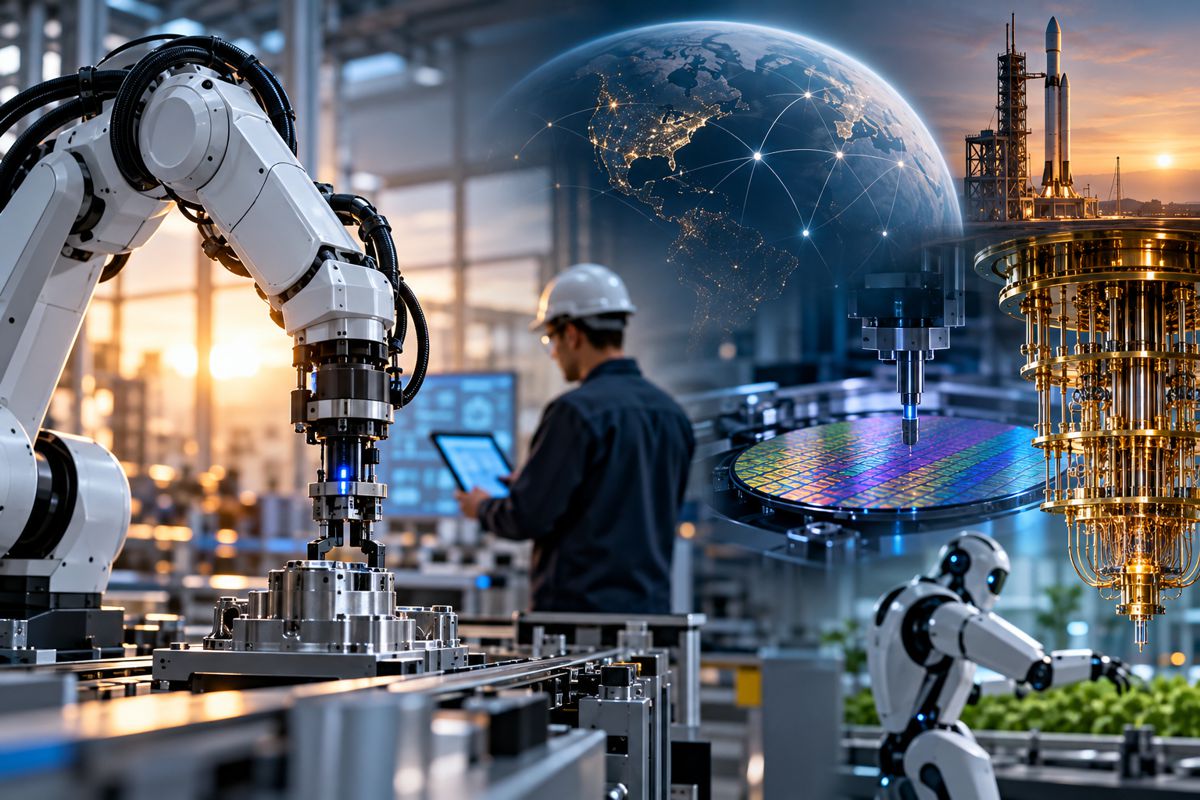
ASTM International has reorganised its emerging technology work around a much broader remit, replacing its Advanced Manufacturing Division with a Critical and Emerging Technologies Division covering fields ranging from artificial intelligence and robotics to quantum technology, semiconductors, biotechnology and commercial space.
ASTM is extending an approach developed through advanced manufacturing into technologies where standards increasingly need to be considered before products, interfaces and industrial practices become entrenched. The new division is already active across approximately 10 ASTM committees and works internationally across roughly 25 countries, with a role extending beyond conventional standards development into technology roadmaps, market intelligence, pre-standardisation work, training and certification.
Briefing
- ASTM International has launched a Critical and Emerging Technologies Division, replacing its former Advanced Manufacturing Division.
- The division is active across approximately 10 ASTM committees and cooperates across roughly 25 countries.
- Its portfolio includes advanced manufacturing, robotics, drones, commercial space, AI, semiconductors, quantum technologies and biotechnology.
- ASTM leads ASCET, a NIST-backed centre established to strengthen standardisation activity around critical and emerging technologies.
- Committee F50, ASTM’s new technical committee on Artificial Intelligence in Manufacturing Systems, is developing standards specifically for industrial AI.
Standardising Technologies Earlier
Standards organisations have traditionally worked most visibly where an industry already has reasonably mature products, processes and terminology. Emerging technologies present a more awkward problem. Definitions can still be disputed, performance measures may not have settled, interfaces continue to evolve and competing technical approaches can develop simultaneously.
Rather than relying on national lists of technologies regarded as strategically important, which vary between governments and change over time, ASTM says it will concentrate on the points where technologies intersect. AI increasingly operates inside manufacturing equipment and robotic systems, for example, while semiconductor technology, communications, cybersecurity and energy infrastructure underpin many of the same systems.
ASTM President Andy Kireta described the division as an extension of work already undertaken in advanced manufacturing.
“The launch of this division reflects where ASTM is heading as an organization, from developing standards to delivering standards solutions across the technologies reshaping the global economy,” says ASTM International President, Andy Kireta. “We have proven this model in advanced manufacturing, where our community built a globally adopted framework jointly with international partners, and through Centers of Excellence that embed standards early in the research process. The CET Division scales that approach in partnership with industry, government, academia, and standards bodies around the world.”
A laboratory result does not necessarily translate into a repeatable manufacturing process, while a successful prototype does not automatically provide the measurement methods, terminology, interoperability or quality assurance needed for production across multiple suppliers and countries.
From Research to Industrial Scale
ASTM’s advanced manufacturing work provides the model for the new division. Additive manufacturing in particular has required manufacturers, researchers, equipment suppliers and standards organisations to establish common approaches while the underlying processes themselves continued to develop. The same problem is appearing elsewhere, often with technologies that interact much more closely with software and data.
“A technology is industrialized and at scale when the quality holds, the results repeat, and it performs the same way globally,” says Mohsen Seifi, Ph.D., vice president of the Critical and Emerging Technologies Division at ASTM International. “That is the bar. We reach it faster by engaging early, shaping standards while the technology is still taking form, and carrying the work through to training and certification with partners across industry, government, and academia worldwide.”
An individual system can perform impressively without an industry necessarily having agreed methods for measuring that performance or comparing it with another system. Quantum technology offers one example. Work undertaken through ASTM’s Advancing Standardization for Critical and Emerging Technologies, or ASCET, programme has identified gaps around basic definitions and performance benchmarks as well as difficulties developing a sufficiently experienced standards workforce.
The findings followed a November 2025 workshop involving the quantum technology community. It was one of the first technology-specific exercises undertaken through ASCET, identifying where common definitions and measurements are missing before formal standards are attempted.
A NIST-Backed Standards Programme
In October 2024, the US National Institute of Standards and Technology awarded ASTM International $15 million to establish a Standardization Center of Excellence for critical and emerging technologies. The programme subsequently became ASCET, Advancing Standardization for Critical and Emerging Technologies.
Its remit includes pre-standardisation engagement, workforce development, pilot programmes and an information-sharing hub. It is also intended to increase participation by smaller businesses and other groups that can struggle to devote personnel and resources to lengthy international standards processes.
The centre held its first major workshop in May 2025, bringing together nearly 200 representatives from industry, government, academia and standards development organisations. Its initial technology priorities include artificial intelligence, quantum technologies, semiconductors and microelectronics, and biotechnology.
For emerging industries, timing can be difficult. Standardise too early and immature technical assumptions risk becoming embedded. Arrive too late and proprietary interfaces, incompatible terminology and competing measurement systems may already have spread through the market. Pre-standardisation offers an intermediate stage in which participants can identify terminology, measurement problems, test methods and interoperability requirements without necessarily fixing the technical architecture of an industry before it is ready.
Artificial Intelligence Enters the Factory
ASTM established Technical Committee F50 on Artificial Intelligence in Manufacturing Systems during 2026, concentrating on applications where AI interacts with manufacturing equipment, software, data and human decision-making.
The committee is expected to develop standards covering terminology and taxonomy, data and models, system integration, interoperability, performance benchmarking, governance, cybersecurity, testing and workforce considerations. General AI standardisation encompasses an enormous range of applications, whereas manufacturing introduces specific questions about repeatability, equipment behaviour, production quality, data integrity and the interaction between automated decisions and physical processes.
F50 explicitly excludes AI applications outside manufacturing and general information technology standards unrelated to manufacturing use cases. ASTM also intends the committee to work with other committees and standards organisations where responsibilities overlap.
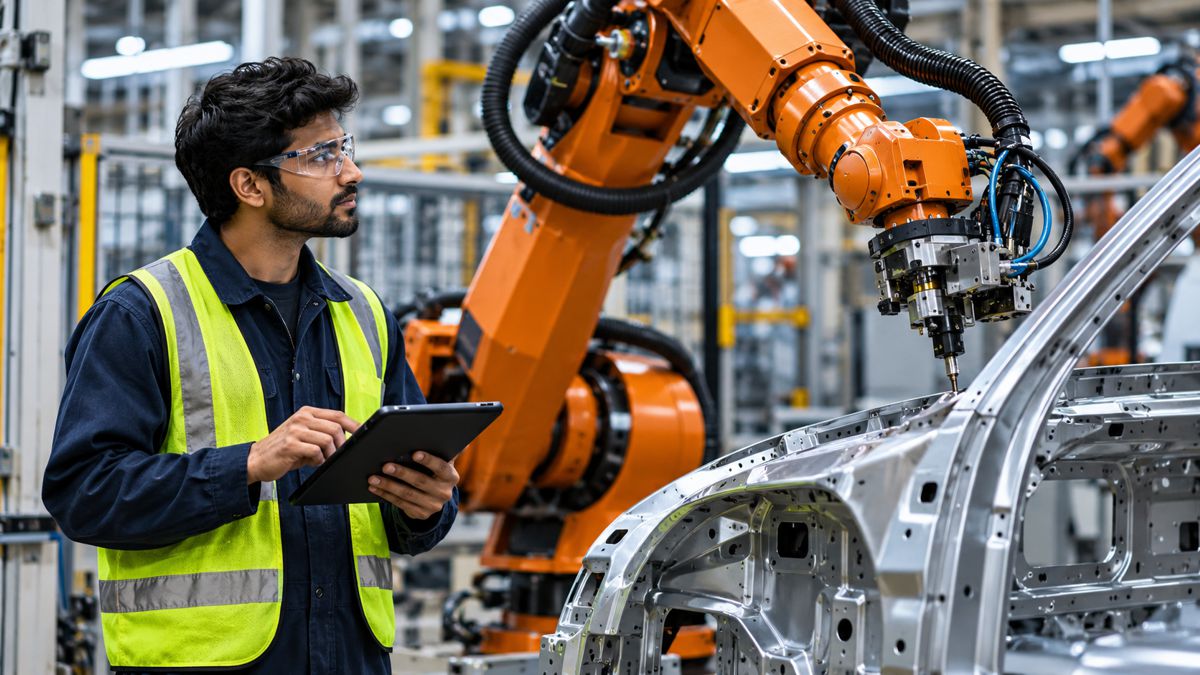
An intelligent manufacturing cell can simultaneously involve robotics, machine vision, AI models, industrial communications, cybersecurity, safety systems and quality control. Treating each technology as an isolated standards problem becomes increasingly artificial once they operate together on the factory floor.
A Broader Technology Portfolio
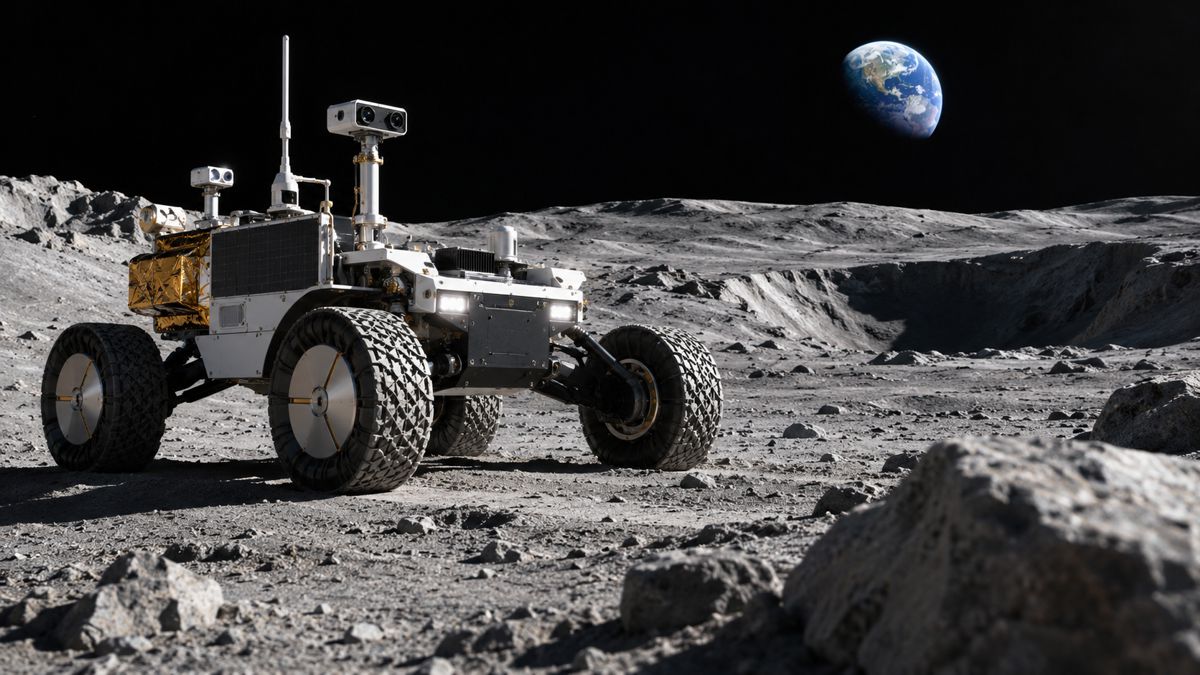
The technologies within ASTM’s expanded remit are at markedly different stages of standardisation. Robotics, exoskeletons and commercial space already have dedicated committee activity, while unmanned aircraft systems are supported by an established body of standards. Semiconductors, quantum technology and biotechnology remain more heavily concentrated in pre-standardisation work through ASCET. Artificial intelligence occupies both areas, with broader exploratory work taking place through ASCET while manufacturing applications move into formal committee activity through F50.
ASTM is also examining how emerging technologies affect established industrial systems. One current work item within Committee F49 is developing a classification framework for evaluating critical emerging technologies within digital supply chains. The proposed approach considers characteristics including maturity, scalability, interoperability and regulatory alignment.
The practical standards problem is therefore often less about whether a technology appears on a government list than whether industries are beginning to encounter common problems of measurement, terminology, interoperability or repeatability.
Standards at the Point of Convergence
Standards have become part of industrial technology policy as governments consider how AI, quantum computing, biotechnology, semiconductors and other strategic technologies will move into commercial use. The United States Government’s Critical and Emerging Technologies List, updated in 2024, stretches across fields including AI, biotechnology, clean energy, cybersecurity, advanced computing, semiconductors, quantum information technologies and space systems.
ASTM’s approach is increasingly centred on the intersections between them. Formal specifications and test methods remain the eventual output in many cases, but roadmapping, research coordination, training and identifying gaps can begin years earlier.
The test will be whether that early involvement produces standards quickly enough to remain useful without attempting to freeze technologies that are still developing. ASTM’s advanced manufacturing programme offers one route through the problem: establish common language, measurement and repeatability where agreement is possible, then allow the standards framework to develop alongside the technology.
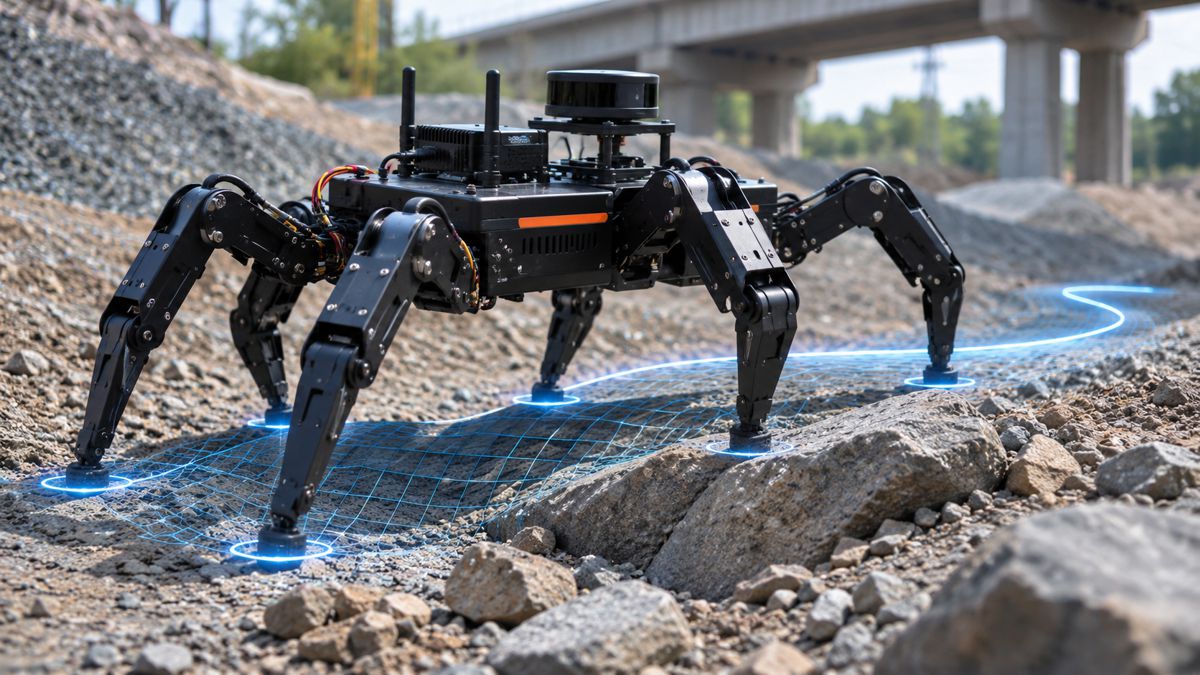
AI systems controlling industrial equipment, autonomous machines working alongside people, commercial spacecraft, quantum devices and semiconductor supply chains present very different engineering problems. They share one fundamental industrial requirement: technologies eventually have to perform predictably outside the organisation that invented them.
That is where emerging technology becomes engineering at scale.
Key Industry Questions
- What is ASTM International’s Critical and Emerging Technologies Division? It is the successor to ASTM’s Advanced Manufacturing Division and coordinates work around technologies including advanced manufacturing, AI, robotics, unmanned systems, commercial space, semiconductors, quantum technology and biotechnology.
- Why has ASTM expanded beyond advanced manufacturing? Many emerging technologies increasingly operate together rather than independently. The expanded structure allows ASTM to address standardisation problems where fields such as AI, robotics, semiconductors and manufacturing intersect.
- What is pre-standardisation? Pre-standardisation covers work undertaken before a formal standard is ready to be developed. It can include identifying technical gaps, establishing terminology, developing roadmaps, assessing measurement requirements and convening relevant industries and researchers.
- What is ASCET? ASCET stands for Advancing Standardization for Critical and Emerging Technologies. ASTM leads the centre under a cooperative agreement with the US National Institute of Standards and Technology.
- How much funding did NIST provide for the programme? NIST announced a $15 million award to ASTM International in October 2024 to establish the Standardization Center of Excellence for critical and emerging technologies.
- What does ASTM Committee F50 cover? F50 develops standards for artificial intelligence used specifically within manufacturing systems. Its scope includes data and models, interoperability, performance benchmarking, governance, cybersecurity, testing and terminology.
- Does F50 develop general AI standards? No. Its formal scope excludes AI applications outside manufacturing and general information technology standards that are not specific to manufacturing.
- Why are standards relevant before a technology becomes mature? Early work can establish common terminology, measurement methods, benchmarks and interoperability approaches before incompatible practices become widely embedded. Formal standards still need to avoid fixing immature technical approaches prematurely.
- Which emerging technologies is ASTM currently addressing? The portfolio includes advanced manufacturing, AI, robotics, exoskeletons, drones and unmanned systems, commercial space, semiconductors, quantum technology and biotechnology, with different technologies at different stages of standardisation.
Strategic Takeaways
- ASTM is expanding a standards-development model established in advanced manufacturing into a considerably wider group of emerging technologies.
- Pre-standardisation allows measurement, terminology and interoperability problems to be addressed before formal standards are practical.
- AI in manufacturing is moving from exploratory standardisation into formal standards development through Committee F50.
- Technology convergence complicates traditional committee boundaries as AI, robotics, software, semiconductors, cybersecurity and physical machinery increasingly operate as integrated systems.
- Industrial scale depends on more than technical performance. Repeatability, measurement, interoperability and quality across different organisations and markets remain fundamental requirements.