Cincoze Introduces Modular Power Protection for Industrial Edge Computers
Industrial computers operating alongside motors, switching equipment and heavy electrical machinery face a persistent reliability problem: electromagnetic interference entering through their power connections. Taiwanese rugged computing manufacturer Cincoze has introduced an external Power Protection Module (PPM) designed to improve immunity to electrical disturbances without requiring customers to replace their existing industrial computers.
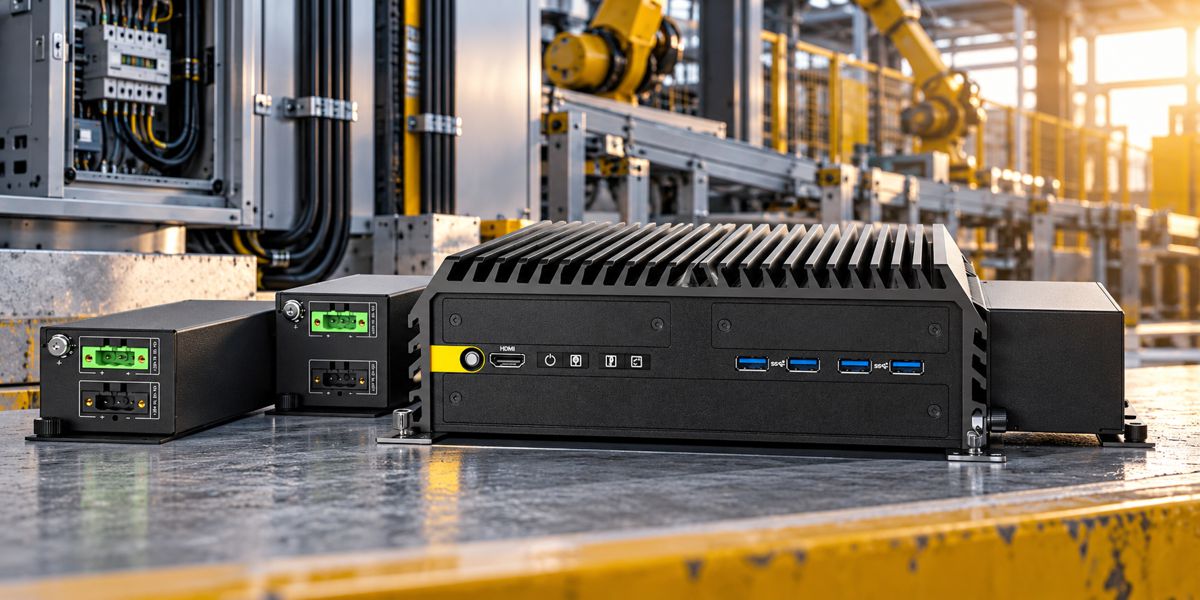
The new product family comprises two models, the 180W PPM-I180 and 360W PPM-I360, which connect to compatible Cincoze systems to provide additional protection against electrical fast transients. Rather than incorporating all electromagnetic compatibility (EMC) protection within the computer itself, the company has adopted an external modular architecture that allows protection to be specified during initial deployment or added later when operating conditions demand it.
Electrical interference can disrupt communications, produce erratic signals or cause unexpected system restarts. In automated production environments, these interruptions can affect machinery and processes that depend on continuous computing operations.
Briefing
- Cincoze has introduced two external Power Protection Modules, rated at 180W and 360W.
- The modules improve immunity to electrical fast transient interference entering through power connections.
- A slide-rail mounting arrangement allows compatible industrial computers to be upgraded without replacement.
- The PPM-I180 supports selected DA, DC and DI series computers, while the PPM-I360 targets higher-performance DV, DX, DS and GM series systems.
- Cincoze references EN/IEC 61000-6-2 and 61000-6-4 requirements, with published EFT test levels available for certain computer configurations.
Electrical Interference in Industrial Computing
Electrical fast transients, commonly abbreviated to EFT, are short-duration voltage disturbances associated with switching activity in electrical circuits. They can arise when relays, contactors and other switching devices interrupt current, particularly where inductive loads such as motors are involved.
Although individual disturbances may be extremely brief, they can occur in rapid bursts and propagate through power distribution and control wiring. Industrial computers are designed to tolerate demanding electrical conditions, but their immunity depends on the severity of the disturbance and the protection incorporated into the installation.
Depending on the equipment design and the disturbance, interference can affect communication interfaces, trigger processor or peripheral faults, or interrupt normal operation. In automated production environments, an unexpected computer restart may require more than simply waiting for the operating system to recover. Connected machinery, software services and control sequences may also need to be restored before normal production resumes.
EFT immunity is addressed by IEC 61000-4-4, which establishes a standardised method for applying repetitive fast transient disturbances during electromagnetic compatibility testing. The test evaluates how electrical and electronic equipment performs when exposed to disturbances representative of switching events encountered in service.
Cincoze’s Power Protection Module provides an additional protective stage at the computer’s power input, intended to reduce the likelihood that conducted transient disturbances will affect the connected system.
External Protection and System Integration
Industrial computer manufacturers typically address EMC requirements through combinations of circuit design, filtering, shielding, grounding and power-input protection. These measures are generally incorporated into equipment during development, with performance assessed under defined test conditions.
Cincoze has chosen to supplement its existing computer designs with an external module that can be selected independently of the main computing hardware. A computer installed in a relatively controlled electrical cabinet may have different protection requirements from an otherwise identical system mounted close to motors, switching assemblies or production machinery.
The external arrangement allows equipment builders to maintain a common computing platform across different installations, adding protection where electrical conditions require it. Existing compatible systems can also be upgraded without changing their processor, memory, storage or communication architecture.
The company has incorporated a slide-rail mounting arrangement intended to simplify mechanical installation and connection. This may be useful for equipment builders and system integrators maintaining standardised computing platforms across several machine types or production facilities.
EMC performance nevertheless depends on the complete installation. Cable routing, grounding, shielding, power distribution and connected equipment all influence how electrical disturbances reach sensitive electronics. An external protective module does not eliminate the need for appropriate electrical design or system-level assessment.
Two Models for Different Computing Loads
The initial PPM range is divided according to the power requirements and performance classes of compatible Cincoze computers.
The PPM-I180 provides a 180W rating and is intended for selected DA, DC and DI series rugged embedded computers. These product families cover entry-level and mid-range industrial computing applications where power requirements are generally lower than those of high-performance processing platforms.
The PPM-I360 has a 360W rating and is designed for selected DV, DX and DS series rugged embedded computers, together with the GM series of MXM GPU-equipped systems. These higher-performance platforms support more demanding processing configurations, including applications requiring dedicated graphics or accelerated computing hardware.
The ratings describe the power capacity of the modules rather than their relative effectiveness at suppressing electrical interference. A 360W module is intended to accommodate a greater electrical load, but that does not establish superior transient immunity compared with the 180W version.
Actual compatibility must be assessed against the computer model, its configuration and power requirements. The manufacturer’s launch announcement does not provide a complete set of electrical specifications, including input voltage ranges, insertion losses or comparative transient attenuation performance.
GPU-equipped industrial computers are used for local image processing, machine vision and automated inspection, where interruptions can affect the availability of real-time data and associated applications. Their inclusion in the PPM range extends the external protection approach to more computationally demanding edge systems.
EMC Standards and Compliance
Cincoze identifies EN/IEC 61000-6-2 and EN/IEC 61000-6-4 as relevant industrial electromagnetic compatibility standards for its new protection modules.
IEC 61000-6-2 establishes generic immunity requirements for electrical and electronic equipment intended for industrial environments. It addresses several forms of electromagnetic disturbance, including conducted and radiated interference, electrostatic discharge and transient events.
IEC 61000-6-4 addresses electromagnetic emissions from equipment used in industrial environments. Immunity standards assess an equipment’s ability to tolerate external disturbances, whereas emissions requirements concern the electromagnetic interference that equipment itself produces.
The specific EFT immunity test method is defined by IEC 61000-4-4. Cincoze’s published technical specifications for certain DS-series configurations fitted with the optional PPM identify EFT test levels of 2 kV for AC power, 1 kV for DC power and 2 kV for signal connections.
These figures relate to the specified computer configurations and should not be interpreted as universal performance ratings for every PPM installation. The manufacturer’s announcement does not provide comprehensive comparative test results across the complete range of compatible systems.
EMC performance must also be considered at the level of the installed system. A computer and external protection module may perform satisfactorily under defined laboratory conditions, but cable lengths, grounding arrangements, connected peripherals and adjacent electrical equipment can introduce additional variables.
For machinery manufacturers supplying equipment into regulated markets, these considerations form part of the wider electrical and electromagnetic compatibility assessment of the finished product. Compliance of an individual component does not automatically establish compliance of the complete machine or installation.
Industrial Applications and Further Development
Industrial edge computers are frequently installed in control cabinets, machine enclosures and distributed monitoring stations. They may collect information from sensors and programmable logic controllers, operate supervisory applications or process data locally before transmitting selected information to central systems.
In these installations, electrical noise can enter through shared power infrastructure even when the computing equipment is physically separated from the machinery producing the disturbance. Protection at the computer’s power input provides one means of managing that exposure alongside appropriate wiring, grounding and electrical design.
Cincoze’s broader computing portfolio serves manufacturing, transport, energy, marine and other demanding operating environments. The new modules are initially positioned for smart manufacturing and industrial automation, where switching equipment, motor drives and distributed control systems can create challenging electromagnetic conditions.
The commercial value of the external arrangement will depend on module pricing, compatibility with existing installations and measurable improvements in immunity under representative operating conditions. Cincoze has not disclosed pricing or availability details in its launch announcement.
The company intends to expand the PPM family to address the EMC requirements of additional industrial sectors, although it has not identified future models or announced a development timetable. The initial modules concentrate on electrical fast transient immunity, with their suitability for individual installations determined by computer compatibility, electrical conditions and the performance of the complete system.
Key Industry Questions
- What is the Cincoze Power Protection Module? The PPM is an external electrical protection accessory designed to improve the immunity of compatible Cincoze industrial computers to electrical fast transient interference entering through their power connections.
- What causes electrical fast transients in industrial environments? Switching operations involving relays, contactors and inductive loads can generate short voltage disturbances that propagate through electrical wiring and interfere with connected equipment.
- What is the difference between the PPM-I180 and PPM-I360? The PPM-I180 is rated at 180W and supports selected lower-power Cincoze computers. The PPM-I360 is rated at 360W and supports higher-performance embedded and GPU-equipped systems. The ratings refer to power capacity, not comparative EMC protection performance.
- Can the modules be fitted to existing computers? Yes. Cincoze designed the modules for installation with compatible existing systems. Compatibility depends on the specific computer model and configuration.
- Which Cincoze computers are compatible? The manufacturer’s product catalogue identifies the DA-1100, DC-1200 and DI-1100 for the PPM-I180. The PPM-I360 supports selected DS and DX series systems, the DV-1000 and GM series. Exact model compatibility should be confirmed against the manufacturer’s current documentation.
- Which EMC standard specifically addresses electrical fast transients? IEC 61000-4-4 defines the EFT immunity test method. IEC 61000-6-2 establishes broader generic industrial immunity requirements, while IEC 61000-6-4 addresses industrial electromagnetic emissions.
- Can the modules protect industrial computers from all forms of electrical interference? No. The published product information specifically identifies improved electrical fast transient immunity. Protection against other disturbances must be assessed against the computer’s complete EMC specifications and applicable test requirements.
- Does installing a PPM guarantee EMC compliance? No. Compliance depends on the applicable requirements, equipment configuration and test results. A complete installation may require additional assessment.
Strategic Takeaways
- External EMC protection allows equipment manufacturers to standardise computing platforms while accommodating different electrical operating environments.
- Retrofittable protection offers an alternative to replacing compatible industrial computers when additional EFT immunity is required.
- The 180W and 360W ratings accommodate different computing loads and do not establish comparative levels of electromagnetic protection.
- System-level EMC performance remains dependent on grounding, wiring, connected equipment and installation conditions.
- Published immunity test levels provide a useful starting point, but equipment manufacturers still need configuration-specific evidence when assessing demanding applications.