






Reinventing the Motor Car: Bringing Back Style, Innovation and Competition
In 1959, Alec Issigonis produced a car barely three metres long that could accommodate four people and their luggage. The original Mini was an extraordinary piece of packaging, combining a transverse engine, front-wheel drive and a remarkably spacious interior within dimensions that would seem almost impossibly small by modern standards.
More than six decades later, the three-door MINI Cooper has grown to nearly 3.9 metres, while the Countryman has become a fully fledged family SUV. Modern cars are safer, more comfortable and considerably more sophisticated, but the industry that once produced such wonderfully unconventional vehicles has increasingly settled on familiar proportions, shared platforms and remarkably similar body styles.
Electric propulsion should have opened another chapter in automotive creativity. Without conventional engines, gearboxes, exhaust systems and transmission tunnels dictating so much of a vehicle’s architecture, designers have greater freedom to explore different shapes and layouts. Yet many electric cars continue to resemble the petrol and diesel vehicles they are replacing, with the same emphasis on crossovers, SUVs and increasingly elaborate passenger accommodation.
The real opportunity may lie beyond the vehicles themselves. Modular electric platforms, advanced manufacturing and digital engineering could make it possible to separate the expensive mechanical foundations of a car from the design of its body, allowing independent manufacturers, specialist workshops and small engineering businesses to participate in an industry that has become extraordinarily difficult to enter.
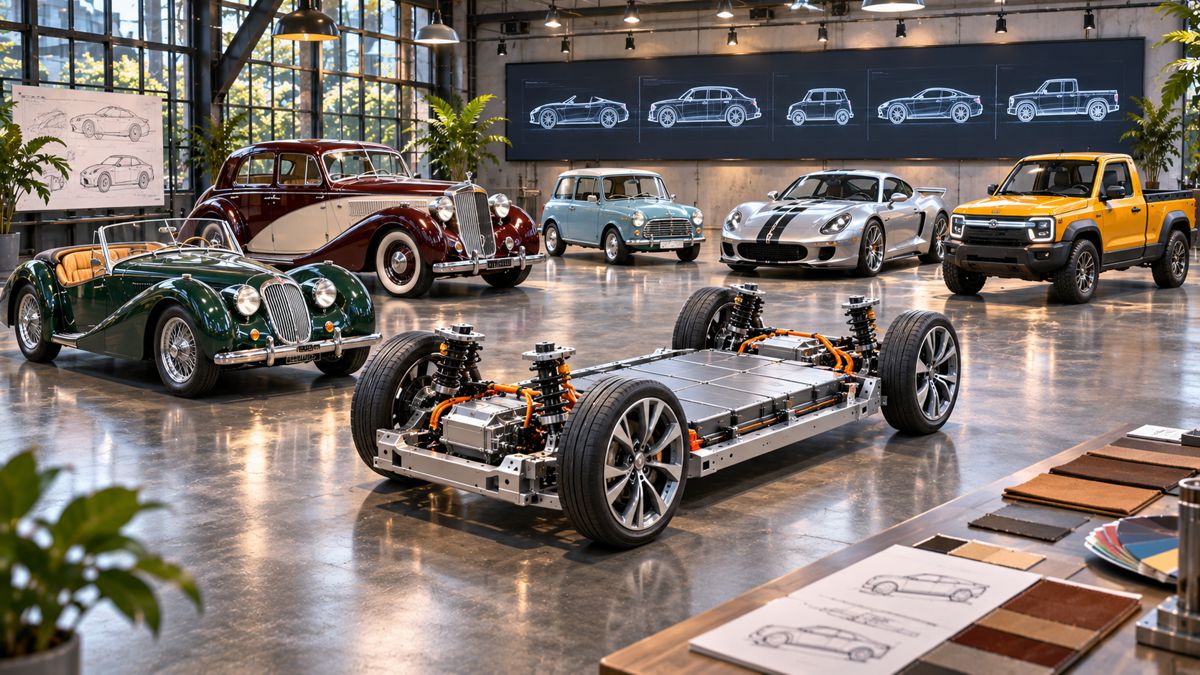
A future motorist might purchase a standardised electric chassis and commission an entirely different vehicle around it. A 1940s-style roadster, an elegant coachbuilt saloon, a lightweight sports car or a practical working pickup could emerge from the same family of engineered platforms, giving designers the freedom to concentrate on style, character and purpose.
Such a manufacturing system would require substantial engineering discipline and new commercial arrangements, but the underlying technologies are already being developed. The possibility is an automotive industry with greater competition, more specialised manufacturers and a far richer variety of vehicles on the road.
Briefing
- The original Mini measured approximately 3.05 metres, with its innovative packaging devoting around 80% of its footprint to passengers and luggage.
- Modular electric platforms could allow independent manufacturers to develop different vehicles around common engineering systems.
- Historical coachbuilding demonstrates how specialist body manufacturers once worked alongside established chassis suppliers.
- REE Automotive, SEGULA Technologies and Olympian Motors are exploring modular vehicle architectures, although commercial challenges remain.
- Advanced manufacturing, shared technical standards and small-series vehicle approval could help more businesses enter automotive production.
When Car Design Was an Adventure
The history of motoring is filled with extraordinary vehicles that emerged because engineers and designers were prepared to challenge established thinking.
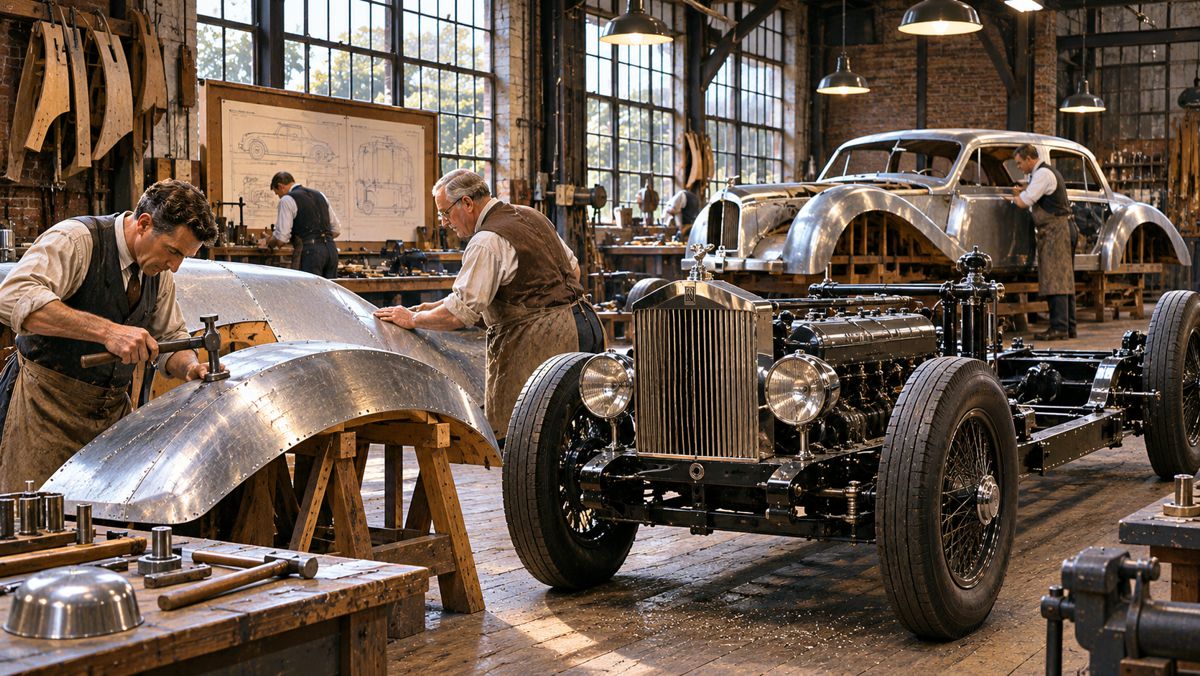
The sweeping wings of a 1930s Delahaye, the elegance of an early Rolls-Royce, the curves of a Jaguar XK120 and the compact ingenuity of the original Mini represented very different interpretations of personal transport. Some were extravagant expressions of craftsmanship, while others emerged from practical attempts to make cars smaller, lighter or more economical.
Innovation extended well beyond appearance. Manufacturers experimented with rear-mounted engines, front-wheel drive, unconventional suspension systems, lightweight structures and unusual seating arrangements. The results were not always commercially successful, but the willingness to explore different approaches helped establish many of the engineering principles still used today.
The original Mini remains a particularly compelling example. Developed following the Suez Crisis and concerns about fuel availability, the car was designed to provide economical transport without sacrificing passenger accommodation. Issigonis arranged the mechanical components around the occupants rather than allowing traditional engineering conventions to determine the vehicle’s proportions.
According to BMW Group’s history of the Mini, approximately 80% of the original car’s footprint was devoted to passengers and luggage. Its 3.05-metre overall length and unusually efficient layout demonstrated how much could be achieved by reconsidering familiar mechanical arrangements.
Modern automotive engineering has delivered enormous improvements in safety, refinement, efficiency and reliability. Nevertheless, the financial and regulatory demands of producing new vehicles have gradually changed the environment in which unconventional ideas can reach customers.
The industry continues to innovate extensively beneath the bodywork, particularly in batteries, software, electronics and driver assistance. The freedom to create something visually distinctive, however, remains constrained by the considerable investment needed to bring an entirely new vehicle into production.
The Cost of Creating a Car
Developing a modern motor car is an expensive undertaking that extends far beyond designing an attractive body and selecting a suitable powertrain.
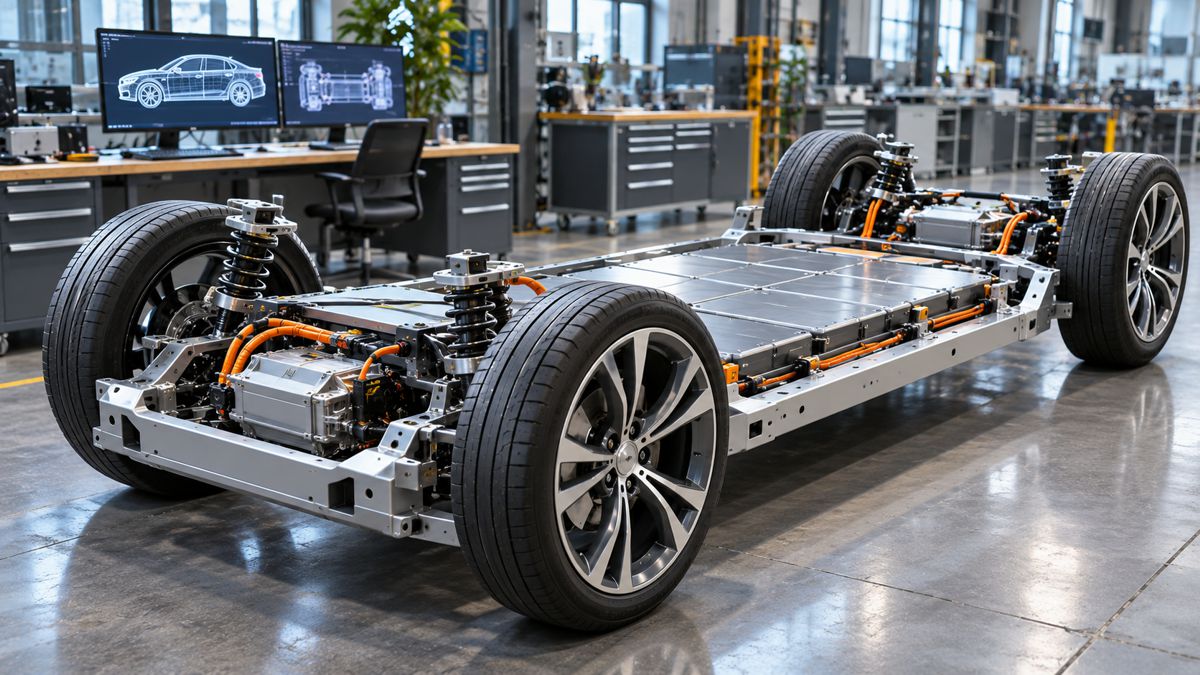
Manufacturers must engineer crash structures, suspension, steering, braking, thermal management and electrical systems before completing extensive testing and certification. Software development, cybersecurity, vehicle diagnostics and long-term component support have added further complexity.
Production introduces substantial additional investment. Stamping presses, welding equipment, paint facilities, assembly lines and quality-control systems are designed around carefully planned manufacturing volumes, while the supply chain must deliver thousands of components consistently and economically.
These demands have encouraged automotive consolidation and the widespread use of shared vehicle platforms. Volkswagen Group, Stellantis, Toyota, Hyundai Motor Group and other major manufacturers distribute engineering costs across multiple brands and vehicle models, often retaining common mechanical and electronic architectures beneath different exterior designs.
Platform sharing has clear advantages. It reduces duplication, supports consistent quality and helps manufacturers recover the cost of increasingly sophisticated technology. Consumers benefit from reliable vehicles that might otherwise be considerably more expensive to develop.
For a new entrant, however, the challenge remains formidable. An independent designer may have an outstanding concept, but bringing it to market requires access to engineering, manufacturing, certification, finance and aftersales support on a scale beyond most small businesses.
This is where electric propulsion offers an opportunity to reconsider the industry’s structure. If the underlying vehicle technology could be supplied as a standardised product, an independent manufacturer would no longer need to develop every mechanical and electronic system before concentrating on the vehicle it actually wanted to create.
The Electric Skateboard
A dedicated electric vehicle platform can incorporate batteries, motors, power electronics, suspension and important control systems into a common structural architecture.
Often described as an electric skateboard, the arrangement typically places the battery pack low within the vehicle, reducing the need for a conventional engine compartment and allowing designers greater freedom in the positioning of passenger and cargo spaces.
Major manufacturers already use dedicated electric architectures to support multiple models. Wheelbases, battery configurations, body styles and equipment can vary while substantial portions of the underlying engineering remain common.
The more ambitious possibility is to make suitable platforms available to independent manufacturers.
A specialist engineering company could produce a family of electric rolling chassis, complete with validated mechanical systems, documented electrical interfaces and structural mounting arrangements for different bodies. Customers would choose an appropriate platform according to wheelbase, load capacity, performance and battery requirements.
Independent body manufacturers could then concentrate on the elements that distinguish one vehicle from another, developing approved body structures, interiors and specialist equipment without repeatedly engineering the same batteries, motors and braking systems.
There would almost certainly need to be several platform classes. A compact two-seat sports car, a family saloon and a commercial pickup make different demands on weight distribution, crash protection, wheelbase and suspension. Even within a shared architecture, the body and chassis would need to be designed as compatible systems rather than treated as completely interchangeable components.
Nevertheless, common engineering foundations could allow companies to compete through design and specialist knowledge instead of requiring every manufacturer to undertake the full cost of vehicle development.
The Return of the Coachbuilder
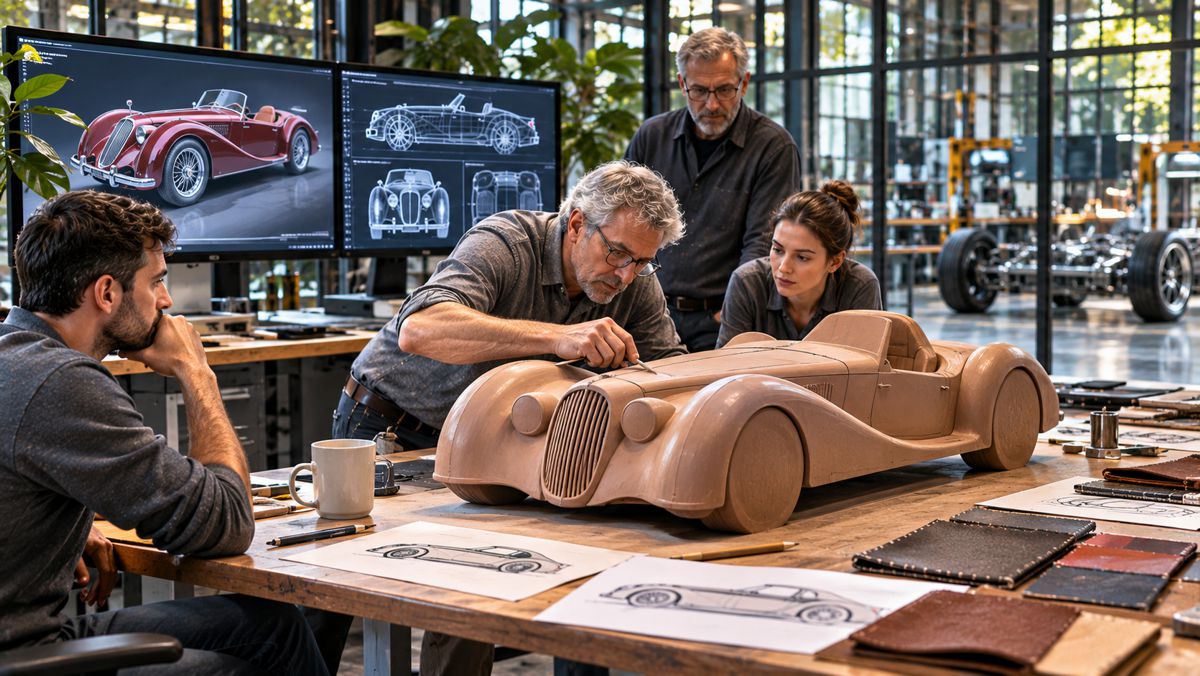
Separating a vehicle’s mechanical engineering from the craftsmanship of its body is an idea with a long automotive history.
During the early decades of motoring, manufacturers including Rolls-Royce, Bentley and Daimler supplied rolling chassis to independent coachbuilders. Customers could commission bodies according to their requirements, with specialist firms responsible for exterior styling, passenger accommodation and interior finishing.
Companies such as Hooper, H. J. Mulliner, Park Ward and Freestone & Webb became renowned for their craftsmanship. A common mechanical foundation could support an elegant formal limousine, an open touring car or a sporting body, often designed for a particular customer.
The arrangement encouraged a diverse industry of specialist businesses. Chassis manufacturers concentrated on mechanical reliability and performance, while coachbuilders competed through appearance, quality and individuality.
The history of Rolls-Royce coachbuilding demonstrates how closely this relationship was connected to the development of luxury motoring. Independent coachbuilders could establish distinctive reputations without developing their own engines, transmissions or complete mechanical platforms.
Mass production gradually displaced much of the traditional industry as integrated body structures and modern manufacturing methods became more economical. Crash protection, vehicle electronics and increasingly complex engineering made it harder to separate the body from the mechanical systems beneath it.
Specialist coachbuilding survived, principally at the luxury end of the market, but it became far less accessible than it had been during the industry’s formative decades.
Electric platforms could revive part of that relationship in a modern industrial setting. Instead of commissioning a handcrafted body for an expensive mechanical chassis, customers might choose from a range of approved designs manufactured using digital engineering, lightweight materials and flexible production methods.
The possibilities would extend beyond luxury vehicles. A small company could specialise in affordable roadsters, another in distinctive urban cars, while an engineering workshop might develop practical commercial vehicles for markets too specialised to attract major manufacturers.
Modular Engineering Is Already Taking Shape
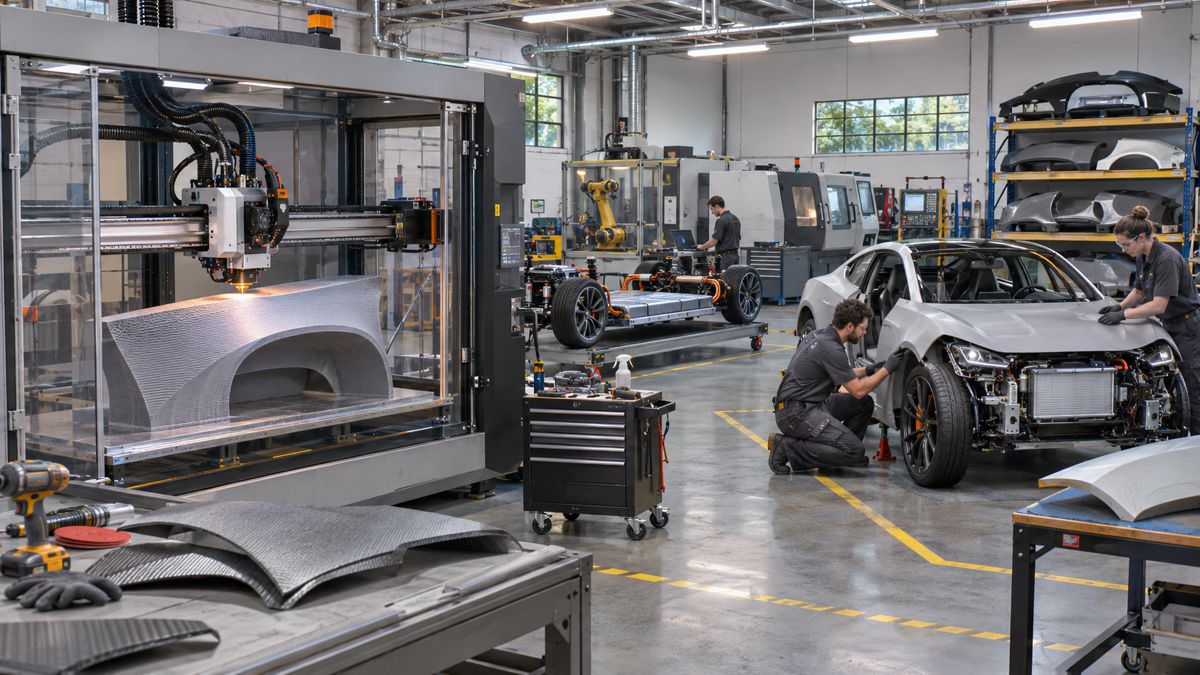
The concept is beginning to emerge in contemporary vehicle engineering, although the companies developing it demonstrate both the possibilities and the commercial difficulties involved.
In October 2026, REE Automotive and SEGULA Technologies announced an industrial partnership to develop modular body-on-skateboard vehicles, presented at the Paris Motor Show.
The collaboration combines REE’s P7-C electric chassis, which uses electronic steering, braking and drive systems, with SEGULA’s vehicle engineering and body development capabilities. The arrangement allows the companies to explore different vehicle applications around a common technical foundation.
The REE and SEGULA partnership announcement provides a contemporary example of the separation between platform engineering and specialist vehicle development that could underpin a more open manufacturing industry.
However, REE’s financial circumstances also demonstrate the difficulty of commercialising advanced automotive technology.
The company entered restructuring proceedings in Israel during 2026, and the Tel Aviv District Court approved a debt arrangement in October following negotiations involving creditors and potential investors. According to Israeli financial newspaper Globes, the company had accumulated debts totalling approximately NIS 51 million.
The restructuring does not invalidate the engineering concept, but it underlines the substantial capital requirements and uncertain commercial returns associated with bringing new vehicle platforms into production.
Another example comes from Olympian Motors’ Olympus platform, which is being developed around an open, modular electric vehicle architecture. The company promotes configurable chassis arrangements intended to support different body styles and specialist applications, alongside retro-inspired designs that depart from conventional modern vehicle styling.
Olympian’s approach is closely aligned with the possibility of independent manufacturers developing vehicles around shared technology, although the availability of a modular platform does not by itself establish proven large-scale production, independent body certification or competitive manufacturing economics.
The direction of development is nevertheless encouraging. Companies are exploring how the expensive engineering foundations of electric vehicles might become products in their own right, available to businesses with different design and manufacturing specialisms.
The Local Car Factory
The potential becomes particularly interesting when modular platforms are combined with advanced manufacturing.
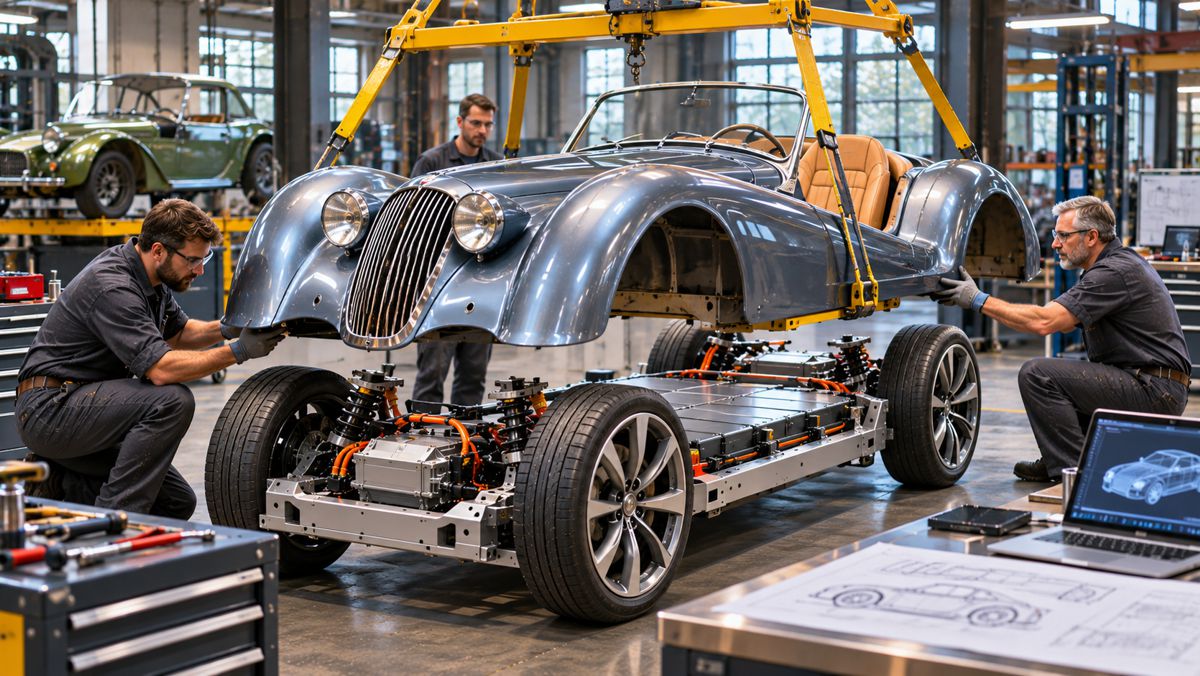
Imagine a specialist automotive workshop where customers can choose from a catalogue of approved body designs. Instead of selecting between a handful of models from established manufacturers, they could choose the type of vehicle they actually want and personalise its appearance, interior and equipment.
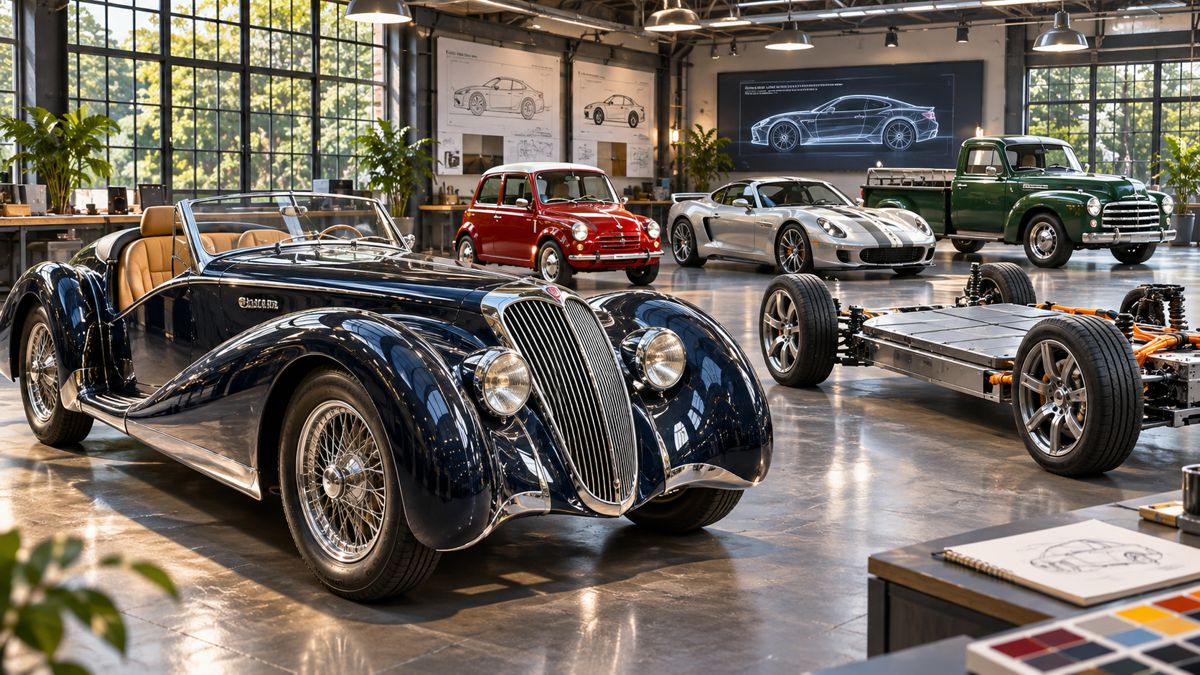
A compact electric platform might support a lightweight city car, a 1940s-inspired roadster or a small commercial vehicle. A longer chassis could form the basis of an elegant grand tourer or a distinctive family saloon, while a heavier platform might accommodate a practical pickup or delivery van.
The workshop would concentrate on body manufacturing and final assembly, purchasing the underlying chassis from a specialist supplier.
Large-format 3D printing could produce selected exterior panels, interior components, prototypes and manufacturing tools. Composite moulding, CNC machining and conventional fabrication would provide other parts of the production process, allowing different techniques to be selected according to cost, material requirements and production volume.
A customer might choose a classic roadster design, specify a deep British racing green finish, select tan leather upholstery and commission distinctive interior details. Another might choose a minimalist urban vehicle with lightweight panels and a simple, practical interior.
For commercial customers, the same system could produce vehicles tailored to particular operations. A landscaping business might commission a compact dropside truck, while a municipal maintenance department could select a body incorporating secure equipment storage and accessible loading arrangements.
The important distinction would be between cosmetic customisation and structural engineering. Colours, trim, interior materials and approved exterior components could offer considerable freedom, while changes affecting crash protection, occupant restraints or structural integrity would require additional validation.
This would be a modern interpretation of coachbuilding, with digital design and flexible manufacturing replacing much of the labour-intensive production associated with traditional bespoke vehicles.
It would also create opportunities for existing engineering workshops, specialist fabricators and industrial designers to participate in automotive manufacturing without attempting to become fully integrated vehicle manufacturers.
Lessons from 3D-Printed Vehicles
The idea of smaller, digitally enabled automotive factories has already been tested.
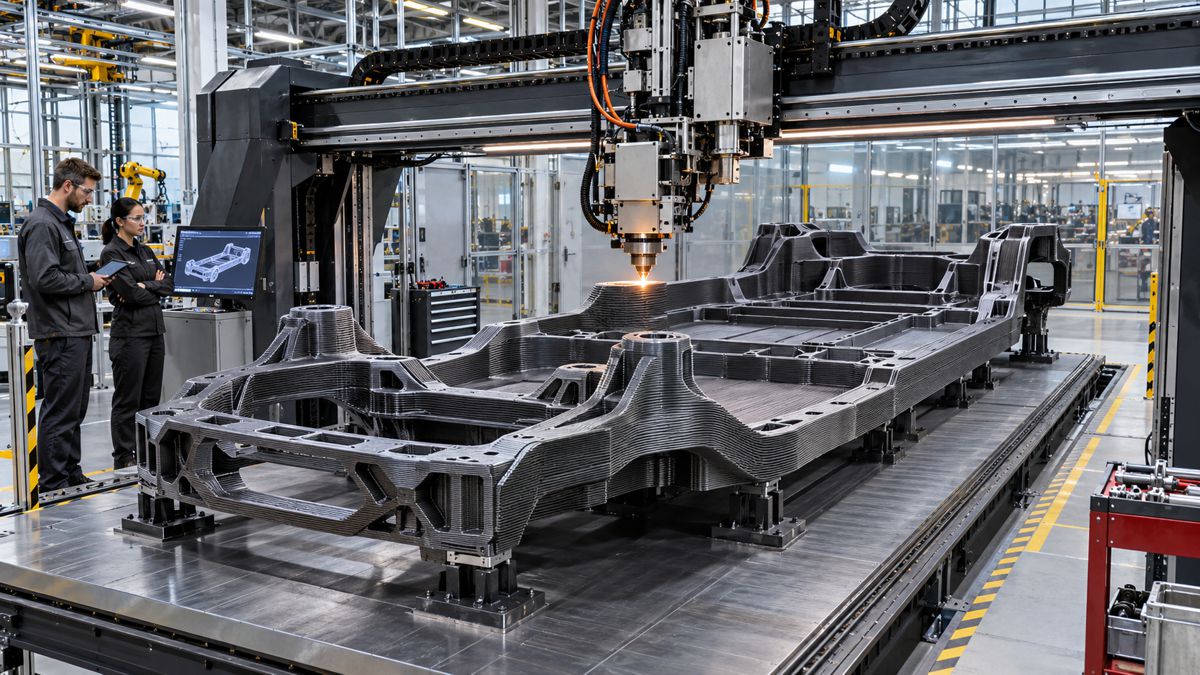
American company Local Motors attracted international attention in 2014 when it demonstrated the Strati, a small electric vehicle incorporating a largely 3D-printed body. The company subsequently developed the Olli autonomous electric shuttle, using additive manufacturing in its vehicle production approach.
Local Motors promoted a microfactory concept in which smaller facilities could manufacture specialist vehicles close to their intended markets rather than relying entirely on enormous centralised automotive plants.
The company closed in January 2022, with TechCrunch reporting its shutdown following its work on the Strati and Olli programmes.
The closure demonstrated that innovative manufacturing technology alone is insufficient to establish a sustainable automotive business. Product certification, investment, manufacturing costs, customer demand and long-term support all remain essential.
Nevertheless, Local Motors demonstrated how additive manufacturing and digital engineering could be applied to vehicle production outside conventional mass-manufacturing systems.
A future small-scale workshop would not necessarily print complete body structures. For many applications, 3D printing may be most economical for producing moulds, specialist components and low-volume parts, while composite fabrication or traditional processes manufacture the finished panels.
The objective would be flexibility rather than replacing every established manufacturing technique. A workshop capable of producing different approved vehicle designs without investing in dedicated stamping dies for each model could serve customers that large manufacturers struggle to accommodate economically.
Opening the Market to Independent Manufacturers
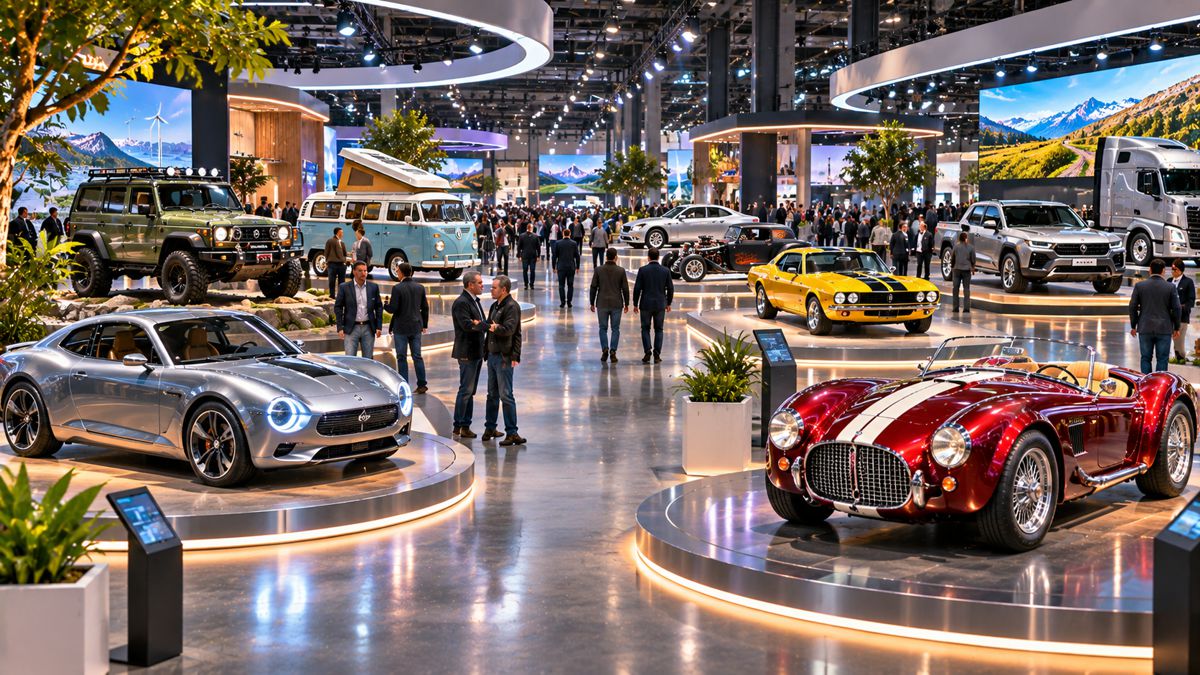
A more modular automotive industry could encourage competition far beyond the companies producing complete vehicles.
A specialist platform manufacturer might supply batteries, motors, suspension, braking systems and electronic architecture, while independent firms develop body structures, interior systems and application-specific equipment.
Other companies could concentrate on assembly, custom finishing, specialist components and aftersales support, creating a network of businesses around common engineering foundations.
The model has similarities with industries in which standardised components and interfaces allow many different manufacturers to participate. Computer hardware provides an obvious example, with common technical standards supporting a wide variety of specialist equipment suppliers and assemblers.
Cars are considerably more complex, particularly because they must operate safely on public roads, but the commercial principle remains attractive.
Access to shared technology could reduce the capital required to develop a specialist vehicle. Independent businesses would still face significant expenditure on engineering, certification, manufacturing and warranties, but the cost of creating an entire drivetrain and electronic architecture could be distributed across many products.
The first commercial opportunities would probably emerge in relatively low-volume markets where individuality or specialist functionality justifies higher production costs. Bespoke luxury vehicles, specialist commercial bodies, lightweight sports cars and distinctive urban vehicles are plausible starting points.
Mass-produced family cars would remain difficult to compete with on price because established manufacturers benefit from enormous economies of scale.
A successful modular industry would also need to avoid creating a different form of dependence. If a small number of platform suppliers controlled essential software, diagnostics, replacement parts and body interfaces, independent manufacturers could find themselves locked into restrictive commercial arrangements.
Published technical standards, transparent licensing and reliable access to compatible components would therefore be central to genuine competition.
The objective would not necessarily be to make every automotive technology open source. Proprietary platforms could still operate within an ecosystem of standardised interfaces, allowing independent manufacturers to develop products without surrendering control of their designs to the chassis supplier.
Such arrangements could encourage businesses to compete through originality, craftsmanship and customer service, while specialist engineering companies compete on the quality and efficiency of the platforms beneath them.
Safety, Certification and Common Standards
The greatest technical challenge is ensuring that independently developed vehicles remain safe, reliable and legally compliant.
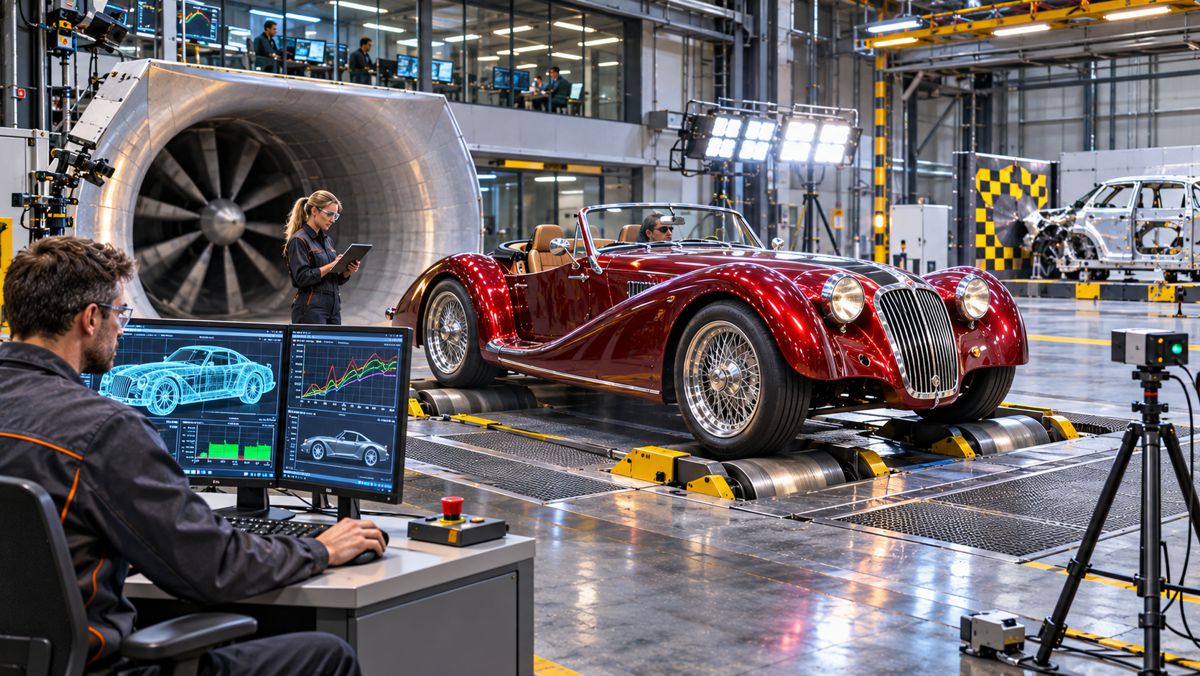
Modern vehicle bodies perform important structural functions, absorbing crash energy, protecting occupants and supporting safety systems. A body cannot simply be attached to an electric platform without considering impact performance, weight distribution, roof strength, pedestrian protection and the operation of airbags and occupant restraints.
Even where a rolling chassis contains substantial crash structures, the completed vehicle must be assessed as an integrated system.
Europe already recognises different approaches to automotive manufacturing. Regulation (EU) 2018/858 provides an approval framework covering complete vehicles, multistage manufacturing, small-series production and individual vehicle approval.
These arrangements allow some flexibility, but manufacturers remain responsible for demonstrating that the completed vehicle satisfies applicable technical requirements.
A modular industry could benefit from more extensive standardisation of structural interfaces, approved mounting arrangements, electrical connections and software communication systems. Platform suppliers might provide validated engineering documentation, allowing body manufacturers to work within recognised parameters rather than beginning every technical assessment from scratch.
Common standards would not eliminate the need for testing, particularly where different body structures affect crash performance, but they could make the process more predictable and potentially reduce duplication.
Governments, engineering institutions and automotive suppliers could contribute through shared research, testing facilities and technical standards, particularly where public investment already supports electric vehicle development and advanced manufacturing.
Long-term servicing would also require attention. A vehicle assembled by a small manufacturer must remain repairable throughout its working life, with replacement parts, diagnostic tools and software support available even if the original body designer ceases trading.
These requirements are substantial, but they are familiar problems within regulated manufacturing. The opportunity is to develop an industrial system that addresses them collectively rather than requiring every small manufacturer to reproduce the same expensive infrastructure independently.
A More Imaginative Automotive Future
The appeal of a more open automotive industry extends beyond engineering efficiency.
Motor cars have always occupied an unusual position between practical machinery and personal expression. People choose vehicles because they need transport, but also because they appreciate particular shapes, colours, materials and driving characteristics.
The dominance of familiar body formats reflects genuine customer demand, aerodynamic requirements, safety engineering and manufacturing economics. Yet the remarkable variety of vehicles produced during earlier periods of automotive development suggests that many different interpretations of personal transport can coexist.
A mature modular industry could provide room for smaller manufacturers to explore those possibilities without needing the production volumes expected of major automotive groups.
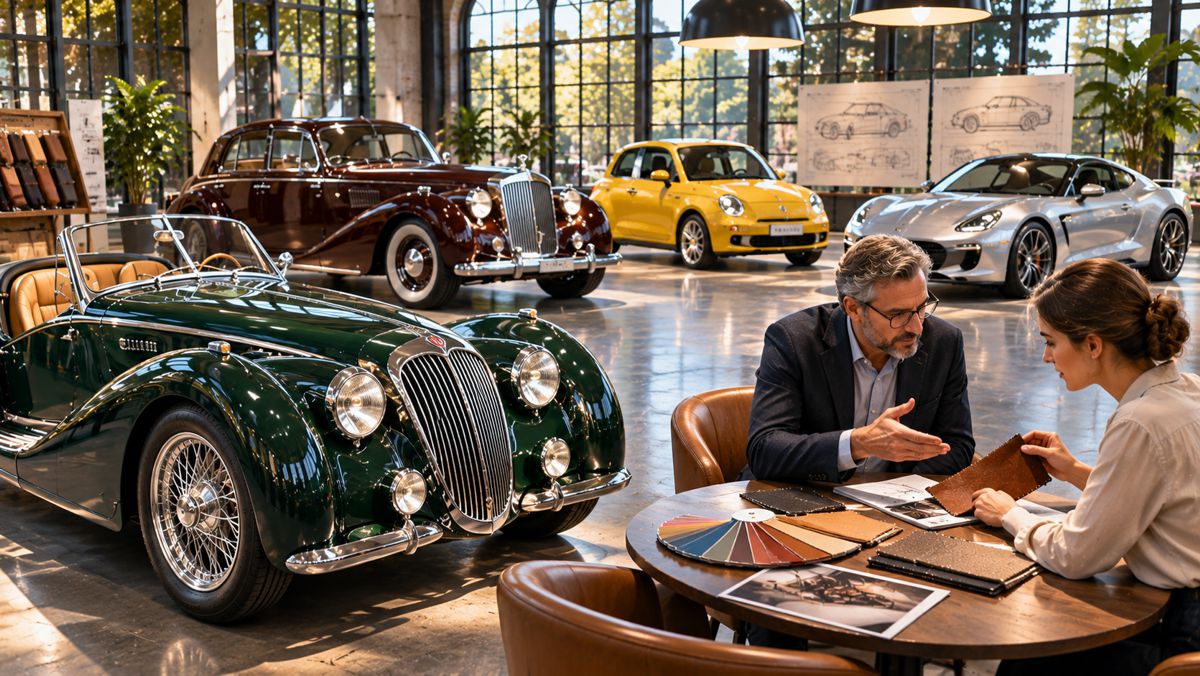
A specialist workshop might develop a beautifully proportioned roadster inspired by the 1940s, combining classic styling with modern electric propulsion and safety engineering. Another business could produce compact city cars that use their dimensions intelligently rather than following the proportions of larger SUVs.
Independent designers might revive the elegance of traditional coachbuilt luxury vehicles, while practical manufacturers could create affordable utility cars, working pickups and specialist vans designed around specific commercial needs.
The possibilities would be limited by engineering, regulation and economics, but there is considerable room for creativity within those boundaries.
A network of independent manufacturers could also bring new ideas into the industry more quickly, particularly where digital design and flexible production reduce the investment needed to manufacture specialist components.
The result would not necessarily threaten conventional mass production. Large automotive companies would continue to deliver affordable, reliable vehicles at volumes that smaller businesses could not match.
Instead, a parallel ecosystem could emerge, offering individuality, craftsmanship and specialist functionality to customers whose needs or tastes are poorly served by mainstream models.

Returning Creativity to the Motor Car
The original Mini emerged because an engineer was prepared to reconsider the arrangement of familiar mechanical components. Issigonis created a practical vehicle that challenged conventional thinking about size, space and economy, and his design helped influence generations of subsequent cars.
Electric propulsion offers another opportunity to rethink established assumptions, this time extending beyond the engineering of individual vehicles to the structure of the industry that produces them.
Modular platforms, independent body manufacturers and flexible production facilities could allow more businesses to participate in automotive development, provided the necessary safety standards, technical interfaces and commercial arrangements can be established. Early examples demonstrate both the potential and the difficulties, but the underlying approach deserves serious consideration.
The future motor car need not be limited to variations of a handful of familiar designs. There could be room for elegant roadsters, distinctive small cars, specialist working vehicles and entirely new forms of personal transport, created by independent designers with access to reliable, standardised engineering.
The electric vehicle revolution has already changed the machinery beneath the motor car. Its greater legacy could be giving many more people the opportunity to decide what the vehicle above that machinery should look like.
Key Industry Questions
- What is a modular electric vehicle platform? A modular electric platform is a shared vehicle architecture incorporating major systems such as batteries, motors, suspension and electronic controls. Different vehicle designs can potentially be developed around common engineering components, subject to structural and safety requirements.
- Could independent manufacturers build cars using standard electric chassis? Yes, provided suitable platforms are commercially available and the completed vehicles satisfy the relevant technical and regulatory requirements. Shared engineering could reduce development costs but would not eliminate certification and manufacturing responsibilities.
- How did traditional coachbuilding work? Established manufacturers supplied rolling chassis to specialist coachbuilders, which designed and constructed individual vehicle bodies. The arrangement was particularly common in the luxury automotive market before integrated body construction became widespread.
- Could 3D printing make custom cars commercially viable? Additive manufacturing can reduce tooling costs for some specialist components and low-volume production. It is likely to work alongside composite moulding, machining and conventional fabrication rather than replacing them entirely.
- Are modular electric skateboard platforms already being developed? Yes. Companies including REE Automotive and Olympian Motors have developed modular platform concepts and technologies, although commercial maturity and production volumes vary considerably.
- Could a customer choose different body styles for the same electric chassis? Potentially, within a range of compatible and approved configurations. Vehicle bodies affect structural performance and safety systems, so different designs would require appropriate engineering and certification.
- Would modular cars be cheaper than conventional vehicles? Shared platforms could reduce some development costs, particularly for specialist models. Final prices would depend on manufacturing volumes, platform costs, materials, certification and assembly efficiency.
- Could smaller manufacturers compete with established automotive groups? A modular platform market could lower some entry barriers, allowing smaller companies to concentrate on specialist designs and applications. Competing directly with high-volume manufacturers on price would remain difficult.
- What regulatory requirements would apply to independently manufactured cars? Completed vehicles must satisfy applicable safety, environmental and technical requirements. European legislation provides routes for multistage approval, small-series production and individual vehicle approval, depending on the vehicle and manufacturing arrangements.
- What could governments do to support a more open automotive industry? Support for common technical standards, shared testing facilities, modular engineering research and accessible approval processes could help smaller manufacturers participate while maintaining safety and quality requirements.
Strategic Takeaways
- Shared engineering could broaden competition: Standardised electric platforms may allow specialist manufacturers to develop vehicles without independently creating every major mechanical and electronic system.
- Coachbuilding offers a useful industrial precedent: Separating vehicle engineering from body design once supported a diverse network of independent manufacturers and specialist craftspeople.
- Flexible manufacturing creates new opportunities: Additive manufacturing, composite fabrication and digital engineering could make low-volume vehicle production more accessible.
- Commercial viability remains challenging: REE Automotive and Local Motors demonstrate that promising vehicle technology must still overcome significant financing, manufacturing and market barriers.
- Technical standards are essential: Reliable interfaces, accessible certification and long-term component support could enable greater competition without compromising vehicle safety.