Meet Sherwin-Williams OneCure Single Bake Powder Coating
Finishing lines have long carried a quiet tax that rarely shows up in a glossy product brochure. Every time a manufacturer wants the corrosion protection of a primer underneath a durable topcoat, the part has traditionally taken two trips through the oven, with all the energy, floor space, handling and waiting time that a second bake drags along with it. Sherwin-Williams reckons it can scrap that second trip, and it has now gathered a clutch of its dust-on-dust powder systems under a single banner to make the point.
The company’s General Industrial Coatings division has launched OneCure, a patented dust-on-dust powder coating portfolio that lets primer and topcoat cure together in one bake. It is aimed squarely at original equipment manufacturers in transportation, heavy equipment and energy, the sectors where coating lines run hot, throughput is king, and a warranty claim for rust can sour a customer relationship for years. The technology itself is not new, having been deployed in production for well over a decade, but pulling several proven systems into one named portfolio gives buyers a clearer route in and gives Sherwin-Williams a sharper story to sell against rivals like AkzoNobel, PPG and Axalta.
Briefing
- Sherwin-Williams General Industrial Coatings has unified its dust-on-dust powder systems into a single portfolio called OneCure, curing primer and topcoat in one oven pass rather than two.
- Customers report cycle times running 30 to 40 per cent faster than a conventional two-bake process, alongside up to 50 per cent less work-in-process inventory.
- The firm cites up to 75 per cent fewer corrosion-related claims against a direct-to-metal system, and more than a million dollars in avoided capital outlay when building a fresh line.
- A single super-durable polyester topcoat pairs with four primer chemistries, covering super-durable polyester, polyester/epoxy hybrid, epoxy and zinc-rich epoxy.
- The pitch lands as carbon border rules and tightening volatile organic compound limits push OEMs towards leaner, lower-energy finishing.
One Bake Instead Of Two
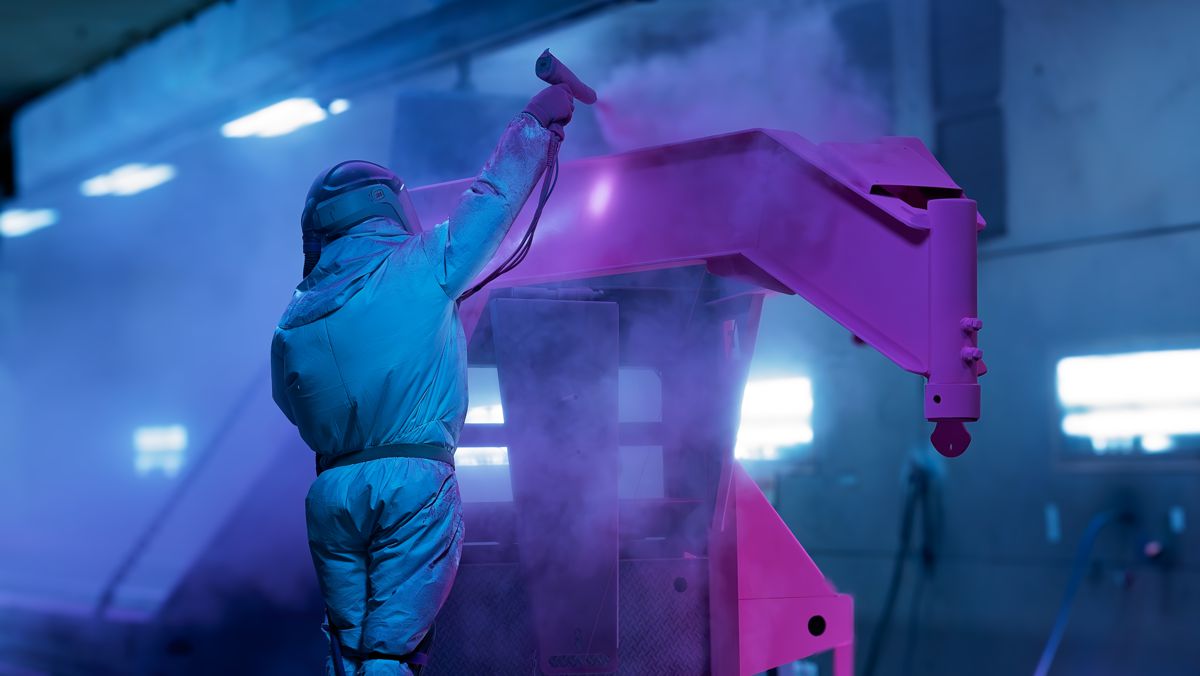
The mechanics are the whole story here. In a standard two-coat powder process, a primer goes on, the part bakes until that primer gels or fully cures, then a topcoat is applied over the hardened layer and the part bakes a second time. OneCure leans on a patented crosslinking chemistry so both layers are sprayed dust-on-dust, wet powder over wet powder in effect, and then co-cured in a single pass. One oven cycle does the job of two, which is where the headline cycle-time gains come from.
That sounds like a tidy bit of process engineering, and it is, but the knock-on effects ripple well beyond the oven. Fewer trips through the line mean less material handling, fewer points where a part can pick up contamination or damage, and a marked drop in work sitting half-finished on the floor. Sherwin-Williams puts the work-in-process reduction at up to half, which for a high-volume OEM is the difference between a finishing area that flows and one that clogs. Tommy Reno, Global Product Director of Powder at Sherwin-Williams General Industrial, frames the portfolio as a repackaging of something already battle-tested rather than a leap into the unknown. “The portfolio is a new, unified offering, but our proprietary OneCure technology has been proven in extremely demanding, real-world production environments and used by globally recognized brands for years,” he says.
The Economics Of Skipping An Oven
For anyone signing off capital expenditure, the most persuasive number is the one about the oven that never gets bought. Building a new powder line around a single cure rather than two removes a curing oven and the floor space, ducting, energy supply and maintenance that come with it. The company claims more than a million dollars in avoided capital expense on a new finishing line, plus a footprint reduction of up to 50 per cent in the areas given over to part finishing. Floor space in a modern plant is rarely sitting idle, so handing half of it back is no small thing.
There is a second audience for that argument, and it matters just as much. Plenty of smaller manufacturers have wanted the corrosion protection that a primer brings but could never stomach the capital and complexity of running a two-bake operation. OneCure lowers that bar. Reno is blunt about the appeal to both camps. “Our customers are constantly pressured to do more with less — and OneCure enables them to do exactly that,” he explains. “If you’re building a new powder line, OneCure can significantly reduce the costs and space needed to do so. And customers who previously couldn’t justify the capital or demands of a two-bake process can now gain the added corrosion resistance of a primer system without the added complexity or costs. Frankly, even if I had an extra oven, I’d switch to OneCure for the intercoat adhesion alone. The layers intertwine during co-curing, making it impossible for the topcoat to peel away from the primer, which eliminates a lot of potential issues in the field.”
Adhesion And Corrosion In The Field
That point about intercoat adhesion is worth sitting with, because it is where the chemistry quietly outperforms the process it replaces. When primer and topcoat cure separately, the bond between them is essentially mechanical, one cured surface gripping another. Co-curing crosslinks the two layers into each other as they harden, so they fuse rather than simply stack. The practical upshot is a coating far less likely to delaminate, which is the failure mode that lets moisture creep in and rust take hold on equipment working outdoors in mud, salt and grit.
The durability figures Sherwin-Williams attaches to all this are the sort that get a fleet engineer’s attention. The company points to up to 75 per cent fewer corrosion-related claims compared with a direct-to-metal system, the cheaper single-coat approach that skips a primer altogether. For makers of agricultural machinery, articulated haulers, trailers and energy infrastructure, where coated steel is expected to shrug off years of abuse, fewer warranty callbacks feed straight through to reputation and resale value. Edge coverage, the perennial weak spot on sharp corners and welds where powder tends to thin out, also improves under the co-cure, tightening up the very places corrosion usually starts.
Chemistry That Bends To The Job
A portfolio only earns the name if it offers genuine choice, and this is where the unified branding does real work. OneCure lets a single super-durable polyester topcoat sit over any of four primer chemistries, namely super-durable polyester, polyester/epoxy hybrid, epoxy and zinc-rich epoxy. That spread covers a lot of ground. Zinc-rich epoxy, for instance, brings galvanic protection prized in harsh marine and energy settings, while a hybrid or straight epoxy primer suits parts that need a tough, chemically resistant base without the cost of zinc loading.
The value of mixing and matching is that a manufacturer can dial the corrosion protection up or down to match the duty cycle of a given part without re-engineering the topcoat, the colour or the gloss the customer actually sees. One topcoat specification, several primer options underneath, all running through the same single-bake line. For a plant making everything from lightly loaded brackets to chassis components destined for a decade in the field, that flexibility keeps the finishing process standardised even as the protection underneath varies.
Energy, Emissions And The Regulatory Squeeze
Strip away the marketing and OneCure is, at heart, an energy story, and the timing is sharp. Curing ovens are among the hungriest pieces of kit in any finishing shop, so halving the bakes lands directly on the utility bill and on a plant’s carbon accounting. That arrives as regulators close in from several directions at once. The European Union’s Carbon Border Adjustment Mechanism began applying its carbon price to imported metal goods from January 2026, nudging exporters towards leaner, lower-emission production, while volatile organic compound limits continue to tighten across North America and beyond. Powder coatings already enjoy a head start there, being solvent-free and low in VOCs, and a single-cure system stacks a further energy saving on top.
The wider market backdrop helps explain why Sherwin-Williams is bothering to repackage and relaunch now. Analysts size the global powder coatings market somewhere in the region of 14 to 17 billion US dollars in 2026, with most forecasts pointing to steady mid-single-digit annual growth out to the early 2030s, driven by exactly the environmental and durability demands OneCure leans on. Asia Pacific dominates the volumes, but North America and Europe remain the strongholds for high-performance industrial finishing, which is the slice OneCure is chasing. In a competitive field crowded with AkzoNobel, PPG, Axalta, Jotun and others, an efficiency claim that touches capital cost, throughput, energy and warranty all at once is a useful flag to plant.
A Track Record Rebranded For A Leaner Era
For all the talk of a new portfolio, the foundations go back a fair way. The OneCure name first surfaced as Powdura OneCure, launched at the Powder Coating Show in Indianapolis in 2014, sold even then on the same core promise of co-reacting primer and topcoat in a single bake to cut energy, labour and footprint.
More than a decade of production use is precisely the asset Sherwin-Williams is now trading on, and Reno returns: “The customers we introduced to OneCure 15 years ago are still using it today. They’re not looking for other solutions because it works exactly as promised. There’s really no better demonstration of the portfolio’s reliability and long-term performance.”
What has changed is the framing rather than the formula. By gathering proven dust-on-dust systems under one name and putting hard numbers on cycle time, inventory, capital and claims, the company is betting that OEMs under pressure to decarbonise and trim cost will look harder at a finishing process that quietly deletes a whole oven cycle.
The technology has been sitting in plants for years doing exactly that. The job now is convincing the next wave of buyers, the ones building fresh lines or finally adding a primer they could never previously justify, that one bake really is enough. On the evidence the company is putting forward, that is a case worth hearing out, and the manufacturers weighing up new finishing capacity over the next few years are the ones who will settle it.