Chicago’s Infrastructure Investment Drives a New Wave of Construction
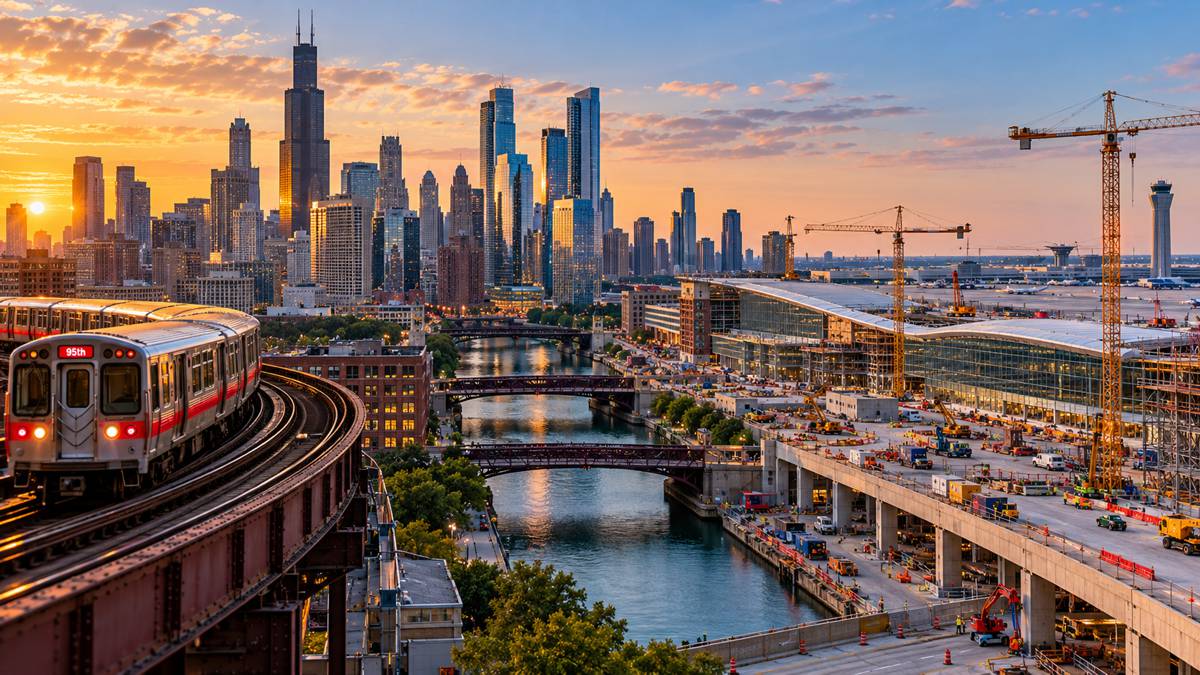
Chicago’s construction industry is managing a substantial pipeline of major projects, from a long-awaited extension of the city’s Red Line railway to an $8.8 billion modernisation of O’Hare International Airport. Meanwhile, plans for a $7 billion redevelopment around the United Center could introduce an entirely new mixed-use district to the city’s West Side.
The combination of public infrastructure investment and privately financed development is generating work across civil engineering, transport systems, structural construction and specialist building services. With Chicago Build Expo returning to McCormick Place on 28 and 29 October 2026, the scale of the city’s construction ambitions provides a timely backdrop for one of the Midwest’s major industry gatherings.
Briefing
- Chicago’s construction pipeline combines major public infrastructure programmes with privately financed commercial and entertainment developments.
- The Chicago Transit Authority’s 5.5-mile Red Line Extension will introduce four accessible stations on the city’s Far South Side.
- O’Hare International Airport is progressing an $8.8 billion modernisation programme, including new passenger concourses and a replacement terminal.
- The proposed $7 billion 1901 Project would redevelop more than 55 acres surrounding the United Center over approximately a decade.
- Chicago Build Expo returns to McCormick Place on 28–29 October 2026, bringing together contractors, engineers, architects, developers and construction technology suppliers.
Extending Chicago’s Public Transport Network
Among Chicago’s most consequential infrastructure investments is the Red Line Extension Project, which will carry the Chicago Transit Authority’s busiest rail corridor southwards from its existing 95th/Dan Ryan terminus to 130th Street.
The 5.5-mile extension will introduce four fully accessible stations serving communities near 103rd Street, 111th Street, Michigan Avenue and 130th Street. Each station is planned with connections for buses, pedestrians and cyclists, alongside park-and-ride facilities.
The project reached a major milestone in April 2026 when the CTA held a groundbreaking ceremony at the future Michigan Avenue station. The extension had been discussed for almost six decades, making its progression into construction particularly significant for communities on Chicago’s Far South Side.
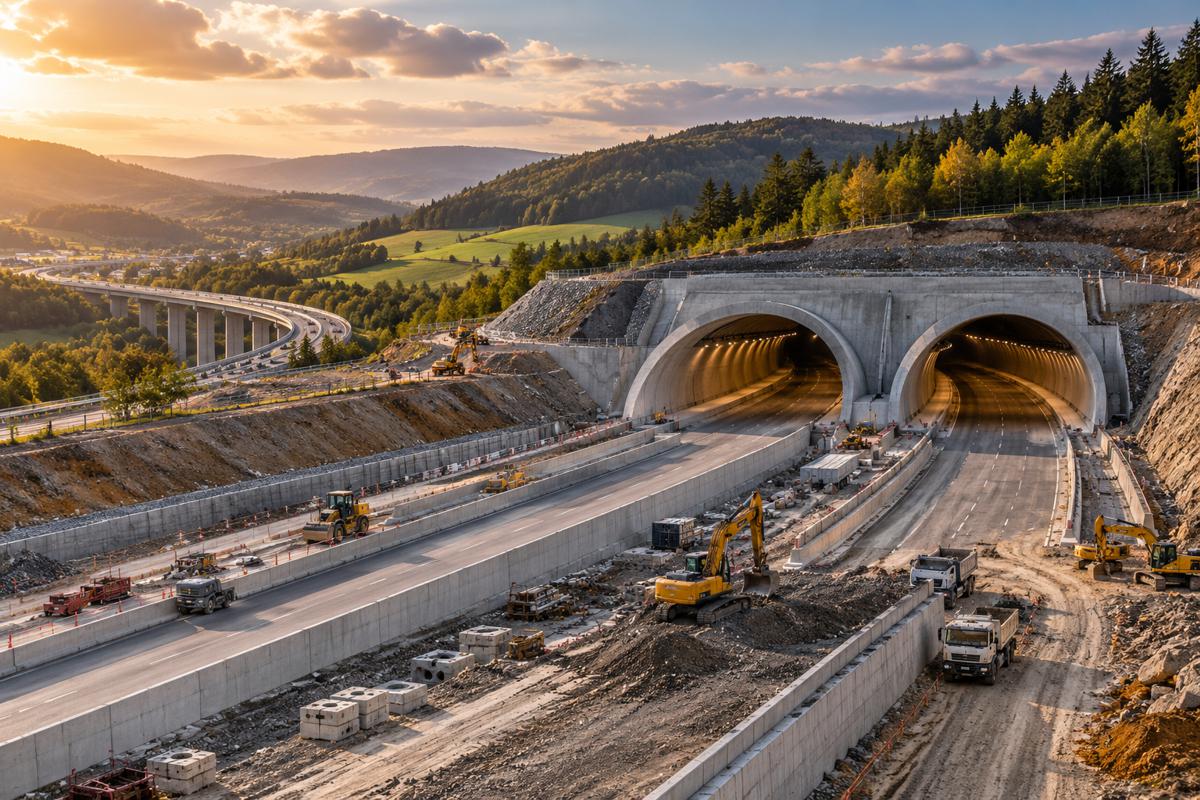
The engineering programme involves considerably more than laying additional railway track. New stations, structures, traction power systems, signalling and supporting infrastructure must be integrated into an operating metropolitan transit network. Construction also has to accommodate established roads, utilities, neighbourhoods and existing transport services.
According to the CTA, passengers travelling from the future 130th Street station towards the Loop could save up to 30 minutes on their journeys. Improved connections are also expected to widen access to employment, education and other services across the metropolitan area.
Elsewhere on the network, the CTA continues to pursue accessibility improvements, traction power upgrades and station modernisation. Its March 2026 construction briefing identified work involving the State/Lake station, the Austin station on the Lake Line, Racine station and several electrical substations. These programmes form part of the less visible but essential investment required to maintain and modernise an extensive urban railway system.
O’Hare Airport’s Expanding Construction Programme
Chicago’s aviation infrastructure is undergoing an equally ambitious programme of redevelopment. At O’Hare International Airport, the Chicago Department of Aviation is progressing its $8.8 billion ORDNext modernisation programme, involving new passenger concourses, supporting infrastructure and a replacement for the airport’s existing Terminal 2.
Construction of the new Concourse D is already well advanced. The 580,000-square-foot facility will provide 19 gates, with flexibility to accommodate different aircraft configurations. The AECOM Hunt Clayco Bowa construction team is delivering the concourse under a package valued at approximately $1.45 billion, with completion scheduled for late 2028.
The next phase involves Concourse E, where the city announced plans in August 2026 to begin construction later in the year. An initial 14 gates are scheduled for completion in 2030, followed by the O’Hare Global Terminal in 2033 and the remaining Concourse E facilities in 2034. The sequencing is designed to preserve operational capacity while existing airport facilities are replaced.
Delivering major structures within an operating international airport introduces particular complications. Airside access restrictions, security requirements, utility diversions, underground connections and the need to maintain passenger and aircraft movements all influence construction methods and scheduling.
The programme requires close coordination between structural works, mechanical and electrical installations, operational technology and the specialist systems needed to maintain safe aviation operations. Large construction packages must also be carefully sequenced around existing infrastructure, leaving limited room for disruption to airport services.
Private Investment and the Redevelopment of Chicago’s West Side
Chicago’s commercial construction pipeline is also attracting substantial private investment. One of the largest proposals is the 1901 Project, a planned $7 billion redevelopment of land surrounding the United Center, home to the Chicago Bulls and Chicago Blackhawks.
Announced by the Reinsdorf and Wirtz families, the development covers more than 55 acres of privately owned land and envisages a mixed-use neighbourhood incorporating residential accommodation, retail, entertainment facilities and public open space.
The scheme is planned as a multiphase development spanning approximately ten years. Individual construction packages and delivery dates will depend on subsequent approvals, investment decisions and commercial conditions, meaning the headline investment figure represents the proposed scale of development rather than expenditure already committed to construction.
The masterplan seeks to make greater use of land currently dominated by parking and event-related facilities. Introducing a more permanent residential and commercial population would change the character of the surrounding district, while placing additional demands on local roads, utilities, drainage and pedestrian infrastructure.
Construction would also need to accommodate the continued operation of the United Center and its programme of sporting and entertainment events. Maintaining access for visitors, service vehicles and neighbouring communities will influence how the development is phased.
The proposal follows a broader pattern in which major sports and entertainment venues become anchors for mixed-use urban development. The commercial model extends activity beyond individual events, introducing residential, hospitality and retail uses intended to support the surrounding area throughout the year.
Transport, Freight and Regional Infrastructure
Chicago’s construction requirements extend well beyond its most visible developments. The metropolitan region must continue maintaining an extensive network of roads, bridges, railways and freight corridors while accommodating changing travel patterns and commercial activity.
In October 2025, the State of Illinois announced a $50.6 billion six-year infrastructure programme covering transport improvements across the state. The programme includes road and bridge works, transit investment and local infrastructure projects, although the funding is statewide rather than exclusively allocated to Chicago.
Regional priorities were further developed in the 2026 Regional Transportation Plan approved by the Chicago Metropolitan Agency for Planning in October 2026.
The plan identifies investment priorities including improvements to the I-90/I-94 corridor, North DuSable Lake Shore Drive, the CREATE 75th Street freight corridor, transit accessibility and regional rail connections. Inclusion in a long-range transport plan does not necessarily mean that every project has secured construction funding or an immediate start date.
Freight transport remains particularly important to Chicago’s infrastructure economy. The city is one of North America’s principal railway and logistics centres, where the performance of railway junctions, highway connections and intermodal terminals directly affects the movement of goods across the continent.
The Chicago Region Environmental and Transportation Efficiency programme, better known as CREATE, brings together public agencies and freight railway operators to address longstanding capacity and operational constraints. Its projects include railway flyovers, road-rail grade separations, track improvements and other works intended to reduce conflicts between passenger trains, freight movements and road traffic.
These schemes often involve complex construction in tightly constrained urban environments. Building a grade separation, for example, can require substantial bridge and earthworks operations, utility relocation, temporary traffic arrangements and close coordination with railway operators to maintain services during construction.
The city’s immediate maintenance requirements are equally important. Road resurfacing, bridge rehabilitation, water infrastructure, drainage improvements and utility replacement may attract less attention than major developments, but they provide recurring work for contractors and materials suppliers while protecting the performance of existing assets.
Chicago’s varied construction programme also places different demands on project delivery. Railway engineering and airport construction must be carefully integrated with operating infrastructure, while commercial developments face challenges involving procurement, planning approvals, financing and changing occupier demand.
The availability of specialist labour, long-lead electrical equipment, structural steel and other critical materials can influence project schedules. Digital design coordination, offsite fabrication and improved construction management systems offer practical ways to manage some of these pressures, although their effectiveness depends on how well they are integrated into site operations.
Chicago Build Expo Returns on 28–29 October 2026
With major transport projects advancing and substantial commercial developments in planning, Chicago’s construction pipeline provides a relevant setting for Chicago Build Expo 2026, which takes place at McCormick Place on Wednesday 28 and Thursday 29 October.
The exhibition brings together contractors, architects, civil and structural engineers, developers, building services specialists and construction technology suppliers from across the Midwest and the wider United States.
Organisers expect more than 30,000 attendees, alongside over 350 exhibitors and 450 speakers. The programme includes technical conference sessions, professional development opportunities, product demonstrations and networking events covering construction, architecture, engineering and property development.
The 2026 exhibition will also be co-located with InstallerSHOW Chicago, broadening its coverage of mechanical services, heating, ventilation and air conditioning technology. Dedicated areas for fire safety, security and emerging construction businesses will provide further opportunities for suppliers to engage with architects, engineers, contractors and building owners.
Digital construction will feature prominently, including discussions around artificial intelligence, project management systems and technologies used to coordinate increasingly complex building projects. These subjects have practical applications across Chicago’s transport, airport and commercial construction programmes, where design coordination, project scheduling and operational constraints can have considerable effects on delivery.
The event will also include an Architect’s Hub, professional networking activities and initiatives supporting greater participation across the construction workforce.
Chicago’s Construction Pipeline Extends into the Next Decade
Chicago’s current construction programme spans projects with very different timescales. Railway extensions and airport developments are moving through active construction, while ambitious private regeneration proposals are expected to progress in stages over several years.
Announced investment values provide an indication of scale, but actual construction activity depends on procurement schedules, committed financing, regulatory approvals and the release of individual work packages. Public infrastructure programmes and privately financed developments also operate under different commercial and delivery constraints.
Nevertheless, the combination of transport modernisation, airport expansion, freight infrastructure and private redevelopment gives Chicago a broad construction pipeline extending well into the next decade.
As contractors, engineers and suppliers gather for Chicago Build Expo later this month, the city’s ongoing projects provide a practical context for discussions about construction technology, procurement and the delivery of increasingly complex infrastructure. Much of the work is already under way, and some of the most demanding engineering programmes are still ahead.
Key Industry Questions
- What is driving construction investment in Chicago in 2026? Major transport upgrades, airport modernisation, infrastructure maintenance and privately financed developments are contributing to construction activity across the city.
- How much is Chicago investing in infrastructure? Chicago has several separately funded public infrastructure programmes and private developments. The $8.8 billion ORDNext programme and proposed $7 billion 1901 Project are examples, but their budgets should not be combined or described as a single city investment plan.
- What is the Chicago Red Line Extension? A 5.5-mile extension of the CTA Red Line from 95th Street to 130th Street, incorporating four new accessible stations and improved connections for communities on the Far South Side.
- What is included in O’Hare Airport’s modernisation programme? The ORDNext programme includes new passenger concourses, the O’Hare Global Terminal and associated infrastructure improvements intended to increase capacity and modernise airport operations.
- What is the 1901 Project? A proposed $7 billion mixed-use redevelopment surrounding the United Center, incorporating residential, retail, entertainment and public space over more than 55 acres.
- What is the CREATE programme in Chicago? The Chicago Region Environmental and Transportation Efficiency programme is a public-private initiative addressing freight and passenger railway capacity through track improvements, grade separations and other infrastructure works.
- When and where is Chicago Build Expo 2026? The exhibition takes place on 28–29 October 2026 at McCormick Place in Chicago, Illinois.
- Who should attend Chicago Build Expo? The event is aimed at construction contractors, architects, civil and structural engineers, developers, building services specialists, equipment suppliers and other built-environment professionals.
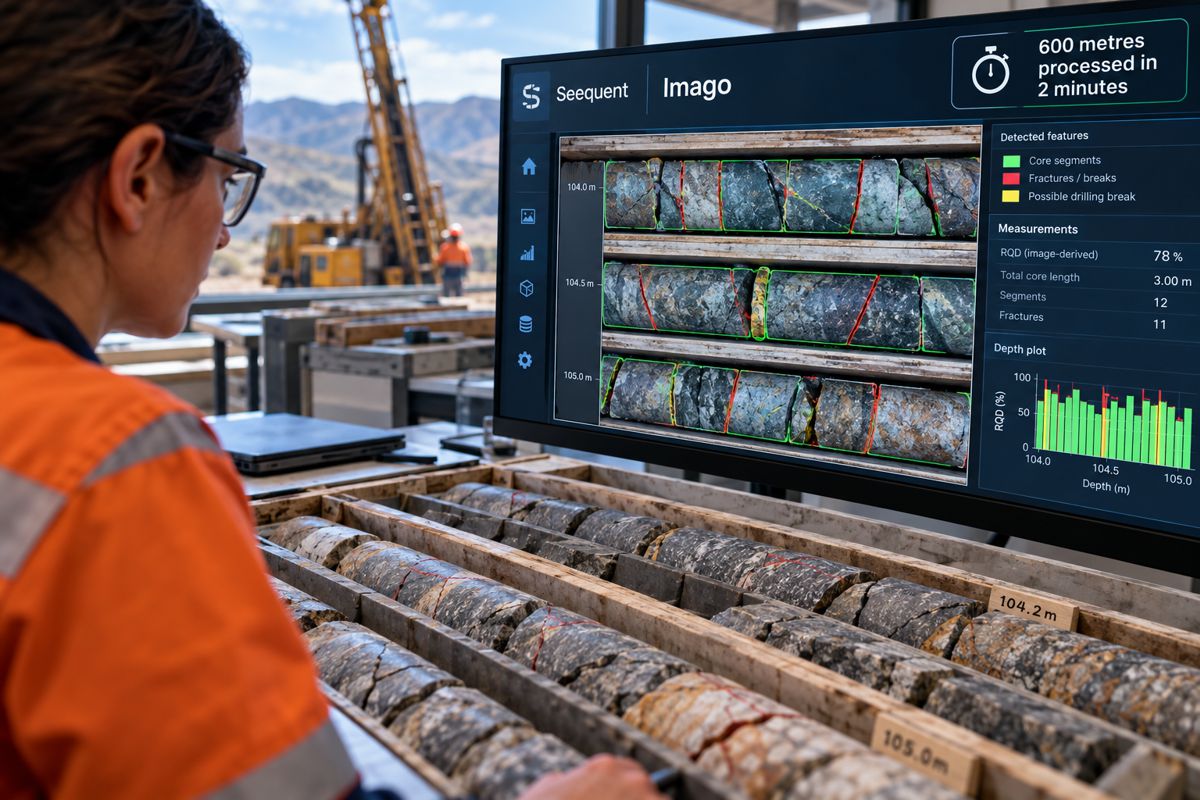
- What construction technologies are relevant to Chicago’s project pipeline? Building information modelling, digital design coordination, offsite fabrication, construction management platforms and specialist infrastructure monitoring systems all have applications across major projects.
Strategic Takeaways
- Chicago’s construction opportunities are distributed across transport, aviation, commercial development and essential infrastructure maintenance, reducing dependence on any single project category.
- Airport and railway programmes require specialist engineering capabilities and careful integration with operating infrastructure, creating demanding conditions for contractors and suppliers.
- The proposed 1901 Project could generate sustained construction activity, although its commercial phases remain dependent on subsequent investment decisions and approvals.
- Freight railway improvements and grade separation projects offer specialised civil engineering opportunities while addressing longstanding transport constraints.
- Chicago Build Expo provides a regional meeting point for construction businesses seeking to understand project requirements, demonstrate technologies and develop relationships across the supply chain.