When Cities Swallow the Infrastructure They Depend On
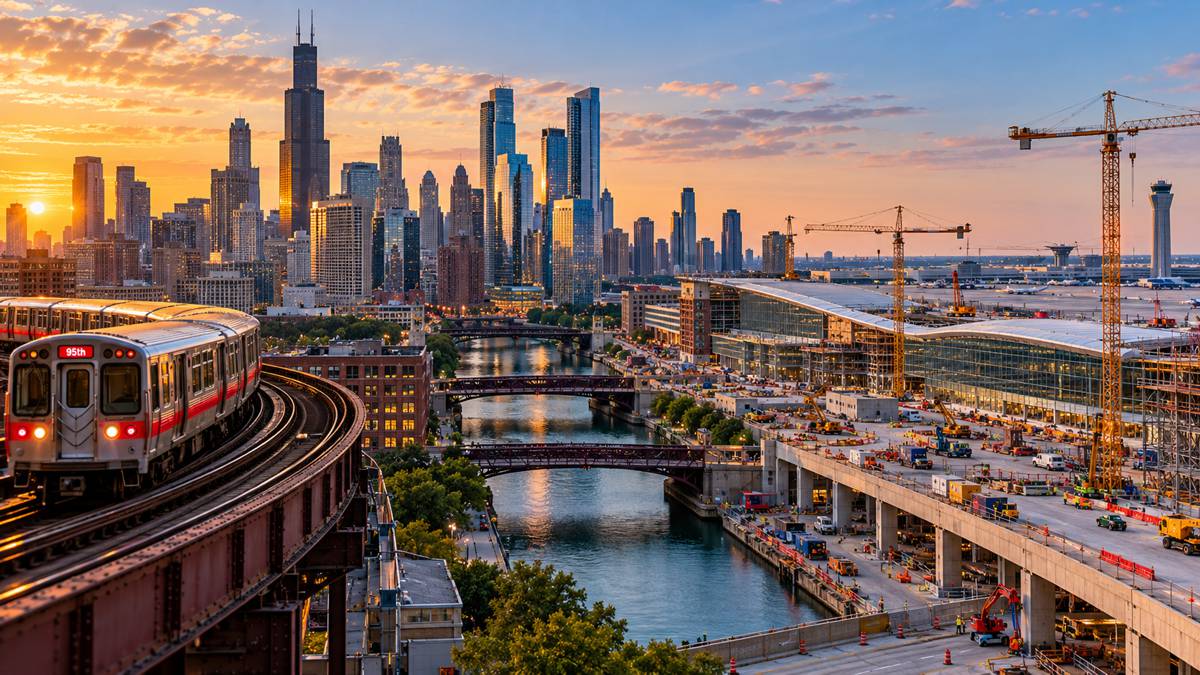
From Vietnam’s roadside settlements to Britain’s industrial towns, airports, shipyards and wastewater treatment plants, the infrastructure that creates economic growth can eventually find itself constrained by the communities it helped establish.
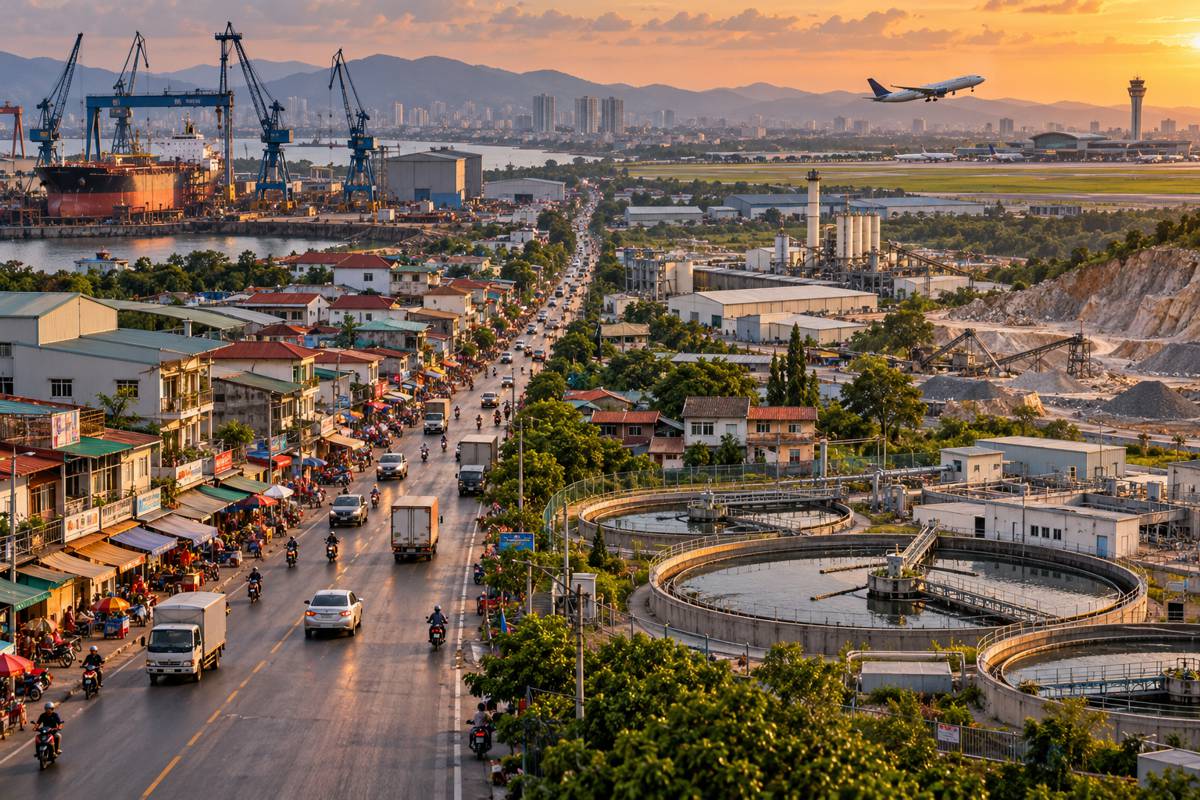
Travel along an established highway in Vietnam and the boundary between road and town can become difficult to distinguish. Houses, workshops, restaurants and shops line the carriageway, often with direct access to the passing traffic. What may once have been a relatively open transport corridor has evolved into an extended commercial settlement, with the road serving simultaneously as a regional connection, a local street and a place of business.
This pattern illustrates a challenge that extends far beyond Vietnam. Infrastructure changes the economic geography around it, attracting investment, employment and development. Roads open land for housing and commerce, airports generate business districts, and factories or shipyards can support the growth of entire towns. Over time, however, the development stimulated by these investments can make the original infrastructure increasingly difficult to operate, maintain, modernise or expand.
The consequences are often gradual. Buildings advance towards a highway until widening requires extensive demolition. Residential neighbourhoods approach industrial facilities, creating conflicts over noise, odours and heavy vehicle movements. Wastewater treatment plants become embedded within expanding urban areas, even as population growth increases demand for their services. What began as evidence of successful infrastructure investment can eventually become a constraint on its future usefulness.
For governments, developers and infrastructure owners, this presents a challenge extending well beyond the initial construction programme. Building capacity is only part of the investment. Protecting the ability to use and adapt that capacity over the following decades can be equally important.
Briefing
- Infrastructure investment attracts development and changes surrounding land values, sometimes creating long-term operational constraints.
- Vietnam demonstrates how roadside growth can transform strategic highways into linear settlements, complicating future widening and access management.
- Britain’s industrial towns illustrate an older relationship in which factories, shipyards and other major employers helped create the communities surrounding them.
- Wastewater treatment works, quarries, airports, ports and freight facilities can become increasingly difficult to expand as incompatible development approaches their boundaries.
- Effective planning must distinguish between essential infrastructure requiring long-term safeguarding and obsolete industrial facilities that can be appropriately redeveloped.
Vietnam and the Road That Becomes a Town
Across Vietnam, roads provide a particularly visible example of how transport investment can determine the physical shape of development. A new or improved route increases access to markets, employment, schools and services, making land alongside the carriageway more attractive. Houses, shops, restaurants and workshops follow the traffic, and individual clusters of buildings can eventually merge into settlements extending for considerable distances along the road.
For local businesses, road frontage offers passing customers, visibility and convenient access. Households benefit from improved connections and potentially more valuable property, while commercial investment brings employment and services closer to communities. These are precisely the economic benefits that road infrastructure is intended to generate, but the resulting development can gradually change how the road functions.
A strategic highway is designed to move traffic efficiently between settlements, industrial centres and regional markets. As roadside activity increases, it must also accommodate pedestrians, motorcycles, deliveries, parked vehicles and frequent turning movements into individual properties. The growing number of access points introduces conflicts between local activity and through traffic, reducing journey reliability and creating additional safety risks even where the physical carriageway remains unchanged.
The problem has been recognised in infrastructure research. The World Bank’s 2008 report, An Expressway Development Strategy for Vietnam, examined the constraints facing the country’s road network, including roadside development, land acquisition and the difficulties associated with expanding transport infrastructure through settled areas.
The implications become particularly significant when a highway requires upgrading. An additional lane may appear straightforward on an engineering drawing, but the land beside the road is no longer empty. Buildings, boundary walls, drainage systems, utility connections and established businesses occupy space that might otherwise have accommodated widening, service roads or safer junction arrangements.
Acquiring that land can involve compensation, relocation, complex property negotiations and the reconstruction of local access arrangements. Shops may lose frontage, homes may require demolition and utilities may need extensive diversion. The eventual cost of improving the highway is therefore determined not only by the engineering works but also by the development that followed the original investment.
When Road Widening Becomes Urban Reconstruction
The difficulty is compounded by the amount of land a highway may need over its operational life. Future improvements can require additional lanes, turning facilities, pedestrian crossings, drainage channels, utility corridors, retaining structures and construction access, while major junctions and bridges often need substantially wider footprints than the carriageway between them.
Once surrounding land has been developed, engineers may be forced to consider narrower layouts, complex structures or entirely new alignments. Constructing a bypass or controlled-access expressway can sometimes become more practical than attempting to restore the original road’s strategic function, particularly where roadside access and commercial activity are firmly established.
Yet bypasses can begin the same cycle if surrounding development is not managed. New commercial opportunities appear, land values rise and businesses follow the traffic, gradually introducing the access demands and local movements that the new route was intended to avoid.
Vietnam’s experience demonstrates why infrastructure safeguarding must extend beyond the land required for initial construction. A road that is intended to serve regional traffic for several decades needs an appropriate relationship with surrounding development, supported by access controls, local road networks and credible provision for future improvements.
When Industry Built the Town Around Itself
The relationship between infrastructure and settlement is hardly new. Britain’s industrial history demonstrates how factories, shipyards, mills and steelworks could shape entire communities, with employment attracting housing, commerce and public services to locations that might otherwise have remained relatively undeveloped.
During the Industrial Revolution, major industrial facilities drew workers from surrounding regions, encouraging the construction of housing close to employment. Shops, schools, places of worship, railway connections and other services followed, creating distinctive industrial towns whose layouts reflected the requirements of their principal industries.
In some cases, development was deliberately coordinated. Saltaire in West Yorkshire, established around the textile manufacturing operations of Sir Titus Salt during the nineteenth century, combined industrial buildings with workers’ housing and community facilities. Now recognised as a UNESCO World Heritage Site, it demonstrates how manufacturing investment could determine the physical and social organisation of an entire settlement.
Elsewhere, development was less formally planned. Factories and workshops expanded, housing spread along neighbouring streets, and successive generations of industrial activity created dense urban districts with production facilities embedded in their centres. These communities were not simply located near industry; their economic development was inseparable from it.
Shipyards and the Communities They Created
Shipbuilding provides a particularly clear illustration because major yards depend on specific physical conditions. Access to navigable water, sufficient waterfront land, fabrication areas, workshops, lifting equipment and transport connections all influence where operations can be established. Once a shipyard develops at scale, it can anchor a much wider industrial economy involving steel fabrication, engineering, marine equipment, electrical systems and specialist suppliers.
Barrow-in-Furness and the shipbuilding districts of the River Clyde demonstrate how closely industrial development and urban growth could become connected. Housing, transport links and public services expanded alongside the industries providing employment, creating communities whose prosperity depended heavily on continued manufacturing activity.
The relationship becomes more complicated when production technology changes. Modern shipbuilding can require larger fabrication halls, more extensive assembly areas, heavier lifting systems and improved road access, while facilities established in earlier industrial periods may be surrounded by streets and buildings that leave limited room for expansion. Modernisation is therefore not simply a matter of installing new equipment; it can require substantial changes to the physical organisation of an industrial site and its connections to the wider transport network.
Where shipbuilding declines, the consequences are reversed. Communities can lose employment, supporting businesses and demand for specialist services, leaving former production areas available for redevelopment but creating the much harder task of replacing the economic activity that sustained the town.
Industrial history reveals both sides of the planning challenge. Successful manufacturing investment can attract development that constrains future operations, while industrial decline can leave communities dependent on facilities that no longer fulfil their original economic purpose.
Factories and the Industrial Land Cities Gradually Lose
The pressures affecting historic industrial towns remain relevant to modern manufacturing, particularly where industrial estates established beyond urban boundaries have gradually become surrounded by residential and commercial development.
Factories depend on far more than the buildings containing their production lines. Reliable power and water supplies, freight access, loading areas, storage facilities, waste management arrangements and connections to suppliers and customers all contribute to their operational viability. Many also operate beyond conventional working hours, with machinery, ventilation systems, refrigeration equipment and delivery vehicles functioning throughout the day and night.
These activities can be managed within an appropriate industrial environment, but they become more contentious when housing approaches. Noise, vibration, lighting, emissions and heavy vehicle movements may generate complaints, while manufacturers can face pressure to introduce additional mitigation measures or alter established operating arrangements.
Some improvements are justified by changing environmental standards or genuine concerns about health and safety. Others arise because planning decisions have allowed sensitive land uses to move closer to operations that were previously separated from residential areas. The distinction matters because it influences who should reasonably bear the cost of making neighbouring uses compatible.
Relocating a specialist factory can involve rebuilding production lines, obtaining new environmental permissions, installing dedicated utility connections and disrupting established supply chains. Businesses may also lose access to experienced workers if a replacement facility is located too far from the existing workforce, making relocation commercially unrealistic for some manufacturers.
There are wider consequences when industrial land is converted to residential or commercial use. A city may gain valuable development sites while losing production capacity, engineering services and facilities supporting its construction industry. Concrete batching plants, asphalt producers, fabrication workshops and building products manufacturers all benefit from proximity to urban markets, and moving them farther away can increase transport distances and delivered costs.
Not every industrial site should be preserved indefinitely. Manufacturing technologies change, businesses close and some facilities are no longer appropriate for their original uses. The important distinction is whether redevelopment reflects a genuine change in industrial requirements or simply the increasing property value of land occupied by businesses that remain economically useful.
Wastewater Treatment Plants and the Homes They Serve
Few examples demonstrate the contradictions of urban expansion more clearly than wastewater treatment works. These facilities have traditionally been located according to engineering and environmental requirements, including topography, sewer networks, pumping arrangements, available land and suitable discharge locations. Many were established beyond the main residential areas of towns, providing a degree of separation from the populations they served.
As settlements expand, housing developments can gradually approach treatment facilities that were once relatively isolated. New residents may encounter odours from treatment processes, noise from pumps and blowers, sludge handling activities or the movement of maintenance vehicles, generating demands for additional environmental controls and operational changes.
At the same time, the expanding population increases the volume of wastewater requiring treatment. The plant faces growing demand for capacity while surrounding development reduces the space available to provide it, creating a particularly difficult relationship between urban growth and essential public services.
Why Moving a Treatment Plant Is Not Like Moving a Warehouse
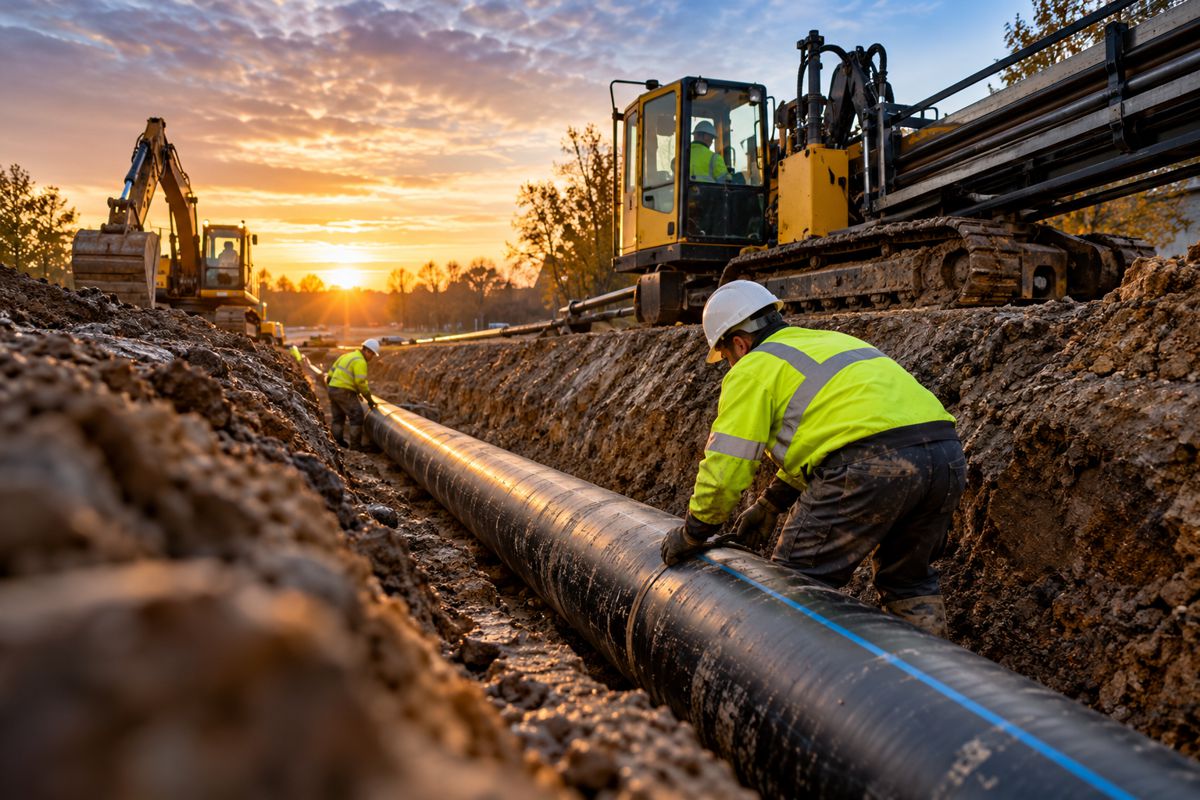
A wastewater treatment works forms part of an extensive connected system, often developed over generations. Sewers, pumping stations, rising mains and discharge infrastructure may cover a substantial urban area, while the treatment plant’s location reflects the hydraulic characteristics of that network, including opportunities to move wastewater by gravity.
Relocating the facility can therefore require much more than constructing replacement tanks and buildings. Major trunk sewers might need rerouting, pumping requirements could increase and new discharge arrangements may be necessary, potentially affecting infrastructure far beyond the original site.
Modern treatment technologies can reduce odours, improve process efficiency and accommodate additional capacity within a smaller footprint. Covered processes, air treatment systems and improved monitoring can also reduce conflicts with neighbouring development, although these measures involve capital expenditure and cannot eliminate every operational impact.
The planning implications are increasingly relevant as cities seek to expand housing provision. England’s September 2026 National Planning Policy Framework provisions on energy and water infrastructure emphasise early engagement between planning authorities, utility providers, regulators and network operators, including consideration of drainage and wastewater capacity.
That coordination is essential because the consequences of inadequate safeguarding can emerge decades after the original development decisions. A city may approve housing around its wastewater infrastructure, only to discover that expanding treatment capacity to serve those homes has become substantially more difficult and expensive.
Airports and the Suburbs That Follow Them
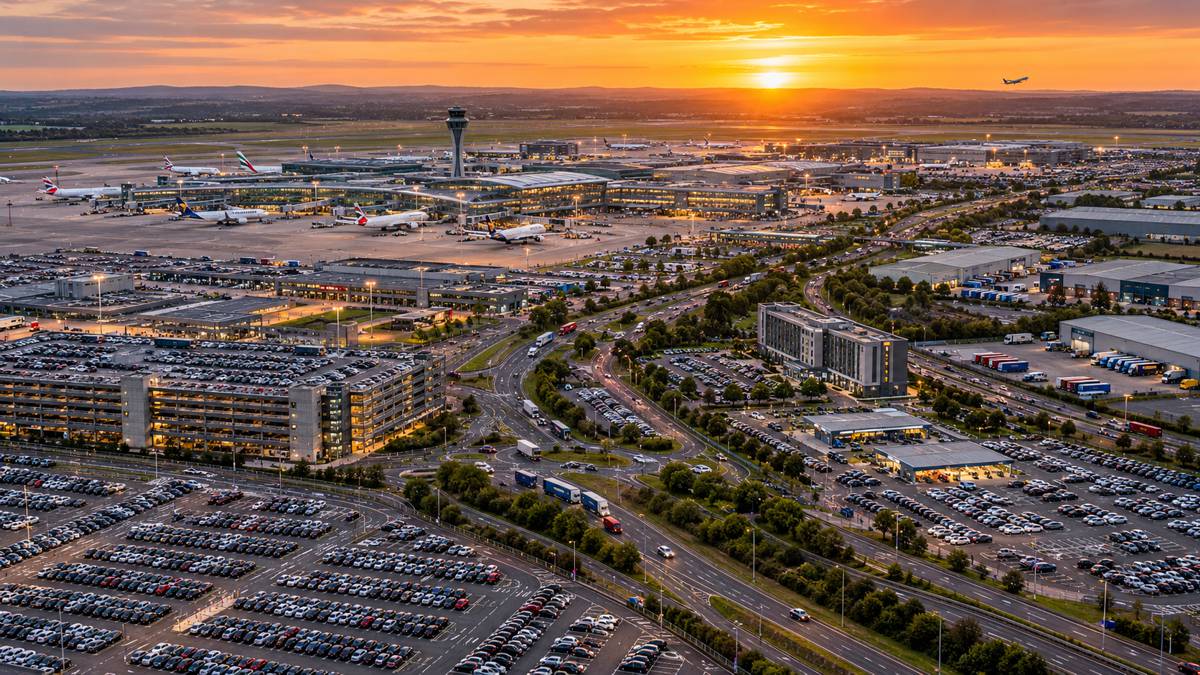
Airports illustrate the same process on a regional scale. Many were originally established beyond the densest urban areas, where land was more readily available and fewer residents were exposed to aircraft operations. Over time, the airport itself becomes a powerful influence on surrounding development, attracting hotels, car parks, logistics centres, maintenance businesses, offices and distribution facilities.
Improved road and rail connections make neighbouring land more accessible, while employment opportunities encourage residential growth. Eventually, an airport that was once relatively isolated can find itself embedded within an expanding metropolitan area, with disputes over aircraft noise, operating hours, flight paths and future expansion becoming increasingly difficult to resolve.
There is an obvious irony when housing follows an established airport and residents subsequently complain about aircraft movements. However, determining which development arrived first does not settle every legitimate concern. Passenger demand can increase, flight frequencies may grow, aircraft types evolve and operating patterns can alter the noise experienced by neighbouring communities, meaning a property purchased near an established airport may face substantially different conditions decades later.
The planning challenge is to protect existing airport operations from avoidable conflicts while ensuring that proposals introducing additional impacts receive appropriate scrutiny.
Australia provides a useful example through its National Airports Safeguarding Framework, agreed by Commonwealth, state and territory transport ministers in 2012. The framework addresses aircraft noise alongside protected airspace, wildlife hazards, building-generated turbulence, lighting and public safety areas near runway ends.
These requirements demonstrate that airport safeguarding extends beyond residential amenity. Buildings, cranes, industrial activities and other developments can affect aviation safety and operational efficiency even when aircraft noise is not the primary concern.
The Airport Economy Extends Beyond Its Boundary
Airports also reveal the difference between an infrastructure operator’s direct revenue and the wider economic activity enabled by the facility. An airport serving a tourism destination may support hotels, restaurants, car hire businesses, taxis, property services and construction activity across an extensive region, with much of that expenditure captured by independent businesses rather than the airport operator.
A metropolitan airport may similarly support logistics parks, offices and industrial estates extending far beyond its operational boundary. These activities generate employment and investment, but they also increase traffic, land consumption and demand for housing and public services.
The airport becomes an anchor for an economic ecosystem whose development it does not necessarily control. Regional planners must therefore encourage the benefits of connectivity without allowing surrounding development to compromise future aviation operations or the surface transport networks on which they depend.
Quarries and the Mineral Resources That Cannot Move
Quarries present a particularly important problem for construction and infrastructure supply chains because, unlike most commercial businesses, they cannot relocate independently of their underlying resources. Suitable stone, sand, gravel and other mineral deposits exist in specific geological locations, and extraction must take place where those deposits can be accessed.
Many quarries operate for decades, supplying materials for concrete, asphalt, roads, buildings and civil engineering projects. Their activities can involve blasting, crushing, screening, dust, vibration and substantial heavy vehicle movements, all of which require appropriate environmental management but cannot always be made compatible with residential development immediately beyond the site boundary.
As settlements expand, housing and commercial development may approach established mineral operations, increasing the potential for conflict and complicating proposals to access adjoining deposits. In some cases, development can prevent economically important mineral resources from being worked at all.
The consequences extend beyond the quarry operator. If a local source of aggregates becomes unavailable, materials may need to travel greater distances to construction sites, increasing haulage costs, road traffic and associated emissions across a much wider region.
England’s September 2026 National Planning Policy Framework provisions on minerals recognise these constraints. The framework provides for Mineral Safeguarding Areas and protection of facilities involved in mineral handling, processing, concrete manufacturing and the distribution of recycled and secondary aggregates.
Safeguarding does not automatically grant permission for extraction or remove environmental obligations. It helps ensure that future mineral requirements are considered before other development eliminates the available options, particularly where growing settlements are increasing demand for the very construction materials produced by nearby quarries.
Ports and the Battle for Waterfront Land
Ports have shaped urban development for centuries, providing access to trade, employment and industrial activity. Docks, warehouses, railway connections and manufacturing facilities frequently became foundations of surrounding cities, creating commercial districts and transport networks that evolved around maritime trade.
As urban economies changed, waterfront land acquired new commercial value. Former industrial districts became attractive locations for apartments, offices, leisure facilities and public spaces, and the redevelopment of obsolete docklands has delivered substantial benefits in many cities.
The difficulty arises when working port infrastructure remains strategically important. Cargo terminals require space for handling and storage, reliable access for heavy vehicles and trains, security arrangements and the ability to operate according to shipping schedules rather than conventional business hours. Container cranes, refrigerated cargo facilities, vessels and freight movements can create operational impacts that conflict with neighbouring residential uses.
Port capacity also depends on infrastructure beyond the terminal boundary. A modernised container terminal may be capable of handling additional cargo, but its performance can be limited by congested access roads, inadequate freight railway connections or a shortage of nearby logistics land. Protecting the waterfront site without safeguarding the transport corridors that serve it may achieve relatively little.
For port cities, redevelopment decisions therefore require a distinction between industrial land that has genuinely become redundant and facilities that remain essential to regional and national freight networks. Once strategically located port land has been converted to residential use, recreating equivalent operational capacity elsewhere can be technically difficult, environmentally contentious and financially expensive.
Railway Freight Terminals and the Forgotten Logistics Network
Rail freight infrastructure faces comparable pressures, particularly where former industrial districts are being redeveloped. Freight terminals, marshalling yards and intermodal facilities need extensive land for sidings, loading equipment, storage, vehicle movements and connections to the wider railway network, with operations sometimes extending into overnight periods to accommodate freight schedules and passenger services.
As housing approaches established facilities, train movements, handling equipment, lighting and heavy vehicle activity can become sources of conflict. Meanwhile, rising land values may encourage redevelopment of railway land that appears underused when assessed only in terms of its immediate property value.
Removing an urban freight terminal can have consequences across the transport system. Goods previously transferred between rail and road near their destinations may need to be handled farther away, increasing the distance travelled by lorries and potentially undermining policies intended to reduce congestion and freight emissions.
The same principle applies to railway approaches and connecting infrastructure. A terminal cannot function effectively without access to the network, and safeguarding a railway corridor is of limited value if the land needed for loading, storage and distribution has disappeared.
Freight infrastructure must consequently be considered as part of a connected system rather than a collection of independently developable sites, particularly as cities seek to improve the environmental performance and efficiency of their logistics networks.
The Gas Holders That Disappeared from Britain’s Skyline
Not every industrial facility surrounded by urban development needs to remain in operation indefinitely. Britain’s former gas holders provide an instructive contrast, illustrating how technological change can make once-essential infrastructure redundant.
For generations, large cylindrical gas holders were familiar landmarks across industrial towns and cities. Many used telescopic sections that rose as gas was stored and descended as it was withdrawn, often within prominent steel guide frames. They formed part of the infrastructure supporting manufactured town gas and, subsequently, gas distribution systems.
As gas production, transmission and storage technology changed, the need for these large low-pressure storage structures diminished. Many sites were decommissioned, and demolition released land that had become increasingly valuable within expanding urban areas.
Former gasworks can present substantial remediation challenges because of contamination associated with historic industrial processes, but redevelopment has nevertheless created opportunities for new uses. Some gas holders have also been retained because of their architectural and industrial heritage value, demonstrating that adaptation and preservation can sometimes coexist with urban regeneration.
Their history introduces an important qualification to infrastructure safeguarding. Protecting essential facilities should not become an argument for preserving every industrial asset regardless of changing technology, demand or environmental performance. Some infrastructure becomes genuinely obsolete, while other facilities remain essential but face pressure because surrounding land has become more valuable or incompatible development has been permitted nearby.
Planning systems need to recognise that distinction rather than treating every industrial site as either permanently protected or automatically available for redevelopment.
The Economics of Infrastructure Encroachment
Across these examples, the same economic forces repeatedly appear. Infrastructure improves the usefulness of surrounding land, whether through transport access, employment, utility services or connections to wider markets. Development follows those opportunities, increasing property values and generating further demand for infrastructure.
Initially, this is evidence of successful investment. The difficulties emerge when the growing value and intensity of surrounding land use begin competing with the operational requirements of the original facility.
Land acquisition becomes more expensive, environmental mitigation more complicated and access arrangements increasingly constrained by buildings and property boundaries. Expansion proposals may also involve negotiations with a larger number of affected residents, businesses and public authorities.
A highway upgrade can require extensive demolition and compensation, while a wastewater treatment plant may need expensive odour-control equipment or alternative expansion arrangements. A factory may struggle to modernise its logistics facilities, and a quarry can lose access to mineral deposits needed by the construction industry.
These costs are not always fully apparent when the original infrastructure is commissioned. A road project may demonstrate strong economic benefits on opening, but subsequent land-use changes can alter traffic patterns and make future improvements substantially more expensive. Similarly, the economic value created by an airport or port can encourage property development that progressively reduces its operational flexibility.
There is also a question of who ultimately pays. The benefits of development may accrue to landowners, property developers and local businesses, while the costs of resolving later conflicts fall on infrastructure operators, utility customers, taxpayers or future construction projects. The party benefiting from a land-use decision is not necessarily the party that bears its long-term consequences.
Who Was There First Is Not the Only Question
It can be tempting to reduce infrastructure conflicts to a simple argument about precedence. An airport existed before the surrounding housing, a factory operated before apartments were built nearby, or a quarry was extracting materials before residential development approached its boundary.
In such cases, it is reasonable to question why planning decisions permitted potentially incompatible uses to move closer to established operations. However, historical precedence cannot provide an unlimited entitlement to create noise, pollution or safety risks, particularly where an operator proposes substantial changes to its activities.
An established factory may introduce new production processes, a quarry may seek to expand extraction, and an airport may propose additional flights or changed operating hours. These developments can create impacts that did not exist when neighbouring properties were originally constructed, while environmental standards and expectations concerning public health may also have changed.
England’s planning framework addresses part of this relationship through the Agent of Change approach, under which developers introducing sensitive uses near existing activities are expected to consider the potential impacts and appropriate mitigation. The principle is relevant to industrial premises, transport operations and other established uses, although its application depends on the circumstances and applicable planning policy.
It does not remove the environmental responsibilities of existing operators or guarantee permission for future expansion. Effective safeguarding should prevent foreseeable conflicts while retaining the ability to assess new or intensified impacts, rather than simply determining which party must absorb the costs once those conflicts have developed.
Protecting Tomorrow’s Infrastructure Before the Land Disappears
The most effective response to infrastructure encroachment begins before surrounding land has been developed. Strategic planning can identify future requirements for transport corridors, utility connections, industrial operations, mineral extraction and essential public services, allowing those requirements to inform decisions while alternative layouts and suitable land remain available.
For highways, this may involve protecting space for future junctions, service roads, drainage systems and additional capacity, alongside managing direct access to strategic routes. Airports require consideration of aircraft noise, protected airspace and operational safety, while mineral safeguarding can prevent important resources and associated processing facilities from being unnecessarily lost to incompatible uses.
Wastewater treatment works need sufficient land and network flexibility to accommodate population growth, while ports and freight terminals require protection of the road, rail and logistics connections that make them operationally useful. Manufacturing districts may also warrant deliberate planning protection where they support strategically important employment, supply chains or construction materials production.
These measures involve difficult choices because land reserved for potential future infrastructure may remain undeveloped for years, limiting opportunities for property owners and local authorities. Infrastructure forecasts can change, projects can be cancelled, and safeguarding arrangements that are too broad or indefinite can impose unnecessary economic costs.
The answer is not to freeze cities in their existing form, but to establish credible long-term requirements, review them periodically and make the consequences of development decisions transparent. Where land must be protected, the justification should be clear. Where infrastructure has become obsolete, redevelopment should be considered. Where operational facilities remain essential, planning should avoid creating conflicts that future generations will be forced to resolve at substantially greater expense.
Connecting Engineering with Urban Development
Infrastructure planning and urban development are frequently treated as related but separate disciplines. Engineers assess capacity, geometry, construction methods, maintenance requirements and operational performance, while urban planners consider housing, employment, land use, accessibility and community needs.
Yet successful infrastructure projects change the very land-use patterns on which their long-term performance depends. A highway can attract development that alters traffic movements and consumes future widening space. An airport can stimulate an extensive commercial district while becoming increasingly constrained by nearby housing. A treatment plant can enable residential expansion that ultimately leaves insufficient room for additional treatment capacity.
These outcomes suggest that infrastructure appraisal should consider the development pressures new capacity may generate, while spatial planning must recognise operational requirements extending decades into the future. The two disciplines cannot be separated without risking decisions that appear beneficial individually but create substantial problems when their long-term consequences are considered together.
Key Industry Questions
- Why does urban development often follow new infrastructure? Transport connections, utilities and industrial investment make surrounding land more accessible, commercially useful or suitable for housing. Businesses and households respond to those opportunities, often increasing land values and development pressure.
- Why is ribbon development a problem for highways? Ribbon development introduces frequent property entrances, turning movements, roadside commercial activity and mixed traffic into corridors intended to carry through traffic. It can reduce operational efficiency and make future widening or junction improvements more expensive.
- Why are wastewater treatment plants difficult to relocate? Treatment works are connected to extensive sewer networks, pumping arrangements and discharge infrastructure. Relocation may require major changes to those systems rather than simply replacing the treatment buildings and equipment.
- What makes shipyards and factories different from airports? In many industrial towns, manufacturing facilities helped create the surrounding settlement rather than being overtaken by a previously independent city. Their operations, employment and supporting supply chains became closely integrated with the community.
- Should all existing infrastructure be protected from redevelopment? No. Infrastructure can become obsolete as technology, demand and economic conditions change. Safeguarding should protect credible long-term operational requirements while allowing appropriate redevelopment where facilities are no longer needed.
- How can governments reduce future conflicts? Approaches include strategic land safeguarding, appropriate separation distances, controlled highway access, protection of freight and utility corridors, coordinated land-use planning and early assessment of development near established operations.
Strategic Takeaways
- Infrastructure and urban growth have always influenced one another. Roads create commercial opportunities, airports support regional economies, ports enable trade, and industrial facilities provide employment and essential products. Their success changes surrounding land values, development patterns and the expectations of neighbouring communities.
- Vietnam’s roadside settlements demonstrate how new transport connections can gradually become constrained by the development they attract. Britain’s industrial towns show how factories and shipyards can shape entire communities, while wastewater treatment plants and quarries illustrate the difficulty of relocating facilities tied to extensive networks or fixed natural resources.
- The disappearance of Britain’s gas holders offers a necessary counterpoint. Not every facility should remain indefinitely, and technological change can create legitimate opportunities for redevelopment. The challenge is to distinguish infrastructure that has genuinely outlived its purpose from infrastructure that remains essential but has become inconvenient to accommodate.
- For governments, this means recognising that land-use decisions can create costs extending decades into the future. Developers must understand that proximity to infrastructure brings operational constraints as well as commercial advantages, while infrastructure owners need to engage with planning authorities long before expansion becomes necessary.
- The construction industry has a particular interest in this relationship because every major infrastructure project changes its surroundings. The development that follows can determine how difficult the next project will be, whether it involves widening a road, expanding a treatment works, modernising a factory or protecting a freight corridor.
- A road, airport, port, factory or treatment works may be designed for a service life measured in decades. The land-use decisions made around it during that period can either preserve its value or progressively undermine it.
- Cities need infrastructure to grow. The greater challenge is ensuring that growth does not consume the space their infrastructure needs to survive, adapt and expand.