Artificial Intelligence enables hydropower smart planning across Amazon basin
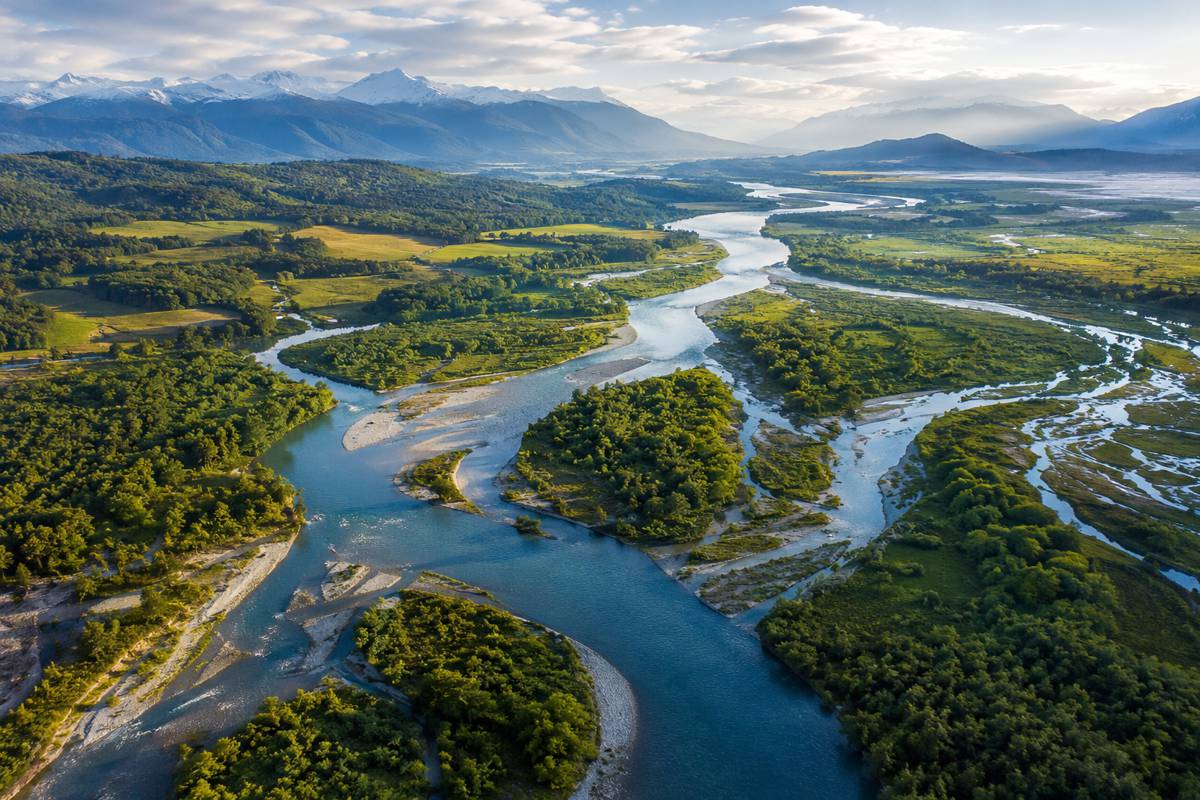
An international team of researchers has for the first time demonstrated how artificial intelligence can be harnessed for sustainable hydropower development across the entire Amazon basin – stretching across South America.
The work shows how computational advances using AI can identify dams that are likely to be particularly detrimental and reveals lost environmental benefits from the 158 existing hydropower dams in the basin, originally placed without coordinated planning that considered their cumulative negative effects.
The new work, published in the journal Science, demonstrates how AI can be applied to other renewable energy projects as societies worldwide seek to transition away from fossil fuels.
Cornell University biologist Alexander Flecker and Cornell computer scientist Carla Gomes co-led the project, which considers six socio-environmental criteria for optimization of the more than 350 proposed hydroelectric dams in the Amazon basin: river flow; river connectivity; sediment transport; fish diversity; greenhouse gas emissions; and energy production.
“AI is being used by Wall Street, by social media, for all kinds of purposes,” said Gomes. “Why not use AI to tackle serious problems like sustainability?”
This research emphasizes the importance of strategic planning at the scale of the entire Amazon basin, and pushes the frontiers of the work Gomes and Flecker published in 2019 that sought to optimize selection of dams in the Amazon basin with respect to lowering greenhouse gas emissions. This work is substantially more ambitious in providing insights about the largest and most biodiverse transboundary river basin in the world, which spans eight countries, and shows why international cooperation is important for basin-wide planning in the Amazon.
The paper features a total of 40 co-authors from more than two dozen academic institutions in the U.S., Europe and South America, along with NGOs including The Nature Conservancy and the Wildlife Conservation Society.
“What makes this work special is that we’re bringing together so many different areas of expertise, and real Amazon experts, in areas such as ecology, fisheries biology, hydrology, social science, and computer science and AI,” said Flecker.Support for this research came from the National Science Foundation, the Cornell Atkinson Center for Sustainability’s Academic Venture Fund and the Army Research Office’s Defense University Research Instrumentation Program.
For additional information, res the Cornell Chronicle story.