Automation, AI and Telematics Transforming Heavy Machinery Operations
Imagine a vast mining site in Western Australia where 250‑tonne haul trucks ferry ore with no drivers, or a city project in Sweden where quiet electric excavators guided by AI reshape a block with minimal human input.
These scenarios aren’t science fiction, they’re real pilot projects showing how automation and robotics are revolutionising construction and mining equipment. The traditionally rugged world of bulldozers, cranes and haul trucks is going digital and green, promising safer worksites, higher productivity and new types of operator roles.
Leading original equipment manufacturers (OEMs) like Caterpillar, Komatsu and Volvo Construction Equipment are pouring innovation into “smart” machines, from self-driving earthmovers to cranes that can diagnose their own maintenance needs. Caterpillar, for example, has operated autonomous haul trucks in mines for over a decade and is now bringing that expertise to construction sites. Its Cat® Command system lets operators control bulldozers and excavators remotely from a safe location, meaning one person can oversee multiple machines at once and keep crews out of harm’s way.
In a recent trial at a North American quarry, Caterpillar’s first autonomous mining trucks for the aggregates industry boosted productivity by nearly 30% compared to traditional manned operation. This dramatic gain underscores how AI-driven, self-propelled equipment can accelerate project timelines and improve efficiency.
Other OEMs are following suit worldwide. Japan’s Komatsu has deployed over 500 autonomous haul trucks in mines (under its FrontRunner system) and is now developing robotic construction gear for civil projects. It has trialled excavators that can dig trenches on their own, and its dozers and graders use intelligent Machine Control (iMC) to automatically adjust blade movements, reducing the need for constant human input.
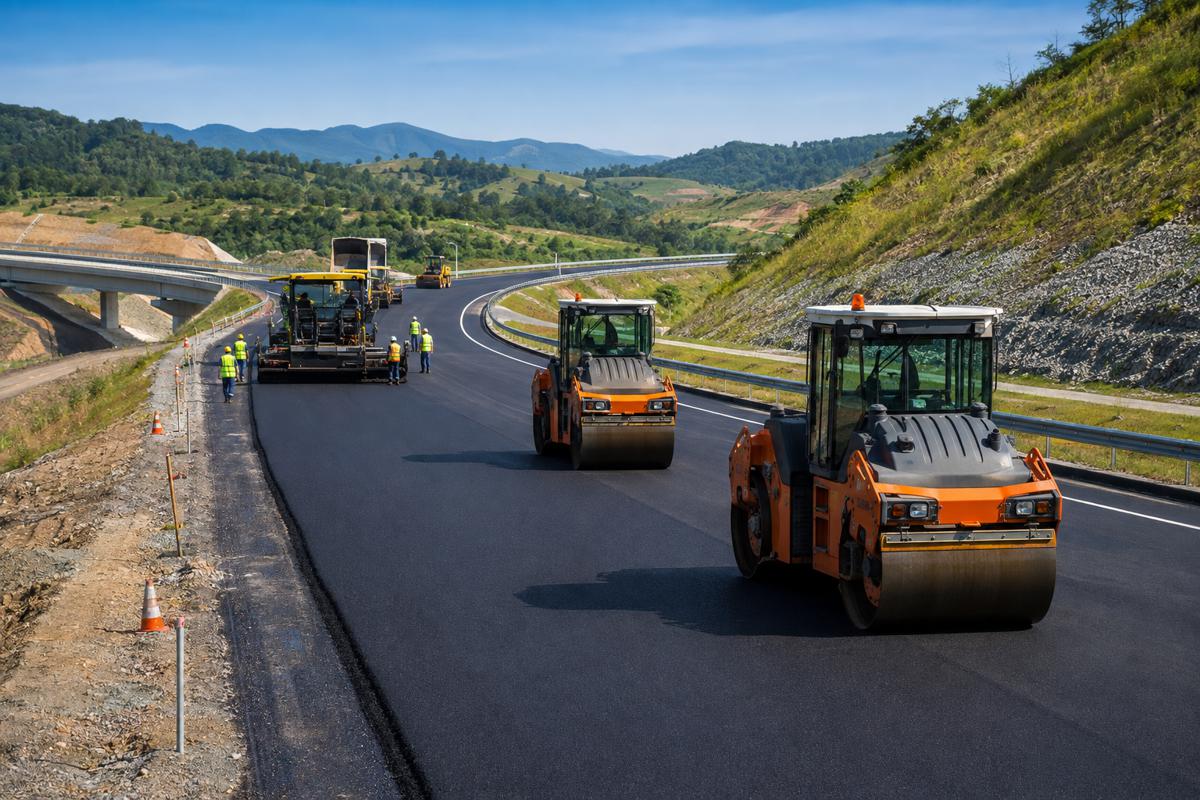
Sweden’s Volvo CE is similarly pioneering autonomy, it unveiled an CX01 autonomous asphalt compactor (a driverless road roller) and the TA15 electric dump truck, which hauls 15 tonnes with zero emissions and no operator on board. These robo-haulers are already shuttling material in pilot programs, proving that automation can work in real jobsite conditions. Even in China, manufacturers like XCMG have demonstrated convoys of self-driving dump trucks in mines, leveraging the country’s massive projects as testing grounds. And in Australia, a global leader in mining tech, companies like Rio Tinto have well-publicised autonomous train and truck operations, knowledge now being transferred into large remote civil projects.
Real-world case studies illustrate the impact. In Japan, Shimizu Corporation built a dam in 2022 using almost entirely autonomous or remote-controlled machinery, slashing on-site manpower by 70%. In the United States, several big quarries in Arizona and Texas are running fleets of autonomous haul trucks from Caterpillar and Komatsu, reporting higher output and consistent safety performance.
European contractors have tested “autonomous crash trucks” (driverless impact protection vehicles) to shield road crews without putting a driver in danger. These examples show that automated heavy equipment is not a distant vision but an emerging reality across mining and civil construction. The benefits, from keeping workers out of hazardous environments to alleviating skilled labour shortages, are driving rapid adoption. As one Caterpillar executive noted, autonomy makes equipment “easier and safer to use,” aiming to reduce the construction industry’s high accident rates.
In short, automation and AI are becoming the new “second crew” on jobsites, taking on repetitive or dangerous tasks so human teams can focus on supervision and complex decision-making.
Connected Machines and Predictive Maintenance
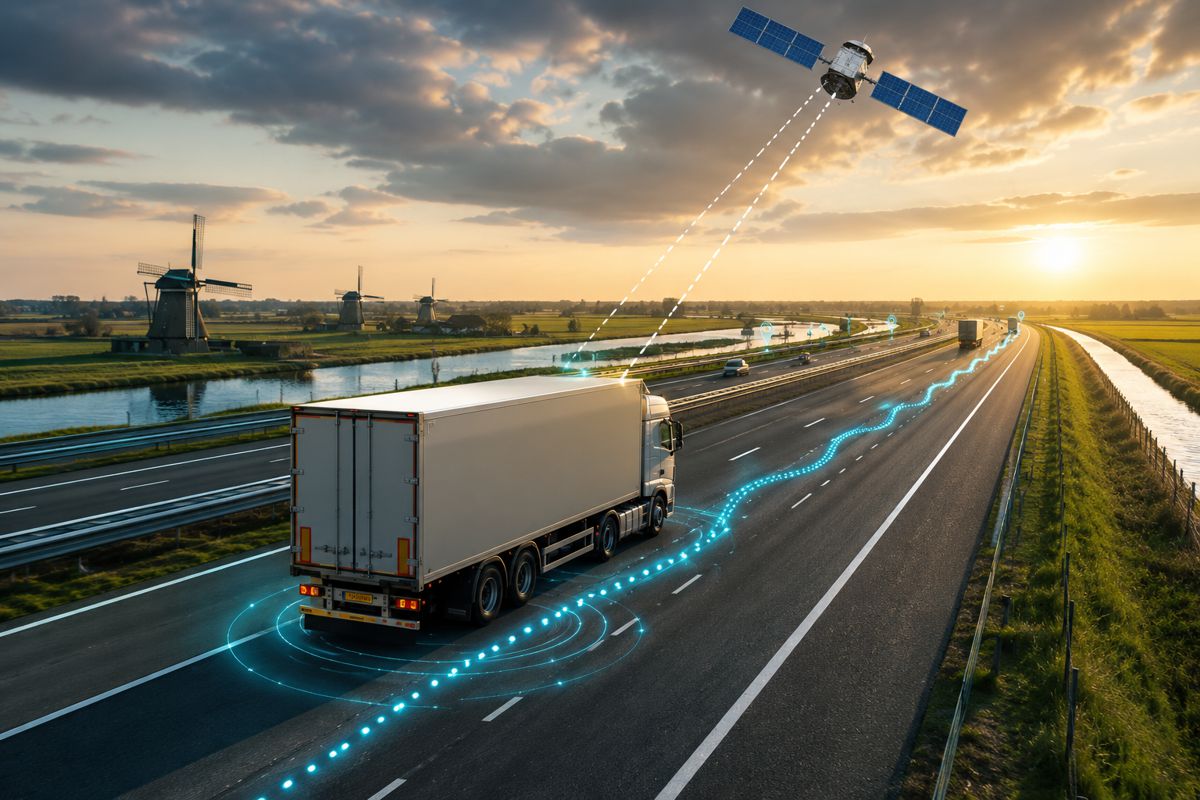
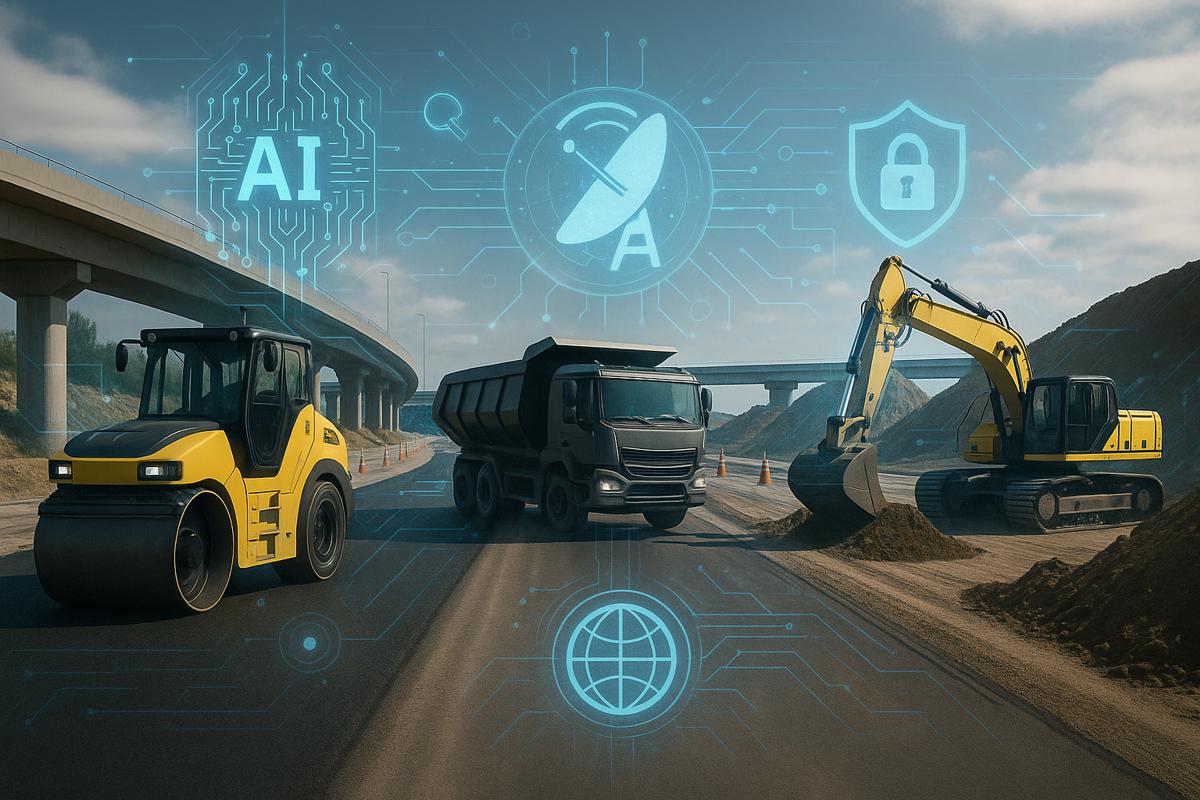
Alongside robotics, the rise of telematic, the integration of telecommunications and informatics in machinery, is transforming fleet operations. Modern heavy equipment now comes with built-in GPS, sensors and wireless links that continuously beam data about the machine’s location, performance and health to cloud platforms.
Fleet managers can monitor their entire operation in real time on a dashboard, gaining actionable insights to optimise how machines are used. According to industry research, some 6.8 million construction machines worldwide were equipped with OEM telematics units in 2023, and that installed base is projected to reach over 12 million by 2028, a testament to how ubiquitous connected equipment is becoming.
Key benefits of this telematics revolution include:
- Enhanced utilisation: Real-time usage data helps identify underutilised machines and eliminate idle time. Companies can redeploy or resize their fleets more effectively, improving productivity and return on investment.
- Predictive maintenance: Sensors continuously check engine vitals, hydraulic pressure, temperatures and more. Advanced telematics can predict potential failures before they happen, prompting maintenance crews to fix small issues (like a hairline crack or a fraying hose) before they cause major breakdowns. This proactive approach minimises unplanned downtime and repair costs.
- Safety and compliance: On-board systems track operator behaviour (speed, braking, seatbelt use) and machine loads. Managers get alerts if equipment is misused or safety limits are exceeded. This not only helps enforce safety protocols but can also lower accident rates and insurance costs by correcting risky behaviour.
- Fuel efficiency: Telematics monitors fuel burn and idle times, enabling firms to pinpoint waste. Simple changes, like reducing idle periods or optimizing haul routes, can yield significant fuel savings and cut emissions.
Real-world deployments show tangible gains. One construction equipment dealer, Eagle Power & Equipment, integrated telematics platforms (CASE SiteWatch and Kubota NOW) to track its mixed fleet, resulting in less downtime and higher operational efficiency for its clients. The city of Houston recently outfitted its public works vehicles with telematics and reported improved fleet utilisation, smarter maintenance scheduling, and notable cost savings in just the first year.
Manufacturers are also leveraging connectivity: in 2023 Terex introduced an off-road crane with a telematics solution that streams performance data to engineers. This allows remote monitoring of the crane’s health, helping catch issues early and reduce jobsite delays. In effect, every modern excavator, loader or drill rig can now serve as a rolling data source, enabling data-driven decision-making in an industry historically reliant on manual inspections and operator reports.
Perhaps most impressively, artificial intelligence and machine learning are turbocharging predictive maintenance. By crunching the torrents of data from these machines, AI algorithms can recognise patterns of wear and tear that precede a failure. In fact, advanced AI-driven maintenance systems have achieved over 90% accuracy in forecasting equipment failures weeks in advance, allowing repairs to be scheduled well before a breakdown.
One fleet technology firm reports that combining AI with telematics has reduced unexpected equipment failures by 87% and cut overall downtime by 65%, saving on the order of $125,000 in maintenance and productivity costs per machine annually. While individual results vary, the trend is clear: smart analytics are shifting maintenance from a reactive to a proactive paradigm. Instead of waiting for something to go wrong, companies can fix problems before they disrupt operations, extending the life of expensive assets and keeping projects on track. This also has sustainability benefits, well-maintained machines run more efficiently and use fewer spare parts, trimming waste over the long run.
For OEMs, these connected systems are now a core selling point. Caterpillar, Komatsu and others offer proprietary fleet management software that not only tracks equipment but also provides AI-driven advice, for example, suggesting an optimal time to replace a part, or automatically ordering consumables based on usage patterns. Machines are increasingly delivered “digital-ready” with dozens of sensors and edge computing units pre-installed.
In essence, heavy machinery is joining the Internet of Things: bulldozers and drilling rigs are becoming intelligent nodes in a connected work ecosystem. And when the machines themselves can report, “I need service in 10 hours” or adjust their operation to prevent self-damage, it fundamentally changes how fleets are managed. Construction and mining firms that embrace this connectivity are seeing fewer equipment failures, leaner maintenance budgets, and higher confidence in their schedules, critical improvements for an industry where downtime and delays can cost millions.

Cybersecurity Risks in Connected Fleets
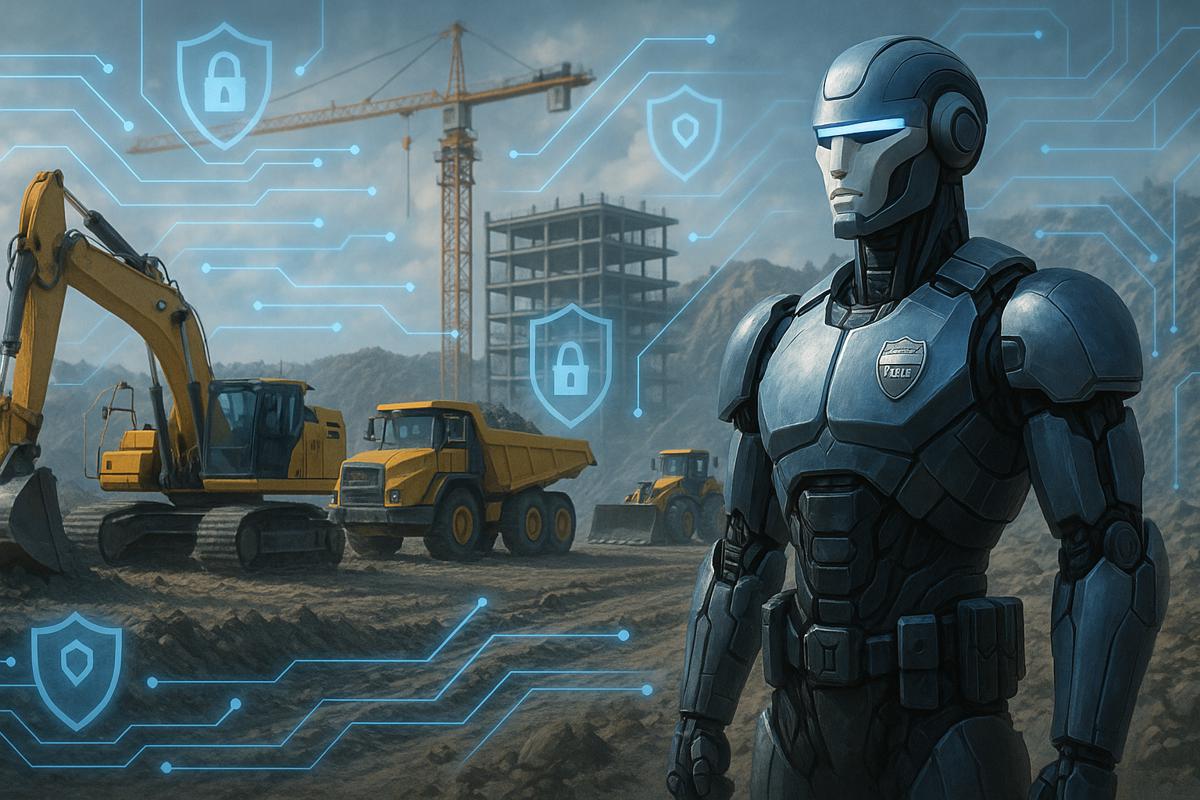
However, as heavy equipment becomes more digitised and networked, a new challenge has emerged: cybersecurity. The same telematics and remote access capabilities that enable efficient operations also introduce potential vulnerabilities. Every sensor, wireless module or software dashboard added to a machine is another doorway that attackers might try to exploit. In an era of increasingly connected construction, cybersecurity has shifted from a back-office IT concern to a mission-critical safety issue on the jobsite.
Recent analyses reveal that many operational technology systems in infrastructure were never designed with security in mind. For example, early “smart road” projects discovered traffic light controllers that communicated over unencrypted radio links with default factory-set passwords, researchers were able to seize control of 100 intersections in one U.S. city by exploiting these oversights. This kind of breach, while on traffic systems, is a cautionary tale for heavy machinery as well: if a hacker can intercept or spoof the signals to a connected bulldozer or hijack a crane’s telematics unit, they might cause chaos. Even construction message boards have been hacked by pranksters (simply by using default credentials), altering digital road signs to display jokes. While that incident was benign, it underscores how poorly secured devices can be taken over to undermine trust and safety.
The potential consequences of a cyber-attack on heavy equipment or fleet management systems are serious. In a worst-case scenario, an attacker could issue malicious commands or disrupt data flows. Imagine ransomware freezing an entire fleet of excavators in the middle of a time-sensitive project, or a spoofed sensor feeding false readings to an autonomous truck so it suddenly halts (or worse, veers off course). Researchers have even modelled how a coordinated attack on connected vehicles could gridlock a city, jamming just 14% of traffic lights or a fraction of connected cars was enough to cause a cascading traffic collapse in simulations.
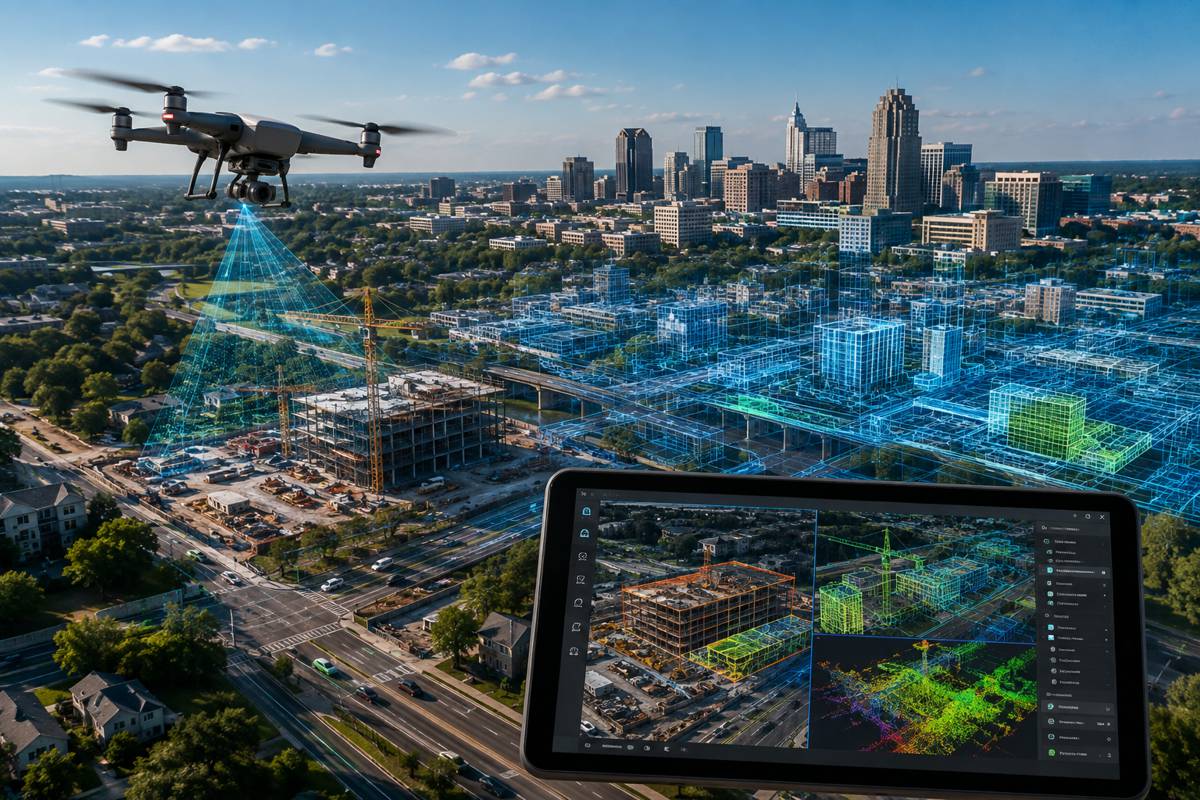
On a construction site or mine, analogous attacks could halt operations or create dangerous situations. For instance, false data injected into a quarry’s fleet management system might lead to overloaded trucks or missed safety alerts. Or malware on a site network might quietly alter a digital twin’s design data, causing construction crews to build something incorrectly. These scenarios, while hypothetical, illustrate the new kinds of risks that arise when machines talk to the cloud.
Real incidents show the threat is not just theoretical. In 2018, the Colorado Department of Transportation was hit by a ransomware attack that crippled its IT systems. Thankfully, because the agency had designed its networks with segmentation, the attack “did not affect the critical systems used to manage road traffic and alerts”, traffic signals and variable signs kept working. The damage was largely confined to office computers, and operations teams were able to restore data from backups, limiting the downtime.
This example highlights the importance of isolating critical operational networks (like those controlling roads or machinery) from general corporate networks. More recently, European transport authorities have endured waves of DDoS (distributed denial-of-service) attacks that knocked out public-facing services like travel websites and toll payment systems. While those didn’t directly compromise equipment, they show that motivated hackers are probing infrastructure systems, and construction and mining sites could be targets as they digitise.
“As construction sites evolve into data-driven ecosystems, our digital attack surface is expanding dramatically,” warns Avery Dean, a cybersecurity consultant at Basalt Cyber. “Every sensor and digital twin is a potential entry point for attackers. We must bake security in from the ground up.” In other words, security can no longer be an afterthought. Without proper safeguards, the very tools that make modern fleets “smart” could be turned against us. A compromised telematics unit or an excavator’s onboard computer isn’t just an IT issue, it’s a direct threat to safety, project delivery and company reputation.
Experts note that without cybersecurity, data-driven machines quickly become liabilities: if you can’t trust the readings from a sensor or the autopilot of a truck, you can’t safely use them. The stakes are high, and both industry and government are paying attention.

Securing the Autonomous Fleet
Protecting connected heavy machinery requires a multi-layered approach, combining technical safeguards with robust policies. The goal is to secure machine-to-cloud communication, harden the machines themselves, and ensure overall operational continuity even under attack. In practice, this involves encryption, strict authentication, real-time monitoring, and more.
Encrypt data and commands
All communications between machines, base stations and cloud servers should be encrypted to prevent eavesdropping or tampering. Many older devices sent data in plain text over radio or cellular links, an obvious risk. Today, best practice is end-to-end encryption for telemetry and control signals so that even if an attacker intercepts the link, they cannot read or alter the content. As Basalt’s cybersecurity consultants stress, “secure digital twins and end-to-end encryption are no longer optional extras” in modern operations. For example, when a loader reports its fuel level or receives a remote stop command, that traffic must be as protected as an online bank transaction. Encrypting these links thwarts man-in-the-middle attacks and ensures the integrity of data that operators and autonomous systems rely on.
Authenticate users and devices
Strong authentication mechanisms are essential so that only authorised personnel and systems can access machine controls or data. This starts with basics like replacing default passwords with robust, unique credentials for each device. Increasingly, companies are adopting zero-trust architectures where every user, device or component has to continuously prove its identity before gaining access. In practice, that can mean multi-factor authentication for human logins to fleet management systems, digital certificates for machines, and cryptographic attestation of hardware/software.
Aurora, a developer of self-driving trucks, noted that it uses cryptographic attestation to verify the integrity of all on-board hardware and software, preventing any unauthorised code from running on its vehicles. It also deliberately does not allow remote control of critical driving functions in its autonomous trucks, an architectural decision to minimise attack avenues. While construction equipment may need remote operation features, access to those features must be tightly controlled. Machine firmware should be signed and validated at start-up (so hackers can’t install rogue software), and regular software updates should be applied to patch vulnerabilities. In short, trust in the system comes from verifying everything and everyone.
Real-time monitoring and intrusion detection
Given that no defence is fool proof, having eyes on the network is vital. Companies are deploying intrusion detection systems (IDS) and continuous monitoring tools that watch for abnormal signals or unauthorised access in real time. For example, if a cyber-intruder tries to feed spurious data into a bulldozer’s control network, the monitoring system might detect unusual commands or traffic patterns and trigger an alert. Some advanced autonomous systems even integrate cyber monitoring directly into the machinery’s fail-safe functions. In the trucking sector, Aurora’s vehicles will automatically pull over to a safe stop if their internal threat detection systems sense a critical security issue. Similarly, a smart excavator might be designed to enter a safe mode if it loses trusted communication with the control server. Real-time monitoring also means having an incident response plan: companies conduct drills to practice isolating a breached system, much like a fire drill for cyber events. By hunting threats proactively and responding immediately, fleet operators can contain incidents before they spiral, for instance, detecting one hijacked sensor and preventing it from affecting the rest of the network.
Network segmentation and fail-safe design
A core principle in securing operational technology is segmentation, dividing systems into zones with barriers between them. In a connected fleet, this means that even if one machine or subsystem is compromised, the breach cannot spread laterally to others. For example, an IoT camera on a jobsite might be on a separate network segment from the autonomous bulldozer control system; if the camera gets hacked, it should not provide a bridge into the machine controls. Many contractors and mines now use firewalls and virtual LANs to isolate critical systems. They also maintain offline backups and redundancies. The Colorado incident showed the value of this, the traffic management remained unaffected because it was segregated and could quickly be restored from clean backups. In practice, segmentation for heavy equipment could involve having the telematics data flow in one channel that cannot issue physical commands, while command-and-control links are on a more secure, closed network. Additionally, machines should have safety interlocks that default to a safe state if anomalous commands are detected. A crane might ignore a command to move if it comes in a form that fails authentication checks, for instance. Such design ensures that a single point of failure won’t bring down an entire fleet or cause a catastrophe.
Leading OEMs and contractors are increasingly mandating these measures. Procurement contracts now require that any “smart” construction equipment or site device meets specific cybersecurity standards. Manufacturers are responding by building security into their products from the ground up, encrypting onboard communications, hardening controllers against tampering, and collaborating with cybersecurity firms to test for vulnerabilities.
Basalt Cyber, for instance, works closely in this space: the company specialises in securing critical infrastructure and has helped equipment makers and engineering firms design secure data architectures for their connected systems. From performing risk assessments on fleet networks to implementing secure coding practices in machine software, such expertise provides the resilience needed for innovation to thrive safely.
“In construction’s connected future, cybersecurity isn’t optional, it’s foundational,” as Basalt Cyber emphasises. They focus on everything from network protection and threat monitoring to ensuring that emerging tech like IoT sensors and digital twins are guarded against intrusion. The message is clear: just as you wouldn’t operate a crane without proper physical safety measures, you shouldn’t deploy autonomous or connected machines without robust cyber-safety measures in place.
Safeguarding the Future of Automation
As automation and connectivity continue to reshape heavy industry, focusing on cybersecurity is not merely about thwarting hackers, it’s about building trust. When human operators and site managers know that their machines are secure, they are more willing to embrace and rely on those machines. Effective cybersecurity, in fact, becomes a prerequisite for wider adoption of autonomous technology.
“Effective cybersecurity is paramount for building trust in autonomous technology,” notes one trucking technology firm, which treats security and safety as inextricably linked. In a mining pit or on a highway job, an operator needs confidence that the bulldozer’s autopilot will obey only legitimate commands, or that the data coming from a drill rig’s sensors is accurate and untampered. By encrypting data, authenticating access, and monitoring systems in real time, companies create a transparent and reliable operating environment. The machines perform as expected, and if something does go awry, alarms sound immediately. This reliability in turn fosters trust among the workforce and project stakeholders.
Secure automation also underpins trust with the public and regulators. Construction and mining sites increasingly interface with public infrastructure (consider autonomous dump trucks crossing a public road). Demonstrating that these systems are secure helps reassure regulators and communities that autonomous equipment won’t pose undue risks. It’s analogous to how the aviation industry treats safety, rigorous security and testing create trust so that passengers comfortably fly on autopilot-equipped planes. Similarly, a secured fleet of robots and AI-guided machines allows engineers, investors, and policymakers to confidently support their deployment. Without that trust, projects might face opposition or delays.
In practical terms, a secure digital ecosystem means project managers can leverage real-time insights without fear of unseen sabotage. It means a foreman can hand over certain tasks to a machine co-worker, knowing there are safeguards preventing erratic behaviour. And it means that if an incident occurs, cyber or otherwise, there are fail-safes to prevent harm and recovery plans to maintain continuity.
As one industry analysis put it, when done right, cybersecurity makes “smart” construction robust: you get the benefits of real-time data and automation without creating a digital Achilles’ heel. Conversely, ignoring cyber risks would erode trust and could quickly halt the automation revolution. No company or government will continue deploying connected machines if they start causing accidents or outages due to hacks.
Fortunately, the industry trend is toward integrating security as a fundamental component of innovation. Engineers now talk about “secure by design” systems, and standards bodies are developing cybersecurity guidelines specifically for industrial and vehicular automation. It’s a virtuous cycle: the more security is improved, the more confidently firms can deploy AI and telematics at scale, which leads to greater productivity and safety gains. In the end, secure automation fosters a true partnership between humans and machines. Operators can focus on higher-level decision-making and trust the smart equipment to execute the rest, while investors see reliable returns and fewer disruptions. Policymakers, too, can support digital infrastructure knowing that resilience has been engineered in.
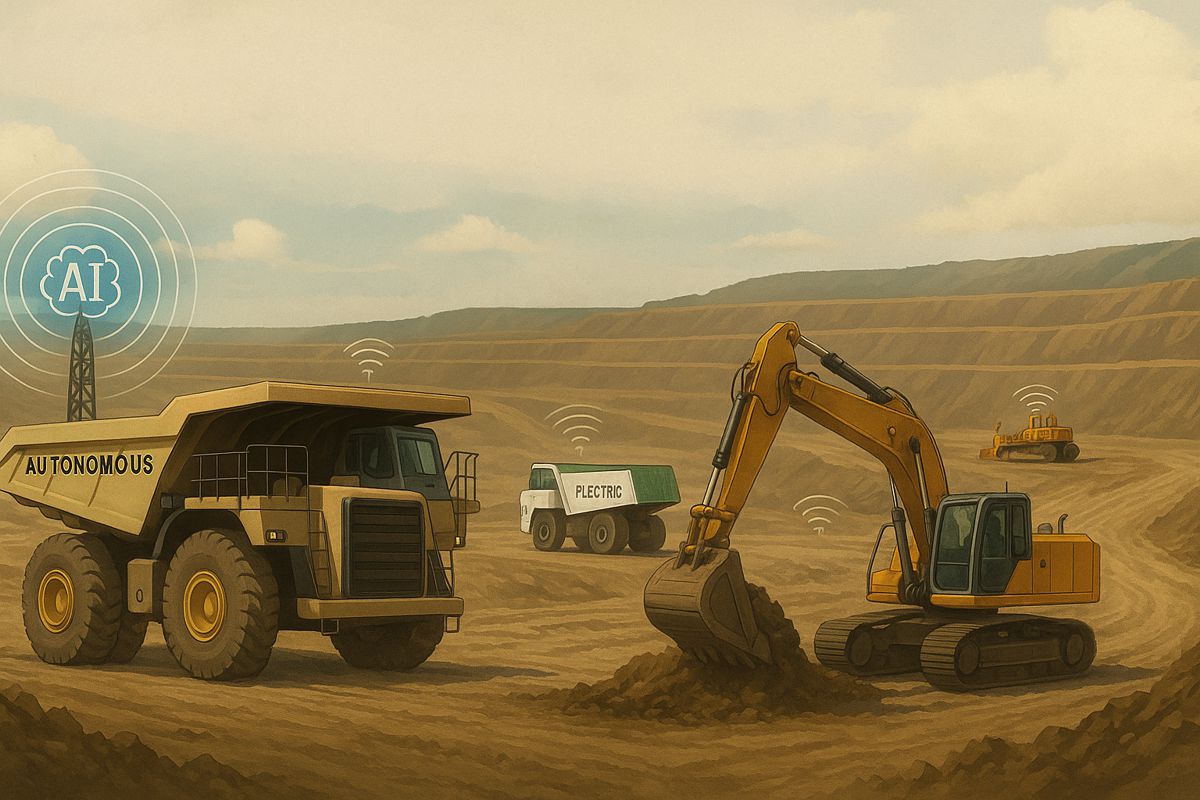
The heavy machinery landscape is evolving faster than ever with automation and AI. From mines running 24/7 with self-driving trucks to construction sites where every asset is connected and self-monitoring, the future is undeniably exciting. Yet that future hinges on cybersecurity as the bedrock.
By securing machine-to-cloud links, hardening devices, and maintaining vigilant oversight, the construction and mining sectors are turning potential cyber weak points into pillars of strength. The result is a new level of trust, trust that the smart machines will behave safely and predictably, and trust among all stakeholders that technology can be relied upon. With that trust, engineers and crews can fully harness automation’s benefits, delivering projects more efficiently and safely than ever before.
A digital thread now runs through bulldozers and drills; keeping that thread strong and secure will weave a brighter future for heavy industry.