Japan Accelerates Fusion Power Ambitions with Helix HARUKA
Japan’s push toward commercially viable fusion energy has taken a tangible step forward, as Helical Fusion Co Ltd confirms the construction site for the first phase of its Helix HARUKA demonstration programme. While fusion has long been framed as a scientific frontier, this development signals something more consequential for the global infrastructure landscape: a shift from experimental science toward engineered, scalable energy systems.
At the heart of the announcement lies Phase 1 of Helix HARUKA, focused on magnet demonstration. It may sound technical, but in reality, it represents one of the most decisive engineering hurdles in fusion. Without reliable, high-performance magnetic confinement systems, fusion simply cannot transition from laboratory curiosity to dependable energy infrastructure. By committing to hardware manufacturing, site development and testing timelines, Helical Fusion is moving firmly into the realm of industrial execution.
As countries grapple with decarbonisation targets, energy security concerns and the rising cost of grid infrastructure, fusion is increasingly seen as a long-term solution capable of delivering stable, baseload power without the intermittency challenges of renewables. The race is no longer theoretical. It is now about who can build first, scale fastest and deliver commercially.
Why Magnet Technology Defines Fusion’s Future
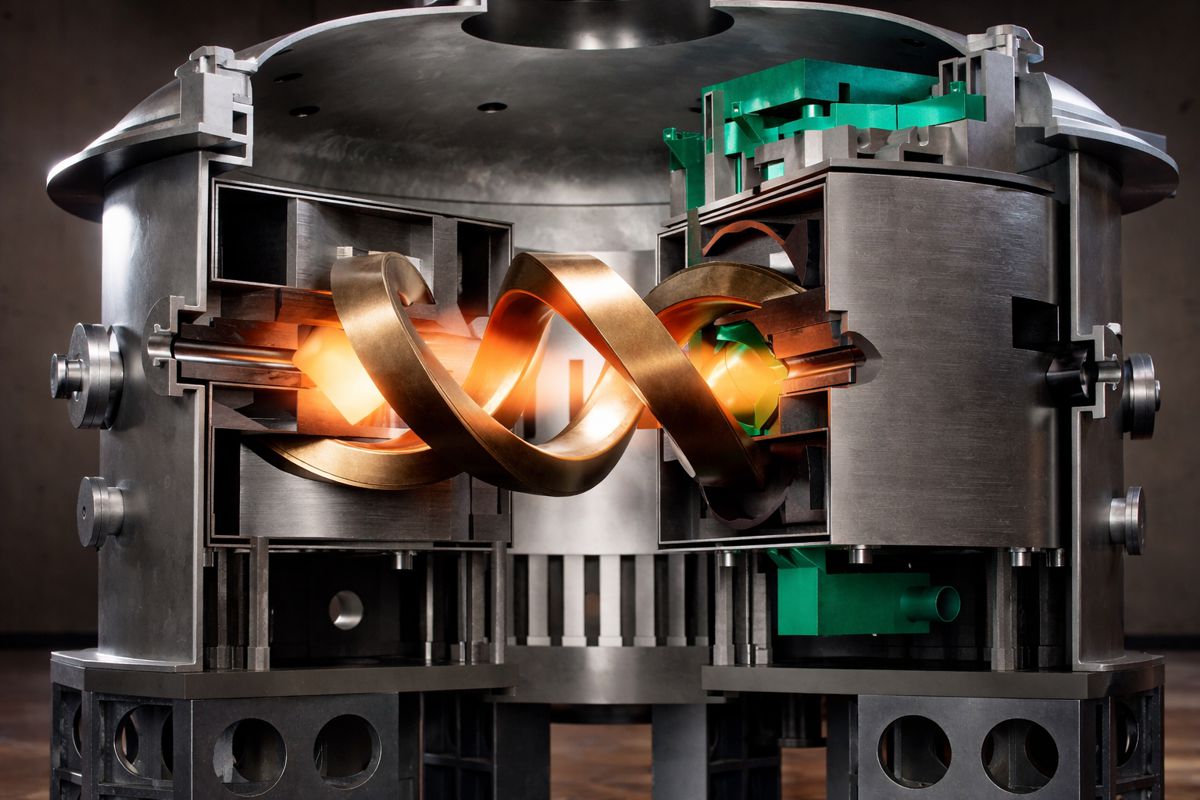
Fusion power relies on the ability to confine plasma at extreme temperatures, often exceeding those found in the core of the sun. That confinement is achieved through powerful magnetic fields, making superconducting magnet systems the backbone of any viable fusion reactor design. In the case of Helical Fusion, the focus is on a non-planar helical high-temperature superconducting magnet system.
This approach reflects the company’s commitment to the stellarator concept, a configuration widely regarded for its potential to achieve steady-state operation. Unlike tokamak designs, which require pulsed operation, stellarators are engineered for continuous plasma confinement. That distinction is critical when considering real-world power generation, where stability and uptime directly influence economic viability.
Globally, investment in high-temperature superconducting materials has surged in recent years, driven not only by fusion but also by applications in grid infrastructure and advanced transport systems. According to data from the International Energy Agency, electricity demand is expected to double in some regions by 2050, placing immense pressure on energy systems to deliver both reliability and sustainability. Fusion, if realised at scale, could fundamentally reshape that equation.
Helix HARUKA Phase 1 and the Engineering Reality
Phase 1 of Helix HARUKA is centred on assembling and testing the HTS magnet system under operational conditions. The work will take place within a dedicated joint research facility on the campus of the National Institute for Fusion Science, one of the world’s leading institutions in stellarator research.
This phase is not about theoretical validation. It is about proving that complex magnet systems can function reliably as integrated hardware. That includes managing current loads, thermal performance and mechanical stresses, all of which become exponentially more challenging at fusion scale. Energisation tests are scheduled for 2027, marking a clear milestone in the programme’s timeline.
By anchoring development within a live research environment, Helical Fusion is effectively shortening the feedback loop between design, build and test. That integration is crucial. Historically, fusion programmes have suffered from long development cycles, fragmented collaboration and limited industrial involvement. This model attempts to address all three challenges simultaneously.
A Japan Style Public Private Partnership Model
One of the more compelling aspects of the Helix programme is its organisational structure. Helical Fusion is positioning itself within a distinctly Japanese model of public–private partnership, combining academic excellence with industrial capability and start-up agility.
The collaboration with NIFS is central to this approach. The institute operates the Large Helical Device, a flagship experimental facility that has achieved plasma operation durations exceeding 50 minutes. That operational knowledge is invaluable when transitioning toward steady-state reactor concepts. It also provides a depth of engineering insight that would be difficult for a private company to replicate independently.
At the same time, Helical Fusion brings system integration expertise and the ability to move quickly. Industrial partners contribute manufacturing capacity, ensuring that designs can be translated into physical components at scale. Taken together, this creates what the company describes as a tightly coupled build-and-test loop.
From an infrastructure perspective, this model mirrors trends seen in large-scale transport and energy projects worldwide. Governments provide foundational research and regulatory frameworks, while private entities drive delivery and innovation. In the case of fusion, that alignment could prove decisive in accelerating commercial timelines.
From Demonstration to Power Generation
The Helix programme is structured across three distinct phases, each representing a step closer to commercial deployment. Phase 1 focuses on magnet validation. Phase 2 will move toward integrated system demonstration, combining the magnet with other critical components such as the blanket and divertor systems.
These elements are essential for managing heat loads and extracting energy from the fusion process. Demonstrating their performance alongside sustained high-temperature plasma operation will be a key milestone. Importantly, Phase 2 will not generate electricity. Instead, it will establish the engineering confidence required to proceed to the next stage.
That next stage is Helix KANATA, the programme’s first power-generating unit. The objective is to achieve net-electric operation alongside steady-state performance and maintainability. These are not minor targets. They represent the threshold at which fusion transitions from experimental technology to commercial infrastructure asset.
Globally, similar ambitions are being pursued by both public and private initiatives, from ITER in Europe to a growing number of venture-backed fusion startups. However, timelines remain uncertain, and technical challenges persist. What sets the Helix programme apart is its emphasis on incremental, hardware-driven validation rather than large, singular projects.
The Strategic Importance of Stellarator Technology
Japan’s long-standing investment in stellarator research provides a strong foundation for this approach. Unlike tokamaks, stellarators do not rely on plasma current to maintain confinement, reducing the risk of disruptions. This makes them inherently suited to continuous operation, a critical requirement for power generation.
The Large Helical Device has played a pivotal role in advancing this technology, delivering insights into plasma stability, heat management and long-duration operation. These achievements are now being translated into engineering frameworks that could support commercial reactors.
From a global perspective, diversification in fusion approaches is essential. While tokamaks have dominated much of the research landscape, stellarators offer a complementary pathway that may prove more practical for certain applications. As investment flows into the sector, having multiple viable designs increases the likelihood of successful deployment.
Infrastructure Implications for a Fusion Powered Future
If fusion reaches commercial viability, the implications for infrastructure are profound. Unlike traditional power plants, fusion facilities could be located closer to demand centres, reducing transmission losses and enabling more resilient energy networks. They would also operate without the carbon emissions associated with fossil fuels or the long-lived radioactive waste of conventional nuclear fission.
For construction and engineering sectors, this opens up entirely new markets. Fusion plants would require specialised materials, advanced cooling systems and precision manufacturing, creating demand across multiple supply chains. The integration of these facilities into existing grids would also necessitate upgrades to transmission infrastructure and energy management systems.
In this context, projects like Helix HARUKA are not just scientific milestones. They are early indicators of a potential industrial transformation. As development progresses, contractors, investors and policymakers will need to adapt to a new category of infrastructure, one that blends energy, technology and advanced manufacturing.
Building Momentum Toward the 2030s
Helical Fusion’s roadmap aligns with a broader industry expectation that the 2030s will be a निर्णing decade for fusion energy. By targeting standalone demonstrations of key technologies in the 2020s and integrated systems in the early 2030s, the company is positioning itself within a competitive global timeline.
That said, challenges remain. Scaling superconducting materials, managing costs and ensuring regulatory readiness are all significant hurdles. Yet, the presence of a structured development programme, backed by institutional expertise and industrial collaboration, provides a level of confidence often lacking in earlier fusion efforts.
Crucially, this is no longer a distant vision. With manufacturing already underway and testing milestones defined, fusion is edging closer to becoming a tangible component of the global energy mix. The success of initiatives like Helix HARUKA will play a decisive role in determining how quickly that transition occurs.
A Turning Point for Energy and Infrastructure
What makes this development noteworthy is not just the technology itself, but the shift in mindset it represents. Fusion is being treated as an engineering challenge to be solved through iteration, collaboration and industrial discipline. That approach mirrors the evolution of other transformative technologies, from aviation to space exploration.
For the construction and infrastructure sectors, the message is clear. Fusion is no longer a theoretical concept confined to research laboratories. It is emerging as a future asset class, one that could redefine how energy systems are designed, built and operated.
As Helical Fusion advances its Helix programme, the industry will be watching closely. The outcomes of Phase 1 may seem incremental, but they form the foundation upon which commercial fusion will ultimately be built. And in an era defined by the need for sustainable, reliable energy, that foundation could not be more important.