MicroSurfacing Workshop Set to Draw Industry Leaders to Bituroad 2026
On 30 May, during Bituroad 2026, a focused technical workshop on MicroSurfacing and advanced emulsion technologies will bring together engineers, contractors, material specialists and policymakers for a deep dive into one of the most practical solutions in modern road maintenance.
Hosted at the Pullman Axis Towers and delivered in cooperation with the International Bitumen Emulsion Federation, the session has been structured as a hands-on knowledge exchange rather than a theoretical conference. The emphasis is firmly on application, performance, and decision-making in the field. For professionals responsible for maintaining road networks under pressure, the value lies in walking away with workable insights rather than abstract concepts.
Participation is free for registered Bituroad visitors and exhibitors, lowering the barrier for attendance and encouraging a broader mix of stakeholders. That alone is likely to attract a strong audience, but it is the relevance of the subject matter that will ultimately fill the room.
Briefing
- One day technical workshop on 30 May at Pullman Axis Towers
- Delivered with the International Bitumen Emulsion Federation
- Practical focus on MicroSurfacing, emulsions and real world applications
- Covers RAP usage, polymer modification and equipment capabilities
- Free access for Bituroad 2026 registered participants

Why This Session Deserves a Place in Your Schedule
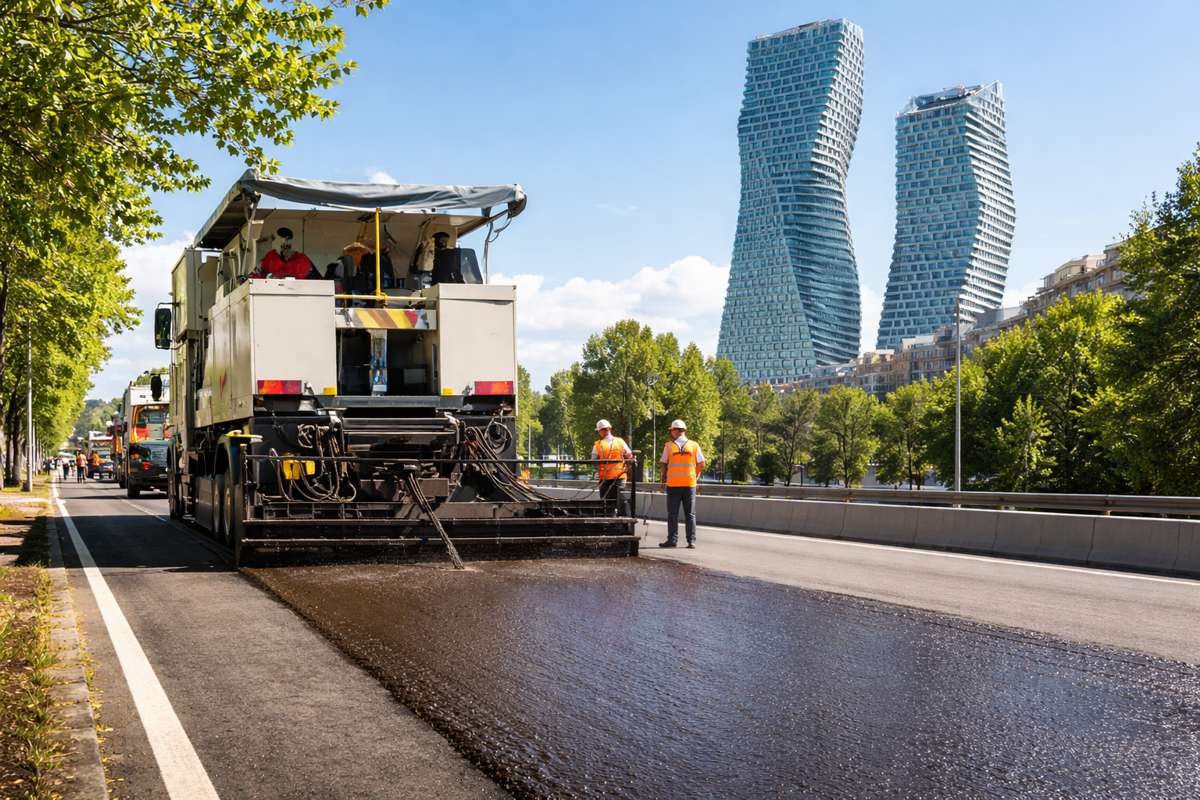
Across global markets, road authorities are under growing pressure to extend asset life without expanding budgets. Full reconstruction is increasingly difficult to justify when networks stretch across thousands of kilometres. Preservation techniques such as MicroSurfacing are no longer niche solutions, they are becoming central to infrastructure strategy.
This workshop arrives at a time when many decision-makers are reassessing how they allocate maintenance funding. It offers a timely opportunity to hear directly from specialists working at the cutting edge of emulsion technology and surface treatment methods. Instead of reading reports or reviewing specifications in isolation, attendees can engage with experts, ask questions, and compare approaches.
There is also a commercial dimension. Contractors attending the session are likely to gain insight into emerging demand trends and technical requirements, positioning themselves more effectively in tenders and long-term maintenance contracts. In a competitive market, that kind of intelligence is often the difference between staying relevant and being left behind.
What Attendees Will Actually Learn
The programme has been designed around seven core themes, each addressing a critical aspect of MicroSurfacing and emulsion technology. Rather than presenting them as standalone topics, the workshop ties them together into a coherent narrative that reflects how projects are delivered in practice.
Participants will explore the fundamentals of emulsion technology and its environmental implications, alongside the role of emulsifiers in achieving consistent and reliable performance. From there, the discussion moves into more advanced territory, including latex modification and the advantages of polymer-enhanced systems.
The inclusion of sessions on 100 percent RAP MicroSurfacing reflects a growing interest in circular construction practices. For engineers and asset managers, this is not just about sustainability credentials. It is about reducing material costs and securing supply chains in an increasingly volatile market.
Machine capabilities and application techniques are also on the agenda, providing a bridge between material science and on-site execution. Understanding how equipment influences outcomes is essential for anyone involved in specifying or delivering MicroSurfacing treatments.
A Practical Environment for Knowledge Exchange
What sets this workshop apart is its format. It is not positioned as a large-scale conference with broad themes and limited interaction. Instead, it offers a more concentrated environment where discussions can go deeper and participants can engage directly with presenters.
That matters because many of the challenges in road maintenance are highly specific. Climate conditions, traffic loads, and regulatory frameworks vary widely from one region to another. A smaller, technically focused setting allows attendees to raise these nuances and explore how solutions can be adapted.
The involvement of international organisations and technical sponsors adds further depth. It ensures that the content reflects both global best practice and the latest developments in materials and equipment. For attendees, this translates into a more rounded understanding of where the industry is heading.
Networking with Purpose
Events like Bituroad 2026 naturally offer networking opportunities, but this workshop sharpens that focus. Everyone in the room will be there for a reason, whether it is to improve maintenance strategies, evaluate new technologies, or identify commercial opportunities.
That creates a different kind of conversation. Instead of general introductions, discussions tend to move quickly into specifics. Contractors can connect with suppliers, engineers can compare methodologies, and policymakers can gauge how technical developments align with regulatory goals.
For companies operating across multiple regions, the workshop also provides a chance to benchmark practices. Seeing how others approach similar challenges can reveal efficiencies and innovations that might not be immediately apparent within a single market.
Bridging Sustainability and Performance
Environmental considerations are woven throughout the workshop content, reflecting the increasing importance of sustainability in infrastructure projects. Cold-applied emulsion technologies already offer lower energy consumption compared to traditional hot mix asphalt, but the discussion goes further.
The integration of recycled materials, particularly RAP, highlights how maintenance strategies can contribute to broader circular economy objectives. At the same time, the focus on polymer-modified systems ensures that performance is not compromised.
For many attendees, the real value lies in understanding how to balance these priorities. Sustainability targets are becoming more stringent, but road networks still need to perform under heavy traffic and challenging conditions. The workshop addresses this balance directly, offering practical insights rather than abstract goals.
A Strategic Stop at Bituroad 2026
Bituroad has established itself as a meeting point for the bitumen and road construction sectors, and this workshop adds a targeted technical layer to the broader event. For visitors already attending, it represents an efficient way to gain focused knowledge without stepping outside the exhibition schedule.
For those considering whether to attend, the workshop provides a clear incentive. A single day spent engaging with specialists and peers can deliver insights that would otherwise take months to gather through reports, site visits, and fragmented discussions.
With free participation for registered attendees, the decision becomes less about cost and more about time. Given the pace at which infrastructure demands are evolving, dedicating a day to understanding practical maintenance solutions is a sound investment.
Where the Industry Moves Next
MicroSurfacing and emulsion technologies continue to evolve, driven by the need for more efficient, sustainable, and resilient road maintenance solutions. Workshops like this do more than share information. They help shape how these technologies are adopted and implemented across different markets.
For those attending Bituroad 2026, the MicroSurfacing workshop offers a chance to step away from the noise of the exhibition floor and focus on something tangible. It is a space to learn, question, and connect, all within the context of real-world challenges.
In an industry where outcomes depend on both technical precision and practical judgement, that combination is hard to beat.