Aeva Accelerating Autonomous Freight with 4D LiDAR for Daimler Trucks
The race to commercialise autonomous freight transport has entered a more serious phase. For years, the industry has been flooded with pilot projects, prototype demonstrations and carefully choreographed test runs across American highways. Now, attention is shifting towards something far more commercially significant: industrial-scale validation and the hard engineering milestones that precede mass production.
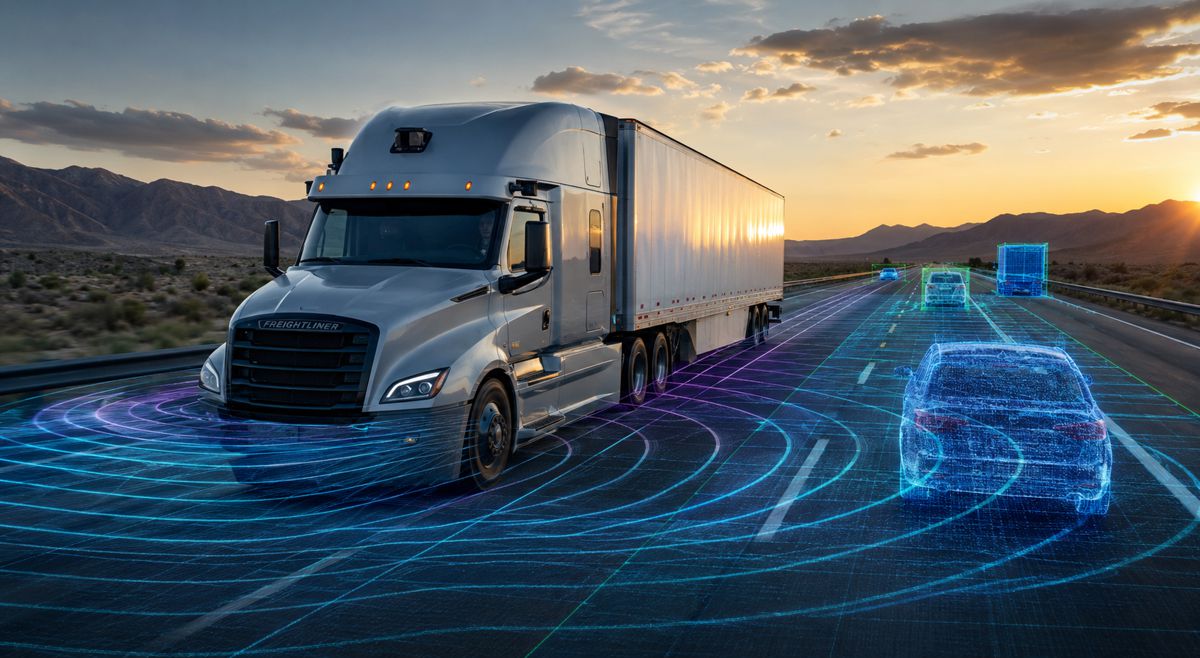
That shift became clearer this week as Aeva confirmed the delivery of initial C-sample units of its Atlas 4D LiDAR sensors to Daimler Truck North America and Torc Robotics for their SAE Level 4 autonomous Freightliner Cascadia programme. While the announcement may sound technical on the surface, within the automotive and freight industries, C-sample delivery represents a pivotal stage in the path toward series production.
For autonomous trucking developers, this is the point where technology begins crossing the uncomfortable gap between laboratory promise and industrial reality. Systems must prove not only that they function, but that they can operate reliably at highway speeds, in poor weather, across long operating hours, and under the relentless economic pressures of commercial freight logistics.
The broader implications stretch well beyond trucking. Autonomous freight systems are rapidly becoming part of a wider digital infrastructure ecosystem involving smart highways, connected logistics corridors, real-time fleet management and increasingly automated supply chains. Long-haul trucking sits at the centre of global commerce, and the companies that solve highway autonomy at scale could reshape everything from labour economics and insurance to infrastructure investment and logistics planning.
Briefing
- Aeva has delivered initial Atlas 4D LiDAR C-sample sensors to Daimler Truck North America and Torc Robotics
- The sensors are being integrated into autonomous Freightliner Cascadia Class 8 trucks targeting SAE Level 4 autonomy
- Aeva is the exclusive supplier of long-range LiDAR for the programme
- Atlas sensors use FMCW technology to measure both distance and instant velocity simultaneously
- The platform is designed for long-range detection up to 500 metres, supporting safe highway-speed autonomous operation
The Engineering Reality Behind Autonomous Trucking
Passenger vehicle autonomy may dominate headlines, but commercial trucking presents an entirely different engineering challenge. A fully loaded Class 8 truck travelling at motorway speeds requires dramatically longer stopping distances, wider turning radiuses and more predictive hazard detection than smaller autonomous vehicles.
Highway freight also demands exceptional sensor reliability. Unlike urban robotaxis operating within tightly mapped geofenced areas, long-haul autonomous trucks encounter varying road surfaces, inconsistent lane markings, severe weather, construction zones and unpredictable driver behaviour over thousands of kilometres.
That’s where sensor performance becomes critical. LiDAR systems effectively serve as part of the autonomous vehicle’s eyes, continuously mapping the surrounding environment in three dimensions. Yet not all LiDAR systems operate the same way, and the industry has spent years debating which sensing architectures can deliver the reliability needed for large-scale deployment.
Aeva’s Atlas platform uses Frequency Modulated Continuous Wave, or FMCW, sensing technology rather than the more common time-of-flight approach used by many competing LiDAR suppliers. FMCW systems can directly measure both position and velocity simultaneously for every detected point.
That distinction matters enormously at highway speeds. Traditional LiDAR systems typically determine motion through sequential measurements and software estimation. FMCW technology instead measures velocity directly, potentially enabling autonomous systems to distinguish more quickly between moving vehicles, roadside infrastructure and stationary obstacles.
For a heavy truck travelling at 65 mph, even fractions of a second matter. Earlier detection translates directly into additional braking distance and greater decision-making time.
Highway Freight Automation Moves Closer to Commercial Deployment
The autonomous trucking sector has matured considerably over the past five years. Early enthusiasm around fully driverless logistics gave way to a more measured industry approach as developers encountered the realities of safety validation, regulation and operational complexity.
Several startups disappeared entirely during the market correction that followed the autonomous driving investment boom of the late 2010s. Others pivoted toward software licensing or limited operational domains. What remains today is a smaller group of heavily capitalised companies working closely with established truck manufacturers and logistics operators.
That makes the Daimler Truck and Torc partnership especially important. Unlike experimental standalone ventures, the programme combines autonomous driving expertise with one of the world’s largest commercial vehicle manufacturers and an established production platform in the Freightliner Cascadia.
Torc itself has spent more than two decades developing safety-critical autonomous systems. Backed by Daimler Truck AG, the company has focused specifically on long-haul freight operations across the United States, where motorway freight demand continues growing despite mounting labour shortages and rising logistics costs.
The economics driving autonomous trucking remain powerful. According to the American Trucking Associations, the US trucking industry continues facing persistent driver shortages, while freight volumes are projected to rise substantially over the coming decades. Autonomous systems are increasingly viewed not as futuristic experiments, but as a potential operational necessity.
At the same time, regulators and infrastructure planners are beginning to prepare for a mixed-autonomy transport landscape in which conventional vehicles, assisted-driving trucks and fully autonomous freight fleets share motorway corridors.
LiDAR Competition Intensifies Across the Automotive Sector
The LiDAR market itself has become one of the most fiercely contested areas in automotive technology. Over the past decade, dozens of companies entered the sector promising breakthroughs in range, cost reduction and sensing precision. Yet scaling automotive-grade production has proven extraordinarily difficult.
Many suppliers struggled to transition from prototypes to durable, manufacturable systems capable of surviving automotive operating conditions. Others faced mounting pressure from vehicle manufacturers demanding lower costs and higher integration levels.
Aeva’s approach has centred heavily on silicon photonics and lidar-on-chip integration, attempting to reduce complexity while improving scalability. The company’s platform integrates sensing hardware, processing and perception algorithms onto silicon-based architectures.
This industrialisation focus has become increasingly important as automotive manufacturers seek suppliers capable not only of technical innovation, but of supporting long-term production programmes involving thousands of vehicles.
“Our partnership with Aeva continues to make strong progress as we move toward series production of our autonomous truck program,” said Rakesh Aneja, Head of Corporate Development at Daimler Truck North America. “The delivery of Atlas C-samples reflects the maturity of Aeva’s technology and the strength of our collaboration as we work together to bring safe, reliable autonomous trucking solutions to market.”
The wording reflects the cautious tone now common across the autonomous vehicle sector. Gone are the exaggerated claims of imminent driverless revolutions. Instead, the focus has shifted toward safety validation, operational reliability and incremental deployment.
Long Range Perception Becomes a Strategic Requirement
One of the defining challenges in highway autonomy is perception range. Urban autonomous systems often prioritise short-range object detection in dense environments. Long-haul freight, however, depends on seeing hazards far ahead of the vehicle.
Aeva says Atlas is capable of detecting objects at distances up to 500 metres. That capability becomes especially important for trucks operating at motorway speeds where stopping distances can exceed the length of several football pitches under full load conditions.
Weather resilience also remains a major concern. Rain, fog, dust and glare continue challenging sensor systems across the industry. Autonomous trucks operating commercially cannot simply disengage every time environmental conditions deteriorate.
While no sensing platform completely eliminates weather-related limitations, FMCW-based systems are generally viewed as offering advantages in interference rejection and velocity discrimination compared with some conventional approaches.
“Delivering Atlas C-sample sensors to Daimler Truck marks a major step toward bringing autonomous trucking towards series production,” said Soroush Salehian, Co-founder and CEO of Aeva. “Atlas is purpose-built for the long-range perception required at highway speeds, and our unique ability to measure both distance and instant velocity enables autonomous systems to detect and respond to hazards earlier and with greater confidence. We’re proud to advance our collaboration with Daimler Truck towards launch as the industry moves closer to deploying safe autonomous trucks at scale.”
The emphasis on confidence is notable. Commercial fleet operators care less about technical novelty than operational predictability. Reliability, uptime and safety performance ultimately determine whether autonomous freight systems gain widespread adoption.
Smart Infrastructure Will Shape the Next Phase
Autonomous trucking development is occurring alongside broader changes in transport infrastructure itself. Governments across North America, Europe and parts of Asia are investing heavily in connected infrastructure, roadside sensing systems and digital traffic management platforms.
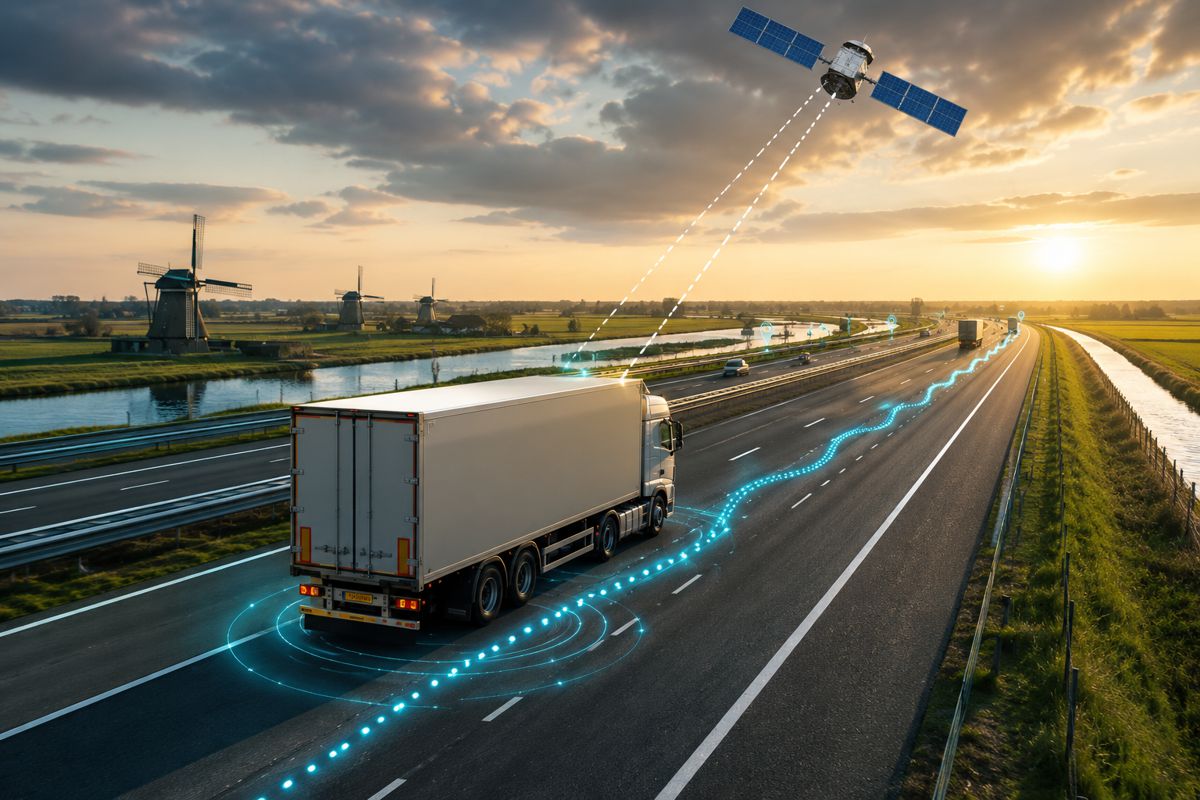
That convergence matters because autonomous freight vehicles are unlikely to operate entirely independently from the infrastructure around them. Future freight corridors may incorporate connected traffic systems, smart logistics hubs, dedicated freight lanes and real-time infrastructure monitoring.
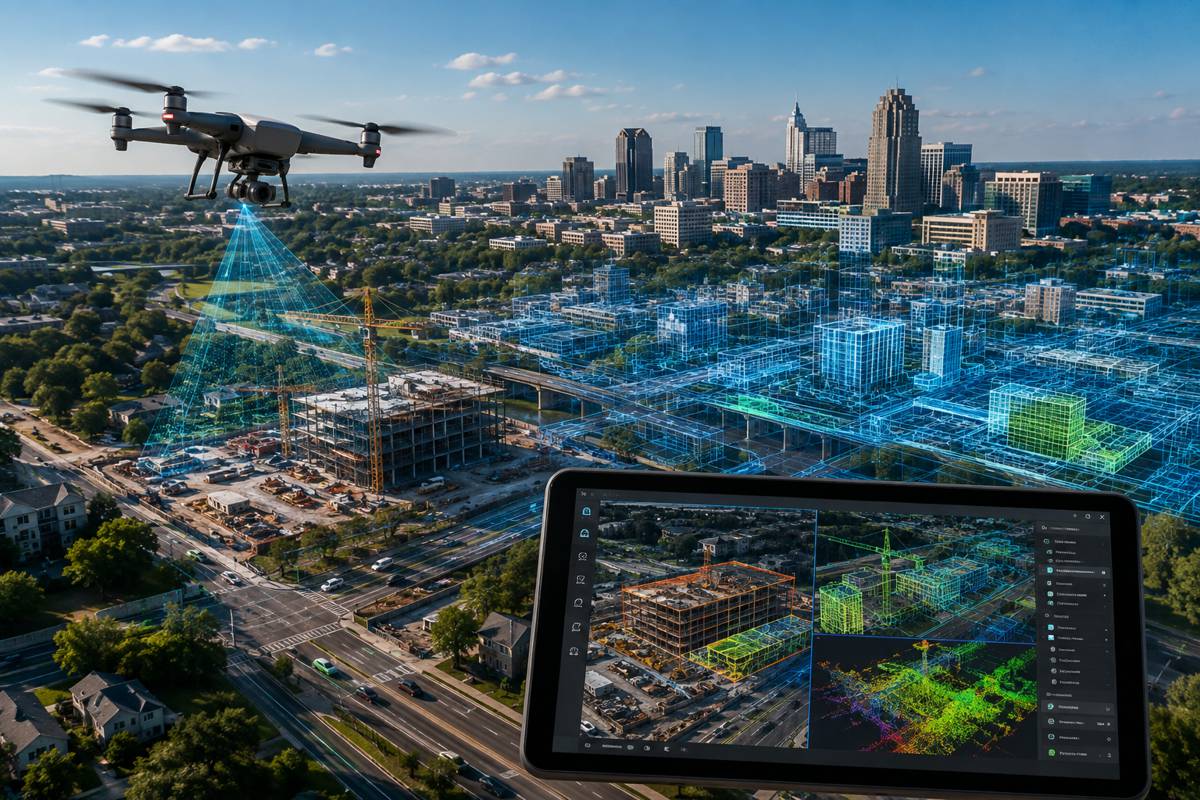
Construction and infrastructure sectors therefore stand to play a central role in enabling highway autonomy. Road design standards, digital mapping systems, lane marking quality and communications infrastructure may all require adaptation as autonomous freight expands.
For contractors and infrastructure technology providers, that creates substantial commercial opportunity. Sensor systems like Atlas are only one piece of a much larger transformation involving vehicle automation, digital infrastructure integration and logistics optimisation. Companies capable of connecting these systems into reliable operational ecosystems are likely to shape the next generation of transport networks.
Freight Automation Edges Toward Industrial Reality
The autonomous vehicle industry has spent years trapped between technological ambition and commercial scepticism. Investors grew wary after repeated delays, while regulators demanded stronger evidence that autonomous systems could operate safely in uncontrolled real-world environments.
What distinguishes the current phase is the growing emphasis on production readiness.
C-sample validation may not generate the same excitement as flashy prototype unveilings, but within automotive engineering circles it signals something far more important: systems beginning to align with the manufacturing, durability and safety requirements necessary for commercial deployment.
For Daimler Truck, Torc and Aeva, the next stages will involve continued integration, validation and optimisation as the programme moves closer to production-scale deployment.
The road ahead remains complex. Regulatory approval, infrastructure readiness, insurance frameworks and public acceptance still present substantial hurdles. Yet the industry increasingly appears to be transitioning from speculative experimentation toward operational implementation.
Long-haul freight may ultimately become one of the first commercially viable large-scale autonomous transport sectors. Motorway driving presents a more controlled environment than dense urban mobility, while the economic incentives for logistics operators remain compelling.
The result is a freight industry steadily evolving into a far more digital, connected and sensor-driven ecosystem than the one that exists today. Autonomous trucks are no longer simply technology demonstrations. They are becoming infrastructure assets in their own right.