AIIB Invests in the Philippines with $300m Port Finance
When the Asian Infrastructure Investment Bank put its name to a USD300 million loan for International Container Terminal Services Inc, the headline figure wasn’t really the story. Money flows into Asian ports all the time. What caught the attention of bankers, port operators and finance ministries across the region was how the money was being lent.
For the first time anywhere in the Philippines, the Beijing-based multilateral wasn’t asking the government to stand behind the deal. No sovereign guarantee, no state backstop, just a senior unsecured corporate loan for the project finance handed straight to a private operator on the strength of its balance sheet and its track record.
That distinction matters more than it might sound. Multilateral development banks have spent decades wrapping their lending in government guarantees, partly out of caution and partly out of habit. By going non-sovereign in a market where it had never done so before, the AIIB has signalled that it’s willing to take commercial risk on operators it trusts. The agreement was signed in Manila during AIIB President Zou Jiayi’s first visit to the country, alongside ICTSI Chairman and President Enrique K Razon Jr, and it points the cash at three terminals that between them carry a sizeable chunk of the nation’s trade.
Briefing
- The AIIB will lend USD300 million to ICTSI through a senior unsecured corporate loan, its first non-sovereign-backed transaction anywhere in the Philippines.
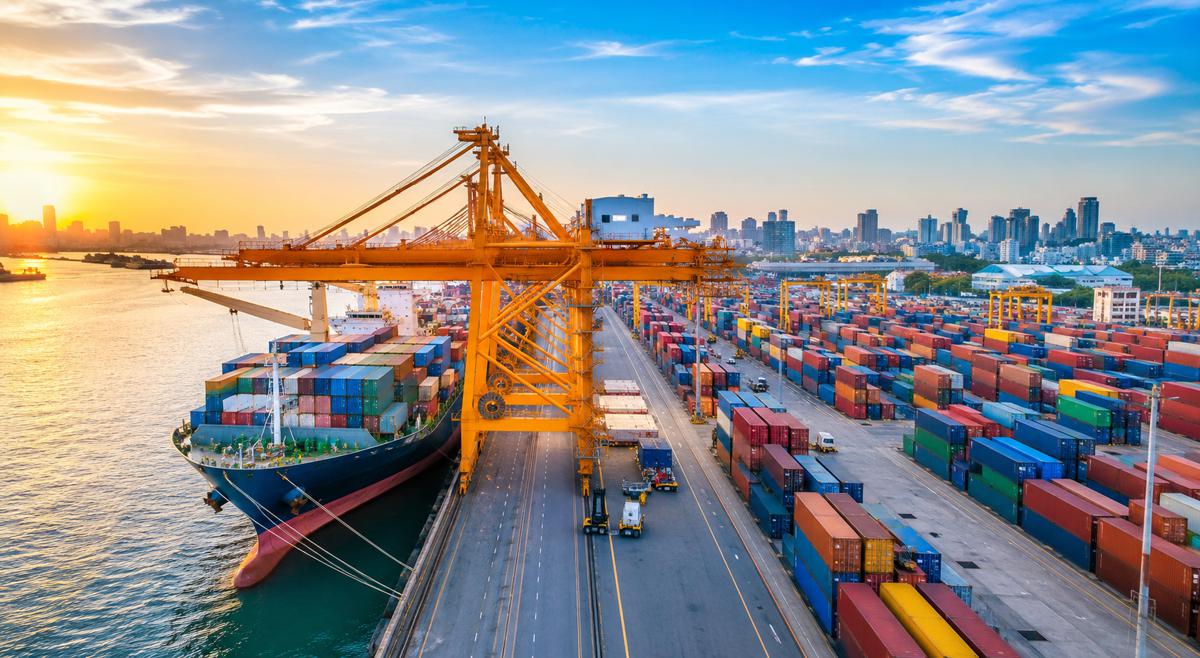
- Funds target three terminals: the Manila International Container Terminal, the Mindanao Container Terminal and the South Luzon Container Terminal now under development in Batangas.
- MICT capacity is set to climb to 3.7 million TEU by 2027, MCT to roughly 1 million TEU by 2028 and SLCT to 800,000 TEU by 2028.
- Part of the loan funds fully electric quay cranes and the replacement of diesel yard equipment, trimming greenhouse gas emissions from terminal operations.
- The deal lands as Philippine container ports strain under record volumes, with MICT having handled a single-year record of 3 million TEU in 2025.
A Financing Model That Could Travel
Strip away the ceremony and what’s left is a quietly significant shift in how a major multilateral views private infrastructure. Lending without a sovereign guarantee forces the bank to underwrite the borrower directly, which is a harder, more commercial calculation than leaning on a state’s credit. For ICTSI, an operator that already raises money on international debt markets, the appeal lies less in the headline rate and more in the signal: a AAA-rated institution is prepared to sit alongside it on long-dated infrastructure. For the AIIB, it’s a template that could be lifted and dropped into other emerging markets where governments are stretched thin and reluctant to pile fresh contingent liabilities onto their books.
Zou framed the transaction as a marker for the institution’s next chapter. “ICTSI represents exactly the type of partnership AIIB aims to build as the Bank enters its second decade,” she said. “This transaction demonstrates how AIIB can support infrastructure development by deploying innovative financing instruments and working closely with global operators who have the scale and execution capacity to deliver impact for the people we serve. We look forward to deepening this strategic relationship.”
The bank began operations in 2016, has grown to 111 approved members, sits on USD100 billion of capital and carries top-tier ratings from the major agencies, so its appetite for commercial risk tends to ripple outward to other lenders watching how it moves.
Where the Money Goes, and What It Buys
The loan isn’t being sprinkled evenly. The bulk of the attention falls on the Manila International Container Terminal, ICTSI’s flagship and the busiest box facility in the country. MICT handled a record 3 million TEU in 2025, the first time it had touched that mark in a single year, and it already accounts for roughly 70 per cent of Manila’s container volumes.
The financing is meant to push its annual capacity to 3.7 million TEU by 2027, building on an eighth berth that’s been taking shape with a 300-metre quay, a 15-metre draught and the ability to take vessels carrying up to 18,000 boxes. For a gateway that’s been running hot, that headroom isn’t a luxury.
The two other terminals fill out the geography. Down in Batangas, the South Luzon Container Terminal is still under development and is being lined up for 800,000 TEU of annual capacity by 2028, giving shippers an alternative to the perpetually congested capital. In the south, the Mindanao Container Terminal is slated to reach around 1 million TEU by 2028, reinforcing a region that’s long felt like an afterthought in national logistics planning.
Spread the three out on a map and the logic becomes plain: this is about widening the country’s maritime front door rather than simply enlarging a single overworked hinge.
Congestion Is the Backdrop Nobody Can Ignore
Anyone who’s tracked Philippine logistics knows capacity has been the sore point for years. Container throughput across the country’s ports topped 8.57 million TEU in 2025, up more than 9 per cent on the year before, and the Philippine Ports Authority is penning in close to 8.88 million for 2026. Those are healthy numbers on paper, yet they sit uncomfortably close to the ceiling.
By early February, MICT’s yard utilisation had pushed past 80 per cent overall, with reefer slots running above 100 per cent, and industry groups were warning about a truck deadlock as empty containers piled up faster than they could be cleared.
That’s the practical case for the spending. When a gateway runs at the edge of its limits, the costs don’t stay neatly inside the port fence. They show up as longer vessel turnaround, demurrage charges, higher freight rates and, eventually, dearer goods on the shelf. Lifting capacity at three terminals at once, rather than chasing one bottleneck at a time, gives the system a bit of slack to absorb the next demand spike.
For exporters and importers who’ve spent the past couple of years sweating over berth windows, that’s the part of the announcement that actually lands.
Cleaner Cranes and the Quiet Decarbonisation Play
Sustainability runs as a thread through the deal rather than sitting in a separate box. A slice of the loan is earmarked for fully electric quay cranes and for swapping out diesel-powered yard equipment, the kind of plant that hums away in the background and quietly burns through fuel around the clock. Ports are stubborn emitters, and the heavy machinery that shifts boxes between ship, stack and truck is a big reason why. Electrifying it chips away at the operational carbon footprint without waiting for some distant technological leap.
ICTSI has form here, having built Latin America’s first carbon-neutral terminal in Ecuador and an automated facility in Melbourne, so the green clauses aren’t bolted on for show. Razon tied the financing to the company’s broader direction.
“ICTSI welcomes this promising partnership with the AIIB, which supports our expansion and sustainability initiatives,” he said. “We value the AIIB’s shared commitment to long-term value creation, inclusive economic growth and responsible business practices, and as such, look forward to strengthening our partnership and accomplishing more together.”
For a multilateral that brands its mission around financing infrastructure for tomorrow, hitching capital expansion to emissions cuts is the sort of two-for-one that’s become its calling card.
A Homegrown Operator With Global Reach
It’s easy to forget that ICTSI started life as a single Manila concession in the 1980s and grew into one of the planet’s most geographically spread terminal operators. Today it runs 33 terminals across 19 economies on six continents, sitting in the upper tier of global operators alongside the likes of PSA, DP World and Hutchison Ports.
Lloyd’s List had it slipping a place in last year’s rankings after being pipped by CMA CGM, though that owed more to a rival’s growth than to any stumble of its own. Led by Razon, one of the Philippines’ best-known business figures, the company posted a 19 per cent jump in nine-month net income to USD751.56 million in 2025, which helps explain why a lender felt comfortable going guarantee-free.
The independence is part of the pitch. ICTSI carries no shipping line or consignee affiliations, so it deals even-handedly with everyone moving cargo through its gates, a positioning that tends to reassure both regulators and customers. Its strategy has leaned on partnering with governments to modernise public maritime assets while keeping majority control, a model it’s exported from Papua New Guinea to the Democratic Republic of Congo.
The AIIB loan slots neatly into that playbook, channelling outside capital into upgrades the company would likely have pursued anyway, just faster and on better terms.
What Comes Next for AIIB in the Region
The transaction reads as a statement of intent as much as a single piece of lending. By choosing a private operator with proven execution for its debut non-sovereign deal in the country, the AIIB has shown emerging-market governments that infrastructure money can arrive without adding to public debt, and shown private operators that a heavyweight multilateral is open for business on commercial terms.
Whether that becomes a pattern across Southeast Asia depends on how this one performs, but the signal has already been sent and rival lenders will be watching the meter closely.
For the Philippines, the stakes are tangible. Trade keeps climbing, the ports keep filling up and the cost of doing nothing keeps rising. Three expanded terminals, cleaner equipment and a financing structure that spares the treasury fresh liabilities add up to a sensible answer to a problem that’s been building for years.
The cranes still have to be delivered, the berths still have to be finished and the capacity numbers still have to be hit on schedule, so the proof will sit in the throughput figures of 2027 and 2028. For now, a loan that looked ordinary on the surface has nudged open a door that had stayed firmly shut.