Snap-on Bets $100m on the Data That Keeps Heavy Equipment Running
Snap-on has rarely been a company that chases headlines, so a hundred million dollar cheque written in early June 2026 says plenty about where the tool maker reckons the money is heading.
On 8 June the Kenosha firm closed its purchase of Diesel Laptops, a South Carolina business that builds the diagnostic software and repair information that heavy machinery now leans on. The figure is modest against Snap-on’s roughly $20 billion market value, yet the thinking behind it points squarely at the equipment that digs, hauls and grades the world’s infrastructure.
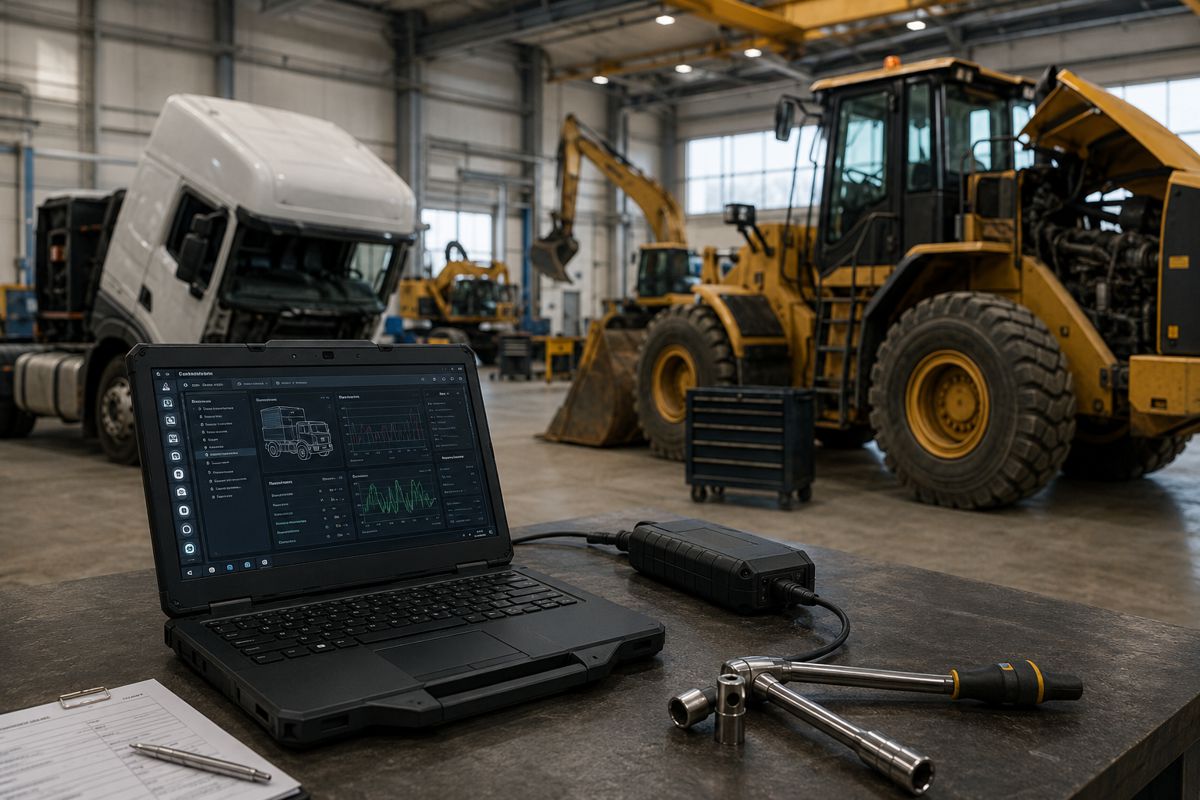
For the construction, mining and agriculture sectors, the deal matters less for the brand changing hands and more for what it confirms. The value in keeping a bulldozer, a Class 8 truck or an excavator earning its keep is drifting away from the wrench and towards the data that tells a technician which fault to chase. Diesel Laptops has spent more than a decade assembling exactly that kind of proprietary, experience-based repair knowledge, and Snap-on has just bought the lot.
Briefing
- Snap-on acquired Diesel Laptops for approximately $100 million in cash, with the deal closing on 8 June 2026.
- Based in Irmo, South Carolina, the company supplies diagnostics, repair information and digital tools for commercial trucks and off-highway vehicles used across mining, agriculture and infrastructure.
- The business will sit within Snap-on’s Repair Systems & Information Group, deepening the corporation’s library of proprietary repair data.
- Snap-on, an S&P 500 constituent, reported sales of $4.7 billion in 2025 and trades on the NYSE under the ticker SNA.
- The commercial vehicle remote diagnostics market is forecast to climb from around $6.35 billion in 2025 to roughly $11 billion by 2030.
The Real Asset Here Is the Repair Data
It would be easy to file this away as one tool company swallowing another, but that misreads what Snap-on actually paid for. Modern diesel engines and off-highway powertrains are dense with sensors, emissions controls and electronic control units, and a fault code on its own rarely tells the whole story. What turns that code into a quick, correct repair is the accumulated knowledge of which symptom maps to which fix, gathered across tens of thousands of real jobs. That knowledge is the moat, and it is far harder to replicate than a scan tool.
Snap-on said the acquisition strengthens its library of proprietary, experience-based data and broadens its product range for diagnosing and repairing increasingly complex vehicles and equipment. That language is dry, but the commercial reality is not. Diagnostic software and repair information carry software-style margins and recurring revenue, and they tie customers in over the long haul. Snap-on already runs gross margins above 50% and aims to hold operating margins near 20%, so bolting on a high-margin data business that it can sell through its established channels fits the playbook neatly.
Why Off-Highway Equipment Sits at the Centre of This
For readers in the infrastructure trade, the off-highway angle is the part worth dwelling on. Diesel Laptops does not just serve roadside truck repair shops. Its customers include the fleets and workshops that keep mining, agricultural and construction machinery turning, and on those sites downtime is brutally expensive.
An idle haul truck or a stranded grader can stall an entire phase of work, rack up penalty clauses and leave crews standing around on the clock. Anything that shortens the gap between breakdown and diagnosis goes straight to the bottom line of the contractor running the job.
That is where the company’s reach becomes interesting to Snap-on. The harder these machines are to diagnose, the more a unified platform of tools, repair information and live expert support is worth to the people maintaining them.
As construction and resource fleets grow more electronically sophisticated, the firms that own the diagnostic layer end up with quiet influence over how quickly assets get back to work. Snap-on is buying its way deeper into that layer, in markets that tend to keep spending even when the wider economy wobbles.
From a Garage in South Carolina to a Hundred Million Dollar Sale
Diesel Laptops is the kind of business that does not usually end up on the front of an S&P 500 acquisition. Founder Tyler Robertson started it in the early 2010s, working out of a garage and selling diagnostic tools online before building his own software around them. He grew it the unfashionable way, without outside capital, doubling revenue in the early years and turning a one-man side project into a company of roughly 180 staff serving more than 80,000 customers a year. Along the way it picked up recognition as one of South Carolina’s fastest-growing firms and was named the state’s Exporter of the Year.
The product line has broadened well past its original niche. The company’s Diesel Decoder, a compact Bluetooth fault-code reader that pairs with a smartphone app, put basic diagnostics within reach of owner-operators and small fleets, letting them clear a derate or force a regeneration without waiting on a dealer.
More recently it rolled out its Master Series of diagnostic solutions and a Diesel Repair mobile app that pushes repair information to technicians in the field. Robertson has long argued that the real cost of a breakdown comes from uncertainty and the wait for a diagnosis rather than the parts themselves, and the firm’s tools are built around closing that gap.
A Diagnostics Market Getting More Complicated by the Year
The timing is not accidental. The commercial vehicle remote diagnostics market was valued at about $6.35 billion in 2025 and is on course to reach roughly $11 billion by 2030, expanding at close to 12% a year, with medium and heavy trucks accounting for the largest slice. Class 8 and off-highway machines generate the heaviest data volumes of all, thanks to sophisticated emissions systems and long, punishing duty cycles. That complexity is precisely what makes good diagnostic data valuable, and it keeps deepening.
Regulation is adding to the pressure. California’s Air Resources Board is moving heavy-duty engines towards the standardised SAE J1979-2 diagnostic protocol from the 2027 model year, part of a broader push towards unified, cloud-connected fault reporting.
Standards like these lower the technical barriers that once fragmented the aftermarket, which cuts both ways. They make it easier for well-resourced players to build broad, multi-brand coverage, while smaller rivals struggle to fund the secure-gateway credentials and cybersecurity processes now expected of them. A company with Snap-on’s balance sheet is better placed than most to absorb that cost.
Where Snap-on Fits and What It Paid For
Snap-on has carried the same identity since 1920, the mark of professionals who take their trade seriously, and it still sells through its instantly recognisable franchise vans alongside direct and distributor channels. The 2025 figures tell the story of a steady, profitable operation: sales of $4.7 billion, fortress-like margins and a place in the S&P 500. Diesel Laptops will join its Repair Systems & Information Group, the division that houses exactly this sort of software and data asset, where it can be cross-sold into a customer base Snap-on has spent a century building.
Investors took the news in their stride. The shares closed at $387.26 on the NYSE on 9 June and nudged up modestly in after-hours trading, a measured response to a deal that barely registers on Snap-on’s cash position. A hundred million dollars is a rounding error for a business of this size, which is rather the point. The company is not making a bet-the-farm move, it is quietly buying optionality on a part of the repair market that looks set to grow faster than the hardware it grew up selling.
What to Watch Next
The signal worth tracking is whether the established equipment and tool giants keep paying premiums for diagnostic data and software rather than building it in house. Snap-on’s purchase suggests that the knowledge of how to fix a machine is becoming as defensible an asset as the machine itself, and that view is unlikely to stay confined to one corner of South Carolina. Expect rivals across the heavy-duty and off-highway space to weigh up similar moves, particularly as emissions rules and electrification pile fresh complexity onto every powertrain.
For contractors, fleet managers and the firms maintaining infrastructure plant, the practical question is more immediate. Consolidation can sharpen the tools and widen the coverage available to a workshop, yet it can also concentrate control of essential repair information in fewer hands. How Snap-on chooses to price and open up Diesel Laptops’ data once it is folded in will tell the market a good deal about where the balance of power in heavy equipment repair is heading.