Volvo Turns their Wheel Loaders into Legal Weighbridges
Volvo Construction Equipment has reworked one of the oldest routines on a quarry or aggregates site, and it’s done so by moving the weighing point off the ground and onto the machine.
With the launch of Certifiable On-Board Weighing for its wheel loaders, the company is letting operators measure a legally tradeable weight at the moment the bucket fills, rather than sending every truck across a fixed weighbridge before it leaves the gate. The loader, in effect, becomes the scale.
The solution made its debut at Volvo Days 2026 in Eskilstuna, Sweden this June, and is celebrating the events fifty-fifth year.
Certifiable On-Board Weighing builds on the existing Volvo CE On-Board Weighing system, which gives operators high-accuracy load data to fine-tune productivity, and adds the one thing that system couldn’t offer on its own: a weight figure trustworthy enough to bill against. That’s a meaningful step for any business where what’s in the bucket is what shows up on the invoice.
Briefing
- Certifiable On-Board Weighing delivers Legal-for-Trade ready weights directly from the wheel loader, cutting reliance on external weighbridges and third-party scales.
- The system is type-approved by an independent notified body to OIML R51 and aligned with the EU Measuring Instruments Directive (2014/32/EU), covering accuracy, data integrity and tamper resistance.
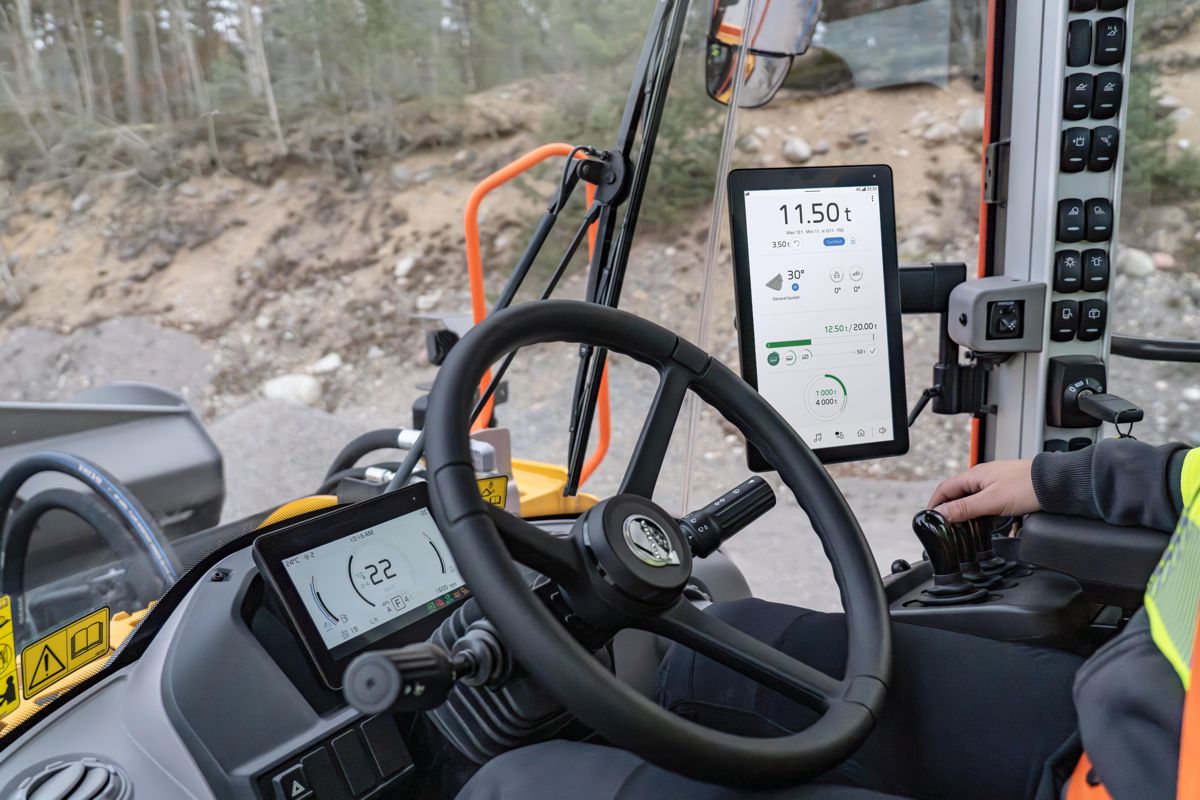
- It runs through Load Assist and the Volvo Co-Pilot 2.0 touchscreen, so operators can read and adjust loads in real time without breaking workflow.
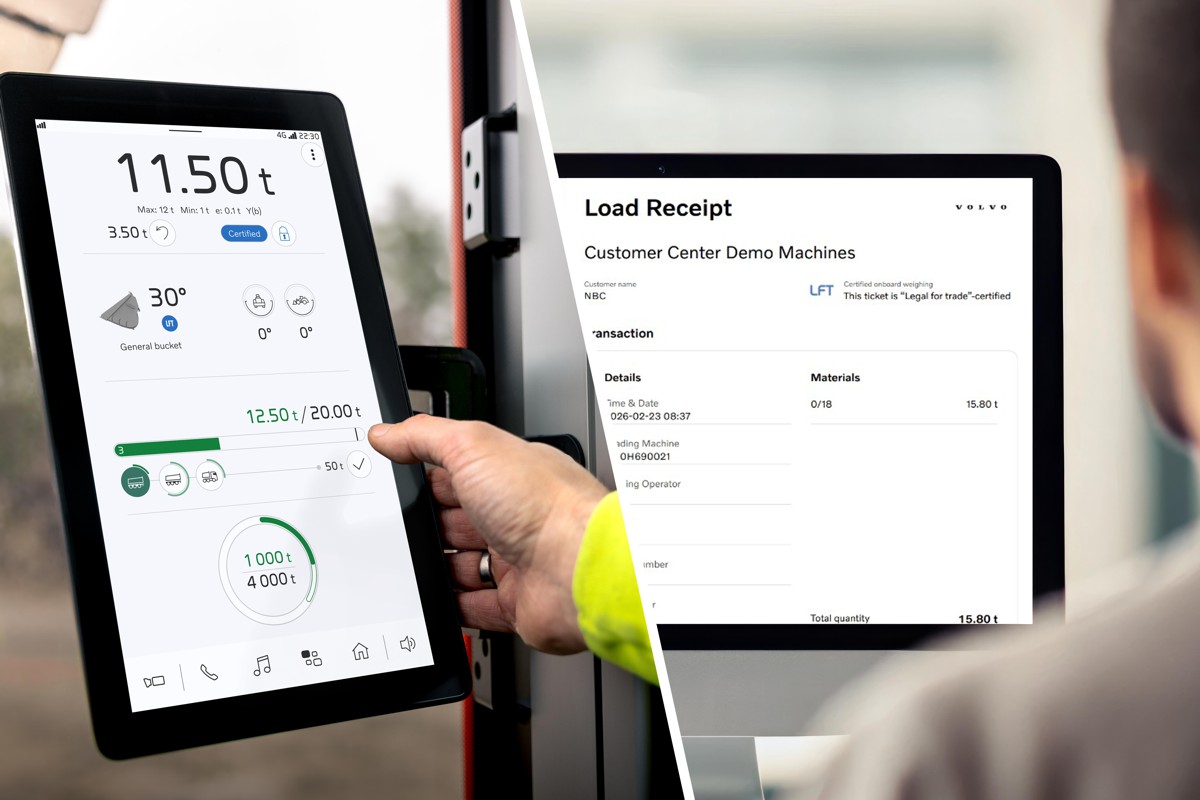
- Paired with Volvo Load Ticket, certified weights flow straight into office systems for documentation, reporting and billing.
- It’s available now on selected models in certain EU markets, rolling out country by country as local certification and dealer readiness allow, with a North American pilot under way.
When The Bucket Becomes The Cash Register
The commercial logic here is straightforward once you follow the load through a working day. On a busy aggregates operation, every truck that has to queue for a weighbridge is a truck that isn’t moving product, and the bridge itself is a fixed asset that costs money to install, calibrate and maintain. By certifying the weight at the loader, Volvo lets that ticket stand up for direct invoicing, which means trucks can in principle skip the site scales altogether. Site traffic eases, the office gets cleaner paperwork, and the whole load-to-cash cycle tightens.
Then there’s the question of getting each load right. Underloading leaves money and capacity on the table, while overloading invites a different kind of pain. Across most jurisdictions, exceeding axle or gross weight limits brings fines, forced offloading and, for repeat offenders, the sort of compliance record that pushes up insurance premiums and spooks contract holders. Penalties scale with the severity of the breach and vary widely by region, but the pattern holds everywhere: a truck stopped, unloaded and ticketed is an expensive truck.
Volvo’s pitch is that certified accuracy at the point of loading lets operators hit the legal limit deliberately, trip after trip, instead of guessing and hoping the next gantry doesn’t catch them out.
What “Certifiable” Actually Means
The word doing the heavy lifting in the product name is “certifiable”, and it carries real regulatory weight. The system is type-approved by an independent notified body according to OIML R51, the International Organization of Legal Metrology’s recommendation for automatic weighing instruments, and aligned with the requirements of the EU’s Measuring Instruments Directive, formally Directive 2014/32/EU.
That directive is the framework that governs whether a measuring instrument can be used for trade across the EU and the wider European Economic Area, and it leans on OIML normative documents to establish a presumption of conformity. Clearing it isn’t a marketing badge; it’s a third-party conformity assessment against defined standards for measurement accuracy.
Crucially, the same standards cover data integrity and security, not just the raw number on the screen. A weight that’s going to settle an invoice has to be protected from interference, which is why Volvo describes the solution as tamper-protected. That detail matters more than it might first appear, because the moment a measurement becomes the basis for payment, both buyer and seller need confidence that nobody has nudged the figure between the bucket and the billing system.
The notified-body route is what gives that confidence a legal footing rather than a verbal assurance.
Built Into The Machine, Not Bolted On
Where many legal weighing setups rely on separate hardware and a trip to a dedicated structure, Volvo’s approach folds the function into the loader’s own digital platform.
Jeany Morales Ylanan, Service Offer Owner Load & Haul Assist at Volvo Construction Equipment, framed it this way: “Developed by Volvo, Certifiable On-Board Weighing delivers certifiable-ready accuracy and reliability designed to support Legal-for-Trade requirements. Fully integrated through Load Assist and the Volvo Co-Pilot interface, the system provides customers with a seamless, tamper-protected solution backed by Volvo’s proven expertise in on-board weighing technology.”
The everyday upside lands with the operator. Advanced sensors and software compensate for machine movement, tilt and operating conditions so the reading holds up while the loader is actually working, not just when it’s standing still.
Ylanan added: “Unlike external weighing systems, the Volvo solution is built directly into the machine’s digital platform. Operators can monitor weight in real time via the Volvo Co-Pilot touchscreen, allowing them to adjust loads during operation without interrupting workflows.”
In practice that means trimming or topping up a load on the fly, rather than discovering at the gate that a truck’s a tonne light or a tonne over.
From Weight To Invoice
A certified number is only half the value if it still has to be copied out by hand. Combined with Volvo Load Ticket, the certified weight data can be documented digitally and pushed to office systems for reporting and billing, letting customers generate load documentation and invoices straight from the machine. That closes a gap that has long forced sites to reconcile weighbridge readouts, paper dockets and accounts software after the fact.
The knock-on effects are administrative but far from trivial. Traceability improves because each load carries a verifiable record from bucket to billing, disputes become easier to settle, and the people in the back office spend less time chasing figures.
For operations running thin margins on high volumes of low-value material, shaving friction out of that paperwork can matter as much as the productivity gains on the loading face.

Where And When Operators Can Get It
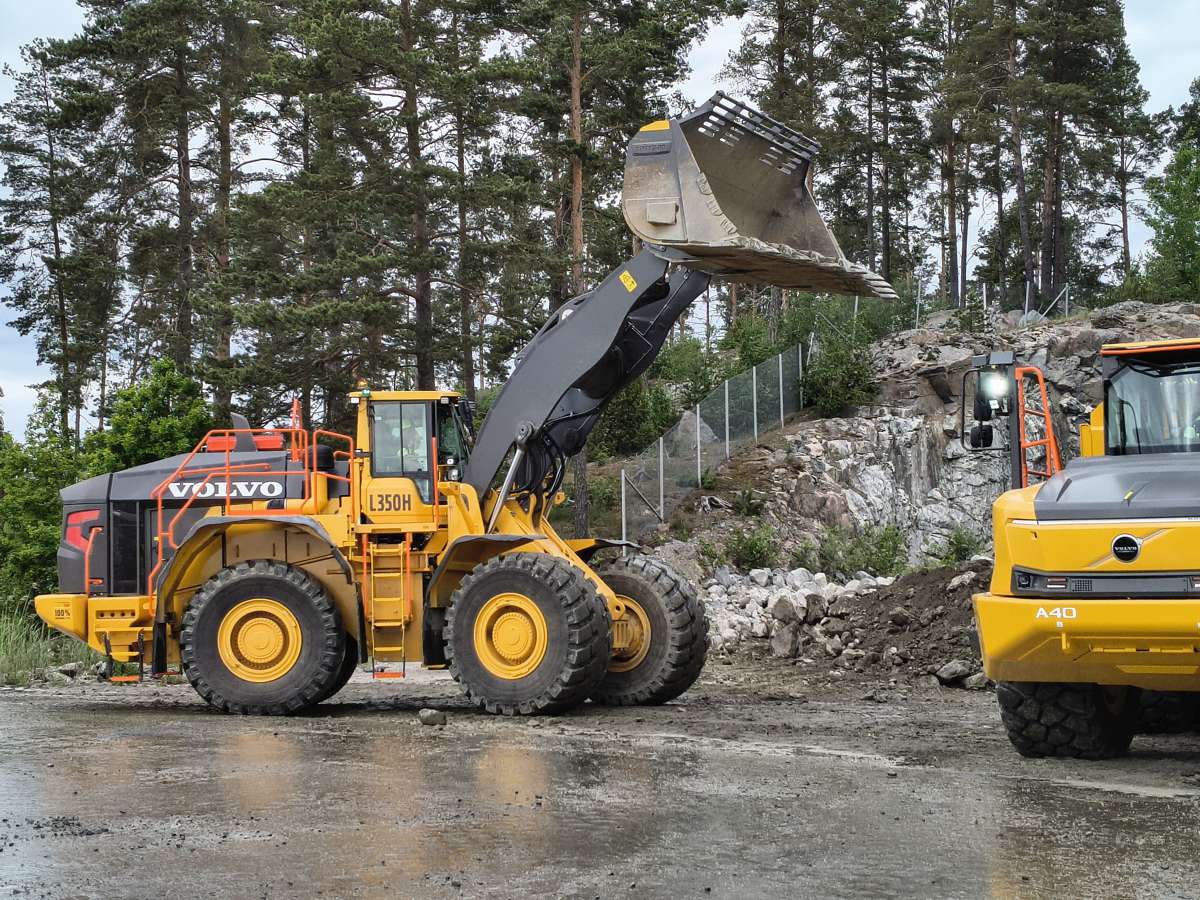
Availability is deliberately measured. Certifiable On-Board Weighing is offered on selected Volvo wheel loaders fitted with Volvo Co-Pilot 2.0 and the Load Assist On-Board Weighing system, spanning the L110H2 and L120H2 through to the L150H, and up to the L260H, in certain EU markets.
Volvo is introducing it market by market, gated by local certification requirements and by whether dealers are ready to handle installation, calibration and the certification process with a local notified body. That’s a sensible cadence for a product whose legal standing depends on regional metrology rules rather than a single pan-European switch-on.
The rollout isn’t confined to Europe. Volvo CE has signalled a North American pilot for the certifiable system, presented alongside its wider wheel loader updates at CONEXPO-CON/AGG 2026 in Las Vegas earlier this year. Different territories run different conformity regimes, so the staggered approach reflects the reality that “legal for trade” means different paperwork in different places, even when the underlying technology is the same.
A Bigger Bet On Connected Services
Step back from the single product and the move fits a clear direction of travel for Volvo CE, which used Volvo Days 2026 to argue that its recent investment programme is already producing tangible services rather than promises. Load Assist alone has been used by more than 10,000 operators to date, and certified weighing extends that platform from productivity tooling into the regulated, revenue-critical end of site operations.
For the wider construction and infrastructure economy, the significance lies less in the gadgetry and more in what it standardises. Aggregates, demolition recycling, ports and bulk logistics all run on weight, and anything that makes that weight both accurate and legally defensible at source chips away at infrastructure and admin that everyone has simply accepted as the cost of doing business.
Whether rivals follow with their own certified on-board offerings will say a lot about how quickly the industry is willing to retire the weighbridge as the default arbiter of a load.