Why UK roadbuilding Needs a Golden Thread of Data
The “golden thread” began life as a building safety measure, a response to the failures of information management exposed after Grenfell. Now the principle behind it, a continuous digital record that follows an asset from design through to maintenance, is being floated as a model for a very different part of the built environment.
Based on original commentary by Dr Paul Phillips, Technical Director at Associated Asphalt, this article explores whether the principles behind the construction sector’s “golden thread” could reshape how roads are planned, built and maintained. The argument lands at a pointed moment for the sector, with the cost of repairing local roads in England and Wales at a record high and the data underpinning maintenance decisions widely acknowledged to be weak.
For the firms that build, surface and maintain the network, and for the authorities and investors who fund it, the stakes are practical rather than abstract. Public money flowing into local highway maintenance now runs to well over a billion pounds a year, yet there is limited consensus on where it delivers the best return, in part because the condition data guiding those choices is patchy.
Phillips’s proposition is that lifecycle visibility, borrowed from a governance model already written into building regulation, could move roadbuilding away from reactive patching and towards managing carriageways as long-term assets. The idea is less about new technology than about a discipline the sector has so far lacked.
Briefing
- Dr Paul Phillips, Technical Director at Associated Asphalt, argues that construction’s “golden thread” of lifecycle information should be extended to roadbuilding.
- The concept stems from the 2018 Hackitt review into building safety and was written into law through subsequent reform, mandating a continuous digital record of a building’s design, materials and decisions.
- The 2026 ALARM survey put the local road repair backlog in England and Wales at a record £18.62bn, with roads resurfaced on average only once every 97 years.
- Official condition data is recognised as incomplete, with the National Audit Office finding that the Department for Transport lacks a clear grasp of local road condition.
- Phillips contends that continuous lifecycle data would support predictive maintenance, whole-life costing and clearer carbon comparisons across materials and methods.
A network running on poor data
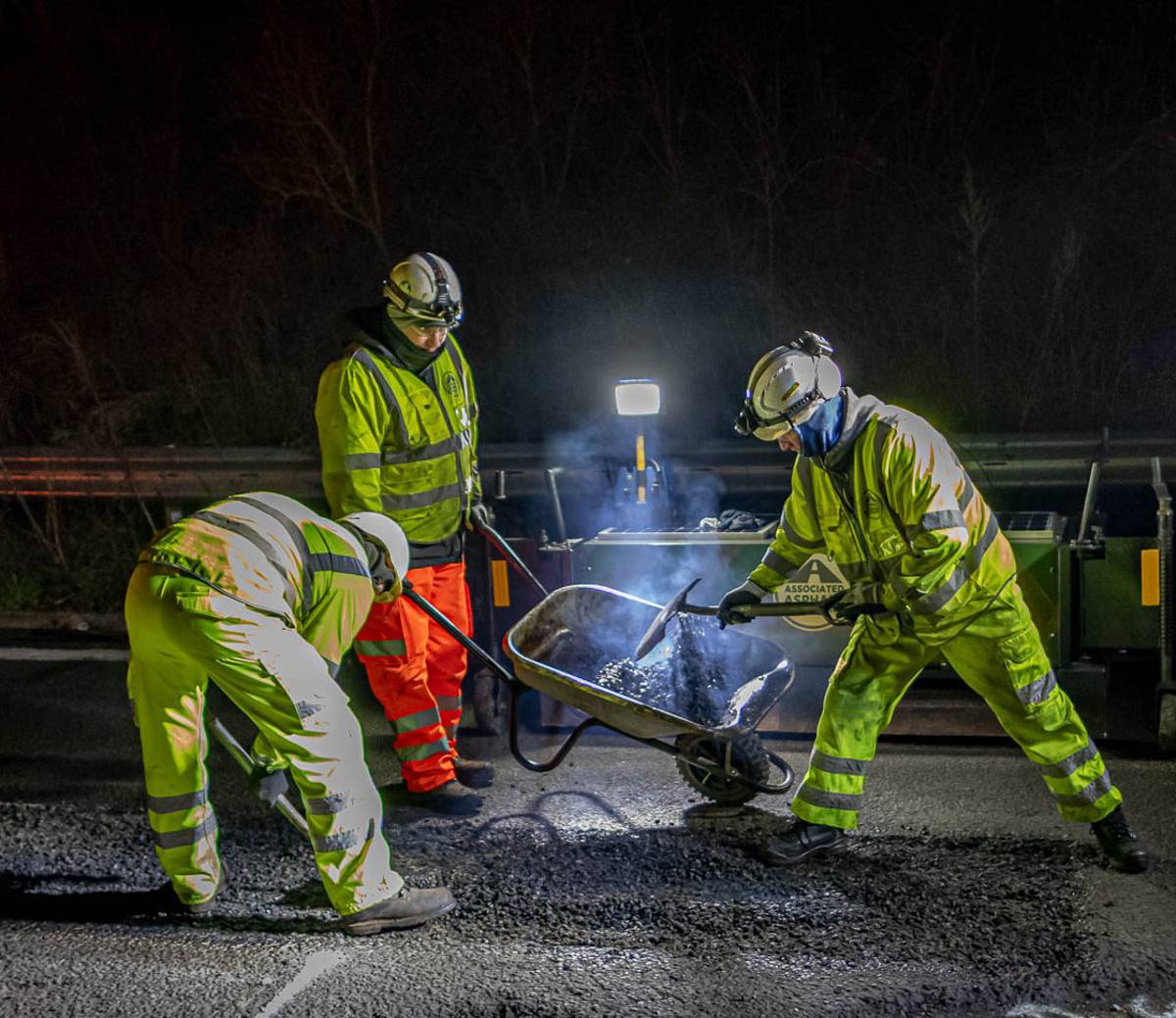
The financial backdrop is stark. The 2026 ALARM survey, published in March by the Asphalt Industry Alliance, put the one-off cost of bringing local roads in England and Wales up to standard at £18.62bn, a record, with the alliance’s chair branding the condition of local roads a national disgrace. Councils filled 1.9 million potholes over the year, equivalent to more than 5,200 a day, yet the backlog kept growing because roads are being resurfaced on average only once every 97 years. The figures describe a network locked into reactive repair, where short-term patching consumes budget without arresting the underlying decline. For materials suppliers and contractors, that cycle is commercially significant, since it shapes both the volume and the type of work commissioned.
Beneath the spending problem sits a data gap that the sector has long flagged. The Department for Transport has acknowledged limitations in its understanding of local road condition, and the National Audit Office has reported that the department does not have a good grasp of the state local roads are really in, with too many gaps in the data it collects. Visibility across the Strategic Road Network is stronger, though inconsistencies remain because multiple survey systems and methods are in use and sensor failures still create blind spots.
Phillips is careful not to assign blame, noting that the UK network is among the most complex in the world, shaped by high demand and historic development and never designed for present-day traffic volumes. The point, as he frames it, is not that anyone is at fault but that the current way of doing things is not working.
What building safety reform set in motion
The golden thread did not emerge from highways thinking at all. It followed the 2018 review led by Dame Judith Hackitt into building regulations and fire safety, which identified poor information management as a systemic weakness and called for a more joined-up approach to high-risk buildings. Reform then turned that finding into a legal requirement: a continuous digital record of a building’s design, materials, decisions and changes, accessible to relevant parties across the asset’s life to support safety, traceability and accountability.
The shift was as much cultural as regulatory, challenging a construction tradition of fragmented communication, siloed working and limited knowledge sharing that had left the sector exposed to miscommunication and systemic failure.
That history matters for roads because the weaknesses the golden thread was designed to address are not unique to buildings. Highways are a different class of asset, but they are exposed to the same problems of fragmented oversight, inconsistent data and limited lifecycle visibility. Phillips’s argument is that the governance principle travels even where the asset does not, and that roadbuilding could benefit from a comparable framework for capturing and sharing information over time. Framed this way, the golden thread reads less as a buildings policy than as a template for accountability that highways have yet to adopt.
Lessons from data-led industries
Outside construction, the direction of travel is already well established. In manufacturing, aerospace and advanced engineering, decisions are increasingly driven by high-quality, real-time data, with components tracked, performance monitored continuously and maintenance planned through integrated digital systems that link design intent to operational reality.
Phillips argues that while there is “no silver bullet”, greater visibility holds a meaningful part of the answer for roads. Applied to carriageways, that would mean carrying a continuous record of an asset from design through construction and into maintenance, capturing not only what was built but how, with which materials, under what conditions and how it has performed since.
The operational case rests on managing the network as a connected system rather than a series of isolated interventions. Full lifecycle visibility would support better planning, more targeted maintenance and clearer insight into how surfaces are actually performing, allowing authorities to act before roads deteriorate into the costly pothole-ridden state that now dominates spending.
Independent analysis has reinforced the value of sharper data, with road surface specialists arguing that more accurate, AI-led condition assessment can surface substantial savings through preventative maintenance. The commercial logic is that intelligence gathered across the whole life of an asset changes which interventions are chosen, and when.

The whole-life cost and carbon case
The sustainability dimension may prove the most consequential for procurement. Operators face mounting pressure to cut carbon and energy use without sacrificing quality, speed or cost, and that balance is hard to strike without data on how materials and methods perform over time.
Better lifecycle information would make it easier to compare the whole-life performance of competing options, weighing the long-term savings and lower emissions of more durable or lower-carbon alternatives against their upfront cost. Where decisions are currently shaped by the immediate job, richer data could tilt them towards considered, durable choices that pay back over years rather than weeks.
For suppliers, that shift carries clear commercial implications. A market that rewards whole-life value rather than lowest initial price changes the basis on which materials compete, favouring products able to demonstrate longevity and reduced lifetime carbon. Phillips frames the wider prize in familiar terms, observing that knowledge is power and that better data availability and long-term visibility could arm operators with the intelligence needed for greater safety, resilience and value.
The same evidence base that supports asset management would also underpin credible carbon reporting, an area of growing scrutiny across infrastructure procurement.
Building a joined-up view of the network
The road network is the backbone of the economy, and Phillips finds it hard to reconcile its importance with the reality that the sector still operates without a clear, joined-up view of its own assets while other industries advance through data-led insight. That absence, on his account, entrenches siloed, short-term fixes at the expense of the strategic, proactive investment that benefits the network as a whole.
New data standards are intended to narrow the gap, with the Publicly Available Standard for road condition monitoring moving the sector towards more consistent and accurate assessment, though the distance between aspiration and routine practice remains wide.
Whether the golden thread itself migrates from buildings to roads matters less than whether the principle behind it takes hold. Phillips writes that he hopes the model “ultimately finds its way into roadbuilding too, shaping a more connected, data-driven future for the industry.”
For an industry under financial strain and public scrutiny, the appeal of treating roads as managed, well-documented assets rather than a succession of emergency repairs is straightforward. The harder task will be assembling the data infrastructure, and the commercial incentives, to make that view of the network a working reality rather than a statement of intent.