Heavy Lifting Meets Urban Rail Renewal at Amsterdam Centraal
Replacing critical railway infrastructure inside one of Europe’s busiest stations without bringing services to a halt has become one of the defining engineering challenges facing mature rail networks. Across Europe, ageing bridges, tunnels and stations require extensive renewal at the same time that governments expect operators to increase capacity, improve reliability and reduce disruption for passengers.
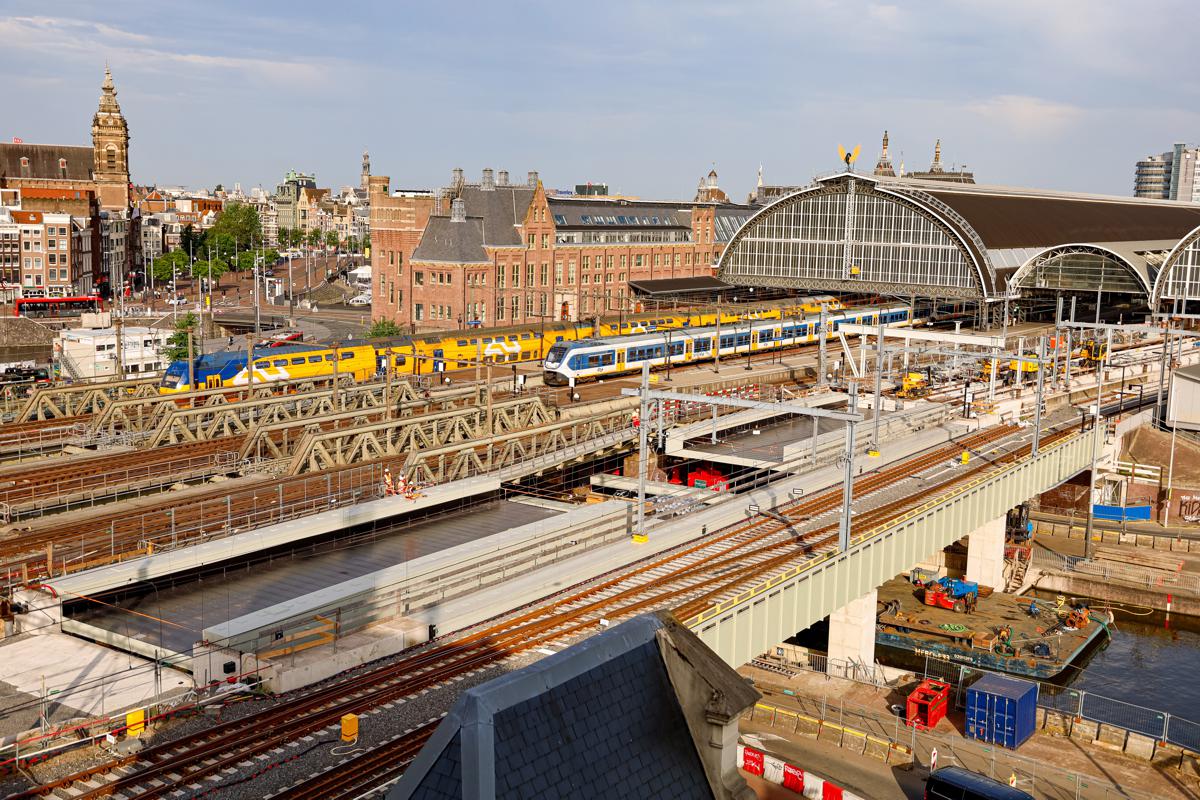
The latest bridge replacement at Amsterdam Centraal Station illustrates how those competing demands can be balanced through careful logistics, modular construction and specialist heavy lifting. With the second of five bridge replacements now complete, the project offers valuable lessons for infrastructure owners seeking to modernise century-old assets while maintaining daily operations. Rather than focusing solely on structural engineering, it demonstrates how transport planning, marine logistics and precision lifting have become equally important components of major rail renewal programmes.
Briefing
- Second of five bridge replacements completed at Amsterdam Centraal Station.
- Works form part of ProRail’s High-Frequency Rail Transport (PHS) Programme to increase future rail capacity.
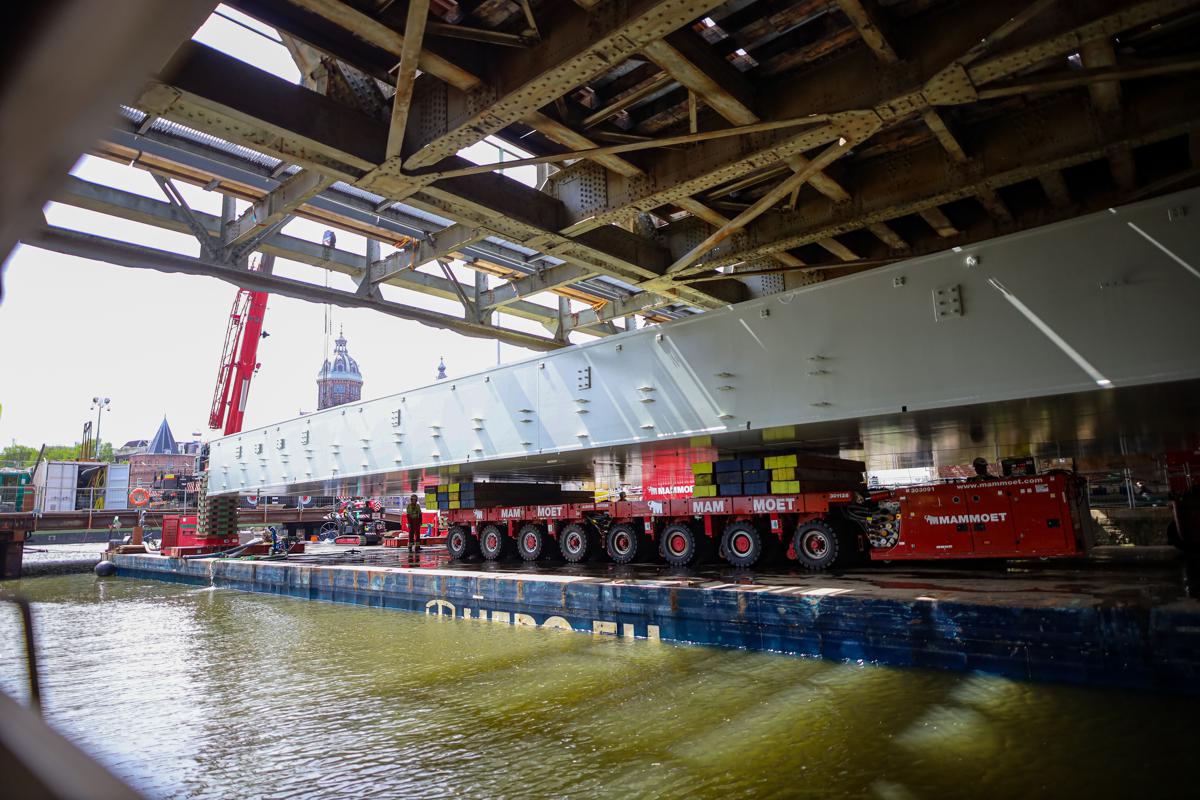
- Three steel bridge sections, weighing up to 275 tonnes each, were transported and installed using waterways to minimise disruption.
- A revised lifting methodology was developed to overcome increasingly restricted working space between existing and newly installed bridges.
- The multi-year programme is enabling infrastructure renewal while keeping one of Europe’s busiest stations operational.
Building Capacity Before Demand Outpaces Infrastructure
Amsterdam Centraal handles around 200,000 passengers each day, with passenger numbers expected to rise significantly during the coming decade. Meeting that growth requires far more than timetable adjustments. Much of the station’s supporting infrastructure dates back more than a century, making bridge replacement a prerequisite for expanding train services and improving operational resilience.
The bridge works form part of ProRail’s wider High-Frequency Rail Transport (PHS) Programme, a long-term national investment aimed at allowing more trains to operate across the Dutch network. Alongside replacing bridges, the programme includes track optimisation, station improvements, platform modifications and associated civil engineering works that collectively increase network capacity without constructing an entirely new terminal.
For infrastructure investors and policymakers, the project reflects a wider European trend. Many rail operators now face the simultaneous challenges of ageing assets, rising passenger demand and increasingly limited opportunities to close busy transport corridors for extended construction periods. Projects therefore succeed not only through engineering excellence but through minimising operational disruption.
Waterborne Logistics Replace Traditional Heavy Transport
Transporting steel bridge sections weighing between 175 and 275 tonnes through the centre of Amsterdam presented a logistical challenge almost as significant as the installation itself.
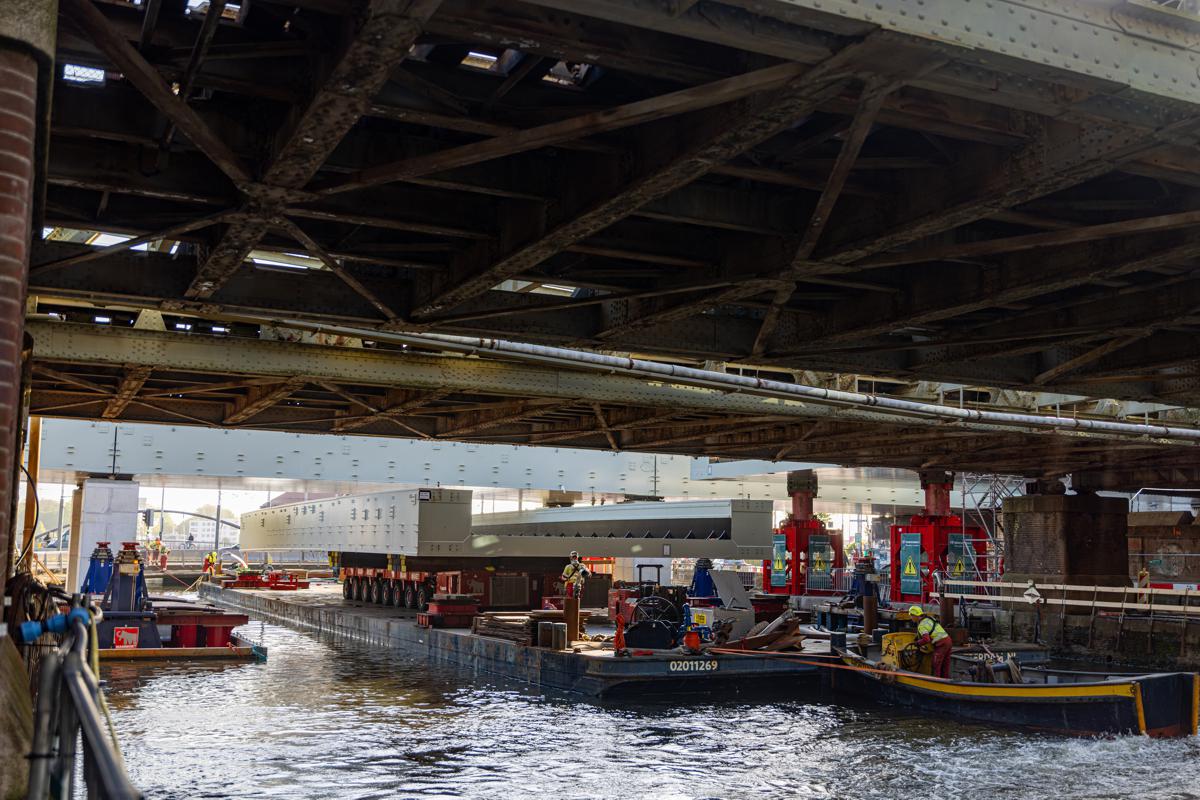
Rather than relying on conventional road transport, the project team elected to move each bridge section by water. Fabricated by Hollandia Infra, the components travelled on flat-top barges before arriving at the eastern side of Amsterdam Centraal. This approach avoided major highway closures, reduced the movement of exceptionally heavy vehicles through the city and allowed work to proceed while the station remained open.
The operation nevertheless demanded considerable precision. Before reaching the installation area, the transport barge had to pass beneath a low pedestrian bridge. Engineers temporarily submerged the vessel by ballasting it with water, reducing its air draft sufficiently to navigate beneath the obstruction before pumping the water back out and continuing towards the worksite.
For cities increasingly seeking to reduce disruption from major infrastructure projects, exploiting existing waterways offers a practical alternative where geography permits. Amsterdam’s extensive canal system provided an obvious advantage, but the principle is applicable wherever navigable rivers or ports connect fabrication facilities with urban construction sites.
Engineering Evolves as the Project Progresses
Completing multiple bridge replacements within the same constrained location means construction methods cannot remain static throughout the programme.
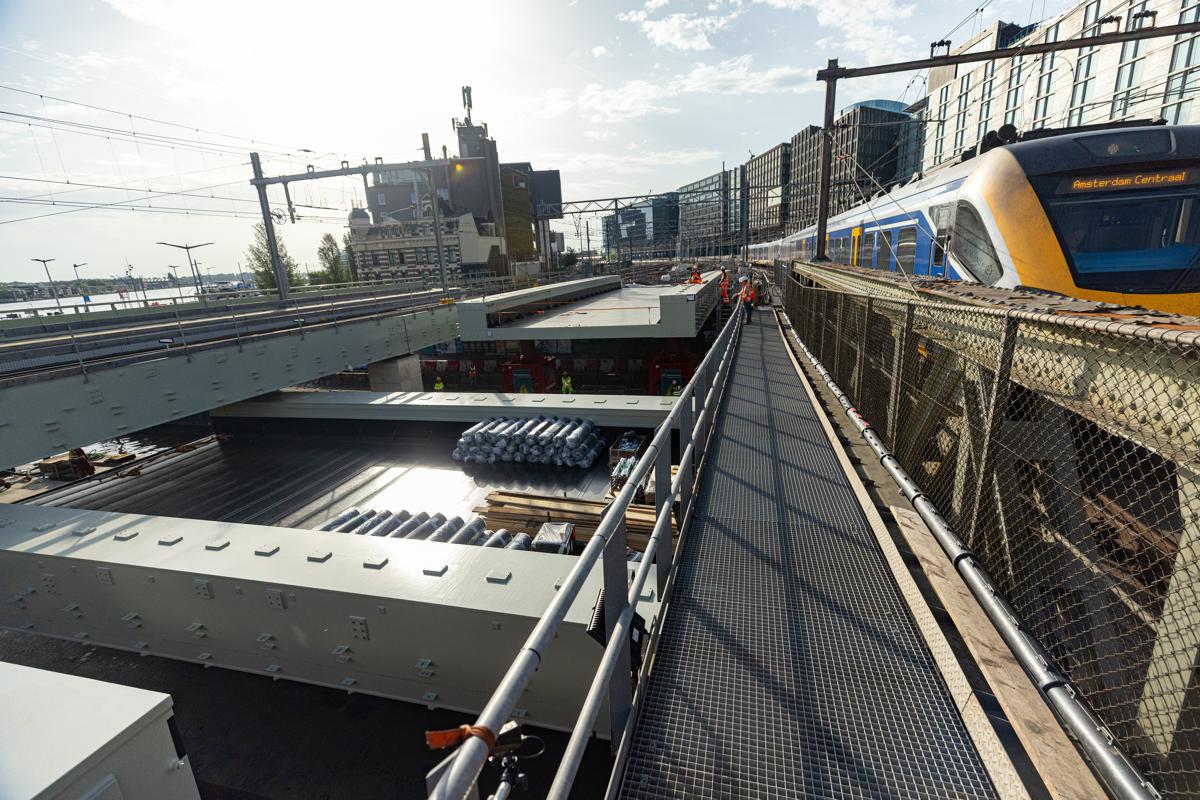
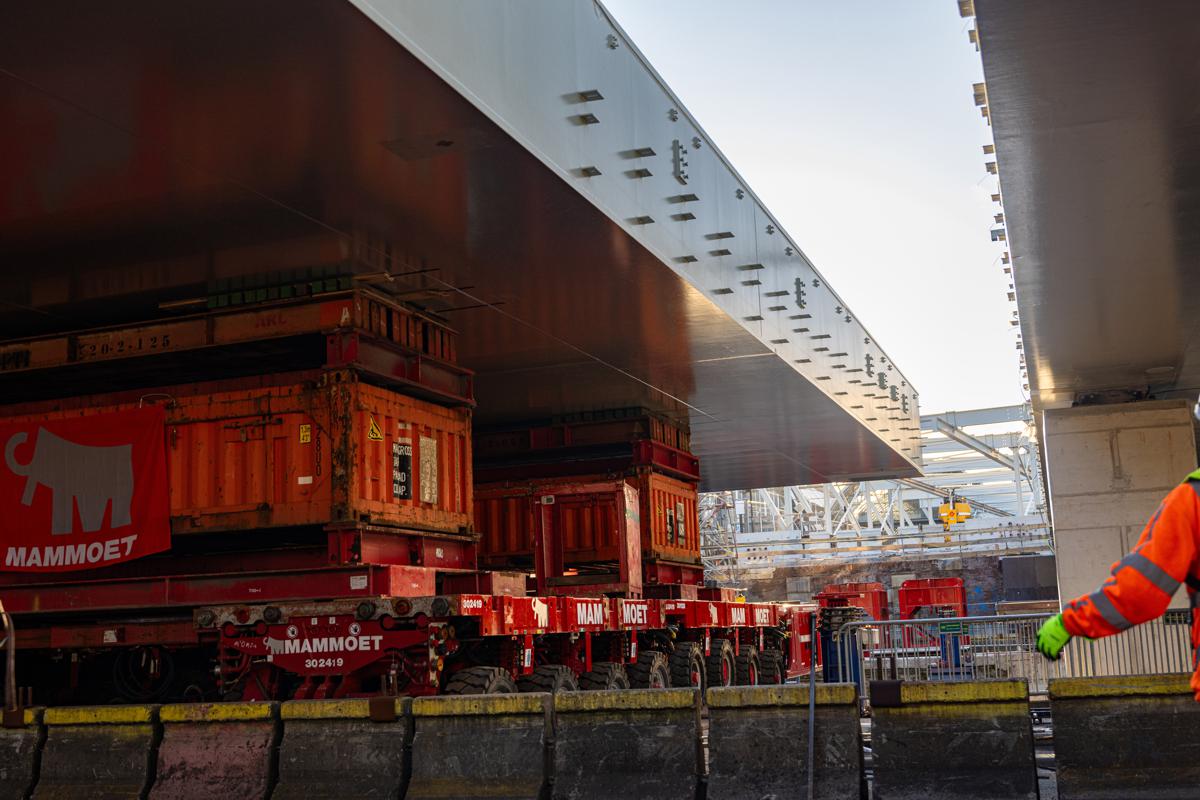
During the first bridge installation, Mammoet employed its Mega Jack 300 system alongside Self-Propelled Modular Transporters (SPMTs) to rotate and position the bridge sections directly from the transport barge. The second bridge, however, introduced new constraints because the available working space had been reduced by both the existing bridges and the newly installed structure from the previous phase.
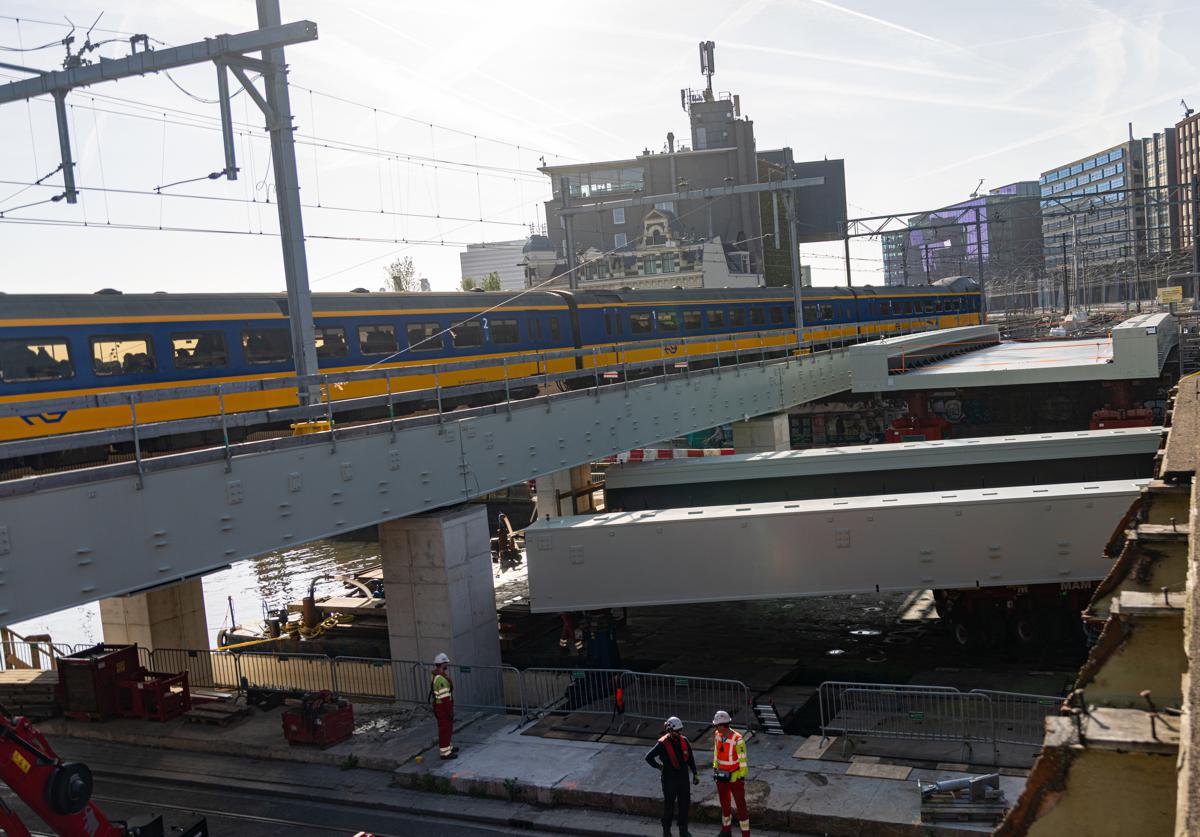
Instead, engineers developed an alternative lifting sequence. Bridge sections were manoeuvred beneath adjacent structures before being elevated using a purpose-built four-point hydraulic lifting system assembled on the quayside. The arrangement allowed four synchronised hydraulic cylinders to raise each section simultaneously while maintaining precise control throughout the operation.
As Mammoet Project Manager Leo de Vette explained: “Previously, we used our Mega Jack 300 system and SPMTs to lift and rotate all deck sections on the deck of the barge and then drive them off and into position.
This time, however, we are working between two bridges, so we had to consider the decks and columns of the old bridges, as well as those of the new bridge we installed last year.
For this reason, we had to first manoeuvre and rotate the new sections underneath these bridges and then jack them up using a four-point lifting system, which was assembled on the quayside”.
The changing methodology underlines an important aspect of long-duration infrastructure programmes. As construction advances, each successive phase often becomes more complex rather than less, requiring engineers to continually refine lifting strategies instead of repeating proven procedures.
Precision Installation Within Tight Tolerances
Perhaps the most technically demanding element involved installing the bridge’s central section.
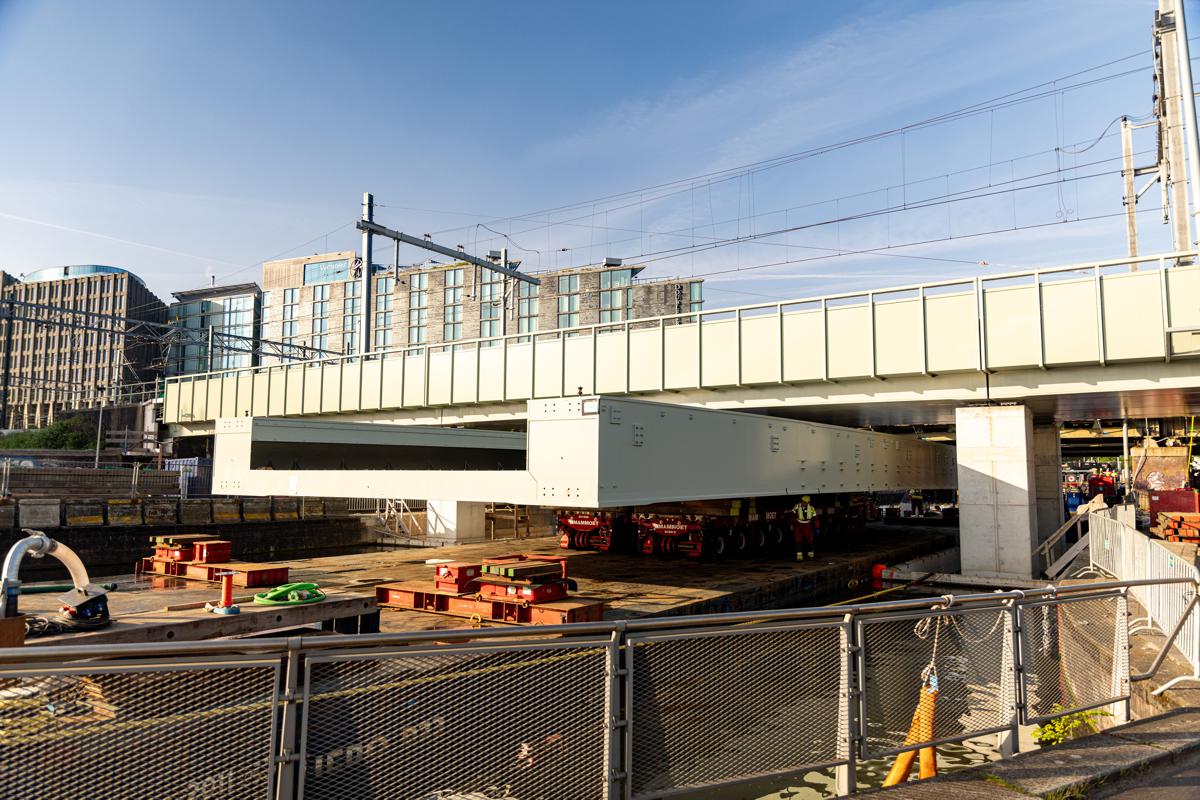
Unlike the outer spans, the centre element could not immediately rest on its permanent support because the bridge pier had yet to be constructed. Engineers therefore floated the section into position, rotated it through 90 degrees, lifted it into place and temporarily supported it on specially designed steel consoles connected to the adjacent bridge sections.
Only after the permanent central column had been completed did the installation team return to lower the bridge onto its final bearing.
According to ProRail, clearances during some stages measured only around 12 centimetres as bridge sections passed beneath existing structures before being rotated into position. Such restricted tolerances illustrate why detailed engineering simulations and carefully sequenced operations have become essential for bridge renewal projects within operational rail environments.
Each bridge section required approximately one week to install, demonstrating that even highly constrained heavy-lift operations can be delivered within predictable construction windows when logistics and engineering are carefully integrated.
Lessons for Urban Infrastructure Renewal
The significance of Amsterdam Centraal extends well beyond the Netherlands.
Many European transport hubs built during the late nineteenth and early twentieth centuries now require substantial structural renewal while continuing to support record passenger numbers. Closing stations for months is rarely politically or economically acceptable, forcing asset owners to pursue phased replacement strategies that maintain operational continuity.
This increasingly favours modular fabrication, off-site manufacturing, heavy transport specialists and temporary support systems capable of reducing on-site construction activity. The bridge replacement programme demonstrates how these disciplines are converging into an integrated delivery model rather than operating as separate engineering activities.
For contractors, the project also highlights the growing commercial value of logistics expertise. Winning major infrastructure contracts increasingly depends not simply on designing replacement structures but on demonstrating how those structures can be installed with the least possible impact on transport networks and surrounding communities.
Delivering Tomorrow’s Railway While Today’s Continues to Operate
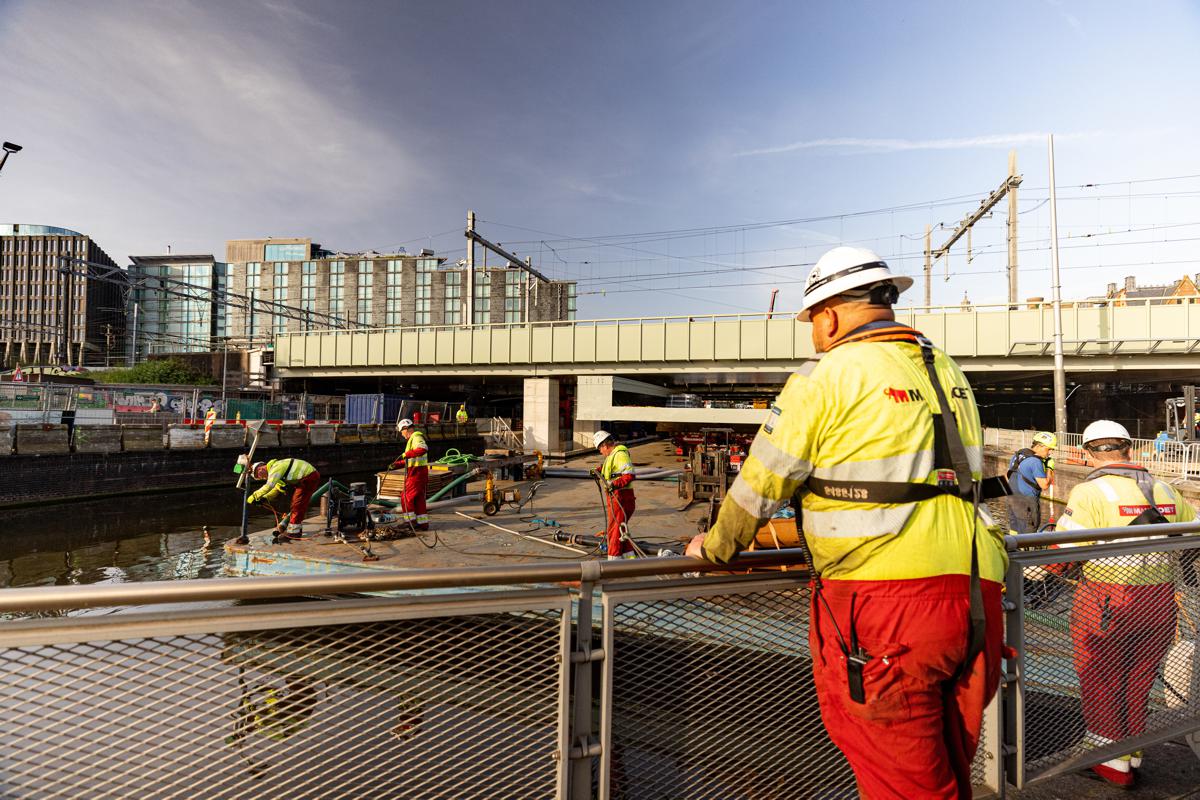
With two bridge replacements now complete and three still to come, Amsterdam Centraal continues to serve as a live demonstration of how complex railway renewal can proceed alongside uninterrupted passenger operations.
The wider programme represents far more than replacing ageing bridges. It forms part of a broader strategy to create additional capacity, improve operational flexibility and prepare one of Europe’s busiest rail gateways for future demand. As rail investment accelerates across Europe, projects such as this are likely to become increasingly common.
For the construction sector, the message is equally clear. Heavy lifting, marine logistics, modular construction and precision engineering are no longer specialist support activities sitting alongside civil engineering. They have become central disciplines in delivering infrastructure renewal where shutting down transport systems is simply no longer an option.