Swarm Robots Borrow From Bees and Ants to Rethink Mine Automation
A research team at Adelaide University has put forward a different answer to a question the mining industry has been spending heavily to solve: how to take people out of dangerous ground without bankrupting the operation or building in new ways for it to fail.
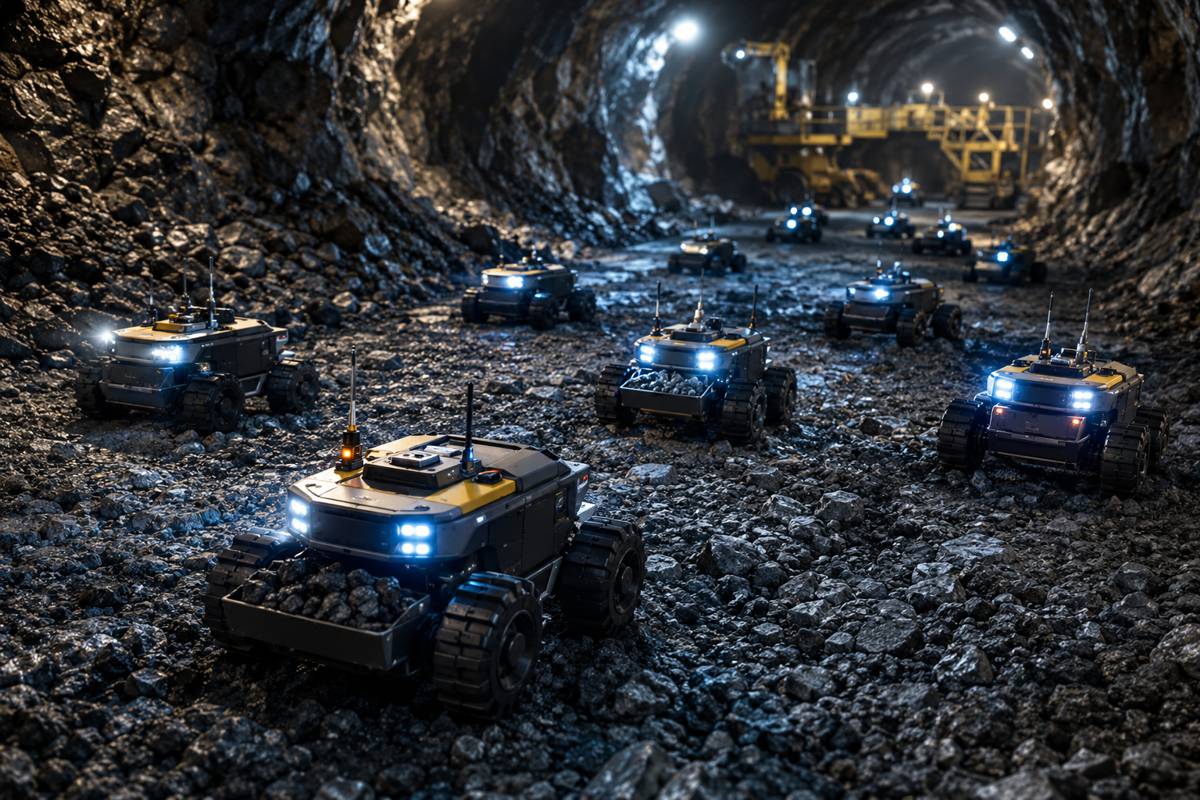
Most of the money poured into mine automation over the past decade has gone into large, expensive, centrally controlled machines, from driverless haul trucks to tele-remote loaders that report back to a single control room. The Adelaide work, published in the journal Natural Sciences, takes the opposite approach. It proposes many small, low-cost robots that coordinate the way a colony of bees or ants does, sharing tasks and making their own decisions without any central brain directing them.
The timing gives the research more weight than a laboratory curiosity might otherwise carry. Miners are chasing copper, lithium, nickel and rare earths into deeper, more remote and harder-to-reach ground precisely because the easy deposits are running down, and the energy transition is lifting demand for those metals. In that setting, the weaknesses of the centralised model, its capital cost and its dependence on a single controller and a reliable communications link, start to look less like inconveniences and more like limits on where automation can realistically go.
The study is small in scale, but it was run on real hardware rather than in simulation alone, which is the detail that should make engineers and investors pay attention.
Briefing
- Adelaide University researchers tested a decentralised swarm of small robots for mine automation, modelled on the cooperative behaviour of bees and ants, and published the work in Natural Sciences (DOI 10.1002/ntls.70049).
- A honeybee-inspired strategy of mapping an area before collecting resources cut travel distance by up to 80 per cent, reduced energy use by around 50 per cent and completed ore-delivery tasks up to 60 per cent faster than a basic system.
- The swarm has no central controller, so the system keeps working even when individual robots fail, addressing a structural weakness in conventional centralised automation.
- The team used off-the-shelf Zumo 2040 robots in a laboratory built to mimic a mine, demonstrating the concept on physical machines rather than in simulation only.
- Researchers flagged sensing, battery life and unpredictable underground conditions as the main barriers before the technology could reach working mines, while pointing to space mining as a longer-term application.
Breaking the Single Point of Failure
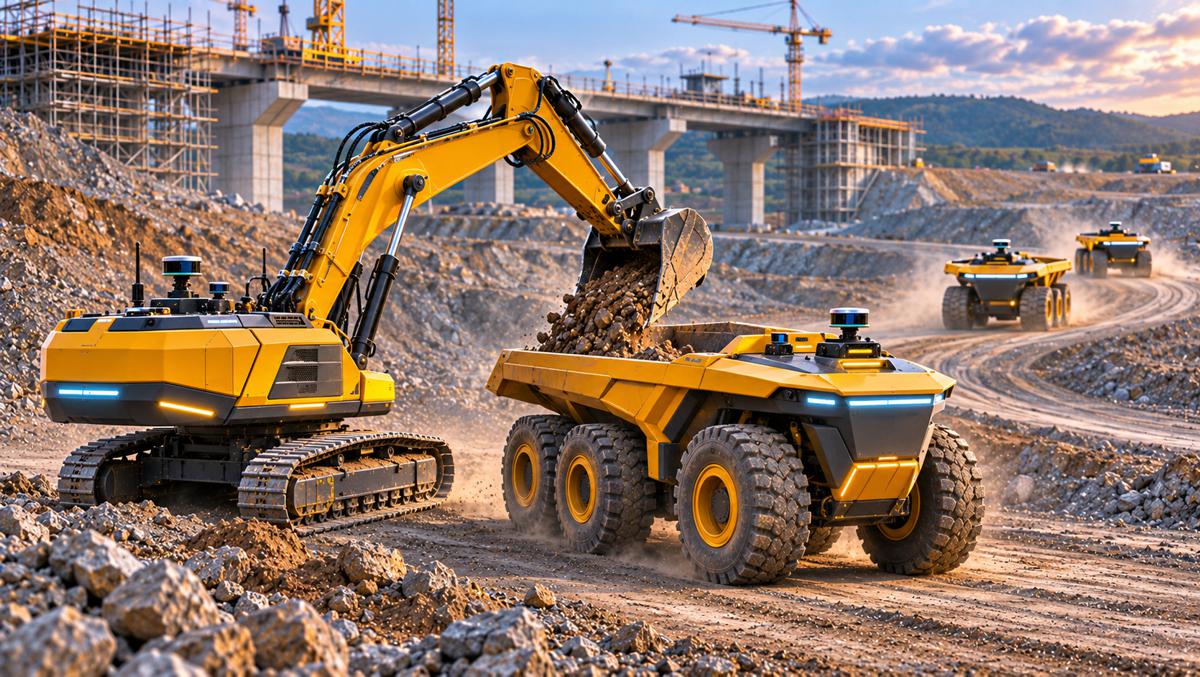
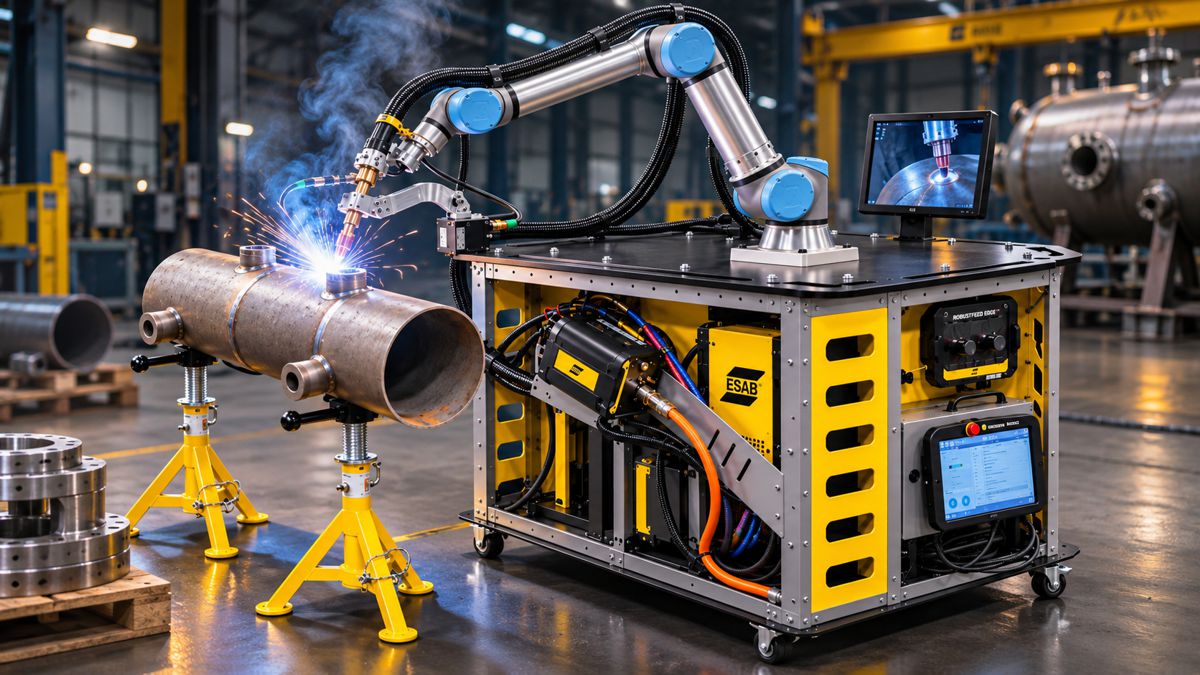
The prevailing approach to mine automation is built around central control. Platforms such as Sandvik’s AutoMine, Epiroc’s Mobius for Mining and the fleet systems offered by Caterpillar and Komatsu coordinate expensive machines from a control centre, and they have delivered real gains in safety and productivity at scale. Rio Tinto, to take one well-documented case, runs dozens of driverless trucks across its iron ore operations in Western Australia. The drawback is that this architecture concentrates risk. A centralised system is costly to install, hard to reconfigure once it is in place, and exposed at a single point: if the controller or the communications link goes down, the fleet can stop with it.
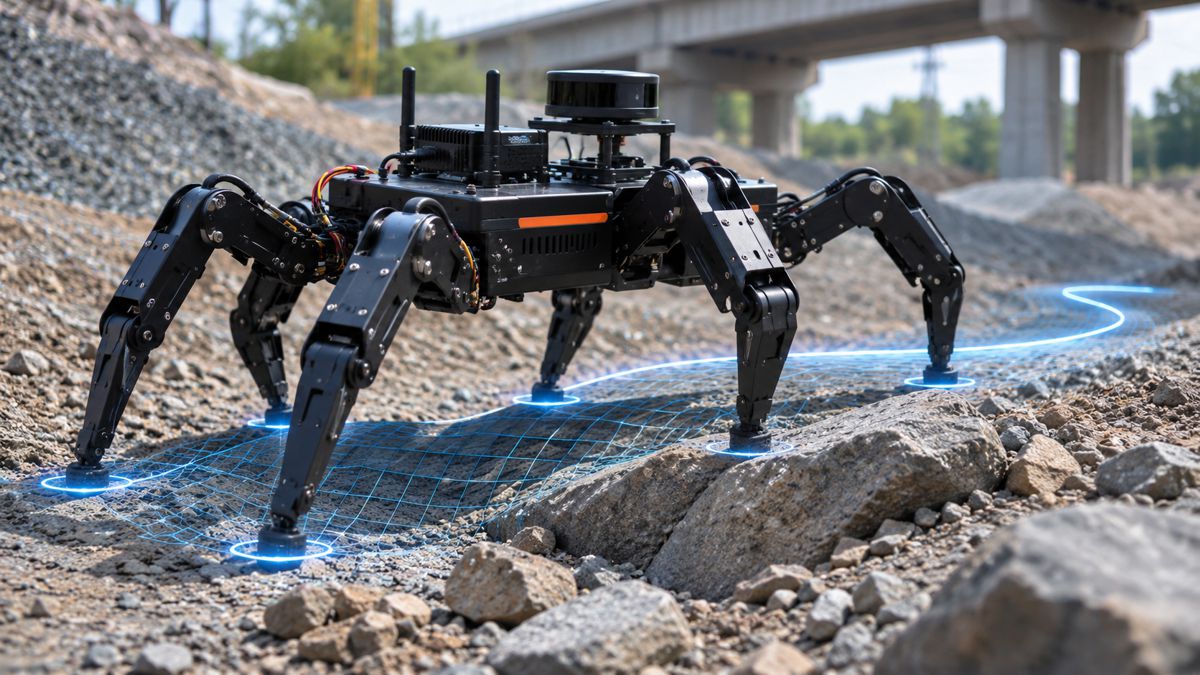
Swarm logic attacks that weakness directly by removing the central brain altogether. Each robot decides for itself and follows simple rules of coordination, so the loss of one unit, or several, does not halt the group. That resilience is the commercial argument, and it matters most in exactly the environments the industry is moving towards, where communications are patchy and conditions are unforgiving.
The wider market is already moving in automation’s direction and leaves room for cheaper, more robust alternatives. Persistence Market Research values the global mining robotics market at around US$1.7 billion in 2026, rising to roughly US$3.3 billion by 2033, with underground mining automation growing faster still on the back of safety regulation, labour shortages and critical-mineral demand.
Lead author Dr Joven Tan, who carried out the research as part of his PhD at the School of Chemical Engineering, framed the appeal in plain terms. “Social insects have developed very efficient ways of solving problems together,” he said, adding that “by applying these ideas to robotics, we can create systems that are more efficient, adaptable and reliable for industries such as mining.”
What the Honeybee Strategy Delivered
The team compared three ways of organising the robots inside a laboratory set-up designed to imitate a mine. The first was a basic system in which each robot collected ore and returned immediately, close to how conventional autonomous collection works. The second drew on ant behaviour, with the robots dividing the work between them so that some located resources while others transported them. The third borrowed from honeybees, sending the robots out to explore and map an area first, then using that knowledge to collect resources along more efficient routes.
The honeybee approach was the clear winner across every test. By learning where resources were before committing to collection, it reduced travel distance by up to 80 per cent, cut energy use by about half, and completed ore-delivery tasks up to 60 per cent faster than the basic model. The ant-inspired method also improved on the baseline through its division of labour, with one robot finding resources while another moved them. Those numbers carry operational meaning rather than just academic interest, because energy consumption and cycle time are precisely the variables that govern the cost of moving material in any mine.
A halving of energy use and a sixty per cent gain in delivery speed, if they survive the move from bench to pit, would translate into real savings. Just as important, the results came from physical robots, which strengthens the case that the strategies can work outside a computer model.
Cheaper Machines, Harder Ground
The economics of the swarm are as significant as its mechanics. A conventional autonomous loader or haul truck is a multi-million-dollar asset, which sets a high threshold for any operation considering automation. A swarm of small, inexpensive robots lowers that threshold sharply, opening automation to smaller operators and to deposits that could never justify a fleet of large autonomous machines. It also changes what counts as an accessible reserve. Small robots can be sent into narrow seams, unstable ground or confined spaces where putting either a person or a large machine would be unsafe or uneconomic.
The industry is already edging in this direction, which makes the Adelaide concept less of a leap than it first appears. In Australia, the Reward Gold Mine has been deploying an autonomous loader configured for narrow-vein extraction, a setting that has historically left reserves stranded because they were too tight to work profitably.
In Chile, Codelco’s El Teniente division has used robots to inspect ground that has not been reinforced and where human entry is prohibited, part of a stated push towards a zero-exposure mine. Both cases show operators using machines to reach material that people cannot safely access, and a low-cost swarm extends that logic to a far wider set of sites. As demand for battery metals and other critical minerals drives extraction into more marginal and remote ground, the ability to work small, awkward or hazardous deposits at modest cost is likely to become a competitive advantage rather than a niche capability.
Inside the Swarm
The hardware behind the study underlines the cost story. The researchers used Zumo 2040 robots, compact units measuring less than four inches on each side and built around the Raspberry Pi RP2040 microcontroller, designed for tasks such as line-following and maze-solving. These are off-the-shelf educational and research platforms rather than bespoke mining machines, which is part of the point: the intelligence sits in the coordination strategy, not in any single expensive robot. That separation between cheap bodies and smart collective behaviour is what makes the approach scalable in principle.
What ties the robots together is a set of local rules rather than a master plan. In the ant configuration, the swarm splits responsibilities so that scouting and hauling happen in parallel. In the honeybee configuration, the robots invest effort up front in exploration and memory, mapping where resources lie before they begin collecting in earnest, which is why it produced the steepest efficiency gains.
The behaviour that emerges looks coordinated even though no robot is in charge. Project leader and co-author Dr Noune Melkoumian, also of the School of Chemical Engineering, set the work in that longer frame. “Nature has spent millions of years developing efficient ways for groups to work together,” she said, noting that “by learning from these systems, we can develop new technologies that are more flexible, reliable and efficient.”
The Obstacles Between Lab and Pit
A tabletop arena is a long way from a working mine, and the researchers are candid about the gap. They identify better sensing, longer battery life and the ability to cope with unpredictable underground conditions as the principal hurdles before the technology could be deployed at scale. Each of these is substantial. Dust, water, rough terrain and the loss of satellite positioning make underground navigation hard for any autonomous machine, and small robots have less room for the rugged sensors and large batteries that field conditions demand.
Coordination at scale is the other open question. Demonstrating efficient behaviour with a handful of robots on a clean surface does not guarantee that hundreds of units will cooperate reliably across a real ore body, where communication is intermittent and the environment keeps changing. The broader automation sector is investing heavily in private underground 5G and LTE networks precisely because real-time coordination between machines depends on connectivity that mines have traditionally lacked.
None of this makes the swarm concept unworkable, and the honesty about its limits is part of what gives the research credibility. It does mean the path from promising laboratory result to deployable system runs through several years of engineering rather than a single product launch.
A Path Towards Space Mining
The most striking claims the researchers make point well beyond the pit floor. Dr Melkoumian sees near-term value in the most hazardous corners of conventional mining and a longer horizon in extra-terrestrial extraction. “Swarm robotic systems could be used in dangerous or difficult-to-reach mining areas, reducing risks for workers while improving productivity,” she said. “They could also play an important role in future space mining missions, where fully autonomous systems will be essential. Our research shows that swarm robotics is no longer just a theoretical idea. These systems can be built, tested and operated in real environments, with the potential to change how resources are explored, excavated and transported.”
The space-mining ambition is speculative, but the underlying fit is logical. Environments with no human presence and long communications delays favour systems that can act on their own and tolerate the loss of individual units, which is exactly what a decentralised swarm is built to do. For the resources industry on Earth, the more immediate question is whether the efficiency and resilience shown in the laboratory can be carried into harsh, large-scale operations.
The Adelaide study does not settle that question, but it shifts the conversation about mine automation away from ever-larger and ever-more-expensive single machines and towards a model that is cheaper to enter, harder to break and easier to scale. Whether incumbents adopt the idea or new entrants build around it, the direction of travel is worth watching closely.