RB Global’s El Salvador Alliance Points to a Bigger Marketplace Strategy
RB Global’s decision to deepen its presence in El Salvador looks, on the surface, like a modest piece of channel housekeeping: one local operator, one auction centre, one capital city. Read against the company’s wider behaviour, it is something more deliberate.
The group’s salvage and total-loss arm, IAA, has signed a new Market Alliance with Matus International to run an auction centre in San Salvador, building on a footprint the company first established in the country back in 2022. For an audience that tracks where commercial-asset capital flows rather than where individual cars end up, the interesting part is not the centre itself but the distribution architecture it represents.
The move belongs to a run of Latin American and Middle Eastern expansions that share a common design. Rather than buying yards, hiring staff and absorbing the working capital of a physical auction estate, IAA is plugging accredited local partners into its existing digital marketplace and letting them handle the parts of the transaction that need a presence on the ground.
That approach keeps the parent company asset-light while widening the pool of bidders competing for inventory that, for the most part, originates with insurers in the United States. The El Salvador alliance is a small node in that network, but the logic behind it is the same logic now reshaping how global marketplaces reach emerging infrastructure economies.
Briefing
- IAA, the salvage and total-loss unit of RB Global (NYSE and TSX: RBA), has launched a new Market Alliance in El Salvador with Matus International, which will operate an auction centre in San Salvador and support buyers through registration, bidding, logistics and delivery.
- The agreement deepens a presence first established in El Salvador in 2022 and follows comparable alliances elsewhere in the region, including Guatemala with Auto Traders of America in late 2025 and earlier expansions into markets such as Oman.
- The Market Alliance template is asset-light: local partners run the in-market operation while IAA retains the inventory, the platform and the digital reach, allowing rapid geographic growth with limited fixed cost.
- El Salvador’s fully dollarised economy removes currency friction for buyers transacting against US-denominated auction prices, an under-appreciated advantage in cross-border salvage trade.
- The expansion sits inside RB Global’s broader omnichannel strategy across automotive, construction, commercial transport and other asset classes, making the model relevant well beyond passenger vehicles.
A Distribution Model Built On Local Partners
The mechanics of a Market Alliance are straightforward, and that simplicity is the point. Matus International takes on the work that genuinely requires a local team, guiding buyers from account registration and bidding through to the logistics and delivery that follow a successful purchase, while IAA continues to supply the inventory, the auction technology and the international demand that gives the marketplace its depth.
David Rymarz, Senior Vice President and Head of IAA Marketplace, framed the rationale in terms of proximity to demand, saying the company is committed to “meeting customers where they do business and strengthening access to our global marketplace,” and adding that “as buyer demand across Central America continues to grow, expanding our reach in the region allows us to provide customers with greater access to our inventory, tools and services, while delivering the local support needed to help them participate in our auctions with confidence.”
What that local support amounts to in practice is the removal of friction. Buyers in Central America have long sourced damaged and total-loss vehicles from US auctions, but the process can be opaque to anyone working at a distance, with unfamiliar paperwork, shipping decisions and customs steps standing between a winning bid and a vehicle on the road.
Allan Matus, Chief Executive Officer of Matus International, positioned his firm precisely at that gap, saying the company looks forward to “helping customers throughout every stage of the purchasing journey, from registration and bidding through logistics and delivery, while providing the local support they value.”
For IAA, the appeal is structural. Each alliance adds bidders without adding much in the way of fixed assets, and a deeper bidder base tends to firm up prices for the sellers IAA ultimately serves, which in the salvage business are predominantly insurers recovering value on written-off vehicles.
The repeatability matters as much as the economics. El Salvador is one entry in a network IAA has been extending market by market, with an alliance in Guatemala announced in late 2025 through Auto Traders of America and earlier expansions into territories as far afield as Oman. RB Global has described a marketplace reaching customers in well over a hundred and seventy countries through auction sites in more than a dozen, and the alliance model is the lever that allows that reach to grow without a matching expansion of physical infrastructure.
In an industry where the scarce resources are inventory and trust rather than auction sheds, building distribution through vetted local operators is a capital-efficient way to convert latent demand into active bidding.
Why El Salvador Anchors The Next Phase
The choice of El Salvador is easier to understand once the country’s recent trajectory is taken into account. The economy is fully dollarised, having adopted the US dollar as legal tender in 2001, which means buyers transact in the same currency that IAA’s auctions are priced in and carry none of the exchange-rate risk that complicates cross-border purchases elsewhere in the region.
The World Bank has pointed to a sharp improvement in security since 2022 and estimated economic growth of around 3.9 per cent in 2025, with construction expanding by more than twenty per cent on the back of strong private and public investment. Remittances, running close to six billion dollars and equivalent to roughly a quarter of national output, keep household spending power resilient even when formal wages lag. For a marketplace that depends on a steady base of buyers able to fund vehicle purchases, that combination of dollar stability, improving confidence and remittance-backed demand is unusually supportive.
There is also a structural dependence on imported vehicles that plays directly to IAA’s inventory. Most of the cars circulating across Central America arrive from North America and Europe rather than rolling off regional production lines, and damaged or total-loss units sourced from US auctions are a well-established route to affordable transport, particularly where local labour costs make rebuilding economical.
El Salvador’s membership of the CAFTA-DR trade framework and its Pacific port infrastructure at Acajutla give the import trade a settled logistical backbone. The government’s removal of Bitcoin’s legal-tender status in January 2025 has, if anything, reinforced the primacy of the dollar in everyday commerce, leaving the marketplace’s pricing and the buyer’s wallet aligned. Establishing a presence here in 2022 and now reinforcing it suggests IAA reads the country as a durable demand centre rather than an opportunistic one.
Repair Costs, Total Losses And The Economics Of Salvage
Behind every salvage alliance sits a quieter trend in the insurance economics of the developed world. As vehicles grow more complex, with sensor arrays, advanced driver-assistance systems and expensive structural materials, the cost of repairing them after a collision has climbed, and a higher repair bill makes insurers more likely to declare a vehicle a total loss rather than fund the work.
That dynamic feeds the supply side of IAA’s business, because a written-off vehicle that is uneconomic to repair in a high-wage market still carries real value to a buyer who can rebuild it where labour is cheaper and parts are plentiful. Widening the bidder pool through alliances such as the one in El Salvador is one of the few levers a salvage operator has to support returns, since more competition for each lot tends to lift the price the seller recovers.
For the Central American buyer, the appeal runs in the opposite direction but reinforces the same flow. A vehicle that has reached the end of its economic life under one insurance regime can become a serviceable, relatively modern asset under another, often with safety systems and drivetrains still intact. That is a circular outcome of a sort, keeping steel, aluminium and functioning components in service for years longer than a straight scrappage would allow.
The trade is not without friction, and concerns about undisclosed flood or fire damage are a standing reason why transparent vehicle histories and verifiable records matter to buyers operating at a distance. A formal in-market partner with a physical centre and an accountable local presence is, in part, a response to exactly that concern, lending structure to a trade that has historically run through a patchwork of informal intermediaries.
Reading The Strategy Across RB Global’s Asset Classes
The temptation is to file this announcement under automotive and move on, but that underrates what RB Global is assembling. The group operates an omnichannel marketplace that spans automotive, construction, commercial transport, government surplus, lifting and material handling, energy, mining and agriculture, with IAA sitting alongside Ritchie Bros. in heavy equipment, Rouse Services in asset intelligence, SmartEquip in lifecycle and parts, and VeriTread in heavy-haul transport.
The same instinct visible in El Salvador, namely building distribution and depth without owning every link in the chain, shows up across the portfolio. In May 2026 the company completed its acquisition of BigIron in the United States and generated more than CA$175 million in gross transaction value at a single premier equipment auction in Edmonton, evidence that the appetite for scale runs through the construction side of the business as much as the salvage side.
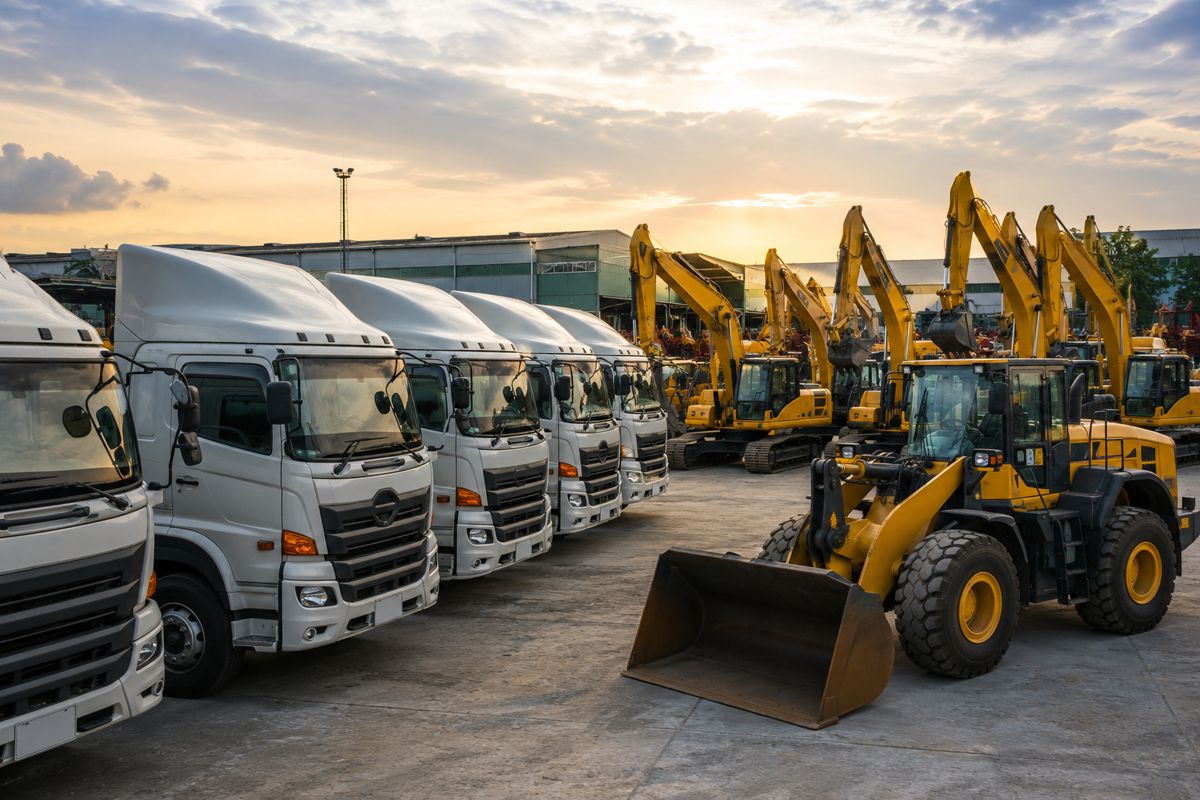
That breadth is what makes the Market Alliance template worth watching for anyone in construction and infrastructure rather than passenger vehicles. The model that IAA is refining in Central America, pairing a global digital platform with accredited local operators, is readily transferable to commercial trucks, attachments and the kind of yellow-iron inventory that moves through Ritchie Bros.
For equipment buyers and fleet operators in emerging markets, the prospect of competing for assets on a transparent international platform while leaning on a local partner for the practical steps is a meaningful change to how second-life machinery is sourced. For investors, the read is that RB Global is compounding marketplace liquidity across asset classes and geographies through a low-capital channel strategy, with the dividend-paying parent treating each alliance as an incremental, repeatable addition to demand rather than a heavy bet on physical expansion.
What The El Salvador Move Signals
It would be easy to underplay an announcement of this size, and just as easy to overstate it. The El Salvador alliance will not, on its own, move RB Global’s numbers in a way that registers in a quarterly result. Its significance lies in what it reveals about method.
Global asset marketplaces are increasingly built less on owned infrastructure and more on networks of accredited partners who carry the local risk and local knowledge, and the value accrues to whoever controls the inventory, the data and the platform that the network plugs into. Central America, with its dollar economies, import-dependent vehicle parks and recovering investment climate, is becoming a proving ground for that approach.
The wider trajectory will be worth following on two fronts. The first is regulatory, since several Latin American governments are tightening safety and emissions standards on imported second-hand vehicles, a shift that could reshape which inventory clears and reward operators able to provide verifiable histories and compliant documentation. The second is competitive, because IAA is not alone in courting these buyers, and the depth of a marketplace ultimately rests on the bidders it can convene.
By formalising its El Salvador presence rather than leaving the trade to informal channels, RB Global is making a measured wager that structure, transparency and local proximity will define the next stage of the cross-border asset trade. For construction professionals, investors and policymakers watching how commercial assets move through emerging markets, that is the part of this story that endures.