Liebherr Targets Urban Construction with Generation 8 Compact Excavators
Urban construction is placing growing pressure on contractors to do more with less space. Whether replacing utilities beneath city streets, carrying out highway maintenance or working on densely developed infrastructure projects, excavators increasingly need to combine compact dimensions with lifting capability, digital connectivity and lower operating costs.
Liebherr’s latest Generation 8 compact crawler excavators represent more than a routine product refresh. They illustrate how manufacturers are responding to changing construction economics by designing machines around productivity, operator efficiency and future digital integration rather than simply increasing power.
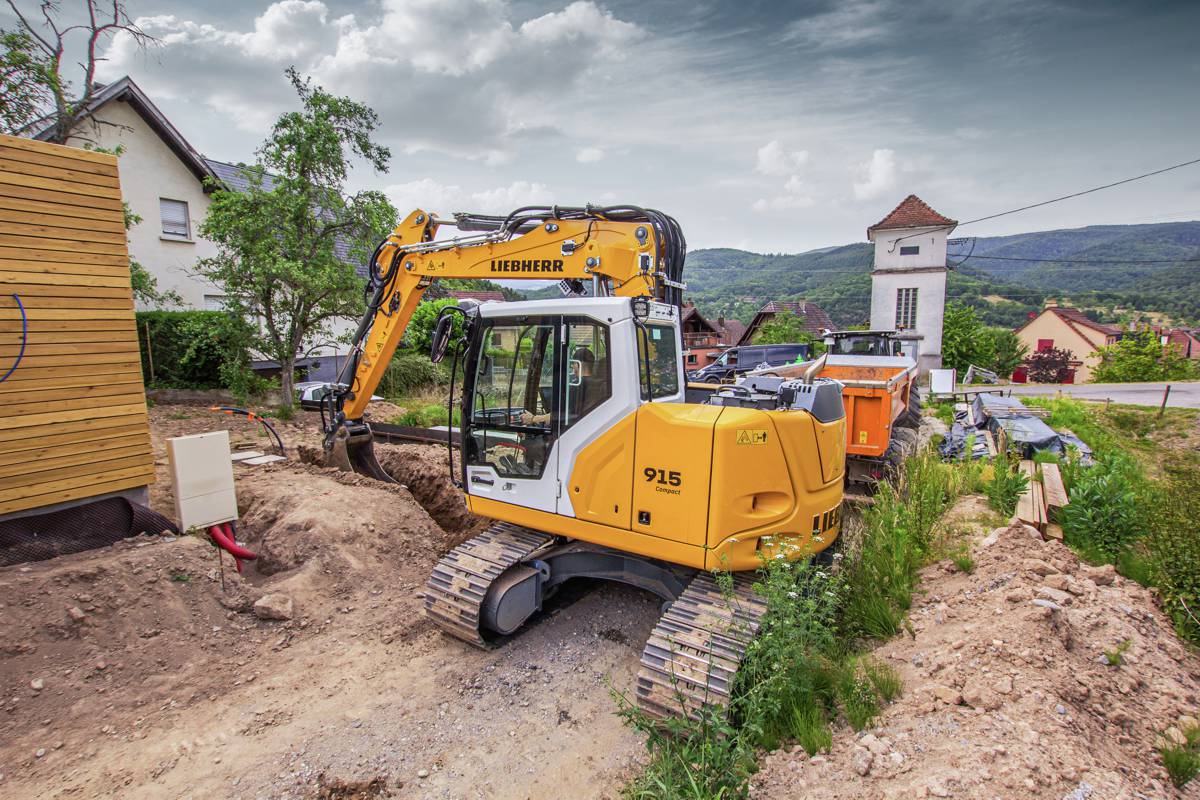
The introduction of the R 915 Compact G8, R 917 Compact G8 and R 920 Compact G8 strengthens Liebherr’s presence in one of construction’s most competitive equipment categories. The 15 to 20-tonne class remains particularly important across Europe and many international markets because these machines are large enough to undertake demanding infrastructure work while remaining compact enough for increasingly congested urban environments.
Their commercial significance extends beyond individual machine sales, reflecting broader industry trends towards connected equipment, fleet optimisation and machines capable of undertaking multiple tasks with minimal compromise.
Briefing
- Liebherr has launched three Generation 8 compact crawler excavators covering the strategic 15 to 20-tonne market segment.
- A new R 917 Compact G8 fills the gap between existing models and targets confined urban construction projects.
- The machines introduce Liebherr’s latest emCAB operator environment and INTUSI operating system.
- Improved hydraulic performance, compact dimensions and digital fleet connectivity aim to increase productivity while reducing operating costs.
- Open digital architecture prepares the machines for future automation and assistance technologies.
A Strategic Expansion in a High-Demand Market
Compact excavators have become indispensable across civil engineering, utilities, highways maintenance and municipal infrastructure. Urban regeneration projects continue to increase throughout Europe and many developed economies, while governments are investing heavily in upgrading ageing underground services. These projects frequently involve confined workspaces, restricted access and strict safety requirements, making machine dimensions almost as important as outright digging performance.
Liebherr’s decision to strengthen its compact crawler portfolio therefore reflects sustained market demand rather than a short-term product cycle. By offering three closely spaced models, contractors can select machines more precisely according to lifting capacity, transport requirements and operating environment without moving into substantially larger equipment. This provides fleet operators with greater flexibility while helping rental companies broaden their offerings within a popular market segment.
The introduction of the entirely new R 917 Compact G8 is particularly significant. Rather than simply updating an existing platform, Liebherr has inserted a model that bridges the performance gap between the R 915 and R 920, giving customers a more finely graduated equipment range. That strategy mirrors wider trends across the construction equipment industry, where manufacturers increasingly tailor machines to highly specific operational requirements instead of expecting contractors to compromise with broadly sized equipment.
Built Around Modern Construction Operations
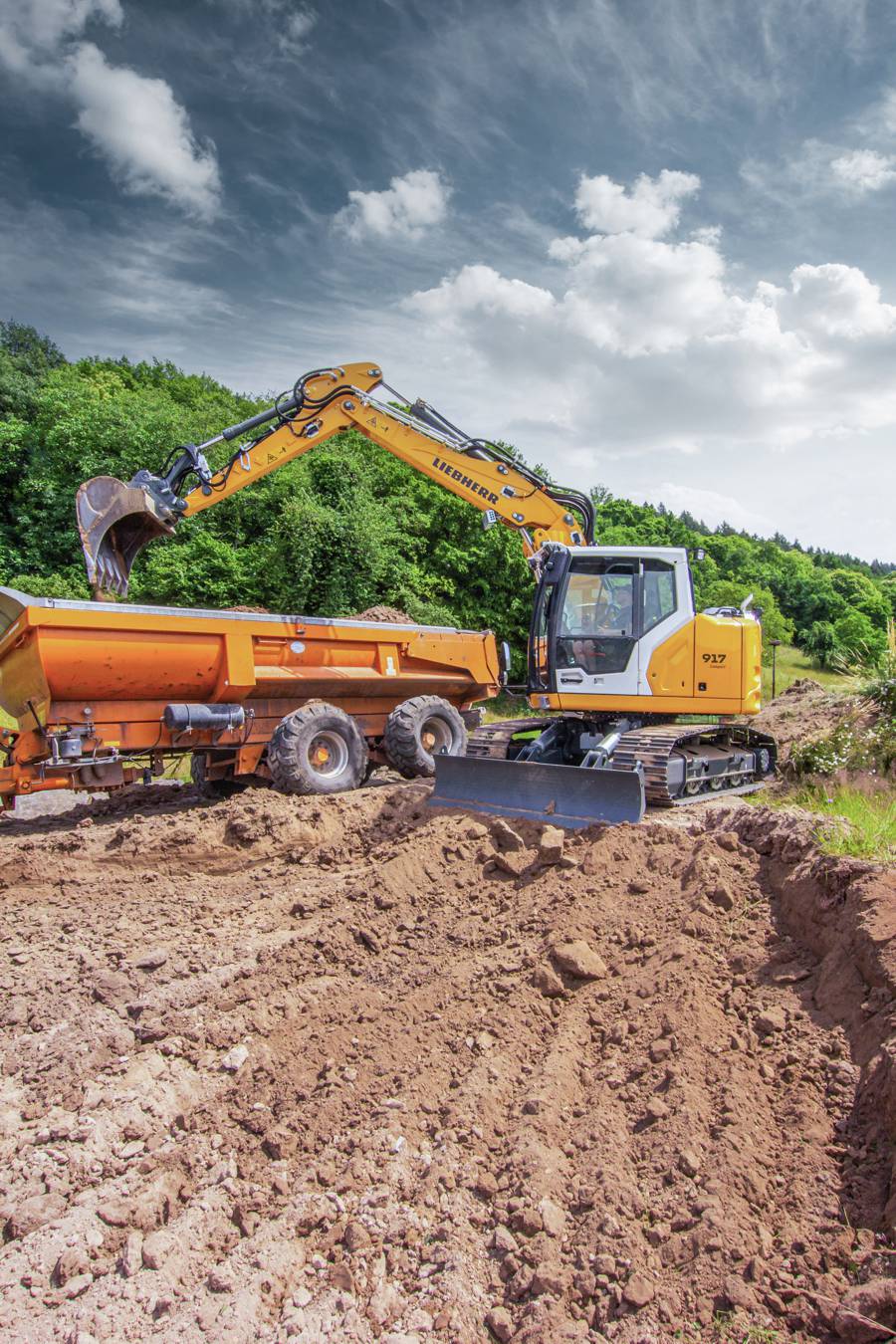
The new excavators have clearly been designed around the realities of contemporary infrastructure projects rather than idealised working conditions. Compact dimensions, particularly reduced rear swing, allow operators to work safely alongside live traffic, existing buildings and active utility corridors without sacrificing stability or productivity.
The R 917 Compact G8 demonstrates this philosophy particularly well. Its 1,700 mm tail swing radius enables operation within restricted work zones while maintaining lifting performance suitable for pipeline installation, urban earthmoving and civil engineering applications. These characteristics make it especially attractive for contractors undertaking city-centre infrastructure upgrades where space restrictions increasingly dictate project methodology.
The wider Generation 8 family has also been developed to accommodate multiple attachments and hydraulic tools, allowing contractors to reduce fleet size by assigning more tasks to individual machines. For businesses facing skilled labour shortages and rising equipment ownership costs, greater machine utilisation often delivers more commercial value than simply increasing peak performance.
Operator Productivity Becomes a Competitive Advantage
Construction equipment manufacturers increasingly recognise that productivity improvements are as likely to come from operator efficiency as mechanical performance. Liebherr’s new emCAB and INTUSI operating concept reflects this shift towards human-centred machine design.
Rather than overwhelming operators with multiple displays and controls, the system focuses on simplifying interaction through customisable interfaces and intuitive access to frequently used machine functions. Ergonomically positioned electric joysticks provide precise machine control while reducing fatigue during long working shifts. These improvements may appear incremental individually, but collectively they can contribute to measurable gains in daily productivity, particularly on repetitive excavation and lifting operations.
The emphasis on operator comfort also aligns with broader industry challenges surrounding recruitment and retention. Comfortable, technologically advanced working environments increasingly influence purchasing decisions as contractors compete for experienced operators in tightening labour markets.
Performance Designed for Higher Utilisation
Although compact machines inevitably face physical limitations, Liebherr has sought to maximise productivity through refined hydraulic systems, optimised kinematics and carefully balanced engine outputs rather than relying solely on additional horsepower.
The three models offer outputs ranging from 90 kW (122 hp) to 110 kW (150 hp), providing sufficient performance for demanding earthmoving, road construction and utility installation work. Optimised boom geometry reduces unnecessary machine repositioning while maintaining digging performance and lifting capability, shortening work cycles across routine operations.
For contractors, these improvements translate directly into equipment utilisation. Reduced repositioning, faster hydraulic response and improved attachment compatibility enable operators to complete more work within a typical shift while reducing fuel consumption and unnecessary wear. As ownership costs continue to rise, these operational efficiencies increasingly influence total cost of ownership calculations.
Digital Fleet Management Moves Into the Mainstream
Perhaps the most commercially significant development lies beyond the excavators themselves. Liebherr’s continued investment in digital connectivity reflects the industry’s gradual movement towards data-driven fleet management.
Integration with MyLiebherr Maintenance and Performance enables fleet managers to monitor machine health, maintenance requirements and operational performance through connected services. Rather than treating maintenance as a reactive activity, contractors can increasingly schedule servicing around operational requirements while identifying performance trends before failures occur.
Importantly, the Generation 8 platform has been developed using an open digital architecture designed to accommodate future assistance systems and software developments. As automation, semi-autonomous operation and artificial intelligence gradually become more common within construction equipment, machines capable of supporting future upgrades are likely to retain greater long-term value than closed proprietary systems.
Lower Operating Costs Through Reliability
Equipment purchasing decisions increasingly revolve around lifecycle economics rather than initial acquisition costs. Downtime, maintenance accessibility and component durability frequently determine profitability over many years of operation.
Liebherr has addressed these considerations by simplifying routine servicing through ground-level maintenance access while retaining a robust structural design intended for intensive applications. Easier servicing reduces maintenance time while encouraging preventative maintenance, improving machine availability throughout the equipment lifecycle.
Higher availability delivers wider commercial benefits beyond maintenance savings. Contractors can complete projects with fewer reserve machines, rental fleets experience higher utilisation rates and equipment financing becomes easier to justify when machines consistently generate productive working hours.
Positioning for the Next Phase of Construction Equipment
The latest Generation 8 compact excavators demonstrate how construction machinery is evolving beyond traditional measures of power and digging capability. Connectivity, operator experience, attachment flexibility and lifecycle efficiency now play equally important roles in purchasing decisions.
For contractors operating in increasingly constrained urban environments, machines capable of delivering strong performance without compromising manoeuvrability are becoming essential rather than optional. Combined with digital fleet management and future-ready software architecture, Liebherr’s latest compact excavators reflect where the wider equipment industry is heading over the coming decade.
Rather than representing an isolated product launch, the new compact range illustrates a broader shift towards intelligent equipment platforms designed to remain productive, connected and adaptable throughout long service lives. For infrastructure contractors facing growing pressure to improve productivity while controlling costs, that combination may ultimately prove more valuable than raw horsepower alone.