JCB Expands Digital Parts Platform as Aftermarket Becomes Competitive Battleground
For construction equipment manufacturers, the sale rarely ends when a machine leaves the factory. Increasingly, long-term profitability depends on the quality of aftermarket support, the speed of parts delivery and the ability to keep fleets operating with minimal downtime. As contractors continue to manage tighter margins, labour shortages and increasingly complex equipment, digital parts platforms are becoming an essential component of fleet management rather than simply another sales channel.
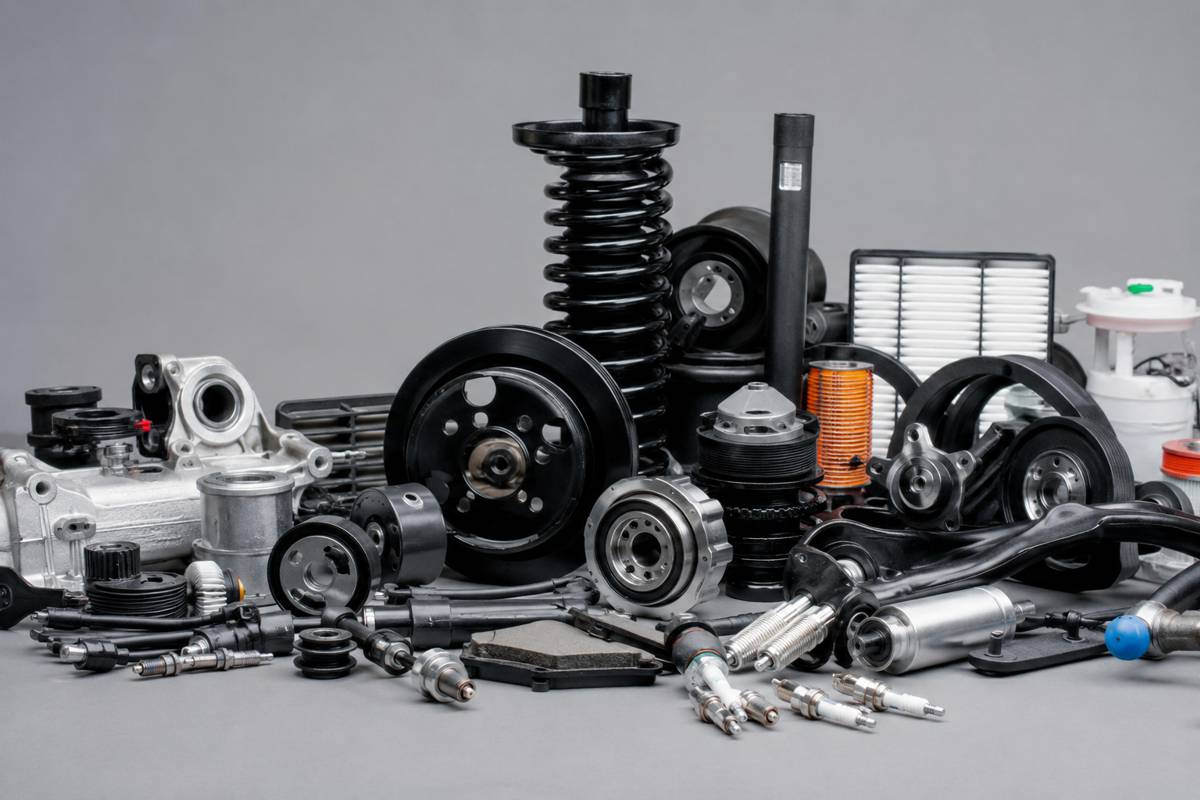
JCB’s decision to expand its online genuine parts catalogue beyond 50,000 product lines reflects a broader shift across the heavy equipment sector. Manufacturers are investing heavily in digital aftersales ecosystems that connect equipment owners, dealers and service operations through integrated online platforms. The objective extends well beyond convenience. Faster identification of the correct component, simplified ordering and improved inventory visibility all contribute directly to higher machine availability and lower operating costs.
Briefing
- JCB Parts Online now offers more than 50,000 genuine parts and attachments.
- The platform provides 24-hour access to genuine replacement components backed by JCB’s global dealer network.
- Customers can order parts for direct delivery or click-and-collect through participating dealers.
- The expanded catalogue supports faster identification of compatible components across JCB’s equipment range.
- Large fleet operators are increasingly integrating digital ordering into day-to-day maintenance strategies.
Digital Aftersales Has Become Core Infrastructure
Equipment manufacturers have traditionally competed on machine performance, fuel efficiency and acquisition cost. Today, the ability to maintain productivity throughout a machine’s operational life is becoming equally important. Contractors purchasing excavators, wheel loaders, telehandlers or backhoe loaders increasingly evaluate the quality of aftermarket support before committing to new equipment.
Digital parts catalogues have become a critical part of that equation. Instead of relying solely on telephone ordering or dealership visits, fleet managers can identify parts using machine serial numbers, confirm compatibility and place orders around the clock. This reduces administrative delays while helping maintenance teams schedule repairs more efficiently.
For manufacturers, digital platforms also improve forecasting and inventory management. Better visibility of customer purchasing behaviour allows dealers to optimise stock levels while reducing the risk of obsolete inventory. In an industry where delayed maintenance can idle equipment worth hundreds of thousands of pounds, these operational improvements deliver measurable commercial value.
Uptime Remains the Primary Commercial Driver
Construction projects continue to operate under intense programme pressure. Whether on highways, residential developments, mining operations or infrastructure projects, equipment downtime quickly translates into missed milestones and higher operating costs.
This explains why manufacturers continue to invest heavily in genuine replacement parts and digital ordering systems. Faster access to correctly specified components reduces the likelihood of incorrect orders, repeated deliveries or extended repair periods.
Mario Moser, JCB Group Managing Director – Global Aftersales, believes the platform’s continued expansion reflects these operational priorities: “Machine uptime remains critical across every sector JCB serves. When parts need replacing, fast access and guaranteed compatibility are essential to maintaining productivity. JCB Parts Online continues to evolve in direct response to customer requirements, making it quicker and simpler to identify and order genuine parts and attachments.
“Expanding the platform to more than 50,000 products helps customers source the exact components for their machine. By improving availability, accuracy and convenience, JCB Parts Online is helping customers maximise uptime, profitability and sustainability across their operations.”
The emphasis on guaranteed compatibility also reflects growing technical complexity. Modern construction equipment incorporates sophisticated emissions systems, electronic control units, telematics and advanced hydraulic systems, making the correct specification of replacement components increasingly important.
Dealers Continue to Anchor the Customer Relationship
Although digital commerce is reshaping aftermarket operations, dealer networks remain central to equipment support strategies. Rather than bypassing dealerships, online ordering platforms increasingly strengthen the relationship between manufacturers, dealers and customers.
JCB’s online platform operates alongside its established dealer network, allowing customers to arrange direct delivery or collect parts locally. This hybrid approach combines digital convenience with local technical expertise, warranty support and service capability.
For dealers, integrated ordering systems can reduce administrative workloads while enabling staff to focus on technical support, diagnostics and higher-value customer services. Digital ordering therefore complements rather than replaces traditional dealership operations.
The approach mirrors wider developments across the construction equipment industry, where manufacturers are investing simultaneously in connected machines, predictive maintenance and digital customer portals as part of broader lifecycle support strategies.
Fleet Operators Are Driving Digital Adoption
The greatest benefits from digital parts procurement are often realised by businesses operating large mixed fleets with demanding maintenance schedules. Online ordering allows maintenance teams to standardise procurement processes while improving planning for preventative servicing.
Green Power Plant Hire Ltd, which operates a fleet of more than 200 JCB construction machines, illustrates how digital ordering has become embedded within everyday fleet management.
Owner David Green explained: “JCB makes life easy for us and ensures we have the support we need to manage our fleet. We find ordering online fast and convenient, helping ensure our JCB machines are always well maintained and operating efficiently. Parts Online is linked to our JCB dealer account at Watling JCB. It means we can get direct delivery of genuine JCB parts or choose to click & collect from our local Watling JCB depot.”
Large fleet operators increasingly view digital procurement as part of wider asset management programmes that include telematics, scheduled maintenance, condition monitoring and lifecycle cost analysis. Integrating these systems helps reduce unplanned downtime while extending equipment service life.
Genuine Parts Support Longer Equipment Lifecycles
The construction industry continues to face pressure to reduce both operating costs and environmental impact. Extending the usable life of heavy equipment has become an important sustainability strategy alongside investment in lower-emission machinery.
Using manufacturer-approved replacement components helps maintain original equipment performance, supports warranty compliance and can reduce the risk of secondary failures caused by incompatible parts. While aftermarket alternatives remain an option for many operators, genuine components continue to play an important role where reliability and uptime are priorities.
This becomes increasingly significant as equipment ownership periods lengthen. Many contractors now retain machines for extended operational lives, making efficient maintenance and dependable parts availability critical throughout the asset lifecycle.
Digital ordering platforms also reduce some of the inefficiencies traditionally associated with parts procurement by improving ordering accuracy and streamlining logistics between customers, dealers and distribution centres.
Digital Support Will Continue to Shape Equipment Ownership
Construction equipment manufacturers are increasingly competing on the quality of the entire ownership experience rather than the initial machine specification alone. Digital parts catalogues, connected service platforms, predictive maintenance and integrated dealer support are becoming essential elements of that proposition.
JCB’s expansion beyond 50,000 online product lines demonstrates how aftermarket services are evolving alongside advances in machine technology. As equipment becomes more connected and maintenance more data-driven, digital procurement systems are likely to become increasingly integrated with telematics, fleet management software and predictive servicing.
For contractors, plant hire businesses and infrastructure operators, the value lies not simply in ordering parts online but in maintaining productive assets with greater certainty. In a market where machine availability directly influences project delivery, digital aftermarket capability is becoming an increasingly important measure of manufacturer competitiveness.