Liebherr’s €100m Investment Signals Confidence in European Manufacturing
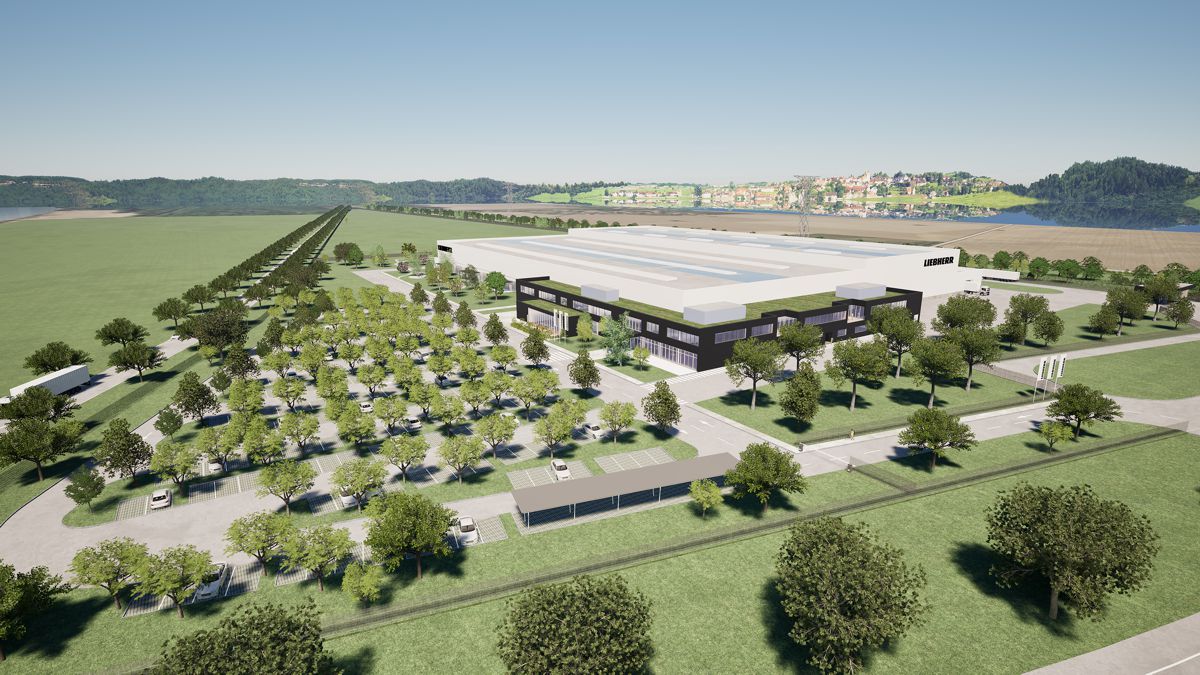
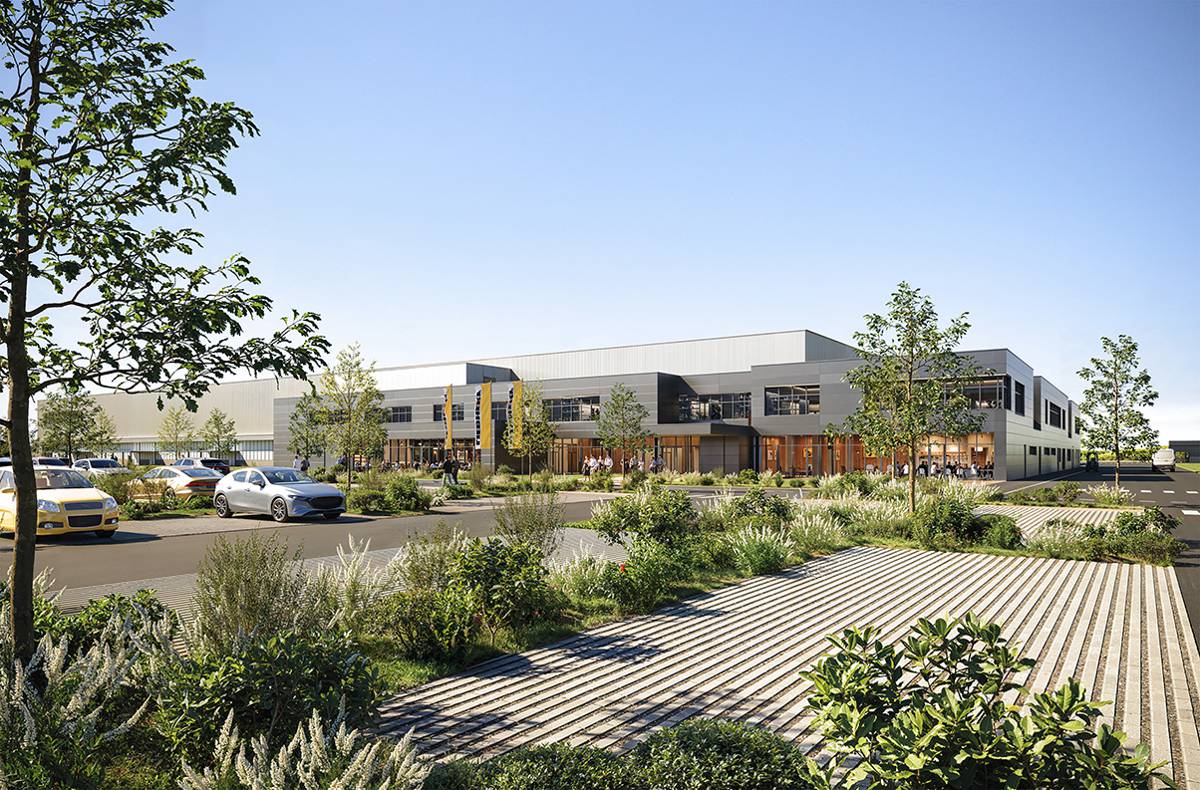
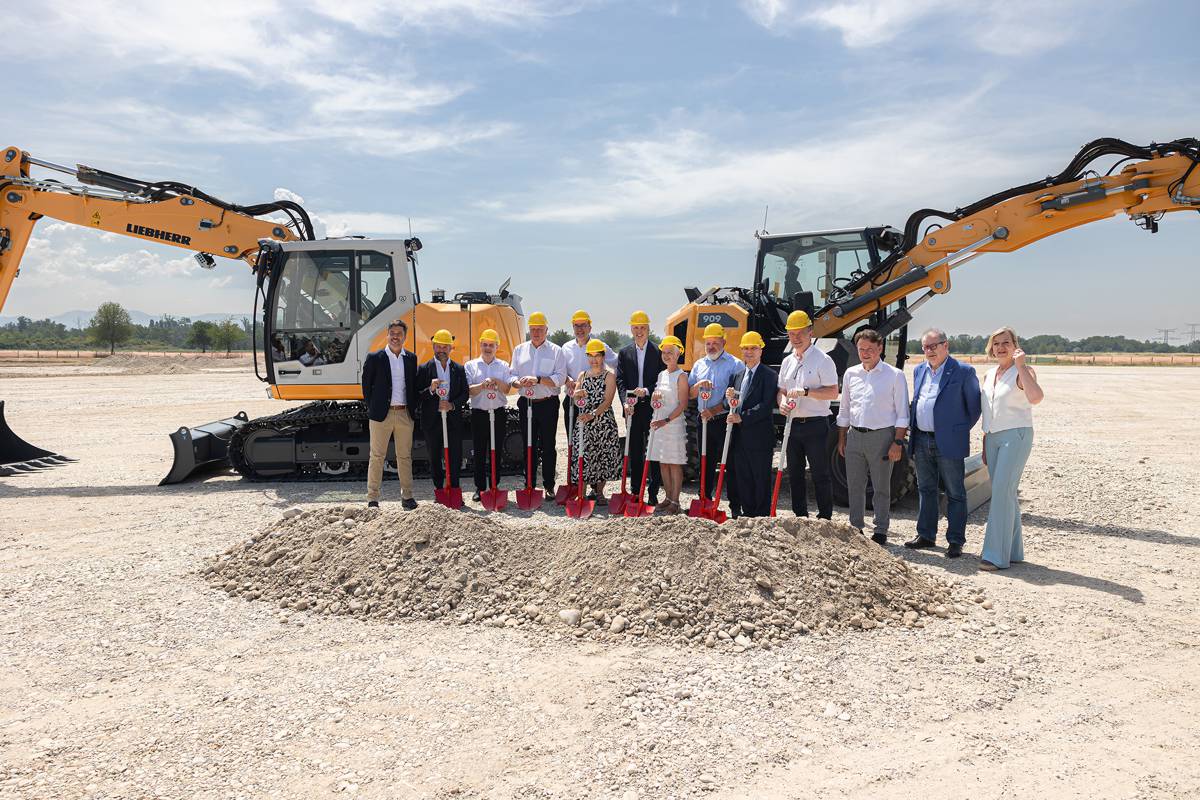
The Liebherr Group has broken ground on a new manufacturing site at Nambsheim in the Haut-Rhin, and the foundation stone matters far less than the strategy it anchors. The family-owned group is committing more than €100 million to a plant dedicated to assembling operator cabs for its earthmoving machines, with a first-phase capacity of up to 10,000 units a year.
What sets the project apart from a routine factory build is its intent. Rather than spreading cab work across several locations, Liebherr is consolidating that expertise into a single competence centre on European soil, at a moment when machinery makers across the continent are rethinking where their highest-value sub-assembly work should sit.
For construction professionals, investors and policymakers, the decision reads as a long-horizon wager rather than a response to current demand. Europe’s construction equipment market has only just turned the corner after a sustained downturn, and a recovery is expected to be gradual rather than sharp.
Liebherr is choosing to build capacity into that uncertainty, betting that demand for machines manufactured in Europe will firm up over the life of the asset rather than within the next quarter. The groundbreaking therefore carries weight as a signal about reshoring, industrial sovereignty and the willingness of a privately held group to put substantial capital behind a multi-year view.
Briefing
- Liebherr is investing more than €100 million in a new Liebherr-EMtec Nambsheim site in Alsace, close to its historic base at Colmar.
- The plant will specialise in assembling operator cabs for the group’s earthmoving machines, with first-phase capacity of up to 10,000 cabs a year.
- The site is expected to employ more than 200 people, with the Grand Est region pledging support of at least €1 million.
- It is designed as a competence centre to centralise strategic cab expertise and strengthen the group’s internal logistics chain.
- The plant is targeting BREEAM certification, and operations are scheduled to begin at the start of 2028.
A €100 Million Commitment to European Production Autonomy
The headline figure is the clearest measure of intent. By putting more than €100 million into a dedicated cab plant, Liebherr is treating a component that often sits in the background of equipment supply chains as a strategic asset worth controlling directly. The site is driven by the group’s earthmoving division and built around a single objective, namely the relocation of specialised expertise into one location to reinforce industrial independence. That ambition responds to a structural shift in customer expectations, with buyers across Europe increasingly placing value on machines that are demonstrably manufactured within the region rather than imported through extended supply lines.
Operator cabs are a logical place to concentrate that effort. They sit at the intersection of several engineering disciplines and carry a high proportion of a machine’s value, which makes their assembly both technically demanding and commercially sensitive. Centralising cab production also tightens the internal logistics chain that feeds Liebherr’s excavator lines, reducing the coordination risk that comes with dispersed manufacturing.
Sebastien Seitz, Managing Director Production of Liebherr-France SAS, framed the investment as a continuation of the group’s long-term approach rather than a reaction to short-term conditions, explaining that: “At Liebherr, we build for the long term. This project in Nambsheim fully embodies our values: a long-term vision, strong regional roots and high industrial standards. By investing here in Alsace, we are strengthening our ties with our customers in Europe and continuing to support them worldwide, with the aim of developing a high-performing, responsible and forward-looking industry.”
The first-phase target of 10,000 cabs a year sets a clear benchmark for the scale Liebherr expects the consolidated operation to reach.
Why Operator Cabs Are Worth Centralising
A modern operator cab is no longer a simple steel box with a seat and controls. It integrates climate management, vibration and noise reduction, safety structures, increasingly sophisticated electronics and the human-machine interfaces that determine how an excavator is actually operated. As the earthmoving fleet electrifies and gains digital capability, the cab becomes the point where much of that complexity is brought together, which raises the stakes around quality, traceability and consistency. Concentrating that work in a purpose-built facility allows a manufacturer to standardise processes, protect proprietary know-how and manage the flow of components more tightly than a fragmented arrangement would permit.
The production concept Liebherr has outlined for Nambsheim reflects that thinking. The site is being developed around autonomous production cells, agile logistics, automation, digital traceability and data-driven process management, an organisational model designed for flexibility rather than rigid line throughput.
That structure suits a competence centre whose output must vary across a wide range of machine models and specifications. It also positions the plant to absorb future change, whether that comes from new cab architectures, additional electronic content or shifting volumes, without the disruption that comes from re-engineering a conventional assembly line. For the wider supply base, a facility of this kind tends to act as a magnet, drawing welding, machining and electronics suppliers into closer proximity and reinforcing the local industrial cluster.
Jobs, Public Support and the Sovereignty Argument
The Nambsheim project is expected to support more than 200 jobs once it reaches full operation, a meaningful addition to the industrial base of a region where Liebherr is already a significant employer. Public money is part of the equation, with the Grand Est region pledging support of at least €1 million, a figure that signals political alignment as much as financial weight. Regional authorities across Europe have grown more willing to back manufacturing investment explicitly, viewing factories as instruments of economic resilience rather than simply sources of employment. The framing around Nambsheim sits squarely within that trend.
Franck Leroy, President of the Grand Est Region, tied the investment directly to the language of economic sovereignty, arguing: “By choosing Nambsheim as the location for this new site, Liebherr is making a major industrial decision: to relocate strategic expertise, create long-term jobs and strengthen the European production chain. The Grand Est Region will be fully committed to this project, providing support of at least one million euros. This is the aim of our work: to make our regions places where industry innovates and produces, and where the economic sovereignty of France and Europe is built in a meaningful way.”
The proximity of the site to Liebherr’s established operations near Colmar strengthens that local logic, allowing the new plant to plug into an existing ecosystem of skills, suppliers and infrastructure rather than starting from a standing position.
Investing Into a Cautious Recovery
The timing of the commitment is best read against the state of the wider market. The CECE Annual Economic Report 2026 found that European construction equipment sales rose by 4.6% in 2025 after reaching a low point, with the outlook for 2026 pointing to more modest growth of around 2% to 2.5%. That recovery is described as gradual and dependent on macroeconomic conditions and public investment choices rather than a spontaneous rebound in demand. Investing into that kind of environment requires confidence that the underlying direction is upward, even if the near-term gradient is shallow.
Several structural forces support that confidence. Industrial reshoring, energy transition spending and continued infrastructure programmes are all expected to underpin equipment demand over the medium term, while France, Germany and the United Kingdom together account for the bulk of the European market.
A dedicated European cab plant gives Liebherr a hedge against the supply-chain disruption and trade friction that have unsettled the sector in recent years, including persistent uncertainty around the United States as an export market. By building capacity now, the group is positioning itself to serve a recovering market from within the region, rather than scrambling to add production once demand has already returned.
A Site Built to an Environmental Benchmark
Liebherr is presenting Nambsheim as a reference point for industrial sustainability, and the targets attached to it are specific rather than aspirational. The plant is aiming for BREEAM certification, an established international standard for sustainable construction, and is being designed around the optimisation of energy consumption, the use of renewable energy, responsible water and resource management, and the limitation of impact on nearby residents. Those commitments increasingly function as commercial requirements as much as environmental ones, given the tightening regulatory environment and the scrutiny that large customers and lenders now apply to supplier emissions.
The broader value of an environmental benchmark lies in its durability. A plant designed to high energy and resource standards from the outset is better insulated against future carbon pricing, reporting obligations and customer demands than one retrofitted later. For an asset intended to operate for decades, that resilience matters to the economics as well as the optics. It also reinforces the message Liebherr is sending to its European customer base, many of whom face their own sustainability targets and look to their equipment suppliers to support rather than complicate that effort.
Alsace at the Centre of Liebherr’s French Base
The new site extends a French footprint that Liebherr has built steadily since 1961, when it founded its first production company in the country at Colmar. According to the group, that historic base now accounts for more than 3,000 employees across several specialised entities covering earthmoving machines, mining and component production, alongside distribution and services.
Liebherr also describes a long-standing aerospace presence in Toulouse dating from 1971, and puts its total French workforce at around 5,000 people. Nambsheim adds a further specialised node to that network, positioned to draw on the skills and supplier relationships already concentrated in the region.
Set against the group’s global scale, the investment reflects a consistent operating philosophy. Liebherr employs around 51,000 people across more than 50 countries and has remained an independent, family-run company for more than 75 years, a structure that allows it to pursue capital-intensive projects on a longer timeline than many publicly listed rivals. The Nambsheim plant fits that pattern of patient, regionally rooted investment. It deepens the group’s industrial concentration in Alsace at a point when that kind of clustering is increasingly seen as a competitive advantage rather than a constraint.
From Foundation Stone to 2028
The practical test now shifts to delivery. Construction follows the ground-breaking, and the site is scheduled to begin operations at the start of 2028, a timeline that will see the plant come online just as the European equipment recovery is expected to be gaining traction. Between now and then, the measures that matter will be the pace of construction, the recruitment and training of a specialised workforce, and the integration of the new facility into Liebherr’s existing logistics chain. Each of those steps carries execution risk, and the eventual contribution of the plant will depend on how smoothly that integration is achieved.
What the ceremony confirms is the direction of travel for a significant part of the European machinery sector. Faced with fragile demand, trade uncertainty and rising expectations around sustainability and local production, a major manufacturer has chosen to consolidate strategic expertise at home and commit substantial capital to doing so.
For an industry weighing where to place its next round of investment, Nambsheim offers a clear data point on how at least one of its largest players reads the balance of risk and opportunity over the decade ahead.