Seawater and the Seabed are Redrawing the Critical Minerals Map
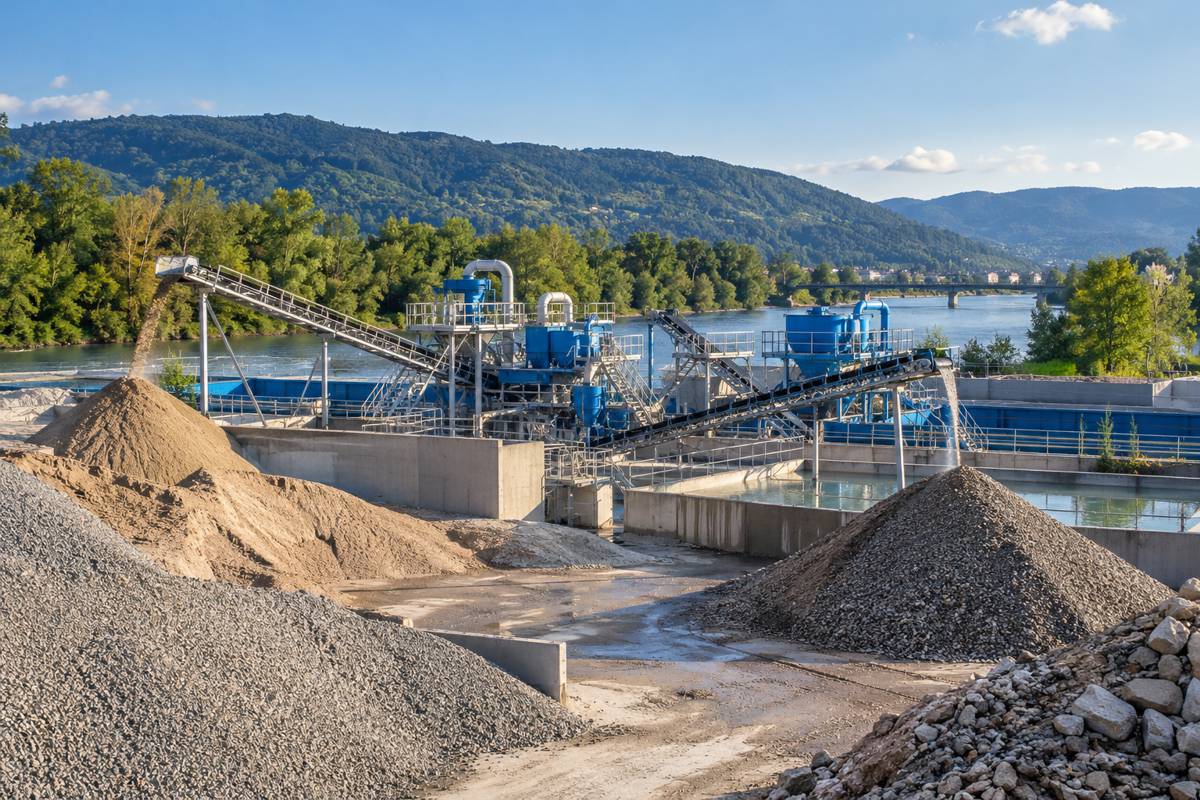
For most of the industrial era, the phrase critical minerals conjured open pits, haul trucks and mountains reduced to gravel. That picture is now being challenged by a very different one, in which the raw materials of electrification and defence are drawn from the sea rather than the land.
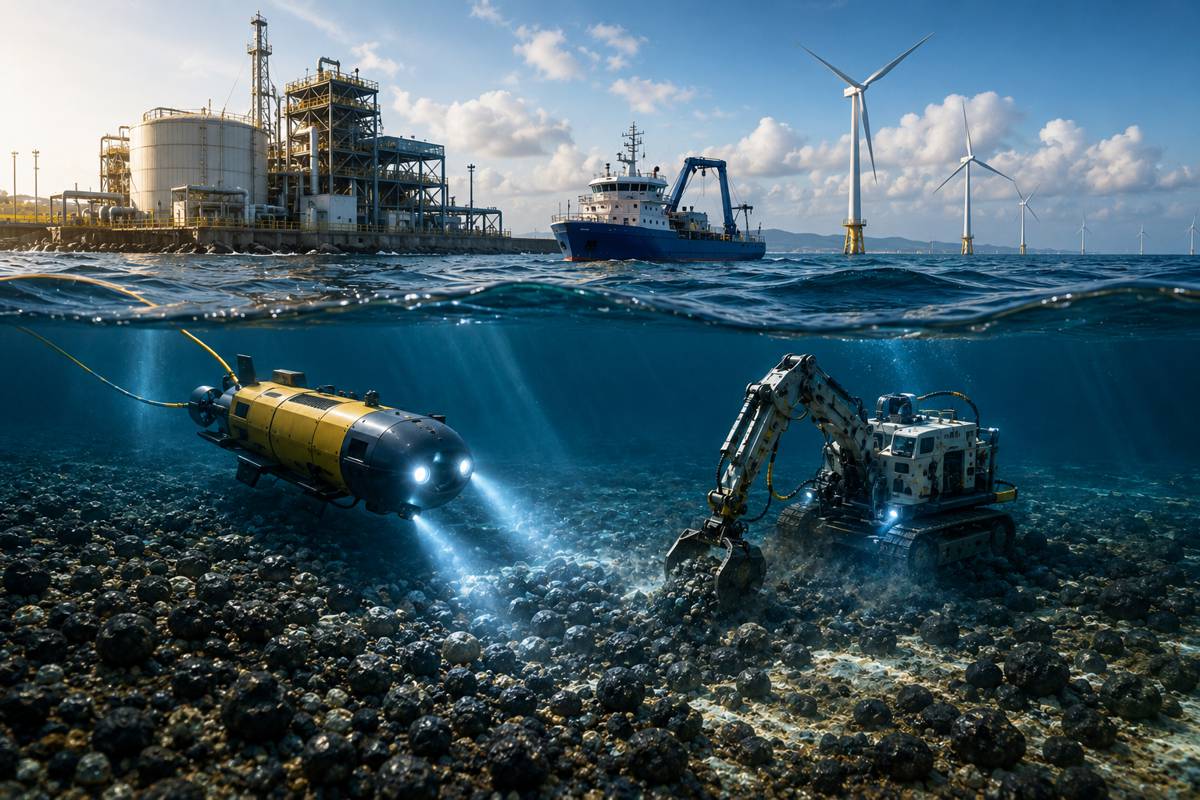
Within a matter of weeks, a roughly one billion dollar United States deep-sea minerals platform has moved closer to a Nasdaq listing, a fleet of autonomous submersibles has photographed more than 600,000 square metres of Pacific seafloor in high definition, a marine robotics hub has been announced in America’s robotics capital, and a national laboratory has demonstrated that magnesium and other elements can be pulled straight out of seawater at a coastal desalination plant. Taken together, these developments describe an industry that is maturing quickly and along several parallel tracks at once.
The significance for construction, infrastructure and industrial technology is direct rather than abstract. The metals in question, including nickel, cobalt, copper, manganese, magnesium, lithium and the rare earth elements, are the feedstock for batteries, electric drivetrains, permanent magnets, grid infrastructure, structural alloys and the machinery that builds everything else.
Supply of most of these materials is heavily concentrated, and the strategic anxiety driving the current wave of ocean projects is the desire to reduce dependence on a small number of processors, China chief among them. The question is no longer whether the ocean will become a mineral source, but how quickly, under what rules, and with what environmental safeguards.
Briefing
- American Ocean Minerals Corporation is combining with Nasdaq-listed Odyssey Marine Exploration in an all-stock merger that values the enlarged group at roughly one billion dollars, creating one of the largest United States controlled deep-sea critical minerals platforms.
- Moana Minerals has completed a ten-day autonomous survey in the Cook Islands, deploying three HUGIN submersibles from Ocean Infinity’s Armada 8605 to gather more than 600,000 seafloor photographs at depths beyond 5,000 metres, with artificial intelligence to be applied to the imagery.
- Impossible Metals will open an Advanced Marine Robotics Hub in Pittsburgh, creating more than a dozen engineering and science roles and drawing on the region’s autonomy and physical AI expertise to develop its Eureka seabed collection system.
- Pacific Northwest National Laboratory has shown that magnesium hydroxide can be extracted directly from seawater and paired with existing desalination infrastructure, alongside methods for leaching nickel and concentrating minerals in seaweed.
- A 2025 United States executive order and a redrawn permitting process under the Deep Seabed Hard Mineral Resources Act have sharpened commercial momentum, even as the international regulatory framework remains unresolved.
A Billion-Dollar Platform Takes Shape
The clearest commercial signal comes from the corporate consolidation now under way. American Ocean Minerals Corporation, or AOMC, is merging with Odyssey Marine Exploration, a listed ocean exploration company with more than three decades of offshore operating experience, in an all-stock transaction that values the combined group at approximately one billion dollars. On completion, and subject to shareholder, regulatory and Nasdaq approvals, the company is expected to trade under the ticker AOMC. In the run-up to the deal, AOMC has raised more than 230 million dollars from institutional and strategic investors, a figure that indicates a level of capital commitment the sector has rarely attracted in the past.
The strategic logic rests on a multi-jurisdiction asset base rather than a single deposit. The platform combines interests in Cook Islands exploration licences, held through Moana Minerals and CIC Limited, with application-stage project areas being pursued in international waters under United States authorities. According to resource statements prepared to the S-K 1300 standard, the Cook Islands licence areas associated with the two projects encompass 417 million tonnes of indicated resources and more than two billion tonnes of inferred resources.
Moana Minerals’ own initial assessment, reported in August 2025, described an indicated resource of 417 million tonnes at an abundance of 26.7 kilograms per square metre and an inferred resource of 102 million tonnes at 26 kilograms per square metre. Tom Albanese, the chairman of AOMC and a former chief executive of Rio Tinto, has framed the enterprise around evidence rather than haste, and his industry standing lends the venture a credibility that early movers in speculative sectors often lack.
For investors watching the critical minerals space, the merger matters because it assembles the pieces of a supply chain rather than a single project. AOMC has positioned itself as a platform spanning exploration, environmental science, harvesting technology, logistics, processing and commercialisation, and its structure reflects a recognition that a mineral in the water is worthless until it can be recovered, refined and sold into a market. That integrated ambition is what separates the current generation of ocean minerals companies from the exploration-only ventures that preceded them, and it is the reason the sector is beginning to attract mainstream capital rather than purely speculative interest.
Proving the Case Through Data, Not Assertion
The Cook Islands survey completed by Moana Minerals shows how the industry is trying to build confidence before extraction begins. Over roughly ten days, three HUGIN autonomous underwater vehicles were deployed from Ocean Infinity’s lean-crewed Armada 8605, mapping and photographing the seabed at depths beyond 5,000 metres across around 1,000 square kilometres within Exploration License 3.
The campaign produced more than 600,000 seafloor photographs together with synthetic aperture sonar imagery and environmental sensor data, forming one of the most detailed photographic datasets yet gathered in the licence area. Because the vessel was already operating in the region, the survey was completed without a separate mobilisation, a point that speaks to the operational efficiencies now available when specialist robotic fleets are shared across projects.
The technical value lies in resolution and in the intended use of the data. Where the broader MV Anuanua Moana programme collects wide baseline data across seasons and disciplines, the Armada campaign concentrated firepower on a smaller target area at higher definition, adding granular detail on habitat, nodule distribution and environmental variability. Processing and quality control are expected to conclude by the third quarter of 2026, after which artificial intelligence will be applied to the imagery to identify, count and characterise both nodules and marine life, laying the groundwork for what the company describes as one of the first comprehensive AI-based assessments of the Cook Islands deep seafloor.
Chief executive Hans Smit set out the philosophy, arguing that the work reflects how seabed minerals development should proceed, through real science that can inform decision-making, and adding that the result is a sharper, more detailed picture of the EL3 seafloor that will inform regulators, stakeholders, and the people of the Cook Islands as future decisions are considered.
That emphasis on evidence is more than presentation. The commitment to share the resulting data, including raw imagery and AI-derived analysis, with the Cook Islands and eventually the wider research community aligns the commercial programme with the environmental scrutiny the industry knows it faces. Albanese captured the same principle when he observed that every responsible decision starts with understanding the data and science and that the survey forms part of a broader commitment to measure first, understand better and support future decisions with evidence.
For regulators and coastal communities weighing the trade-offs of seabed development, the availability of open, high-resolution baseline data is likely to become a precondition of trust rather than an optional courtesy.
Robotics, Autonomy and an American Industrial Bet
If the Cook Islands survey demonstrates data collection at depth, Impossible Metals is concentrating on the machines that will eventually do the harvesting. The company has announced an Advanced Marine Robotics Hub in Pittsburgh, a decision that places it in a city home to more than 140 robotics companies and the university ecosystem that helped create the field.
The hub will create more than a dozen high-paying engineering and science roles, with room to expand, and the company intends to partner with local universities on research, student placements and, under consideration, an annual robotics competition. Locating the work in Pittsburgh is a deliberate attempt to convert the region’s autonomy and physical AI talent into a domestic advantage in marine systems, a sector where the crossover between commercial and defence applications is unusually strong.
The technology at the centre of the effort is the Eureka autonomous underwater platform, which the company has been advancing through successive generations. Rather than dredging the seabed, the Eureka system is designed to hover above the floor and use buoyancy control, computer vision and robotic arms to select individual polymetallic nodules, leaving nodules that host visible marine life undisturbed and avoiding the sediment plumes associated with conventional approaches.
Following the autonomous collection of test material and a deep-water navigation trial off Florida, the company has signalled that a production-scale system is the next milestone. Executive chairman Steve Curnutte tied the venture to national purpose, stating that Pennsylvania built the Arsenal of Democracy, and Pittsburgh is building what comes next, and that the mission is to make America the leader in the autonomous marine and ocean-science systems needed to secure critical minerals.
The wider point for industrial technology is that seabed minerals development is becoming a robotics and software challenge as much as an extractive one. Chief growth officer Mike Regan described the approach not as one machine picking up rocks but as swarms of autonomous robots, precision-harvesting in parallel while leaving the ecosystem intact, a vision that depends on advances in machine vision, edge autonomy and reliable subsea operations rather than on brute mechanical force.
That framing matters to a construction and infrastructure audience because the same capabilities, autonomous navigation, real-time perception and selective manipulation in hostile environments, are precisely those now being pursued in earthmoving, surveying and heavy plant on land. The talent pipelines and dual-use engineering being assembled for the seabed are unlikely to stay confined to it.
Extracting Minerals From the Water Itself
Running alongside the seabed projects is a quieter but conceptually distinct line of research that treats the water column, not the ocean floor, as the resource. Researchers at Pacific Northwest National Laboratory, funded through the Department of Energy’s Hydropower and Hydrokinetic office, have revisited a practice the United States pursued for half a century, when magnesium was extracted directly from seawater before the country shifted to imports in the late 1990s.
Chemical oceanographer Jessica Cross framed the scale of the opportunity by noting that just 0.1 percent of seawater contains enough critical minerals like magnesium and lithium, if we can fully extract them, to meet humanity’s needs for the next 50,000 years or more. The central obstacle is dilution, since an Olympic-sized pool of seawater holds nearly 3,000 kilograms of magnesium but only fractions of a kilogram of lithium and nickel, which means that vast volumes of water and considerable energy are required to recover the scarcer elements.
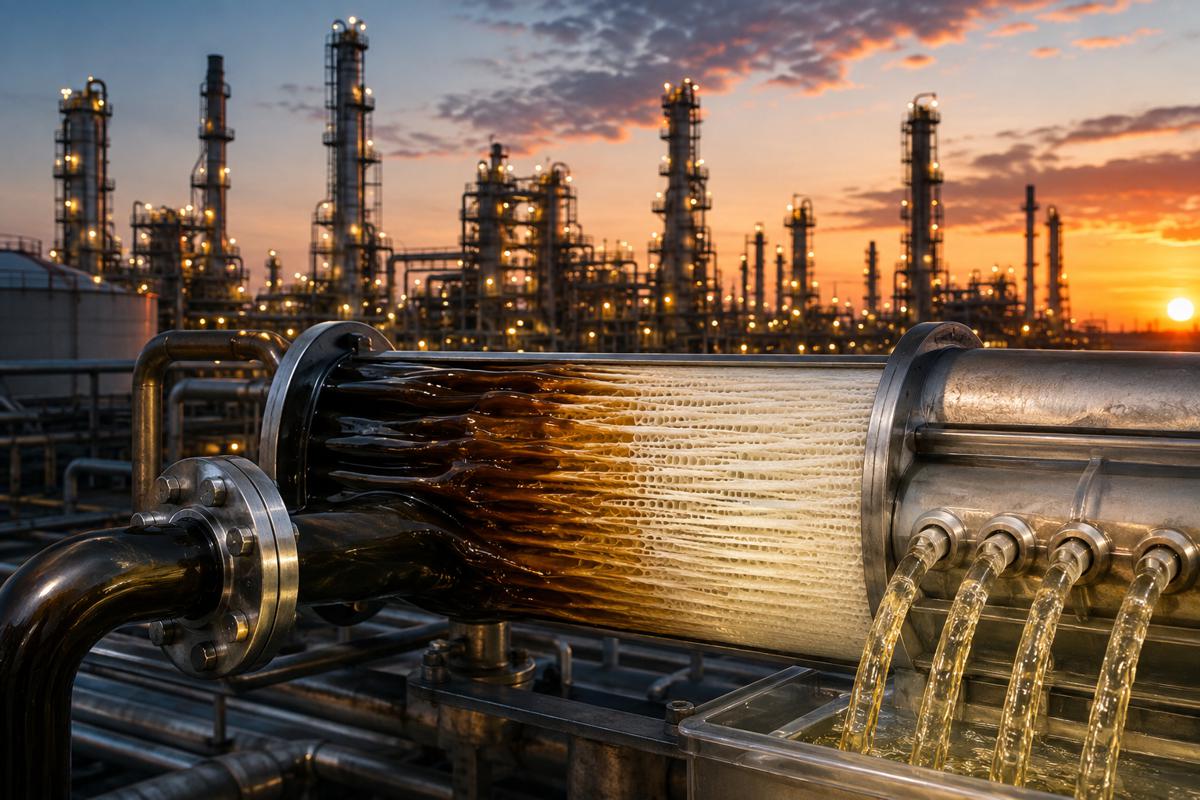
The laboratory’s response has been to simplify. Its co-flow reactor brings seawater and a sodium hydroxide base into contact so that high-purity magnesium hydroxide precipitates where the two liquids meet, cutting at least four steps from the mid-century process and stopping at a saleable, largely imported material rather than pressing on to magnesium metal. The economic case sharpens when the system is bolted onto infrastructure that already exists. An analysis by environmental engineer Brooke Marten found that pairing the reactor with the Carlsbad desalination plant in California could be transformative in scale, and she noted that the Carlsbad plant processes 108 million gallons of seawater per day.
With a 100 percent magnesium recovery rate, that would provide 524,000 kilograms of magnesium hydroxide every day, which is more than triple the United States’ current rate of magnesium hydroxide use. Chemist Chinmayee Subban has stressed both the geographic advantage and the remaining hurdle, pointing out that seawater has a reasonably standard composition worldwide, so that we can develop a technology for one location and rapidly scale it to be deployed in many different places, while acknowledging that the challenge is to scale up these technologies so they can be economically feasible.
The broader research points toward an integrated system in which waste streams become inputs. Brine left after magnesium recovery and desalination can feed a bipolar membrane electrodialysis process that generates the acids and bases needed for downstream mineral processing, and the resulting acid has proven more effective than conventional hydrochloric acid at leaching nickel from domestically sourced olivine.
Separately, researchers have found that some seaweeds concentrate critical materials in their tissues at levels far above the surrounding water, with botanist Scott Edmundson noting that some critical materials show up in seaweed at concentrations a million times higher than the surrounding seawater, opening a route to biomining that also yields fuels and fertilisers. For infrastructure planners, the most striking implication is that coastal desalination plants, already central to water security in arid regions, could become dual-purpose facilities producing fresh water and strategic minerals from the same intake.
The Rules, the Rivalry and the Road Ahead
The commercial energy now visible in the ocean minerals sector cannot be separated from policy. A United States executive order issued in 2025, titled Unleashing America’s Offshore Critical Minerals and Resources, directed federal agencies to expedite permitting under the Deep Seabed Hard Mineral Resources Act, a 1980 statute originally conceived as an interim measure.
The National Oceanic and Atmospheric Administration subsequently proposed a consolidated licensing process that allows qualified applicants to seek an exploration licence and a commercial recovery permit through a single integrated review, and more than ten applications have since been reported. The stated purpose is explicit, namely to counter the dominance of a single supplier, with China responsible for close to 70 percent of global rare earth production and holding a commanding position across the midstream and downstream processing of lithium, cobalt and manganese. Recurrent export restrictions have underscored the vulnerability that ocean projects are intended to address.
This momentum sits within an unsettled international picture. The International Seabed Authority, which regulates activity in waters beyond national jurisdiction, has spent years drafting a mining code without finalising it, and a significant number of governments have called for caution, a precautionary pause or a moratorium while environmental questions remain open.
The Cook Islands, notably, have engaged both with United States interests and, through a separate memorandum, with China, a reminder that the competition for seabed resources is as much diplomatic as technical. Against that backdrop, the emphasis placed by companies such as Moana Minerals and Impossible Metals on baseline data, selective harvesting and low-impact methods is not merely reputational positioning. It reflects a calculated bet that the projects most likely to secure a licence to operate, in both the legal and social senses, will be those that can show they measured the environment thoroughly before disturbing it.
What emerges from these threads is a sector advancing on three fronts that reinforce one another. Seabed nodule projects such as those in the Cook Islands offer scale and defined resources; robotics ventures such as Impossible Metals are building the autonomous tools to recover them with a lighter touch; and laboratory work at PNNL suggests that the water column and existing coastal infrastructure could supply certain minerals without touching the seabed at all.
The practical takeaway is that the materials underpinning electrification, grid expansion and heavy industry are gaining new potential sources at precisely the moment demand is accelerating. The economics remain unproven at commercial scale, the regulatory path is incomplete, and environmental scrutiny will only intensify. Even so, the direction of travel is now unmistakable, and the ocean has moved from the margins of the critical minerals debate to somewhere very close to its centre.
Key Industry Questions
- How soon could ocean-sourced minerals reach commercial supply chains? A realistic timeline spans several years rather than months. Seabed projects such as those in the Cook Islands remain in the exploration and environmental baseline phase, with data processing on the latest survey due to complete in the third quarter of 2026 and resource definition and impact assessment work still ahead. Robotic collection systems are progressing toward production-scale trials, and permitting under United States rules has only recently been streamlined. Seawater extraction of magnesium is technically demonstrated but not yet operating at commercial scale. Investors should treat the next few years as a period of pilots, permits and proof points, with meaningful volumes likely dependent on both regulatory clarity and demonstrated economics.
- Why does ocean mineral extraction matter for construction and infrastructure specifically? The minerals concerned are foundational to the materials and machinery infrastructure depends on. Nickel, cobalt, copper and manganese are central to batteries and electrification; copper is indispensable to grids and buildings; magnesium and rare earths feed alloys, electronics and permanent magnets used in motors and equipment. Constrained or concentrated supply of these materials raises costs and lengthens lead times across construction, transport and energy projects. New sources, whether from the seabed or from seawater, could ease those pressures over time. For infrastructure owners, the prospect of desalination plants doubling as mineral producers is a particularly relevant example of assets serving more than one strategic purpose.
- How do the environmental impacts compare with land-based mining? The comparison is genuinely contested and depends heavily on method. Proponents argue that seabed sources, properly governed, may involve less freshwater use, fewer tailings and lower social harm than open-pit or underground operations. Selective robotic harvesting, which lifts individual nodules while avoiding those hosting visible life and minimising sediment plumes, is designed to reduce disturbance relative to dredging. Critics counter that deep-sea ecosystems are poorly understood and slow to recover, which is why many governments favour a precautionary approach. The heavy investment in baseline surveys and open data reflects the industry’s awareness that environmental credibility will determine which projects proceed.
- What is the regulatory position for companies wanting to operate? Two broad pathways exist. Within a coastal state’s exclusive economic zone, national regulators grant licences, as with the Cook Islands Seabed Minerals Authority. In international waters, the International Seabed Authority ordinarily governs activity, but it has not finalised its mining code. The United States, which is not party to the relevant treaty, has instead moved to expedite permits under its own 1980 legislation, allowing consolidated applications for exploration and recovery. The result is a fragmented landscape in which commercial momentum and international consensus are not fully aligned, creating both opportunity and geopolitical risk for operators.
- How significant is the China supply-chain factor? It is arguably the central driver of the entire wave of activity. China accounts for close to 70 percent of global rare earth production and dominates the processing of several battery metals, and it has repeatedly used export controls as leverage. That concentration creates strategic vulnerability for economies reliant on these materials for defence, electrification and manufacturing. Ocean projects are explicitly framed as a way to diversify supply away from a single dominant processor. Whether they can do so at competitive cost remains unproven, but the geopolitical rationale is a substantial part of why governments and investors are now willing to fund exploration and technology that previously struggled to attract capital.
- What role does artificial intelligence play in these projects? AI is becoming central to both assessment and collection. In the Cook Islands survey, artificial intelligence will be applied to more than 600,000 seafloor images to identify, count and characterise nodules and marine life, enabling resource and environmental analysis at a scale manual review could not match. In robotic harvesting, machine vision and onboard autonomy allow submersibles to distinguish nodules, detect life and operate without constant human control at extreme depth. These are the same broad capabilities, perception, classification and autonomous decision-making, now being deployed in terrestrial construction and surveying, which is why marine robotics hubs are drawing on established autonomy talent rather than building it from scratch.
- Could seawater extraction realistically supply useful volumes? For magnesium hydroxide, the analysis is encouraging. Pairing a co-flow reactor with the Carlsbad desalination plant could, at full recovery, yield 524,000 kilograms of magnesium hydroxide per day, more than triple current United States consumption of the material, using seawater the plant already processes. For scarcer elements such as lithium and nickel, dilution makes the energy and volume requirements far more demanding, and commercial viability is not yet established. The most promising near-term route is integration with existing desalination infrastructure and the productive use of waste brine, which improves the economics by spreading costs across water production and mineral recovery rather than treating extraction as a standalone process.
- What should investors watch as the sector develops? Several markers will indicate whether the sector is maturing. Progress on permits, particularly the first United States commercial recovery approvals and any finalisation of the international mining code, will shape which projects can proceed. Successful production-scale robotic trials and credible cost data will test whether selective harvesting is economic. The quality and transparency of environmental baseline data will influence social and regulatory acceptance. Downstream processing capacity matters, since recovered material must be refined domestically to deliver on supply-chain security. Finally, the ability of platforms such as the enlarged AOMC to convert exploration assets into financed, permitted operations will signal whether the current capital inflow reflects durable value or early-stage enthusiasm.
Strategic Takeaways
- The critical minerals contest is shifting offshore, and infrastructure, energy and manufacturing sectors should factor ocean-sourced supply into long-term materials planning even though commercial volumes remain some years away.
- Environmental credibility is becoming a commercial asset in its own right, with high-resolution baseline data, open data sharing and selective, low-impact methods increasingly acting as the effective licence to operate rather than an afterthought.
- Seabed development is now as much a robotics, autonomy and AI challenge as an extractive one, and the dual-use engineering talent being assembled for marine systems overlaps directly with the autonomy advances reshaping land-based construction and heavy plant.
- Coastal desalination plants could evolve into dual-purpose strategic infrastructure, producing both fresh water and critical minerals from a single seawater intake, a prospect with particular relevance for water-stressed regions pursuing resource security.
- Regulatory fragmentation between national licensing regimes, an unresolved international framework and unilateral United States permitting creates both opportunity and geopolitical risk, and the projects best positioned to succeed will be those that combine defined resources, credible technology and demonstrable environmental rigour.