Wireless Trailer Vision Becomes the New Battleground in Fleet Safety
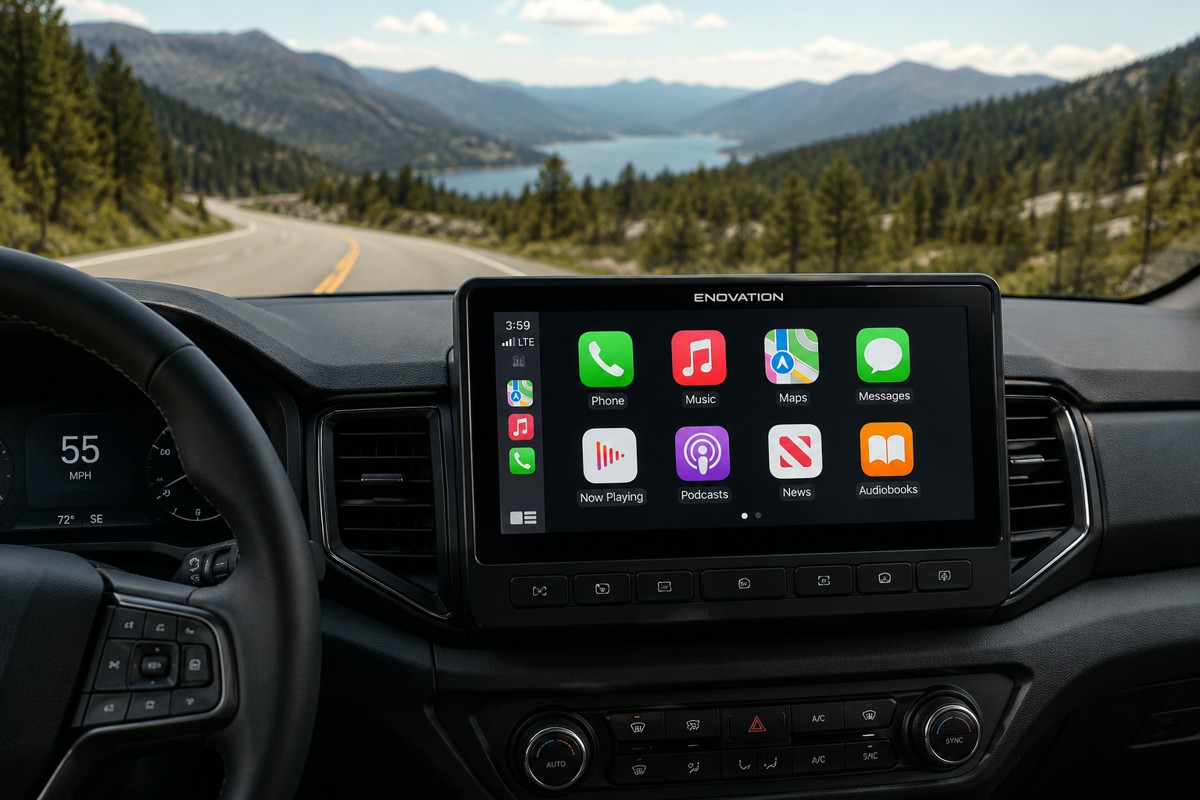
Rear View Safety has launched an upgraded version of its AirVue wireless trailer camera platform, adding proximity sensing and expanding capacity to six cameras across a mixed wired and wireless architecture.
Read as a product announcement, it is an incremental specification uplift. Read against what has happened in the commercial vehicle safety market over the past two years, it is something more interesting: further evidence that the trailer, not the tractor, has become the contested layer of fleet technology, and that the companies consolidating around that layer are building integrated platforms rather than selling components.
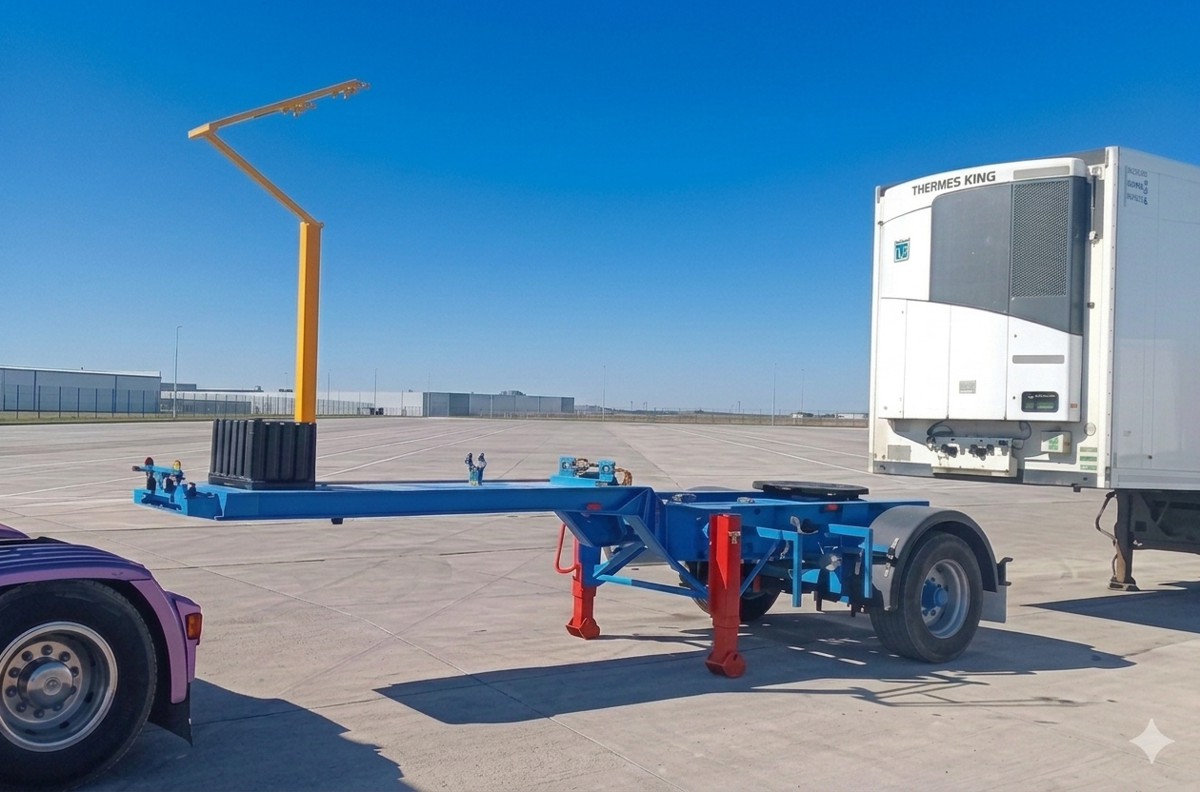
The commercial logic is straightforward once the asset ratios are examined. Fleets running drop-and-hook operations typically hold between two and five trailers for every power unit, and Werner Enterprises alone operates a drop-and-hook pool of around 30,000 trailers. Any safety technology tied to the tractor covers a shrinking share of the equipment actually moving freight, while any technology tied to the trailer multiplies installation cost across a far larger asset base.
Wireless pairing that survives constant tractor-trailer reassignment is therefore not a convenience feature. It is the mechanism that makes trailer-side visibility economically viable at fleet scale, and it explains why Clarience Technologies, which acquired Rear View Safety’s parent Safe Fleet in February 2024, has placed the smart trailer at the centre of its strategy.
Briefing
- Rear View Safety, a Clarience Technologies company, has upgraded its AirVue system with proximity sensors and support for up to six cameras, three wired and three wireless, with an 8ft (roughly 2.4m) rear detection range.
- The system’s Pairing-over-Power technology couples cameras to monitors through the vehicle’s electrical system, with the manufacturer citing a 300ft transmission range, IP69K-rated enclosures and installation time reductions of 50 to 70 per cent against wired equivalents.
- Drop-and-hook trailer pools running at ratios of 3:1 to 5:1 against tractors make wireless retrofit the only cost-defensible route to fleet-wide trailer visibility.
Regulatory divergence is widening: EU General Safety Regulation requirements applied to all new registrations from July 2024 and Transport for London’s - Progressive Safe System took effect in October 2024, while heavy vehicles above 10,000lb remain outside the United States rear visibility mandate.
- Clarience has assembled more than 27 companies covering lighting, telematics, tyre pressure monitoring and vision, and set out a roadmap at the 2026 TMC Annual Meeting to integrate them into a single trailer architecture.
The Trailer Ratio Problem That Wired Systems Never Solved
Trailer pools exist because detention destroys margin. In a live load and unload scenario there is a one-to-one relationship between trailer and power unit, whereas most trailer pools run at ratios between 3:1 and 5:1, and that additional equipment carries real capital cost even as it protects driver retention and turn times.
Carriers have been scaling these networks aggressively, with Werner reporting a pool of some 30,000 trailers that has grown substantially over five years, precisely because committed trailer capacity makes shipper relationships stickier and delivers the consistency carriers want from contract freight. The operational consequence is that a given tractor may couple to dozens of different trailers in a month.
Conventional camera systems were never designed for that pattern. Hard-wired rear vision demands cabling along the full length of a 53ft trailer, connector integrity through repeated coupling cycles, and workshop time that removes the asset from service. AirVue’s approach sidesteps most of that by using the standard seven-way connector as the pairing channel, with the camera and monitor establishing identity over the power line before communication moves to a 2.4GHz wireless link.
Rear View Safety cites a 300ft barrier-free transmission range, support for double and triple tandem configurations, IP69K-rated housings suitable for underside mounting, and installation time savings of 50 to 70 per cent against wired systems.
The interference question matters as much as the range figure. A crowded freight yard or aggregate loading facility may hold dozens of powered and unpowered assets within transmission distance, and a system that pairs the wrong camera to the wrong monitor is worse than no system at all because it creates false confidence.
Pairing through the physical electrical connection rather than through a radio handshake resolves that ambiguity by making the coupling itself the authentication event. The manufacturer describes an interference-resistant design intended to guarantee correct tractor-trailer pairing in busy yards, which is the specific failure mode that has historically deterred fleets from wireless retrofit.
Sensor Fusion Reaches the Rear of the Trailer
The addition of proximity sensing changes the character of the product rather than simply extending its feature list. A camera presents information and leaves interpretation to the driver, which works reasonably well when the driver is actively looking at the monitor and poorly when attention is divided across mirrors, yard traffic and a banksman. Detection sensors covering roughly 2.4m behind the vehicle introduce an active alert layer that does not depend on where the driver’s eyes happen to be pointed. Combining the two creates a system that both shows and tells, which is the direction the wider advanced driver assistance market has been moving for a decade.
Reporting from the 2026 Technology and Maintenance Council Annual Meeting indicates the AirVue platform is being developed well beyond passive imaging. Clarience outlined a system offering 1080p video, integrated backup sensors and onboard recording for litigation and driver coaching, incorporating artificial intelligence for pedestrian detection, vehicle detection and recognition of obstacles such as poles and barriers commonly struck during low-speed manoeuvres. That last category is unglamorous and commercially significant, because low-speed impacts with fixed infrastructure generate a steady stream of body damage claims, trailer downtime and third-party property repair costs that rarely appear in headline safety statistics but sit heavily in maintenance budgets.
Clarience has also identified a generational driver expectation gap as a demand driver. The company noted that younger drivers accustomed to backup cameras and sensors in their personal vehicles find no equivalent capability on a 53ft trailer. For construction and aggregate hauliers competing for drivers against distribution and last-mile operators, equipment specification has become part of the recruitment proposition, and cab technology is one of the few visible differentiators available to a mid-sized contractor.
A Regulatory Gap the Aftermarket Is Being Paid to Close
The regulatory picture across major markets is markedly uneven, and that unevenness is itself a commercial opportunity. In the United States, Federal Motor Vehicle Safety Standard 111 has required rear visibility systems on new vehicles at or below 10,000lb gross weight since May 2018, following the Cameron Gulbransen Kids Transportation Safety Act. Heavier vehicles above that threshold are required only to carry outside mirrors meeting minimum reflective area, with no camera or sensor system mandated, and trailers sit outside the standard altogether. The vehicles with the largest rear blind zones are therefore the least regulated, which leaves specification decisions to fleet operators, insurers and site owners rather than to federal rulemaking.
Europe and the United Kingdom have moved in the opposite direction. New general vehicle safety rules applied to all new motor vehicles sold in the European Union from 7 July 2024, requiring cameras or sensors for reversing detection across the fleet and blind spot recognition with driver warning systems for trucks and buses, with the package expected to help save more than 25,000 lives and avoid at least 140,000 serious injuries by 2038. In London, operators of vehicles above 12 tonnes have had to fit the Progressive Safe System since October 2024, including a camera monitoring system covering the nearside blind spot, with penalty charge notices of up to £550 for non-compliance. Transport for London recognises equipment already compliant with UNECE Regulations 151 and 159 where equivalent safety is achieved, which pushes suppliers towards internationally certifiable architectures rather than market-specific builds.
For a supplier group with global ambitions the practical consequence is convergence pressure. A product engineered to satisfy European type approval and London permit conditions carries a specification ceiling well above the American regulatory floor, and fleets operating internationally increasingly write the higher standard into procurement documents for the whole fleet because managing two specifications is more expensive than managing one. That dynamic tends to favour manufacturers with the engineering depth to certify across jurisdictions, and it is one reason consolidation in this segment has accelerated.
Backing Incidents Remain the Sector’s Most Preventable Fatality
The construction case for trailer-side visibility rests on a well-documented and stubborn pattern. A Bureau of Labor Statistics review of 962 fatal workplace injuries at road construction sites between 2003 and 2010 found 443 caused by workers being struck by a vehicle or mobile equipment, with 143 of those involving a vehicle or plant item that was reversing and 84 involving a reversing dump truck specifically. NIOSH has separately recorded that more than 100 workers are killed and over 20,000 injured each year in the highway and street construction sector, with vehicles and equipment operating in and around work zones involved in over half of construction fatalities.
The mechanics of these incidents recur with grim consistency, and they point directly at what sensor-equipped camera systems are designed to address. Audible reversing alarms lose effectiveness where a paver, breaker or crusher is running nearby, banksman arrangements depend on a person remaining continuously visible and continuously attentive, and mirrors cannot resolve a blind zone that extends the full width of a tipper body. In one NIOSH-documented case, an asphalt dump truck reversed approximately 770ft before striking a municipal police officer directing traffic, with the driver reporting he never saw him and the reversing alarm functioning correctly throughout. An in-cab alert triggered by proximity detection addresses exactly the gap that an alarm audible only outside the cab leaves open.
United States occupational rules have already begun to recognise the substitution. Under OSHA construction requirements, motor vehicle equipment with an obstructed rear view may only be reversed where a reverse signal alarm audible above surrounding noise is fitted or an observer signals that the manoeuvre is safe. OSHA has clarified that a camera system providing an unobstructed rear view can satisfy that requirement, effectively removing the need for an audible alarm or spotter, which converts a safety purchase into a labour productivity argument by releasing a banksman back to productive work on site.
Liability Economics Are Setting the American Purchase Case
Where regulation is absent, litigation is doing the work of setting specification. The American Transportation Research Institute has found that tractor-trailer tort case filings grew at an average rate of 3.7 per cent annually between 2014 and 2023, and that the median verdict above the 10 million dollar threshold reached 36 million dollars in 2022, roughly 50 per cent higher than the 2013 median. ATRI has also documented average verdicts above one million dollars rising from 2.3 million dollars in 2010 to 22.3 million dollars in 2018. Those figures reprice every liability programme in the sector, including for contractors and hauliers who have never had a serious loss.
Video changes the defensive position in a way few other investments can. Footage that establishes a driver was manoeuvring within a defined path at a controlled speed, and that an alert was issued and acted upon, converts a contested narrative into a documented sequence. The inclusion of onboard recording in the AirVue architecture is therefore not an incidental feature but a direct response to how these cases are now argued, and it aligns with the broader market pattern in which insurers offer premium recognition to fleets running camera and collision avoidance systems. For construction clients operating under principal contractor duties, the same evidence trail supports incident investigation and demonstrates the reasonable practicability of control measures adopted.
The corollary deserves acknowledgement because it affects procurement discipline. Recorded data becomes discoverable, and a system generating alerts without a corresponding coaching and review process can document a pattern rather than defend against one. Fleets adopting these platforms should build the review workflow alongside the hardware, which is one of the reasons the market is shifting towards suppliers offering integrated data management rather than isolated cameras.
Clarience Is Building a Platform, Not a Product Line
The strategic frame around this launch is Clarience Technologies’ consolidation programme. The company acquired Safe Fleet in February 2024, taking group headcount above 4,000 across nearly 50 locations, and bringing in a fleet video business with more than 1.5 million systems deployed serving school transport, transit, fire and emergency, law enforcement, work truck, logistics, construction, agriculture, waste and recycling, industrial and military fleets. That followed the 2022 acquisition of telematics provider Fleetilla, which sits alongside the Road Ready trailer telematics brand, and builds on a lineage running back to commercial vehicle lighting manufacturer Truck-Lite.
At the 2026 TMC Annual Meeting the group set out how those assets are intended to work together. Rather than selling standalone components, Clarience described integrating tyre pressure monitoring, lighting, vision systems and telematics into a single architecture delivering real-time insight from the front of the tractor to the rear of the trailer, with chief technology officer Paul Slinkard framing the direction as “The movement toward smart trailers is about advanced connectivity communicating across the entire infrastructure.” He indicated a considerably more advanced iteration would be shown during 2026. The supporting product set is consistent with that ambition: a Truck-Lite Trailer Backup Safety System that detects axle rotation to determine direction of travel and automatically activates rear lighting and optional alarms, targeted at 2027 model year specification, and a Road Ready Tracker Light providing battery-powered daily GPS reporting for chassis, dollies and containers.
The Truck-Lite development is worth isolating because it exposes an overlooked gap.Tractors are required to carry reverse lighting while trailers generally are not, leaving drivers with limited visibility when backing, and no camera performs well in a scene it cannot illuminate. A vision system, an illumination system, a proximity sensor and a telematics backbone sold by four different vendors will rarely integrate cleanly at the trailer. Sold as one architecture, they become a defensible platform position, and that is the commercial thesis Clarience is executing against. Joseph Schechter, VP of Rear View Safety, positioned the AirVue upgrade in similar terms, describing it as “The enhanced AirVue ™ system represents the next evolution of wireless trailer safety. By combining instant connectivity, expanded visibility, and intelligent obstacle detection, we’re giving drivers the information they need to make safer decisions every time they get behind the wheel.”
What Infrastructure Fleet Buyers Should Specify Next
For contractors, aggregate hauliers and municipal fleet operators, the practical question is how to write a specification that remains valid across a seven to twelve year trailer life. Three requirements now look non-negotiable. Pairing must be automatic and physically authenticated rather than manual, because any system requiring driver intervention at each coupling will degrade to non-use within a season. Enclosure ratings must reflect the actual environment, and IP69K underside mounting is the appropriate benchmark for quarry haul roads and unsurfaced site access rather than a specification luxury. Detection must generate an in-cab alert rather than only an image, because the evidence from backover investigations consistently shows drivers looking in the wrong place at the decisive moment.
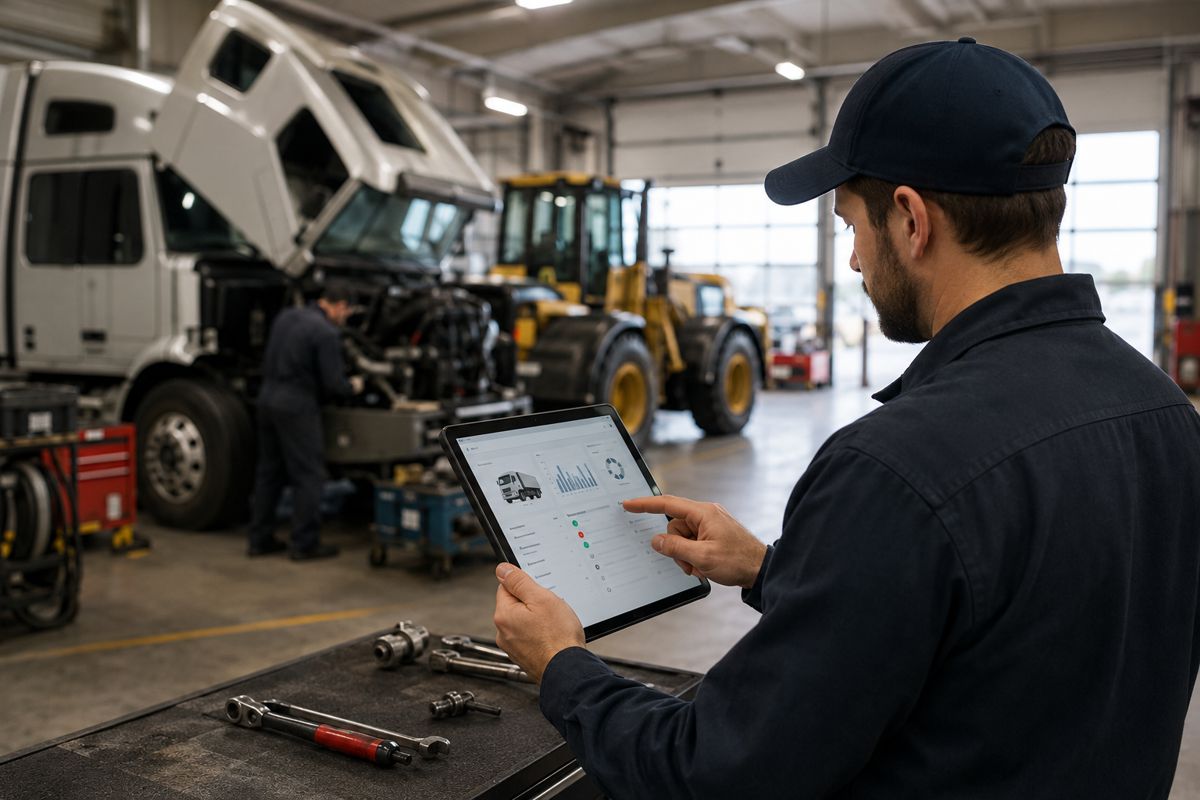
Beyond the hardware, buyers should press hard on data architecture and integration commitments. A camera platform that cannot export event data into an existing telematics or fleet management environment creates a parallel system that nobody reviews, which delivers the cost of the technology without the risk reduction that justifies it. Questions worth putting to any supplier include how footage is retained and retrieved, whether the alert threshold can be tuned to site conditions, what the calibration and cleaning regime demands of maintenance teams, and how the platform will accommodate the European and London requirements that increasingly set the ceiling specification for internationally active operators.
The wider market signal is the one to act on. Trailer-side intelligence is consolidating into integrated platforms backed by manufacturers with the balance sheet to certify across jurisdictions and support equipment through a full asset life. Operators specifying components in isolation over the next procurement cycle risk assembling a fleet that cannot be upgraded coherently, while those specifying against a platform architecture retain the option to add sensing, lighting and telematics capability as it matures. Given how much of the construction sector’s most persistent fatality risk sits in the few metres behind a reversing tipper, that is a procurement decision with a return measured in more than maintenance savings.
Key Industry Questions
How does Pairing-over-Power differ from conventional wireless camera pairing? Conventional wireless camera systems pair over a radio protocol, usually requiring a button press or a stored device list, which fails in yards containing multiple similar assets and creates the risk of a monitor displaying the wrong trailer. Pairing-over-Power uses the vehicle’s electrical connection, in practice the standard seven-way connector, to establish camera and monitor identity before communication transfers to a 2.4GHz wireless link. Because the physical coupling itself becomes the authentication event, the pairing cannot attach to a neighbouring trailer. Rear View Safety describes the design as interference resistant and specifically intended for crowded freight yards, and states that the system requires no prior manual pairing.
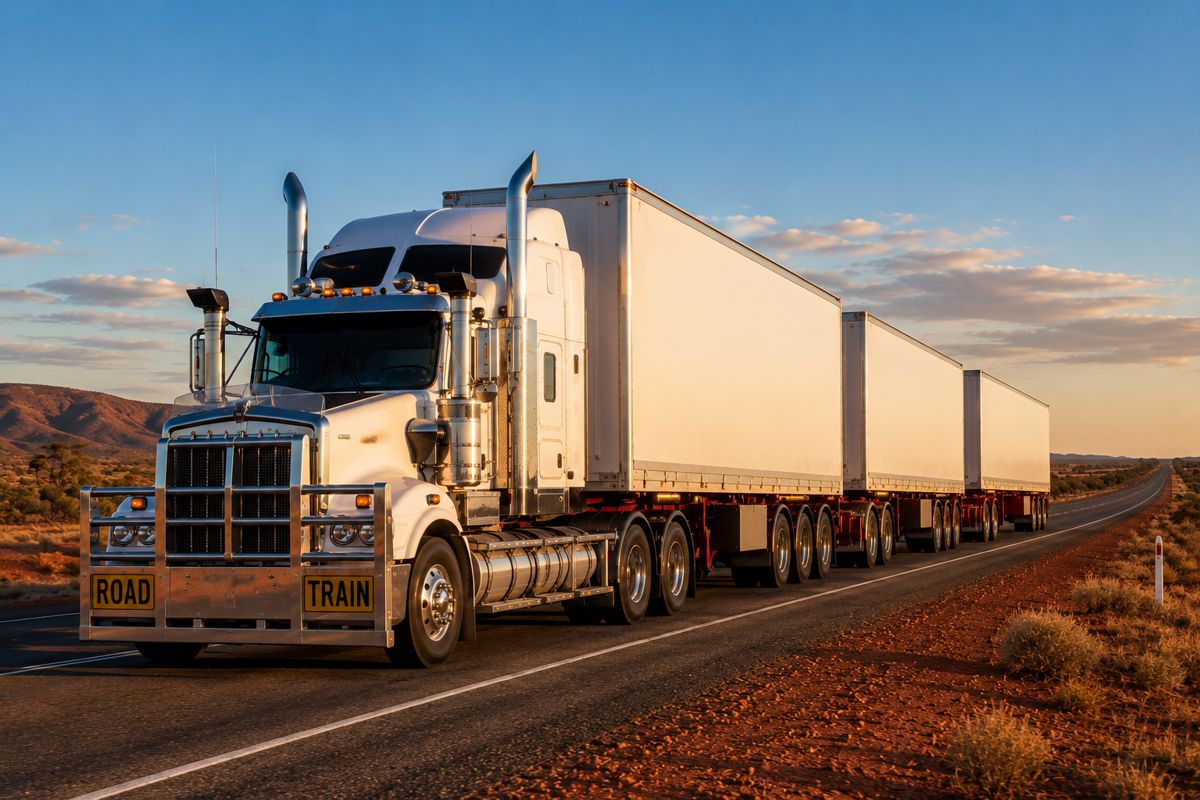
Why does a wireless architecture matter more for trailers than for rigid vehicles? A rigid tipper or mixer carries its camera for the life of the chassis, so a wired installation is amortised across a single asset and one workshop visit. Trailers behave differently. Drop-and-hook fleets typically run between two and five trailers per power unit, and mega-carriers operate pools running to tens of thousands of units, meaning a wired approach multiplies installation labour and cable runs across a much larger asset base while taking each trailer out of service. Rear View Safety cites installation time reductions of 50 to 70 per cent for its wireless approach against wired equivalents, which is the difference between equipping a representative sample and equipping a whole fleet.
Are camera systems accepted as an alternative to a banksman on construction sites? In the United States, OSHA construction rules require that vehicles with an obstructed rear view either carry a reversing alarm audible above surrounding noise or be reversed only on the signal of an observer. OSHA has clarified that a camera system delivering an unobstructed rear view can satisfy that requirement, and that radar and Doppler-based detection also qualifies where it gives workers sufficient warning to clear the path. That interpretation applies to sites under OSHA jurisdiction rather than to public road use. Operators elsewhere should verify the position under their own national regulations and against client site rules, which frequently impose requirements above the statutory minimum.
What does the European regulatory position mean for equipment specified in North America? European rules applied to all new motor vehicles sold in the EU from 7 July 2024, requiring reversing detection by camera or sensor across all vehicle categories and blind spot recognition with driver warning for trucks and buses. Transport for London’s Progressive Safe System has applied since 28 October 2024 for vehicles above 12 tonnes and recognises equipment meeting UNECE Regulations 151 and 159. The practical effect is that European type approval sets a higher engineering benchmark than the American regulatory floor, and manufacturers building to that benchmark can serve both markets. Fleets with international operations increasingly adopt the higher standard fleet-wide to avoid maintaining dual specifications.
How significant are reversing incidents in construction fatality data? They are consistently among the most preventable. A Bureau of Labor Statistics review of 962 fatal workplace injuries at road construction sites between 2003 and 2010 identified 443 caused by workers being struck by vehicles or mobile equipment, with 143 involving reversing vehicles and 84 involving reversing dump trucks. NIOSH has recorded more than 100 deaths and over 20,000 injuries annually in the highway and street construction sector, with vehicles and equipment in and around work zones implicated in over half of construction fatalities. Investigation records repeatedly identify the same combination of factors: a large rear blind zone, an alarm masked by plant noise, and no effective separation between vehicle paths and workers on foot.
Does onboard recording create legal exposure as well as protection? It creates both, and the balance depends on the surrounding process. Recorded footage that documents a controlled manoeuvre and a driver responding appropriately to an alert is among the strongest defensive evidence available, which matters given that ATRI has tracked median verdicts above the 10 million dollar threshold reaching 36 million dollars in 2022. The same data is discoverable, however, and a fleet that generates alerts without documenting review and coaching may find that record used to demonstrate awareness without action. The recommended approach is to implement the review workflow, retention policy and coaching protocol at the same time as the hardware rather than afterwards.
What is the commercial logic behind Clarience’s acquisition strategy? Clarience has assembled more than 27 companies spanning vehicle lighting, camera and vision systems, telematics, tyre pressure monitoring and specialist safety equipment, adding Fleetilla in 2022 and Safe Fleet in February 2024. The Safe Fleet transaction alone lifted group headcount above 4,000 across nearly 50 locations and brought in a fleet video business with over 1.5 million systems deployed. The rationale set out at the 2026 TMC Annual Meeting is integration rather than breadth: connecting lighting, sensing, vision and telematics into a single trailer architecture that competitors selling individual components cannot match, and creating a platform position that is considerably harder to displace than a product win.
What should be checked before committing to a fleet-wide retrofit? Beyond detection range and image resolution, the durable questions concern lifecycle and integration. Confirm the enclosure rating against the actual operating environment, with IP69K appropriate for underside mounting on unsurfaced haul routes. Establish how event data exports into existing telematics or fleet management platforms, since an isolated system rarely gets reviewed. Clarify retention periods, retrieval processes and who holds the data. Check whether alert thresholds can be tuned to avoid nuisance activation in congested yards, which is the most common cause of drivers disabling systems. Finally, examine the upgrade path, because trailers commissioned now will be running when integrated smart trailer architectures reach maturity.
Strategic Takeaways
- The trailer has become the strategically important layer in commercial vehicle safety technology, and suppliers who control the trailer interface will hold a stronger long-term position than those selling tractor-mounted equipment into a shrinking share of the operating fleet.
- Wireless pairing authenticated through the physical electrical connection is what makes fleet-wide trailer visibility economically defensible, converting camera systems from a sample deployment into a whole-fleet standard.
- Regulatory divergence between Europe and the United States means European type approval and London permit conditions now function as the effective global specification ceiling, and internationally active operators should expect to procure against that ceiling rather than the American floor.
- Liability economics are substituting for regulation in the American market, with rising verdict sizes making documented detection and recorded footage a risk management investment as much as a safety one, provided the review and coaching process is built alongside the hardware.
- Integrated smart trailer architectures combining lighting, sensing, vision and telematics are arriving within the current procurement cycle, and fleets specifying components in isolation risk owning assets that cannot be upgraded coherently as those platforms mature.