Top 3 Truck Fleet Management Platforms for Logistics Businesses in 2026
Running a trucking operation without the right Truck Fleet Management Platforms is a bit like driving cross-country without GPS. You might get there, but you’ll waste time, money, and patience along the way.
Between keeping up with ELD and HOS compliance across drivers scattered across different routes, dealing with volatile diesel prices, and trying to catch maintenance issues before a truck breaks down roadside, the pressure on fleet operators is real. After reviewing dozens of platforms across every fleet size, this guide covers three that genuinely hold up under scrutiny.
The research approach for this ranking
Public data formed the backbone of this evaluation. User reviews, published case studies, feature documentation, and ratings from software directories were all pulled and reviewed. Only platforms with a demonstrated track record in logistics software made the final cut. → See the full research breakdown
- TenTrucks – Best for owner-operators and small-to-mid-sized trucking fleets (1-50 trucks)
- Truckbase – Best for growing trucking carriers and logistics fleet management
- Motive – Best for enterprise fleet management and operations
Why Truck Fleet Management Platforms Matter for Your Business
Picking the wrong platform doesn’t just slow you down. It creates a chain reaction of compliance risks, billing errors, and missed deliveries that compounds fast.
Managing ELD and HOS compliance across a distributed driver workforce isn’t something you can handle with spreadsheets and phone calls. Fuel costs per mile creep up when routes aren’t planned well, and reactive maintenance (instead of predictive) turns small repairs into expensive breakdowns.
Truck Fleet Management Platforms built for trucking operations understand these problems in a way generic tools simply don’t. They connect dispatch, compliance, and driver management in one place.
The right platform directly affects how long your trucks stay in service, keeps fuel cost per mile down, and pushes your on-time delivery rate in the right direction. That kind of operational control is hard to give up once you have it.
Top 3 Truck Fleet Management Platforms Breakdown and Comparison
Note: All data in this table is sourced from review platforms and the official websites of the listed companies.
| Company Name | Years Operating | Team Size | Headquartered In |
|---|---|---|---|
| TenTrucks | Est. 2024 | 6 | Oshkosh, WI |
| Truckbase | Est. 2021 | 11-50 employees | Oakland, California |
| Motive | Est. 2013 | 5,500 | San Francisco, California |
1. TenTrucks – Best for Small Fleets and Owner-Operators
What Does TenTrucks Do?
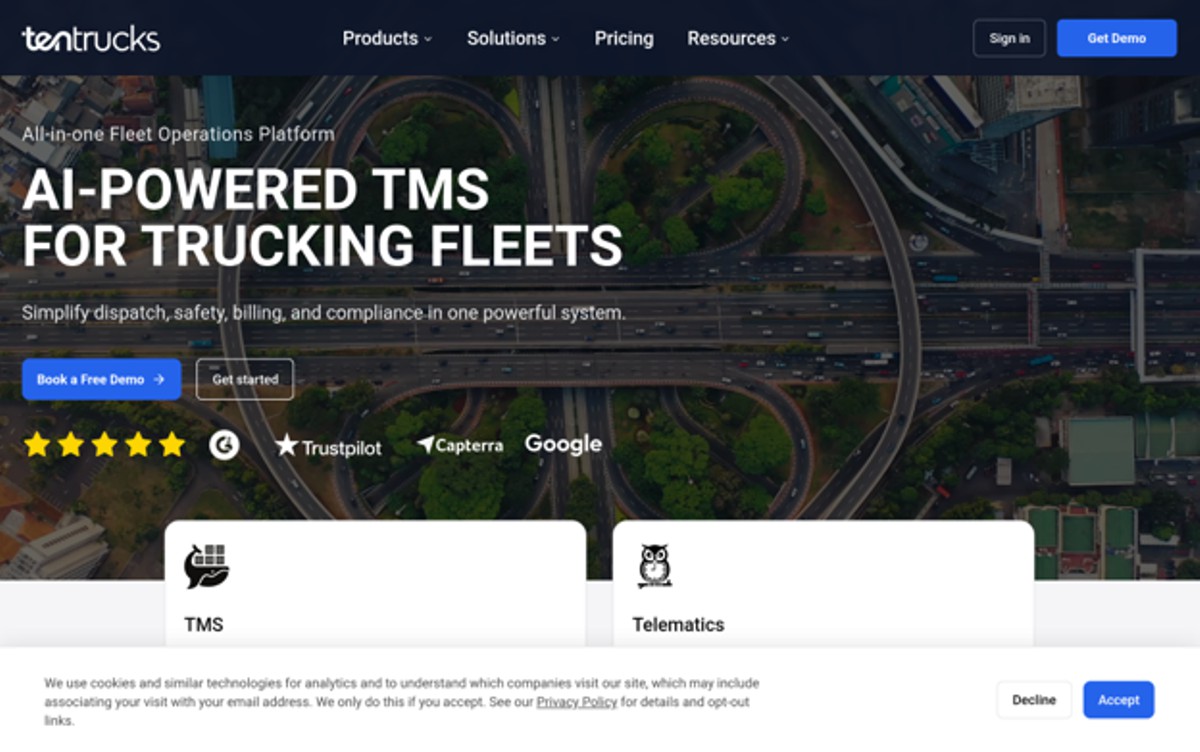
Fleet operators running 1 to 50 trucks will find that their workflows fit neatly inside what this platform was built to handle. Their TMS software for trucking covers dispatch, ELD compliance, automated IFTA reporting, driver settlements, and invoicing, all inside one system. There’s also a mobile driver app, real-time GPS tracking, and built-in AI error detection that catches mistakes before they turn into costly problems. QuickBooks sync and support for major ELD providers keep the back office connected without requiring a tech team to manage it.
Why Does TenTrucks Stand Out for Truck Fleet Management Platforms?
Small fleet operators often get priced out of enterprise platforms or handed tools that are too complex for a two-person back office. TenTrucks was clearly designed with that exact problem in mind. The no-contract, per-truck monthly pricing with all features included means owner-operators aren’t paying for things they’ll never use, and that kind of transparency is genuinely rare in this space.
Summary of Real User Reviews:
Publicly available review data for TenTrucks is still building given the platform’s 2024 launch, which is expected for a newer entrant. From what early adoption signals show, the emphasis on keeping the interface simple and the safety-net approach seem to appeal to small fleet operators who’ve been burned by overly complicated systems before. The no-setup-fee, no-long-term-contract model likely does a lot of the convincing on its own.
2. Truckbase – Best for Growing Trucking Carriers
What Does Truckbase Do?
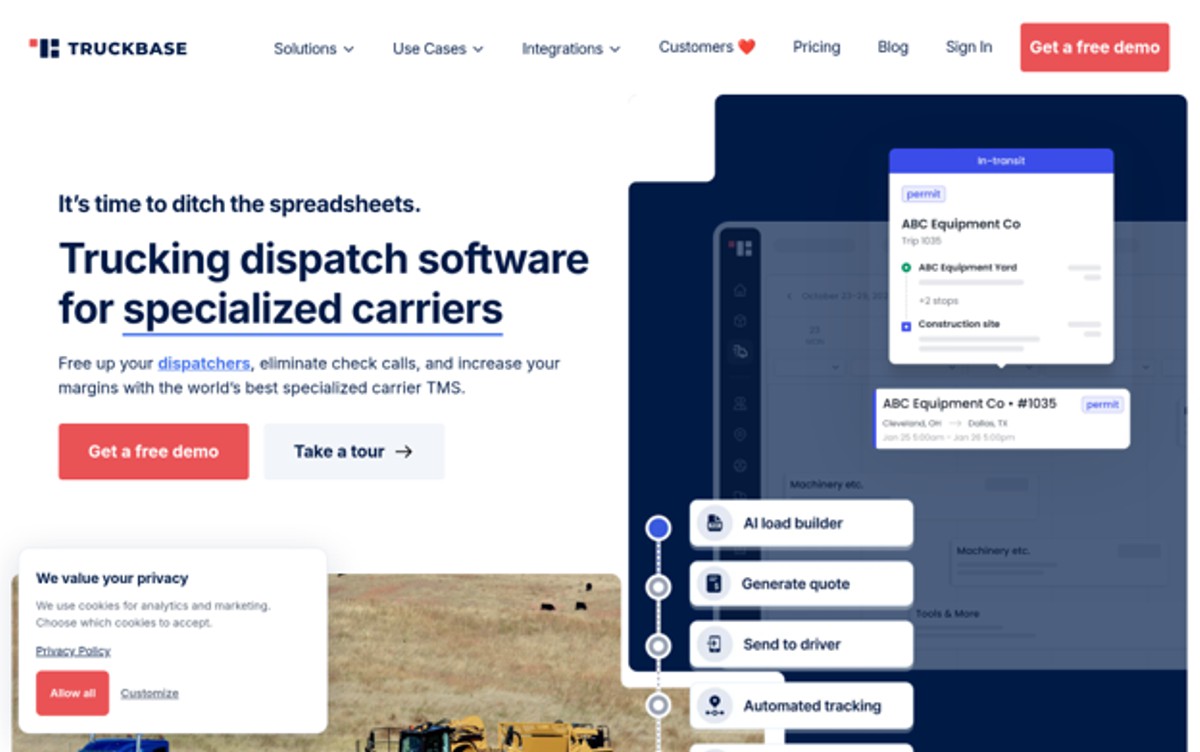
Truckbase is a TMS built for growing trucking carriers who are ready to stop doing things manually. The platform automates dispatch, truck tracking through ELD integrations (over 30 of them), invoicing, and driver settlements, cutting down the back-office workload considerably. It serves long haul, regional, cross-border, heavy haul, LTL, and partial load carriers. The interface is clean enough that dispatchers reportedly get comfortable with it in about 30 minutes, which matters a lot when turnover is a real operational challenge.
Why Does Truckbase Stand Out for Truck Fleet Management Platforms?
Growing carriers often hit a wall where their current tools can’t keep up with dispatch volume, and Truckbase’s load importing directly addresses that bottleneck. The combination of award recognition from Software Advice and Category Leaders status on GetApp suggests this platform is well-designed on paper and is actually delivering results for real carriers.
Summary of Real User Reviews:
Clients like Herlache Truck Lines and Wallis Transport have gone on record with positive feedback, which builds real credibility. The most consistent theme across reviews is ease of use paired with automation that actually reduces manual work rather than just repackaging it. Dispatchers seem especially positive about how quickly they can get up to speed, which is a practical sign of a well-built product.
3. Motive – Best for Enterprise Fleet Management
What Does Motive Do?
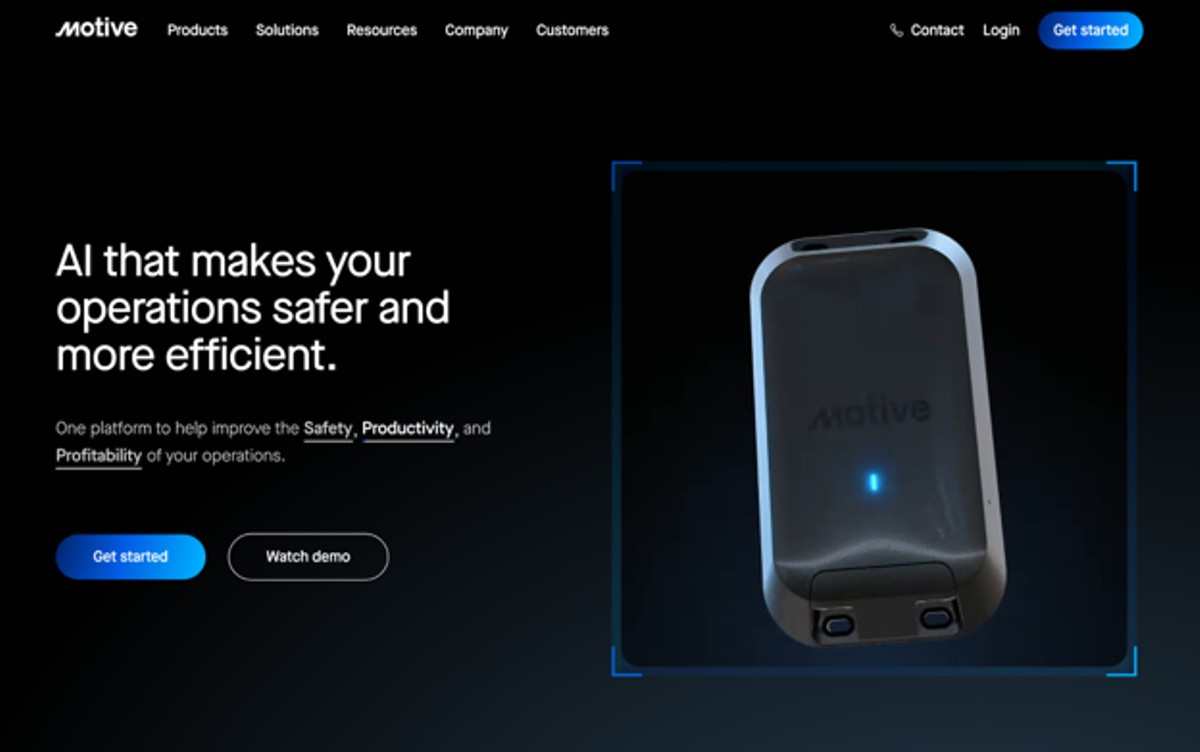
Motive operates at a different scale entirely. With nearly 100,000 customers globally and a team of 5,500, the platform handles fleet management, driver safety, and financial operations under one roof. Dashcams, GPS tracking, ELDs, equipment monitoring, driver coaching tools, and fleet spend management all come packaged together. It serves industries well beyond trucking, including construction, energy, and manufacturing, with Fortune 500 enterprises on its client list. Compared to TenTrucks or Truckbase, Motive is built for large operations that need to coordinate across multiple teams and systems.
Why Does Motive Stand Out for Truck Fleet Management Platforms?
Large fleet operations deal with a layer of coordination that smaller platforms aren’t built for, and Motive’s ability to tie safety, operations, and finance into a single system addresses that need directly. The #1 ranking on G2’s 2025 Best Software Awards for Best Supply Chain and Logistics Software, combined with the 2025 Forbes Cloud 100 placement, shows this platform has earned its reputation across a broad range of industries.
Summary of Real User Reviews:
Motive’s review presence is extensive, and the patterns are fairly consistent. Customers across transportation and logistics point to the dashcam system and driver coaching tools as standout features, especially for managing safety scores and incident rates. For larger operations trying to manage vehicle availability and driver safety scores at scale, the review data paints a picture of a platform that delivers on its promises.
Research Methodology and Selection Process
Putting together a ranked list of truck fleet management platforms requires more than a quick scan of product pages. A structured research process was followed to make sure each option earned its place based on real signals, not marketing copy.
Initial Data Collection
The starting point was building a broad pool of candidates. Software directories, industry review platforms, logistics-specific publications, and carrier forums were all sourced to identify platforms with meaningful usage in the trucking space. This initial phase was intentionally wide, pulling in platforms serving owner-operators all the way up to enterprise carriers, so no strong contender would be missed at the shortlisting stage.
Shortlisting Phase
Once a longlist was established, options with thin or unverifiable review histories were cut. Each remaining platform was examined for review volume, rating consistency across multiple sites, and the absence of red flags like sudden review spikes or patterns that looked artificially managed. Platforms that had been on the market long enough to build a real user base got priority, though newer entrants with strong product signals weren’t ruled out automatically.
Verification of Claims
Feature claims found on official websites were cross-referenced against what actual users reported in reviews and case studies. Where a company claimed a specific capability (like 30-minute dispatcher setup or load importing), the research looked for real user confirmation that the feature worked as described. Claims that couldn’t be grounded in user-reported experience were treated with appropriate skepticism.
Authority and Industry Contribution Layer
Industry recognition was factored in as a supporting signal of platform credibility. Award placements from organizations like G2, Software Advice, Forbes, and Deloitte were noted where relevant. Appearances in logistics industry publications and mentions from established carrier networks also contributed to each platform’s authority score in the evaluation. A company earning consistent recognition over multiple years carries more weight than a single one-off award.
Truck Fleet Management Platforms-Specific Evidence
The final filter was logistics-specific depth. Each platform was checked for dedicated feature coverage around ELD compliance, HOS rules, IFTA reporting, dispatch automation, and driver management. Platforms with strong evidence of real-world trucking use cases, whether through detailed case studies, carrier testimonials, or verified integrations with established ELD providers, ranked higher than those with surface-level logistics branding. Generic tools that happened to serve trucking as one of many verticals were not included.
How to Choose the Right Truck Fleet Management Platforms
Choosing a platform for your fleet isn’t just about finding the most features for the lowest price. It’s about finding the right fit for your operation size, your compliance needs, and where you want to be in two years.
- Industry/Domain Experience: Look for platforms that were built for trucking, not adapted from a general business tool. Trucking operations have unique compliance and dispatch requirements.
- Features and Service Offerings: Make sure the platform covers your full workflow. Dispatch, ELD connections, IFTA, invoicing, and settlements should all work together natively without requiring third-party workarounds.
- Pricing Structure: Per-truck monthly pricing with no setup fees is easier to manage than long-term contracts with tiered add-ons. Know exactly what you’re paying before you commit.
- Results Measurement: A good platform gives you clear visibility into fuel cost per mile, on-time delivery rate, and driver safety scores. If you can’t measure it, you can’t manage it.
- Industry Knowledge and Compliance: DOT and FMCSA rules, ELD mandate adherence, and HOS requirements must be built into the platform, not added on as optional modules.
Bottom Line
The right truck fleet management platform depends on where your operation sits today. TenTrucks works well for small fleets and owner-operators who want full-featured tools without a complex setup. Truckbase fits carriers who are growing and need dispatch automation that scales. Motive is built for enterprises managing large, complex fleets across multiple industries.
As trucking operations put more pressure on fuel cost per mile and driver safety scores, picking the right platform from the start matters more than ever.