Volvo Targets Japan’s Urban Construction Boom with a Smarter Compact Excavator
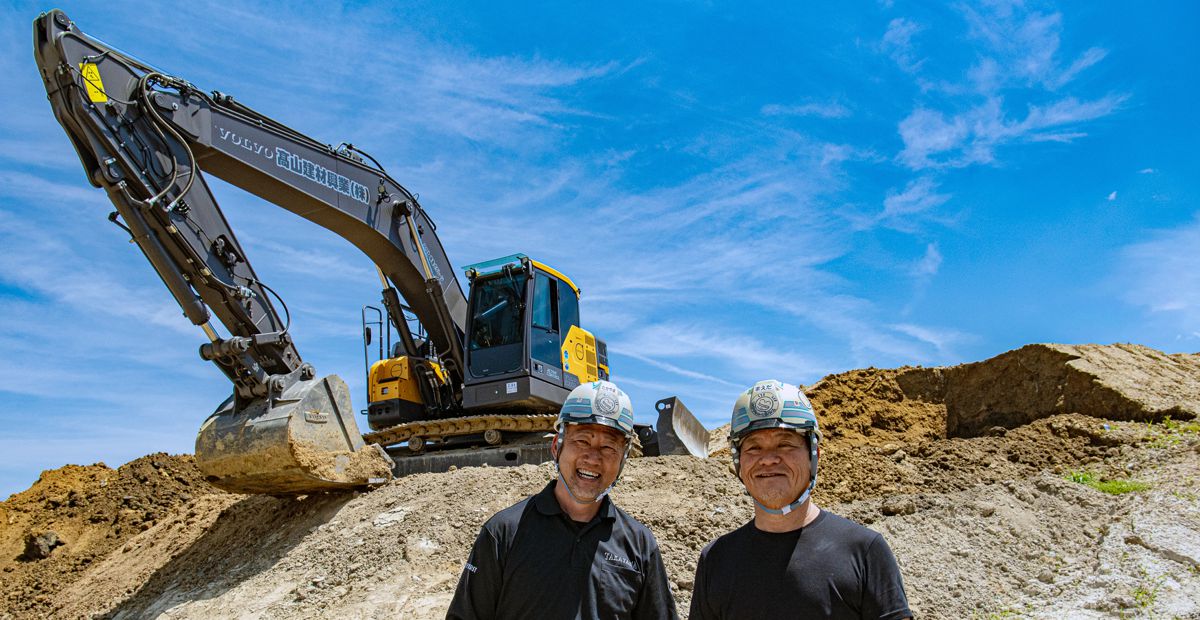
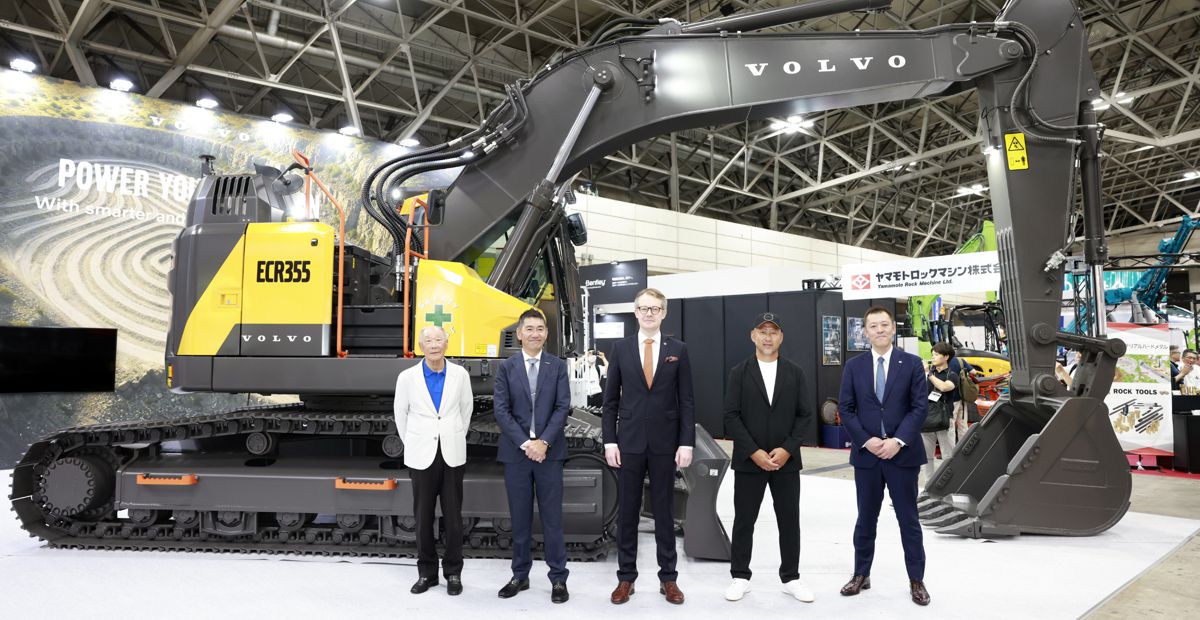
The New Generation ECR355 arrives in a market defined less by weak demand than by the shortage of people available to meet it. When Volvo Group Japan handed the ceremonial key to Takayama Kenzai Kogyo at CSPI-EXPO, presenting its 36-tonne compact-tail-swing excavator to the Japanese market for the first time, the commercially significant fact was not the machine itself but the economics it targets.
Japan is the developed world’s clearest case study in what happens when construction demand holds up while the workforce contracts, and equipment strategy is being rewritten around that constraint. Nearly seven in ten large and midsize Japanese contractors told a January survey they would be unable to take on new large-scale projects in fiscal 2026 because of the labour shortage, a figure that turns every machine purchasing decision into a question of output per remaining worker rather than headline capacity.
That is the frame in which the ECR355 makes sense as more than a product refresh. Takayama Kenzai Kogyo’s earlier experience with the previous-generation ECR355E, working steep hillside residential sites in Nara Prefecture, showed the model doing the work of two or three separate assets. Its compact tail swing and crane specification let a single machine handle both lifting and excavation on ground where space and access are scarce, cutting the number of machines, transporters and operators a job requires.
In a country where the binding constraint is labour rather than capital, a machine that consolidates tasks and reduces the crew needed to complete them is selling exactly what buyers cannot otherwise obtain. Volvo has built the Japanese launch around that logic, and the wider construction and infrastructure industry has good reason to watch where the argument lands.
Briefing
- Volvo Group Japan launched the New Generation ECR355, a 36-tonne compact-tail-swing excavator with an operating weight between 35,500 kg and 39,400 kg, at CSPI-EXPO and handed the first machine to contractor Takayama Kenzai Kogyo, with sales through dealers Nishio T&M and Daiichi Toyo.
- The model targets Japan’s acute labour shortage, where close to 70 per cent of large and midsize contractors say they cannot take on new large-scale projects in fiscal 2026, by consolidating lifting and digging into one machine and lifting output per operator.
- A new Volvo D8M engine, an electro-hydraulic control system and a redesigned main control valve deliver up to 7 per cent better fuel efficiency, with hydraulic oil and return filter intervals extended to 3,000 hours to lower lifecycle cost.
- Volvo Smart View with People and Obstacle Classification combines 360-degree cameras, high-precision radar and AI object recognition, moving factory-fitted machine safety into a space so far dominated by aftermarket retrofit vision systems.
- The launch lands as Volvo CE invests heavily in excavator manufacturing and pushes premium, technology-differentiated machines into Asian markets where Komatsu, Hitachi and Kobelco hold home advantage, reporting a 14 per cent rise in Volvo-branded machine deliveries in the second quarter of 2026.
A Segment That Has Become A Battleground
Compact-tail-swing excavators, also called short-swing or reduced-tail-swing machines, were once a niche compromise between conventional diggers and the tighter footprints that urban work demands. That niche has hardened into one of the more contested parts of the excavator market, precisely because the work has moved into denser, more constrained environments where a conventional counterweight overhang forces operators to close extra lanes, risk contact with adjacent structures, or simply decline the job.
A reduced tail swing lets a machine rotate within roughly the width of a single carriageway rather than two, keeping traffic moving on road and utility projects and reducing the damage risk when loading trucks in confined bays. For infrastructure owners and contractors managing live sites, that translates directly into fewer lane closures, shorter possessions and lower disruption cost.
The competitive response confirms where value is moving. Komatsu is bringing tight-tail-swing models to market through 2026 with its proprietary intelligent Machine Control technology, Hitachi has expanded its ultra-short ZAXIS-7 range up into the larger power classes, and Kobelco continues to develop its short-radius line.
Volvo’s decision to place a 36-tonne machine at the heavy end of the compact-tail-swing spectrum is a deliberate move up the segment, where lift capacity and productivity matter as much as manoeuvrability and where margins are healthier. Introducing that machine in Japan, the home territory of the segment’s strongest incumbents, is the more pointed choice. Volvo is not competing on price against domestic brands with deep dealer roots; it is competing on integrated technology, and the ECR355 is the vehicle for that argument.
The Productivity Case Runs Through Fuel And Consolidation
The clearest evidence for the machine’s commercial proposition comes from the field rather than the brochure. Working comparable tasks on demanding Nara terrain, Takayama Kenzai Kogyo found the previous-generation ECR355E consuming between 20 and 30 per cent less fuel than a typical 20-tonne class excavator, despite being a substantially larger machine.
President and CEO Yoshiaki Takayama said he was “honestly surprised” by that fuel performance, and the surprise is instructive. Contractors instinctively reach for a smaller machine to save fuel, yet a larger compact-tail-swing excavator with a crane specification completed the same work with fewer machines and lower consumption, inverting the usual size-to-cost assumption. When one asset replaces a lifting machine and a digging machine, the saving is not only litres of diesel but a transporter movement, a second operator and the coordination overhead of running two machines on a tight site.
The New Generation model is engineered to widen that gap. Its Volvo D8M engine works with an electro-hydraulic control system and a redesigned main control valve to deliver up to 7 per cent better fuel efficiency than the previous generation, with electronic sensors managing flow and pressure so boom, arm and bucket movements stay smooth and precise. Extended service intervals matter just as much to the ownership case, with hydraulic oil and return filter changes pushed out to 3,000 hours to cut both maintenance spend and downtime.
Ramarajan Rangarajan, Head of Productivity and Retail Development for Volvo CE in Region Asia, framed the combination in ownership terms: “The New Generation ECR355 represents a major milestone for our short-swing lineup in Japan. By integrating advanced electro-hydraulics, smart AI-assisted safety systems, and premium operator comfort into a heavy-duty platform, we are giving our customers a machine that drives down daily operating costs while maximising safety and machine utilisation on highly restricted jobsites.”
With Japanese construction cost inflation running near 5.6 per cent and wages up roughly 23 per cent since 2021, every point of fuel efficiency and every hour of avoided servicing feeds directly into a bid margin under real pressure.
Factory-Fitted Safety Enters An Aftermarket Fight
The ECR355’s safety package is where the launch carries the widest industrial significance. Volvo Smart View with People and Obstacle Classification pairs 360-degree cameras with high-precision radar and AI-based object recognition, alerting operators in real time to people and hazards around the machine. The important word is classification. A system that distinguishes a person from a static obstacle can suppress the constant false alarms that make simpler proximity sensors an irritation operators learn to ignore, and alarm fatigue is one of the reasons bolt-on safety kit often underdelivers.
Struck-by incidents remain among the leading causes of death on construction sites, with the great majority involving heavy machinery, and United States Department of Labor data cited in academic research recorded hundreds of excavator-related accidents over a recent decade, a large share of them fatal. The hazard is acute even when a machine is stationary, because an excavator can rotate through 360 degrees at any moment and pull its counterweight through the space a worker occupies.
Until now, intelligent machine-vision safety has largely been an aftermarket business, with specialists such as Arcure’s Blaxtair and a growing field of proximity-detection vendors retrofitting AI cameras onto mixed fleets and citing near-miss reductions of well over half in the first year of use. Volvo building comparable capability into the machine at the point of manufacture changes the commercial dynamics.
Factory integration removes the installation, calibration and warranty ambiguity of third-party hardware, and it lets safety data flow through the same telematics channel as machine health, which matters for insurers, principal contractors and site auditors seeking verifiable evidence of due diligence. In Japan, where each operator lost to injury is far harder to replace than in a market with slack labour supply, the value of protecting the existing workforce is amplified.
Safety technology here is not only a moral and regulatory obligation but a productivity asset, because a machine that keeps its operator and ground crew intact keeps a scarce and irreplaceable resource working.
Comfort Is A Recruitment Strategy In Disguise
The upgrades to the operator environment read like a comfort list, yet their strategic purpose is closer to workforce policy. The New Generation ECR355 offers a conventional cab with 20 per cent more interior space than previous short-tail-swing models, air-conditioning that improves cooling performance by 50 per cent, an electric joystick and a second-generation Volvo Co-Pilot with a 12.8-inch Full HD display.
These features address the practical reality that Japan’s construction workforce is ageing rapidly, with more than a third of workers aged 55 or older and those under 30 accounting for barely one in ten. Older operators working longer careers need cabs that reduce physical strain, and younger recruits weigh working conditions heavily when the sector is competing against every other industry for a shrinking pool of school leavers. A machine that is materially more comfortable to spend a shift in is, in this context, a retention and recruitment instrument.
Volvo Active Control, available on the machine to provide semi-automatic digging assistance, extends the same logic into skills. The system improves consistency and productivity by handling parts of the dig automatically, which narrows the gap between a veteran operator and a relative newcomer and helps preserve output as experienced staff retire.
That capability speaks directly to Japan’s policy direction, where the Ministry of Land, Infrastructure, Transport and Tourism has set its i-Construction 2.0 programme the target of cutting on-site labour by 30 per cent and raising productivity 1.5 times by 2040 through automation and digital workflows. Semi-automatic assistance on a mainstream excavator is a modest but real contribution to that goal, and it positions Volvo’s technology inside a national agenda rather than merely alongside it. For contractors, the appeal is straightforward, because assistance features protect delivery capacity as the knowledge held by retiring operators walks off site.
Where Volvo’s Excavator Money Is Going
The Japanese launch sits inside a broader corporate story about where Volvo CE is concentrating investment. The company reported a 14 per cent increase in deliveries of Volvo-branded machines, an 8 per cent rise in order intake and a 14.4 per cent adjusted operating margin in the second quarter of 2026, and it has been unusually explicit about backing the excavator segment with capital.
Construction began during the quarter on a new excavator factory in Eskilstuna, Sweden, supported by an investment of 700 million Swedish kronor, adding to a 40 million dollar commitment to bring excavator and large wheel loader production into its Shippensburg plant in the United States. At the same time Volvo has pruned aggressively, divesting its SDLG value brand, closing the loss-making Rokbak hauler business and absorbing distributor Swecon, sharpening its focus on premium machines and higher-margin services.
Pushing a technology-rich compact excavator into Japan is consistent strategy rather than opportunism. Asia was a mixed picture for Volvo CE through the first half of 2026, with growth in Indonesia, South Korea and Southeast Asia offset by contraction in India, Turkey and the Middle East, and order intake across the region softening. Japan is not a volume market Volvo can win on price against entrenched domestic manufacturers, so the route to share runs through differentiation on efficiency, safety and operator experience, sold through established local partners in Nishio T&M and Daiichi Toyo.
The first-customer handover to Takayama Kenzai Kogyo, a contractor already converted by the previous generation, gives the launch a credible reference case rather than a staged photo opportunity. That distinction matters in a conservative buying culture where peer evidence carries more weight than specification sheets.
The Template Other Ageing Markets Will Copy
What makes the ECR355 launch worth the attention of engineers and infrastructure owners well beyond Japan is that Japan is running an experiment the rest of the developed world will eventually sit. Workforce ageing, weak recruitment, flat productivity and rising retrofit obligations are common to most mature construction economies, and Japan is simply further along the same curve that markets such as the United Kingdom are travelling more slowly.
The equipment strategy emerging there, favouring machines that consolidate tasks, protect scarce operators and lower the skill threshold for competent work, is a preview of what buyers elsewhere will prioritise as their own labour pipelines tighten. Watching where Japanese contractors concentrate spending is a reasonable proxy for where broader industrial demand is heading.
The practical lesson for industry leaders is that competitiveness is shifting from raw machine capacity towards output per worker, and procurement should be evaluated on that basis. A machine that costs more but replaces a second asset, keeps its crew safe and lets a less experienced operator perform to standard can be the cheaper choice once labour is priced as the true bottleneck.
Manufacturers are responding by moving intelligence, from AI safety to semi-automatic controls, off the options list and into the standard build, and the competitive gap will increasingly sit between firms that treat this integrated capability as core and those still selling incremental improvements to conventional machines. The ECR355 is one data point in that shift, but it is a clear one, and it points at the questions every fleet owner facing a shrinking workforce will soon have to answer.
Key Industry Questions
- Why launch a 36-tonne compact-tail-swing excavator specifically in Japan now? Japan combines strong construction demand with an acute and worsening labour shortage, which makes machines that raise output per operator unusually valuable. Around 70 per cent of large and midsize contractors report being unable to take on new large-scale projects in fiscal 2026 for want of workers. A larger compact-tail-swing machine that consolidates lifting and digging into one asset directly addresses that constraint by reducing the crew, transport and coordination a job requires. Launching in Japan also lets Volvo test premium, technology-led differentiation in the home market of its strongest excavator rivals, where winning on capability rather than price is the only realistic route to market share.
- How does a larger excavator use less fuel than a smaller one? The counterintuitive result reported by Takayama Kenzai Kogyo, with the previous-generation ECR355E consuming 20 to 30 per cent less than a typical 20-tonne machine on comparable work, comes down to matching machine to task. A larger, more capable excavator with a crane specification completes lifting and digging in fewer cycles and fewer passes, and it avoids running a second machine alongside it. Fuel per litre is only part of the saving. Consolidating work onto one correctly specified asset removes an entire machine’s operating cost, transport movements and operator from the site, which is where the larger efficiency gain is realised in practice.
- What makes factory-fitted AI safety different from retrofit systems? Intelligent machine-vision safety has grown up as an aftermarket business, with third-party AI cameras bolted onto existing fleets. Building the capability into the machine at manufacture, as Volvo has with Smart View People and Obstacle Classification, removes installation, calibration and warranty uncertainty, and it lets safety data run through the same telematics channel as machine health. Classification rather than simple detection is the technical distinction, because identifying a person versus a static object suppresses the false alarms that cause operators to ignore simpler sensors. For insurers and principal contractors, integrated and verifiable safety data is easier to audit than a mixed estate of retrofit hardware.
- Does semi-automatic digging assistance replace skilled operators? No, it narrows the gap between experienced and inexperienced operators rather than removing the need for either. Volvo Active Control handles parts of the dig automatically to improve consistency and productivity, which helps a newer operator work closer to veteran standard and preserves output as experienced staff retire. In a workforce where more than a third of construction workers are over 55, that continuity is a serious commercial concern. Assistance features protect delivery capacity against the loss of tacit knowledge, and they align with Japan’s national i-Construction 2.0 target of cutting on-site labour while raising productivity through automation and digital workflows.
- How significant is the compact-tail-swing segment commercially? It has moved from niche to strategically important as construction has concentrated in denser urban and infrastructure settings. Reduced tail swing lets a machine rotate within roughly one lane rather than two, keeping traffic moving and reducing damage risk when working near structures or loading in confined bays, which lowers disruption cost on live sites. Major manufacturers including Komatsu, Hitachi and Kobelco are actively expanding their short-swing ranges into larger power classes through 2026, confirming that value and competition are concentrating in this part of the market. Volvo placing a 36-tonne machine at the heavy end targets the higher-margin, higher-capacity portion of the segment.
- What does the launch signal about Volvo CE’s wider strategy? It reflects a deliberate concentration on excavators and premium, technology-differentiated machines. Volvo CE is investing 700 million Swedish kronor in a new excavator factory in Eskilstuna and 40 million dollars in United States excavator production, while divesting its SDLG value brand, closing the Rokbak hauler business and acquiring distributor Swecon. The company reported a 14 per cent rise in Volvo-branded machine deliveries and a 14.4 per cent adjusted operating margin in the second quarter of 2026. Introducing a feature-rich compact excavator into Japan through established local dealers fits a strategy of winning premium share in markets where competing on price against domestic incumbents is not viable.
- What should contractors in other markets take from this? Japan is further along a demographic and labour curve that most mature construction economies are travelling more slowly, so its equipment priorities preview those elsewhere. As workforces age and recruitment weakens in markets such as the United Kingdom, procurement will increasingly favour machines that consolidate tasks, protect scarce operators and lower the skill threshold for competent work. Evaluating equipment on output per worker rather than headline capacity can make a more expensive but more capable machine the cheaper overall choice once labour is priced as the true bottleneck. The broader signal is that integrated intelligence, from AI safety to semi-automatic control, is becoming standard rather than optional.
Strategic Takeaways
- The binding constraint in mature construction markets is shifting from capital to labour, and equipment that raises output per operator, rather than headline capacity, is where purchasing power is concentrating.
- Compact-tail-swing excavators have become a genuine competitive battleground at the heavier end of the range, and manufacturers are moving up in size and technology because that is where margin and differentiation now sit.
- Factory-integrated AI safety threatens to compress a fast-growing aftermarket for retrofit vision systems, and its verifiable telematics data will increasingly shape insurer, auditor and principal-contractor expectations.
- Operator comfort and semi-automatic assistance are best understood as workforce policy, protecting delivery capacity as experienced operators retire and helping recruit and retain scarce younger staff.
- Japan is a working preview of the procurement priorities other ageing economies will adopt, so watching where its contractors spend is a credible early indicator of where global equipment demand is heading.