DEVELON Expands Compact Equipment Strategy with DEF-Free Track Loaders
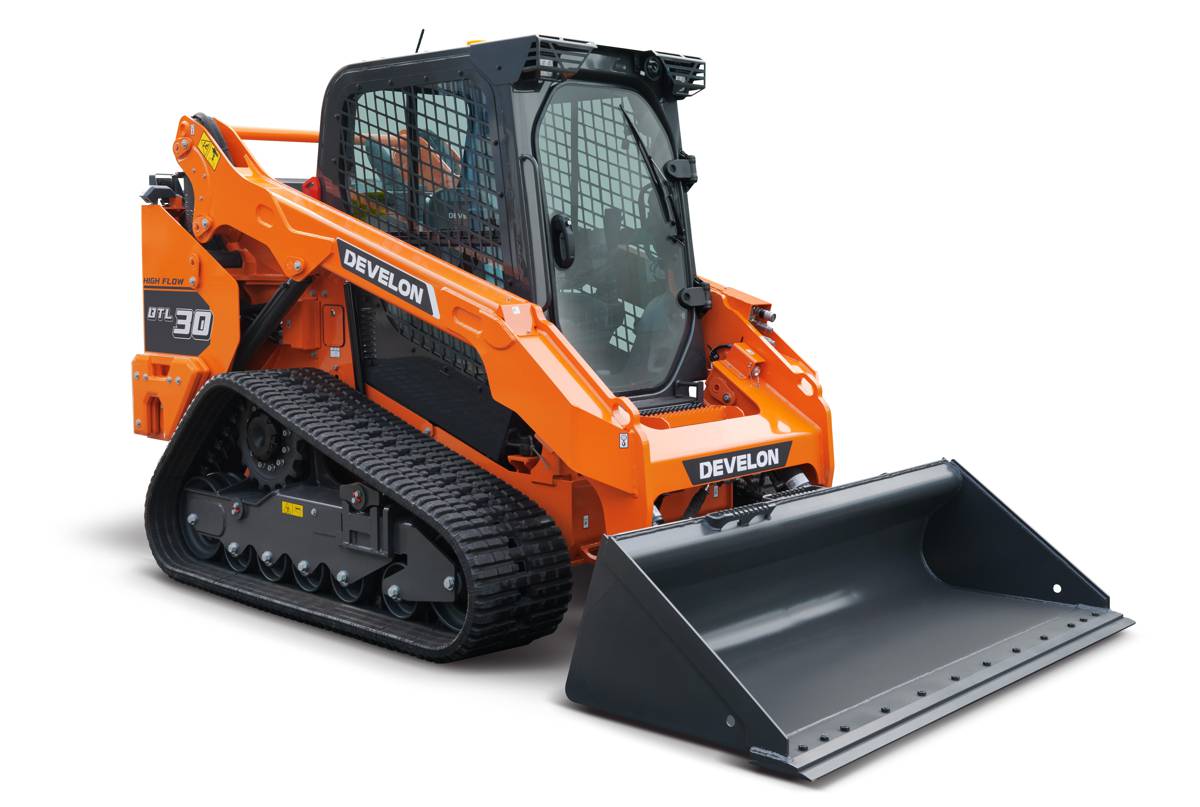
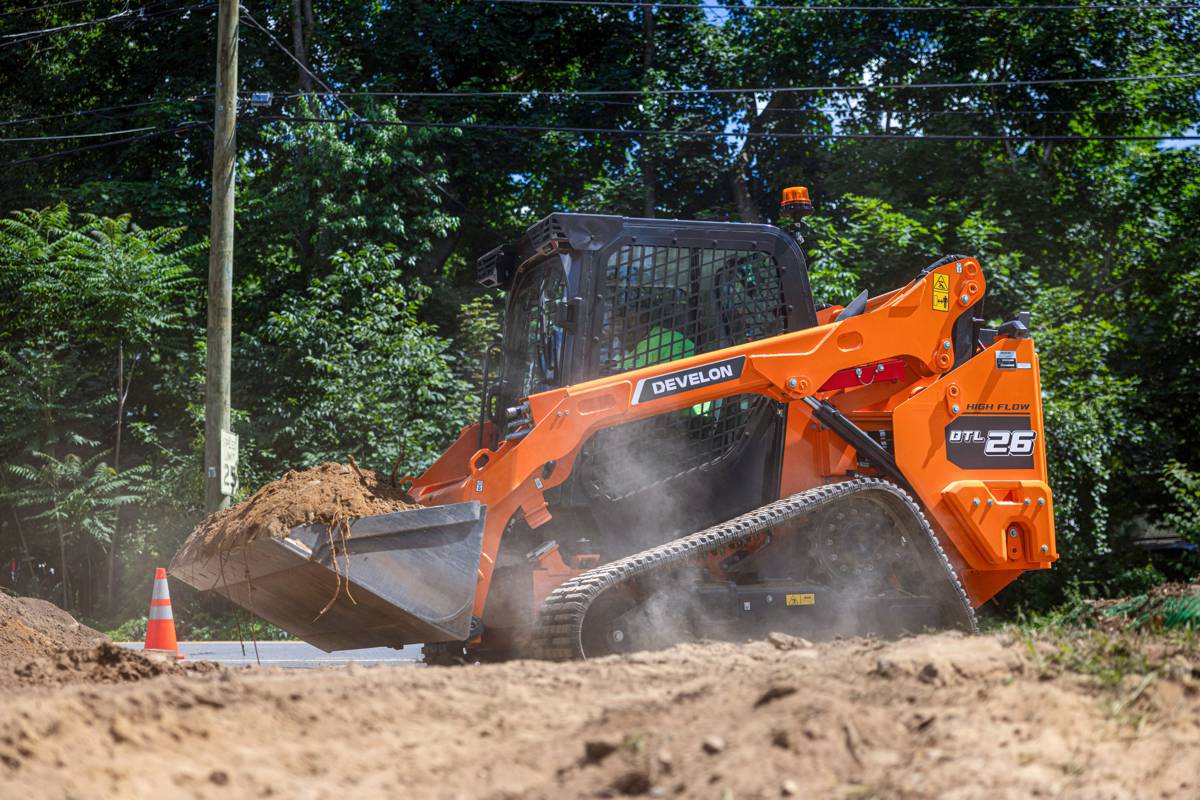
DEVELON’s decision to build two compact track loaders that need no diesel exhaust fluid reads, at first glance, like a modest maintenance convenience. Seen against the shape of the North American compact equipment market, it looks more deliberate than that. By dropping the D24 engine into the new DTL26 and DTL30 and holding both machines below 75 horsepower, the former Doosan brand has engineered its way out of an entire aftertreatment system, and in doing so has told the market exactly where it believes value in compact equipment is now concentrated.
The story here is not the removal of a single consumable, but a calculated bet on lifecycle simplicity, uptime and operator accessibility in the segment where purchasing power is growing fastest.
That bet arrives as DEVELON tries to convert itself from a capable challenger into a genuine full-line original equipment manufacturer in North America. The company, rebranded from Doosan construction equipment in early 2023 and now operating under HD Hyundai Infracore, has spent recent years filling gaps in its portfolio, adding its own dozer, a fresh line of mini excavators and, in 2024, its first compact track loader.
The DTL26 and DTL30 complete that compact track loader family and, more tellingly, aim it at the part of the market that rental fleets and small contractors actually buy in volume. Understanding why the machines matter means looking past the specification sheet and toward the emissions regulation, the rental economics and the labour shortage that together make a simpler diesel machine commercially attractive right now.
Briefing
- DEVELON has added the DTL26 and DTL30 to its compact track loader range, both powered by a sub-75-horsepower D24 diesel engine that removes the need for diesel exhaust fluid and a selective catalytic reduction system.
- The design sidesteps the EPA Tier 4 Final aftertreatment burden that applies above 75 horsepower, a threshold that Bobcat, Kubota and other established players already engineer beneath to strip out cost and complexity.
- The DTL26’s rated operating capacity of 2,600 pounds lands inside the 2,000 to 2,999-pound band that market analysts identify as the fastest-growing slice of a compact track loader market in which North America remains the largest region.
- Rental fleets, which account for well over half of compact equipment utilisation in mature markets, stand to gain most from removing a fluid that less experienced operators routinely mismanage or neglect.
- The launch rounds out a three-model line alongside the 115.3-horsepower DTL35 and moves DEVELON closer to full-line manufacturer status, backed by a North American dealer network of more than 200 locations.
The Seventy-Five-Horsepower Line That Shapes Compact Equipment
The single most important fact about the DTL26 and DTL30 is not printed on their spec sheets in bold. It is the horsepower band their D24 engine occupies. Under the United States Environmental Protection Agency’s Tier 4 Final framework, engines rated below 75 horsepower can meet the standard using a passive diesel oxidation catalyst, a maintenance-free device that requires no fluid top-ups, no injectors and no operator intervention.
Cross the 75-horsepower line and the picture changes sharply, because manufacturers generally have to add selective catalytic reduction, which in turn means a diesel exhaust fluid tank, pumps, lines, injectors and the consumable itself. DEVELON has not invented a new approach so much as applied a well-worn one, deliberately optimising the D24 to deliver useful power while staying beneath the point where that hardware becomes unavoidable.
Engineers across the industry have described the commercial logic behind this threshold in plain terms, noting that there is a strong incentive for many manufacturers to keep engine output below the level at which selective catalytic reduction is required. The reasoning is straightforward once the ownership burden is counted. A DEF system adds acquisition cost, adds failure points and adds a recurring task, and that task falls hardest on operators who are unfamiliar with the technology or who move between machines on a rental yard.
Bobcat and Kubota built substantial compact equipment franchises partly on this maintenance-free positioning, so DEVELON is entering well-trodden ground rather than opening it. What matters is that the company is now willing to compete on that same ground with purpose-built models rather than leaving the value segment to rivals.
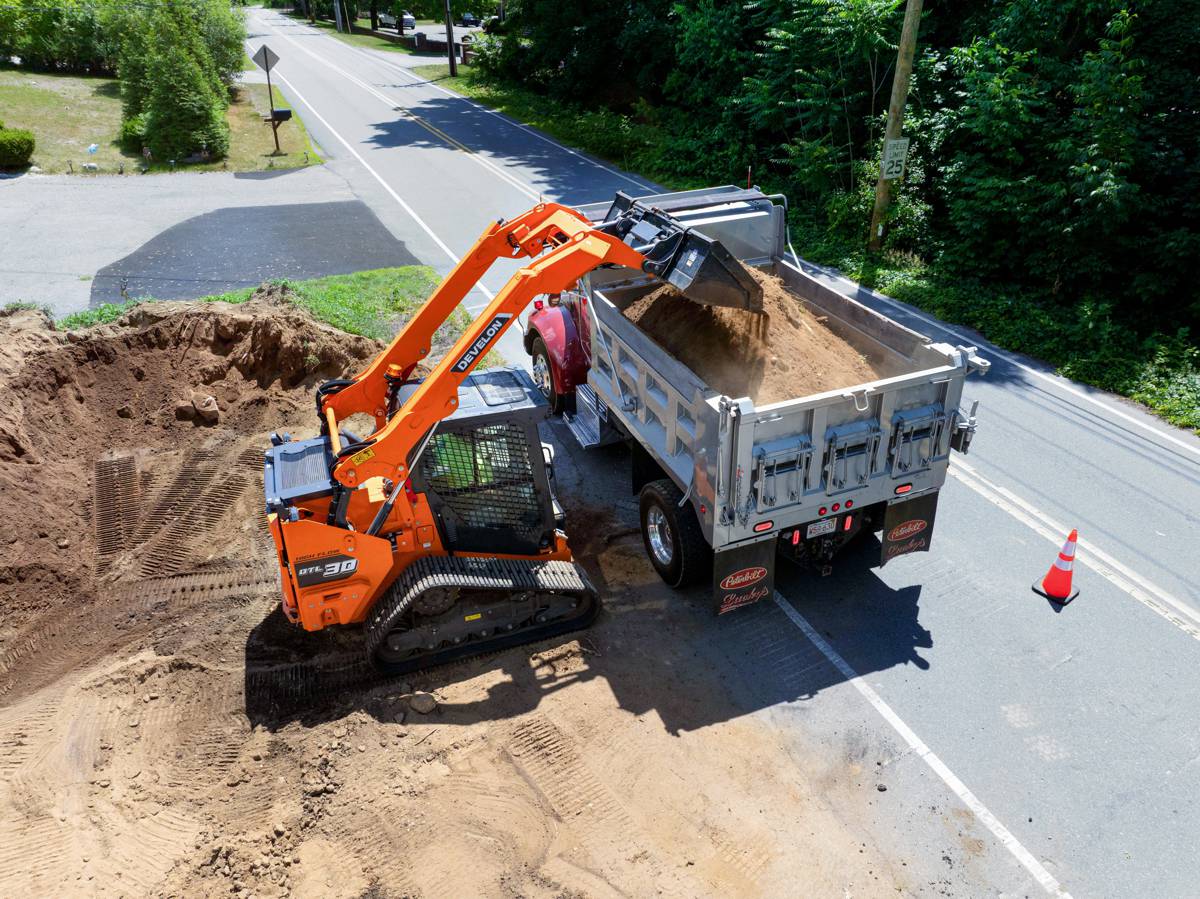
The contrast within DEVELON’s own line makes the strategy legible. The DTL35, the brand’s first compact track loader, runs a 115.3-horsepower D34 engine shared with the DD100 dozer, which places it firmly above the threshold and therefore carries the aftertreatment that the two new machines shed entirely. That larger loader was pitched at high-horsepower grading, land clearing and forestry-cutter work, a different buyer with different priorities.
By positioning the DTL26 and DTL30 as the DEF-free, lower-complexity end of the family, DEVELON has effectively split its compact track loader offering into a performance tier and a simplicity tier, and it is the simplicity tier that speaks to the largest pool of buyers.
Reading the Market Bet Behind the Launch
North America is the largest compact track loader market in the world, and within it the compact track loader has been steadily eating the skid steer’s share, prized for traction, flotation and operator comfort on soft ground. Demand has been resilient even through periods of economic caution, with United States contractors financing more than 54,000 new compact track loaders in the twelve months to February 2025, a double-digit increase on the prior year.
That volume tells manufacturers where to concentrate engineering effort, and it explains why a brand still building its reputation in the category would prioritise the mainstream capacity classes over headline-grabbing outliers.
The specific placement of the DTL26 is where the commercial intent becomes obvious. Market analysis consistently identifies the 2,000 to 2,999-pound rated operating capacity band as the fastest-growing segment of the compact track loader market, driven by landscaping, site preparation, utility work and the general versatility that draws non-traditional buyers into the category. With a rated operating capacity of 2,600 pounds, the DTL26 sits precisely in that band, while the DTL30’s 3,000-pound rating at 35 percent of tipping load reaches into the larger construction-oriented class.
DEVELON has, in other words, aimed its two DEF-free machines at the highest-traffic lanes of a growing road rather than a quiet side street. For a company describing its own compact expansion as a move toward becoming a full-line manufacturer, capturing this middle of the market is more strategically valuable than winning the extremes.
Why Rental Economics Reward a Simpler Machine
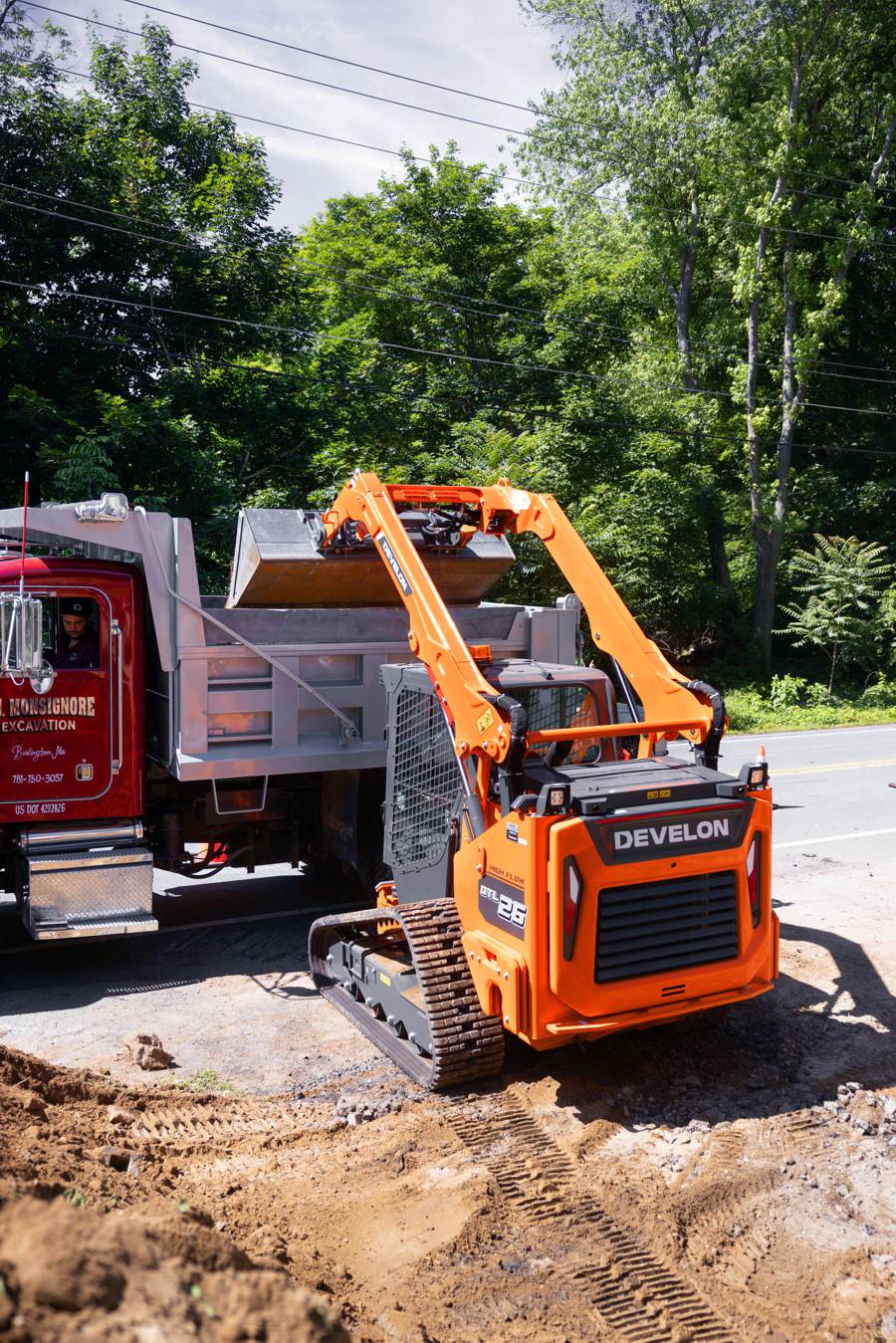
Rental is now the decisive channel in compact equipment, with utilisation through hire fleets exceeding sixty percent in mature markets such as North America and Europe. That structural shift changes what buyers value, because a rental company’s return depends on maximising uptime and minimising the support calls, misuse and downtime that erode margin. A diesel exhaust fluid system is a recurring liability in exactly that environment.
Operators cycle through machines quickly, may not know a given loader’s routines and can run a DEF tank dry or contaminate it, triggering derate modes that pull the machine off the job at the worst moment. Removing the system removes an entire class of avoidable service events, which is why the DTL26 and DTL30 are arguably better tuned to the rental economy than to any single contractor.
DEVELON’s product management has framed the appeal around cost and readiness rather than emissions engineering. “Our customers are looking for opportunities to reduce their operating costs and simplify their maintenance checklists,” says Andy Jeong, product manager at DEVELON, adding that “By eliminating the requirement for DEF, we’ve removed a significant pain point for our customers. They no longer have to worry about fluid storage in extreme temperatures or the added expense of an extra consumable. It’s about providing a machine that is ready to work the moment the operator presses a button.”
The reference to extreme temperatures is not incidental, because DEF gels and can freeze in cold conditions, forcing heated storage and thawing routines that northern contractors and yards would rather do without. Supporting features carry the same uptime logic, from the reversible cooling fan that clears the radiator in high-debris work to the standard travel motor hose guard, mud guard and cabin lamp guard that protect the machine from the conditions that generate repair bills.
Engineering Around the Skills Shortage
The harder constraint on compact equipment productivity is no longer the machine, it is the person in the seat. A persistent shortage of skilled operators means fleets increasingly run loaders with newer, less experienced hands, often for shifts approaching ten hours. A cramped or unintuitive cab compounds that problem, producing fatigue, slower cycle times and the turnover that fleets can least afford. DEVELON has answered by making cab environment and operator assistance central to the DTL26 and DTL30 rather than optional refinements, fitting one of the widest cabs in the class, a minimised A-pillar for sightlines, a standard rearview camera and an eight-inch touchscreen that consolidates machine data and controls.
The assistance functions matter most for the labour argument. Smart Assist features such as return to dig, bucket shake and auto self-levelling let a newer operator perform tasks with a consistency that previously depended on experience, which effectively narrows the skills gap the industry keeps citing.
Operator feedback has focused on comfort and visibility, with Anthony Amato of Amato Excavation reporting after running the machine near Boston that “The new DTL26 delivers an incredibly smooth and comfortable ride. The cab is spacious, the air conditioning keeps up well, and the visibility to the front and sides is exceptional. It provides a premium environment for the operator.”
Jeong connects that comfort directly to the workforce economics that keep contractors awake at night, arguing that “With a premium cab and intuitive controls, we aren’t just helping crews move more dirt; we’re helping business owners attract and keep the best talent by providing them with the best tools in the industry.” Read commercially, the cab is a retention tool as much as a productivity one.
Attachment Returns and Jobsite Safety
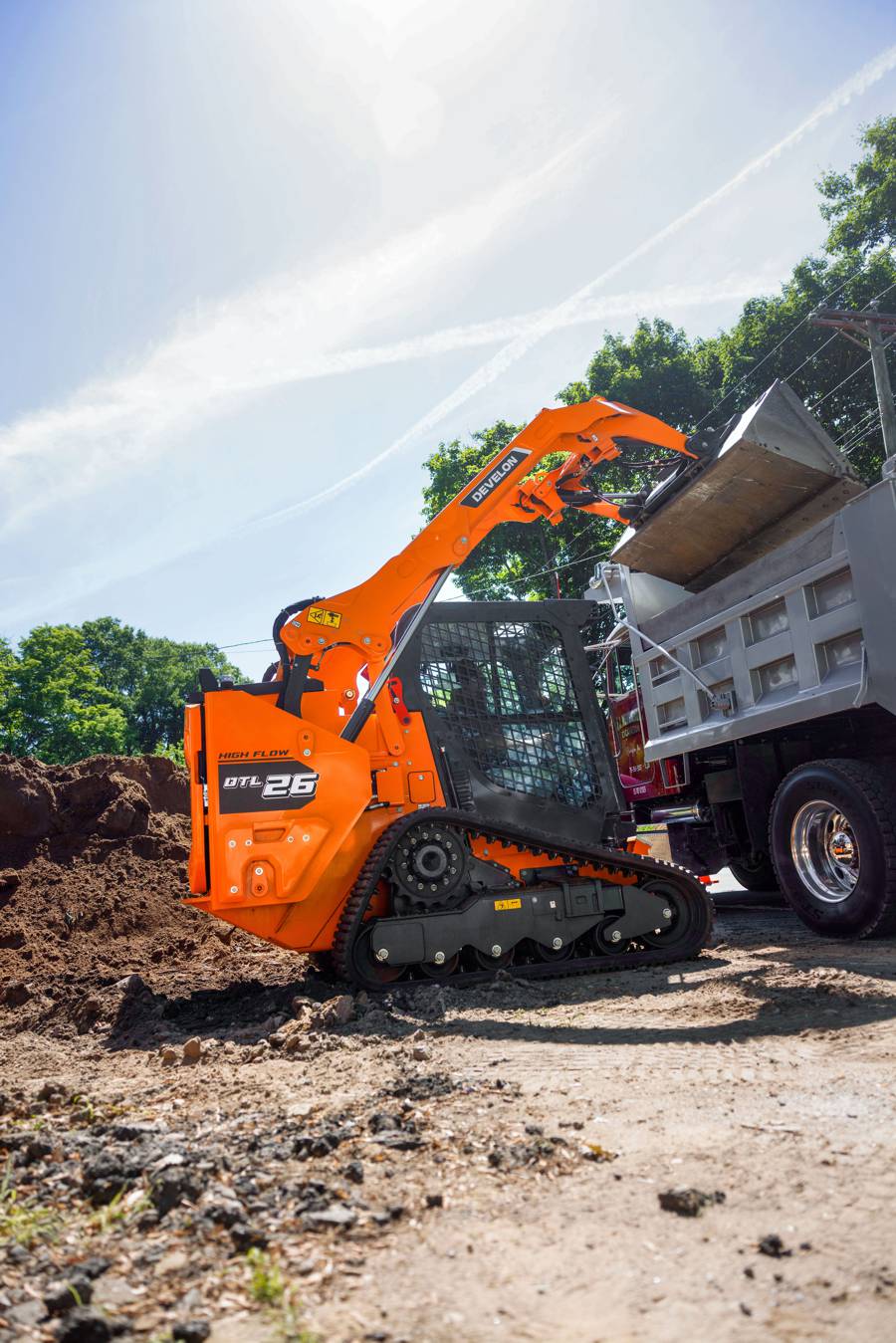
Compact track loaders earn their keep through attachments, and the return on a machine is largely the return on how many jobs its attachments can address. The DTL26 and DTL30 are built to protect that maths. An available hydraulic quick coupler lets an operator switch from bucket to pallet fork without leaving the cab, keeping utilisation high and idle time low, while an optional high-flow auxiliary hydraulic circuit rated at 27 gallons per minute supports demanding tools such as snowblowers, cold planers and brush cutters without bogging the machine down.
Creep speed control adds precision for trenching and milling by holding a slow, steady travel speed while maintaining full hydraulic power to the attachment. Buyers can further tune the machines with a 300-pound counterweight, a torsion suspension system, triple flange idlers or a fixed-frame undercarriage, matching the loader to terrain and task rather than accepting a single compromise configuration.
Safety specification has become a genuine point of competition in this class, and DEVELON has equipped the new loaders accordingly. An optional 270-degree around view monitor camera system paired with ultrasonic proximity sensors addresses the blind spots that make compact machines hazardous on congested sites, a concern that carries real weight for fleet managers balancing productivity against liability.
Operators have noted the practical value, with Dalton Rasch of Rasch Construction observing after running the DTL30 at a DEVELON facility that “The AVM system is a nice feature to be able to see around you and your blind spots.” The machines are offered in both cab and canopy configurations, with most premium features reserved for the cab build, which quietly steers value-focused buyers toward the higher-margin specification while keeping a lower-cost entry point available for price-sensitive work.
Where Compact Equipment Value Is Heading
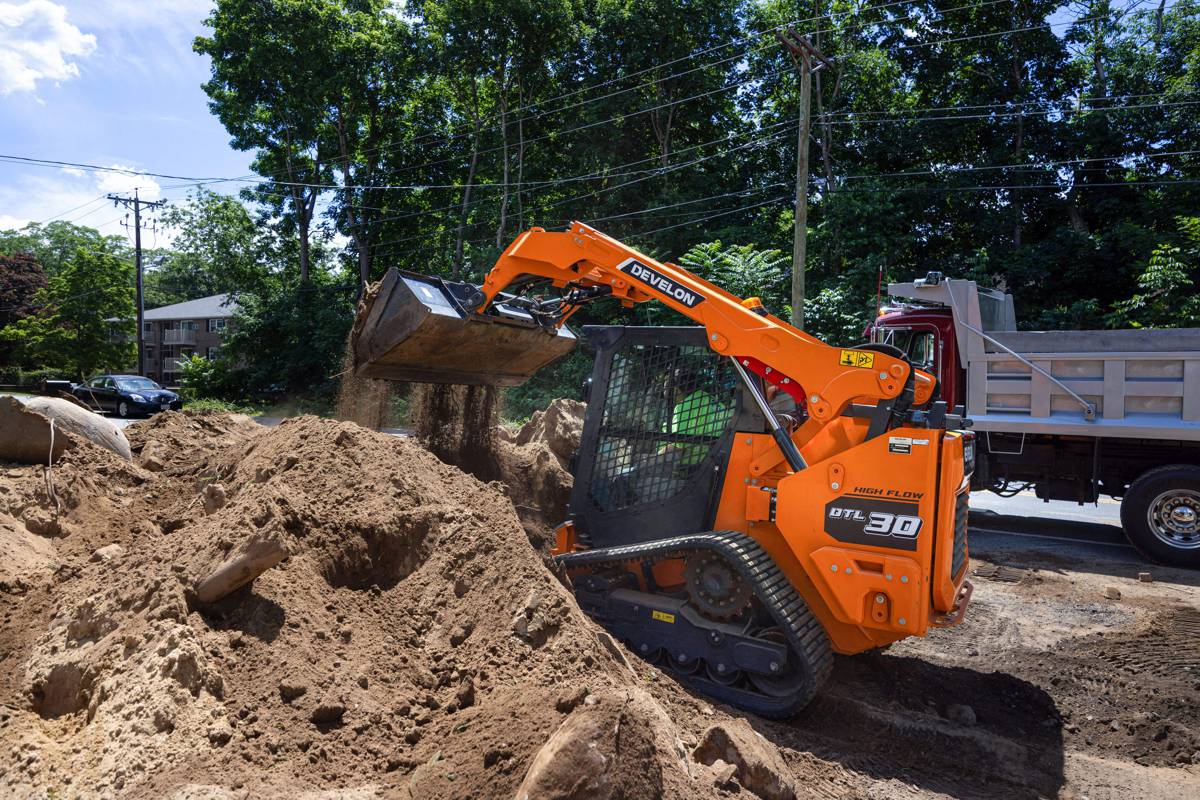
The clearest signal in this launch is that value in compact equipment is migrating from raw capability toward lifecycle simplicity, uptime and accessibility. A decade ago the marketing centred on horsepower and breakout force. Today the differentiators that move rental and contractor purchasing are the absence of a consumable, the width of a cab, the intelligence of an assist function and the number of service events a design can eliminate.
DEVELON’s DEF-free pair fits that reading almost exactly, and the fact that Bobcat and Kubota reached similar conclusions years earlier suggests the direction is structural rather than a single brand’s marketing angle. For infrastructure owners, contractors and fleet buyers, the practical lesson is that total cost of ownership and operator experience now deserve as much scrutiny at procurement as headline performance.
There is a longer-range tension worth watching. The sub-75-horsepower window that makes a DEF-free diesel possible is a product of current emissions rules, and those rules are under review. The California Air Resources Board has been developing a proposed Tier 5 framework aimed at further cutting nitrogen oxide and particulate emissions across off-road engine categories toward the end of the decade, which could eventually narrow or reshape the design space that manufacturers currently exploit beneath the 75-horsepower line.
That does not diminish the commercial logic of the DTL26 and DTL30 today, but it does mean the DEF-free advantage is a window rather than a permanent moat. For DEVELON, the more durable prize is what these machines do for its standing as a full-line manufacturer, giving its expanding dealer network a competitive product in the segment where compact equipment is bought most, and giving the brand a credible claim in a category it entered only two years ago.
Key Industry Questions
- What does removing diesel exhaust fluid actually save an owner or rental fleet? The saving is both direct and indirect. Directly, it removes the recurring cost of the fluid and the acquisition cost of the selective catalytic reduction hardware, including the tank, pumps, lines and injectors. Indirectly, and often more significantly, it removes a maintenance task and a set of failure modes. Operators no longer need to monitor a second fluid, and fleets avoid the derate events that occur when a DEF tank runs dry or the fluid is contaminated or frozen. In rental use, where machines pass through many hands, that reliability translates into higher uptime and fewer support calls, which is where the real margin protection lies rather than in the modest cost of the fluid itself.
- Why does the 75-horsepower threshold matter so much to compact machine design? The EPA’s Tier 4 Final standard treats engines differently by power band. Below 75 horsepower, manufacturers can generally comply using a passive diesel oxidation catalyst that needs no fluid or operator action. At or above 75 horsepower, meeting the same nitrogen oxide limits typically requires selective catalytic reduction, which depends on diesel exhaust fluid. That regulatory line creates a strong engineering incentive to hold power just beneath it, since doing so eliminates an entire aftertreatment system and its associated cost, complexity and maintenance. Several manufacturers deliberately tune engines to deliver flat torque up to that ceiling, capturing most of the useful work while avoiding the added hardware, which is precisely the approach DEVELON has taken with the D24 engine in these two loaders.
- How do the DTL26 and DTL30 fit against the existing DTL35? The three models now form a tiered family. The DTL35, launched in 2024, uses a 115.3-horsepower D34 engine shared with the DD100 dozer and sits above the emissions threshold, carrying the aftertreatment the smaller machines avoid. It targets high-horsepower grading, land clearing and forestry work. The DTL26 and DTL30 occupy the lower and middle capacity classes, with rated operating capacities of 2,600 and 3,000 pounds respectively, and prioritise simplicity and lower running complexity over peak power. In effect, DEVELON has separated a performance tier from a simplicity tier, allowing dealers to serve both the specialist land-clearing buyer and the far larger pool of general construction, landscaping and rental customers from a single product line.
- Which buyers is DEVELON really targeting with these models? The placement points clearly at rental fleets and general contractors rather than niche specialists. Rental now drives most compact equipment utilisation in North America, and rental economics reward machines that minimise misuse and downtime, which favours a design without a DEF system. The DTL26’s 2,600-pound capacity also lands in the fastest-growing capacity band, one populated heavily by landscaping, utility and site-preparation work that increasingly draws non-traditional buyers into the compact track loader category. By covering this mainstream demand rather than the extremes, DEVELON positions the machines where purchase volume is highest and where its growing dealer network can compete most effectively against established brands.
- Does dropping selective catalytic reduction mean the machines are less clean or non-compliant? No. Both machines meet the same EPA Tier 4 Final emissions standard as their higher-powered stablemates, using a diesel oxidation catalyst appropriate to their sub-75-horsepower rating. The regulation sets the environmental outcome, and the diesel oxidation catalyst is simply a different, passive route to compliance that suits smaller engines. The distinction is one of aftertreatment method rather than emissions performance, so buyers are not trading cleanliness for convenience. The commercial gain comes from removing the operational burden of a fluid-based system, not from relaxing the emissions ceiling the machine must meet.
- Could future emissions rules close the DEF-free window? It is a genuine possibility that fleet planners should keep in view. The sub-75-horsepower design space exists because current rules permit a passive aftertreatment route at that power level. The California Air Resources Board has been developing a proposed Tier 5 framework intended to reduce nitrogen oxide and particulate emissions further across off-road categories toward the end of the decade. Depending on its final form and adoption, a future standard could tighten requirements even for smaller engines and reshape the design choices manufacturers currently rely on. That would not affect machines already in service, but it means the DEF-free advantage should be treated as a current window rather than a permanent structural feature of the market.
- How does this affect DEVELON’s competitive position against Bobcat, Caterpillar, John Deere and Kubota? It narrows a gap rather than opening a lead. Bobcat and Kubota in particular have long marketed maintenance-free, sub-threshold compact machines, so DEVELON is matching an established value proposition rather than introducing a novel one. The significance is that DEVELON now competes credibly in the highest-volume compact track loader classes only two years after entering the category, giving its dealers a mainstream product to sell rather than ceding the value segment. Backed by a North American network of more than 200 dealer locations and a broader push toward full-line status, the launch strengthens DEVELON’s claim to be considered alongside the incumbents rather than as a peripheral option.
- What should rental companies weigh when adding these to a fleet? Rental buyers should look beyond purchase price to fleet-level operating economics. The removal of a DEF system reduces misuse-related downtime and simplifies the operator handover that rental depends on, which supports utilisation and residual reliability. The wide cab, standard rearview camera and Smart Assist functions lower the skill barrier for the varied operators a rental machine encounters, reducing damage and support calls. Against those gains, fleets should assess undercarriage and track replacement costs, which are a known long-term expense on any compact track loader, and confirm that the available configurations, from high-flow hydraulics to counterweights, match the attachment mix they intend to hire out. The strongest case for these machines is a high-turnover, mixed-operator fleet.
Strategic Takeaways
- Competitive advantage in compact equipment is shifting decisively from peak horsepower toward lifecycle simplicity, uptime and operator accessibility, and procurement decisions should now weight total cost of ownership and operator experience as heavily as headline performance.
- Engineering beneath the EPA Tier 4 Final 75-horsepower threshold has become a mainstream commercial strategy rather than a compromise, and buyers should expect more manufacturers to offer DEF-free options in the highest-volume compact classes.
- DEVELON’s placement of the DTL26 in the fastest-growing 2,000 to 2,999-pound capacity band signals a maturing challenger targeting the market’s centre of gravity rather than its margins, a move that raises the competitive stakes for incumbents in the value segment.
- Rental fleet economics, not individual contractor preference, increasingly dictate what compact machines get designed, and features that reduce misuse and downtime for inexperienced operators will keep gaining commercial weight.
- The DEF-free advantage rests on current emissions rules, so the prospect of a California Air Resources Board Tier 5 standard later this decade should be factored into long-term fleet and residual-value planning rather than assumed away.