Carbon-Fibre Dust Puts Electric Compressor Design to the Test at Hexcel
Electrifying industrial equipment becomes a rather different engineering proposition when conductive carbon-fibre dust is circulating through the building.
That was the problem facing composite materials manufacturer Hexcel when it needed to replace the standby compressed-air capacity at one of its production facilities. Previous electric compressors from other suppliers had suffered damage after carbon-fibre particles entered their components, while an ageing diesel backup unit was no longer operational. A rented compressor was keeping the contingency system available, but it was never intended to become a permanent answer.
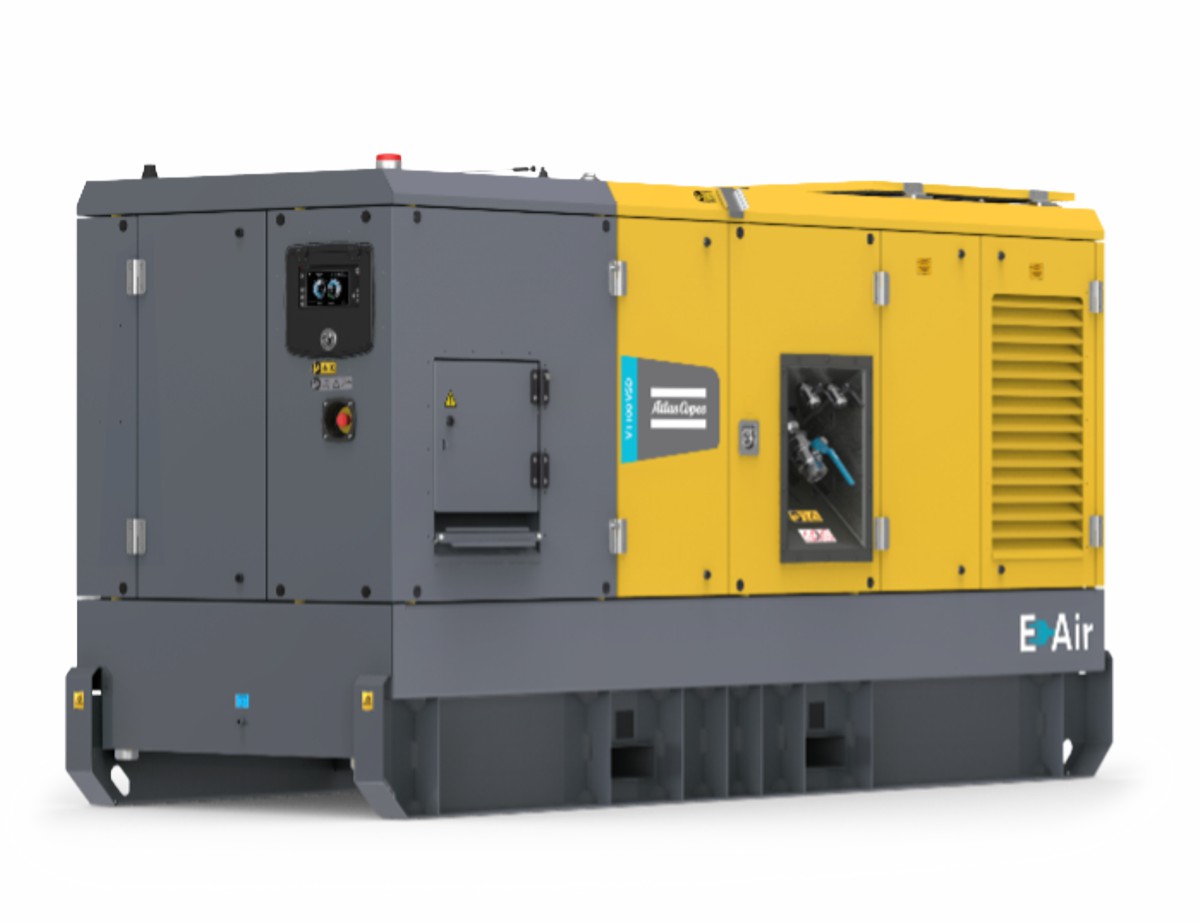
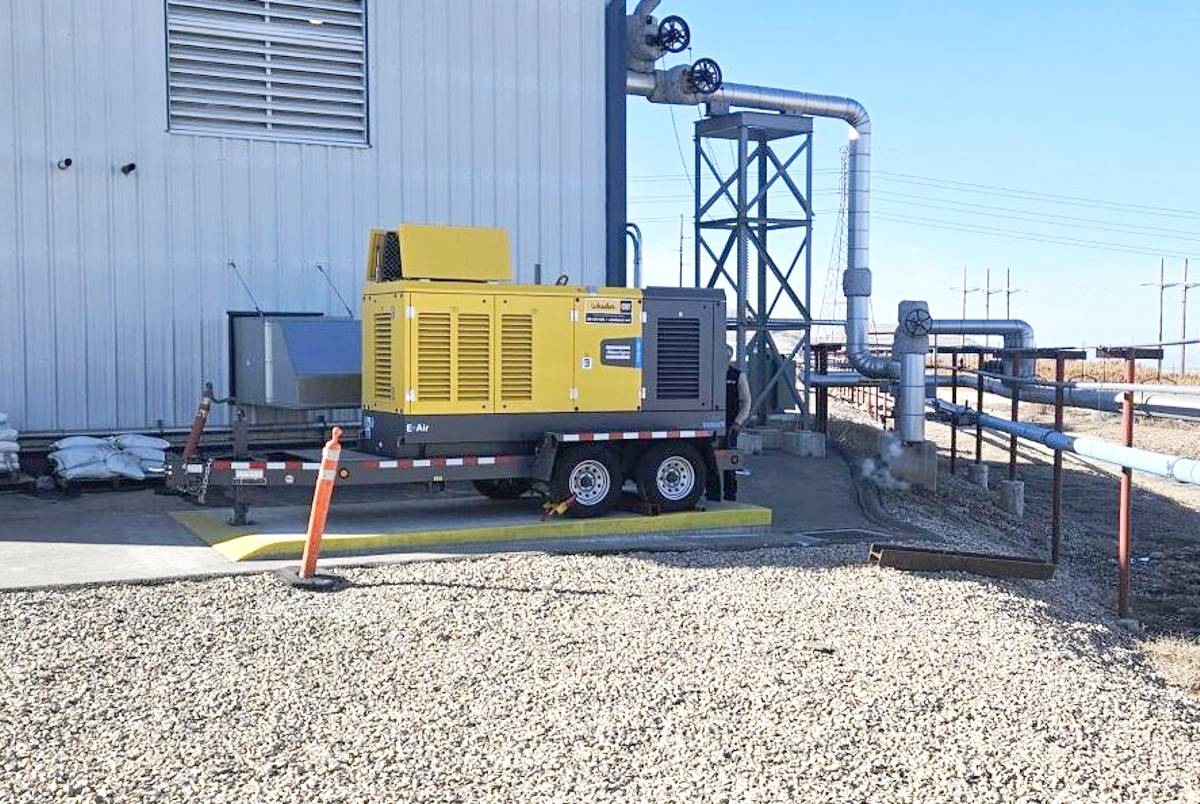
Hexcel ultimately returned to electric compression, installing an Atlas Copco E-Air V1100 VSD. The decision went beyond replacing diesel with electric power. The new compressor also had to survive the contamination that had contributed to previous failures.
Carbon fibre combines high strength and stiffness with low weight, making it important across aerospace, defence, space and industrial applications. It is also electrically and thermally conductive, giving fine airborne carbon-fibre material very different characteristics from ordinary mineral dust. For electrical equipment operating inside the plant, keeping that contamination away from vulnerable components becomes part of the reliability calculation.
Briefing
- Hexcel has installed an Atlas Copco E-Air V1100 VSD as standby compressed-air capacity at a carbon-fibre manufacturing facility.
- Previous electric compressors from other suppliers had been damaged after carbon-fibre particles entered their components.
- The E-Air V1100 VSD uses a water-cooled IP65 permanent-magnet motor and IP67 inverter.
- The 208 kW compressor operates across a 5 to 14 bar pressure range, with free-air delivery of 22.5 to 36.4 m³/min.
- The electric installation replaces an ageing diesel backup compressor and the temporary rented machine that had been covering the requirement.
The Contamination Problem
Compressed air can occupy an awkward position in a continuous manufacturing plant. It attracts little attention when the system is functioning properly, yet loss of air can interrupt equipment and processes distributed across a production line. Standby capacity therefore has to be available when the primary system is unavailable.
Hexcel had already installed a stationary compressor for its normal production requirements. The unresolved issue was redundancy. Its previous diesel standby compressor had reached the end of its useful role and was no longer operating, forcing the plant to rely temporarily on a rented conventional compressor.
A site assessment exposed another constraint. Fine carbon-fibre dust was present in the production environment, and Hexcel reported that particles had previously penetrated and damaged electric compressors supplied by other manufacturers. That experience made the company cautious about choosing another electric machine, particularly because conductive material presents an additional risk around electrical and electronic components.
The specification therefore extended beyond the power source. A diesel compressor avoided some of the electrical architecture associated with a large electric drive, but brought an engine, fuel system, exhaust and corresponding servicing requirements. An electric replacement could remove several of those elements, provided its motor and power electronics were sufficiently protected from the surrounding environment.
Protecting the Electric Drive
Atlas Copco’s E-Air V1100 VSD is built around a 208 kW permanent-magnet electric motor rather than an internal-combustion engine. The motor is water-cooled and carries an IP65 enclosure rating, while the water-cooled inverter is rated IP67.
Under the IEC enclosure classification system, the first digit indicates protection against solid-particle ingress and the second protection against water. Both IP65 and IP67 carry the highest solid-particle ingress classification under the system, making the protection of the motor and inverter directly relevant to an application where fine airborne contamination had previously reached electric equipment.
The cooling architecture also plays a role. The V1100 uses water cooling for both its permanent-magnet motor and inverter, while a variable-speed fan manages cooling airflow through the compressor package. Atlas Copco also equips the unit with heavy-duty air filtration, an after-cooler and water separator, and specifies a maximum ambient temperature of 45°C when the after-cooler is fitted.
None of that makes the complete compressor immune to its surroundings. Compressors inherently move large quantities of air and still require appropriate filtration, inspection and maintenance. The design instead protects major electrical components that would be particularly vulnerable if conductive particles were allowed to enter their enclosures.
Compressed-Air Capacity
The E-Air V1100 VSD operates across a working-pressure range of 5 to 14 bar, with free-air delivery ranging from 36.4 m³/min at the lower end of that range to 22.5 m³/min at higher pressure. Atlas Copco quotes a sound-pressure level of 70 dB(A) at seven metres.
Variable-speed drive allows the motor speed and compressor output to respond to air demand rather than relying on continuous fixed-speed operation. That flexibility suits a standby machine that may be required to accommodate changing production requirements rather than operate continuously at maximum output.
Atlas Copco claims energy savings of up to 50% for the V1100 compared with a comparable compressor operating unloaded. The comparison is specific to that operating condition and should not be read as a blanket 50% reduction against every alternative compressor. Actual consumption will depend on pressure, air demand, utilisation and the machine being displaced.
For Hexcel, the operational change is broader than energy consumption. An electric standby compressor does not require diesel deliveries, refuelling or engine servicing, and produces no local combustion exhaust. Those advantages come with a different dependency: the availability of sufficient electrical infrastructure.
A backup compressor connected to the same electrical supply as the primary equipment cannot provide protection against every form of plant-wide power failure. The project information does not specify how Hexcel has configured electrical redundancy at the facility, so the installation is best understood as standby compressed-air capacity rather than complete utility resilience.
Operating in a Carbon-Fibre Plant
Industrial electrification is frequently assessed through energy consumption, emissions and maintenance, but the physical operating environment can determine whether an electric machine is suitable in the first place. Modern variable-speed equipment combines motors with inverters, sensors and control electronics, making enclosure protection, cooling and filtration part of the specification alongside power and output.
Hexcel had already encountered that distinction. Previous electric compressors had been damaged by contamination, so returning to electric power required confidence that the replacement machine addressed the failure mode rather than simply offering a different source of energy.
There are operational advantages once that hurdle is cleared. Electric drive removes diesel refuelling and local engine exhaust, while also eliminating a number of engine-related service requirements. For standby equipment, however, utilisation may be relatively low and the value of dependable redundancy can outweigh straightforward calculations based on energy consumption alone.
At Hexcel, the previous diesel machine could no longer provide that redundancy and the rented compressor remained a temporary arrangement. According to the supplied project information, the E-Air V1100 has operated successfully in the carbon-fibre environment since installation.
Hexcel’s previous experience meant another electric compressor had to earn its place on engineering rather than emissions credentials. The protected motor and inverter addressed the contamination problem that had damaged earlier machines, allowing the plant to return to electric standby compression without ignoring the conditions that had made the earlier installations troublesome.
In this application, electrification only became practical once the machine was designed around the environment in which it had to work.
Key Industry Questions
- Why is carbon-fibre dust difficult for electrical equipment? Carbon fibres are electrically conductive. Fine particles entering inadequately protected electrical or electronic components can therefore create contamination and reliability problems beyond those associated with ordinary non-conductive dust.
- What compressor did Hexcel install? Hexcel selected the Atlas Copco E-Air V1100 VSD electric rotary-screw compressor as standby capacity for its existing stationary compressed-air system.
- How powerful is the E-Air V1100 VSD? The compressor uses a 208 kW permanent-magnet motor and provides between 22.5 and 36.4 m³/min of free-air delivery across a working-pressure range of 5 to 14 bar.
- How are the electrical components protected? Atlas Copco specifies a water-cooled IP65 permanent-magnet motor and water-cooled IP67 inverter. Both carry the highest solid-particle ingress classification under the IP system.
- Why did Hexcel replace its diesel compressor? The existing diesel backup compressor was ageing and no longer operational. Hexcel had been using a rented compressor while looking for permanent standby capacity.
- Why use variable-speed drive on an air compressor? Variable-speed drive allows motor speed and compressor output to respond more closely to air demand. This can reduce energy consumed during periods when full compressor output is unnecessary.
- Does an electric compressor eliminate maintenance? No. Electric drive removes engine-related servicing and refuelling, but the compressor still requires filtration, cooling-system attention, inspection and scheduled maintenance.
- Can an electric compressor provide emergency backup during a power failure? Only if the electrical infrastructure supplying it remains available. An electrically driven backup compressor connected to the same failed power source cannot provide complete resilience against a site-wide electrical outage.
Strategic Takeaways
- Conductive dust can make enclosure protection and cooling architecture central to the specification of electrically driven industrial machinery.
- Hexcel’s previous contamination problems made equipment protection a procurement requirement rather than a theoretical specification.
- IP ratings apply to specified components. The V1100’s IP65 motor and IP67 inverter should not be interpreted as making the complete compressor immune to its operating environment.
- Variable-speed electric compression can reduce unloaded operation where air demand varies, but energy performance depends on the actual duty cycle.
- Standby equipment needs to be considered as part of the wider resilience system because replacing diesel with electric power changes the dependencies behind emergency compressed-air capacity.