HKX Brings Field-Installed Hydraulics to Wheel Loaders
Ordering a wheel loader with auxiliary hydraulics can mean a factory lead time of 12 to 20 weeks, according to HKX. The company’s first field-installable hydraulic kits for wheel loaders are designed to move that configuration work from the factory to the dealer workshop, allowing machines already in stock to be equipped for attachments when the customer and application are known.
The initial third-spool kits cover the Komatsu WA200-8, WA270-8, WA320-8 and WA380-8, with the WA475-11 to follow. For HKX, the launch also represents its first move into wheel loaders after more than three decades developing auxiliary hydraulic systems primarily for excavators.
For dealers, the proposition goes beyond reducing the wait for an equipped machine. Rather than holding differently specified loaders and attempting to anticipate which attachments future customers will need, a dealer can carry a simpler base machine and add hydraulic capability when required.
Briefing
- HKX has launched its first auxiliary hydraulic kit range specifically for wheel loaders.
- Initial coverage includes the Komatsu WA200-8, WA270-8, WA320-8 and WA380-8.
- The company says factory lead times for loaders specified with auxiliary hydraulics can reach 12 to 20 weeks.
- The third-spool kits use an external bolt-on valve and integrate with existing machine controls.
- HKX plans a kit for the Komatsu WA475-11, while fourth and fifth spool options are under development.
Configuring Dealer Stock
Wheel loaders have become versatile attachment carriers. Beyond conventional buckets and forks, machines can work with grapples, screening buckets, brooms, snow equipment, mowers and other hydraulically powered tools. That flexibility depends on having the appropriate hydraulic services available at the front of the machine.
For an owner buying against a known application, specifying those requirements when ordering the loader is straightforward. Dealers carrying inventory face a different calculation because they have to anticipate what an eventual customer will want, sometimes months before that customer appears.
A loader equipped for a specialised application consumes inventory capital while waiting for a buyer who needs that specification. An unequipped machine has a potentially wider market but may be unable to satisfy a customer who needs additional hydraulic capability immediately. Field installation allows the dealer to postpone that decision, keeping the base machine available to a broader range of buyers until a specific requirement emerges.
Robert Burnett, vice president and general manager of HKX, said lead time has repeatedly emerged as the constraint in conversations with dealers.
“Dealers have told us for years that lead time is the constraint, not the hardware,” said Robert Burnett, vice president and general manager of HKX. “A loader sitting on the lot is a versatile machine if you can equip it quickly. These kits let a dealer say yes to a customer this month instead of pointing at a plant schedule, and they let that dealer stock a simpler machine that stays sellable to everyone.”
The approach may be particularly useful where attachment demand varies with season or local industry. Snow removal, vegetation management, material handling, recycling, quarrying and construction can require very different tools from essentially the same loader platform. Delaying part of the specification until the machine has an identified job reduces how much of that demand a dealer has to predict.
External Hydraulic Architecture
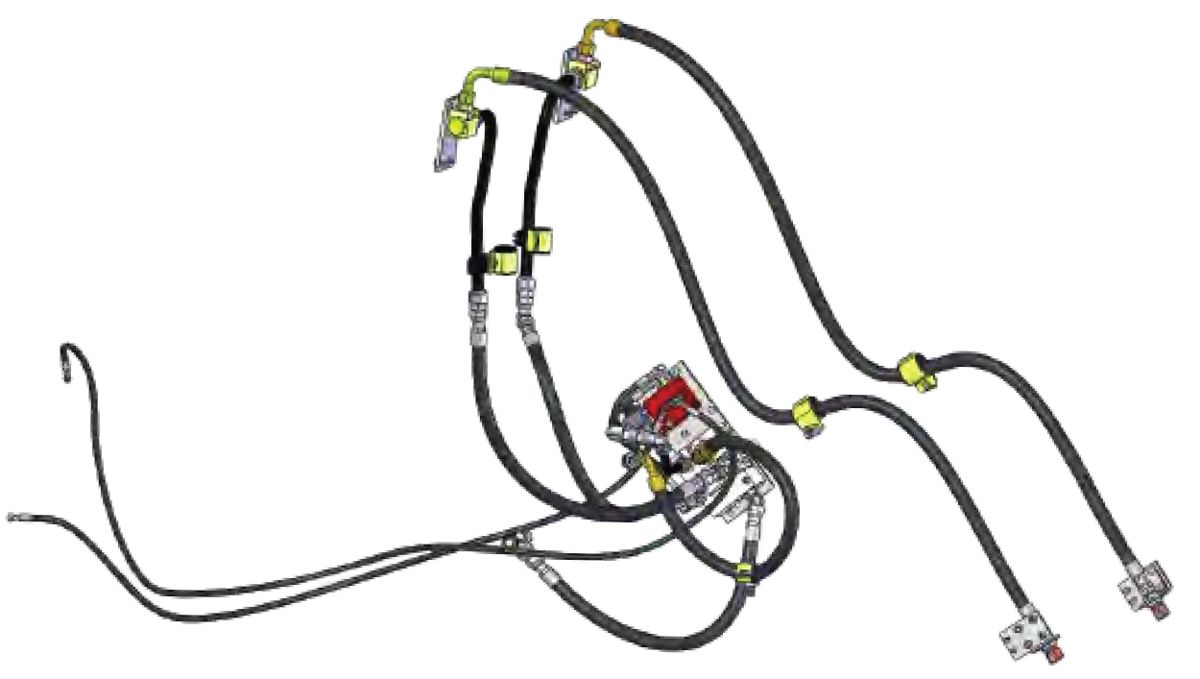
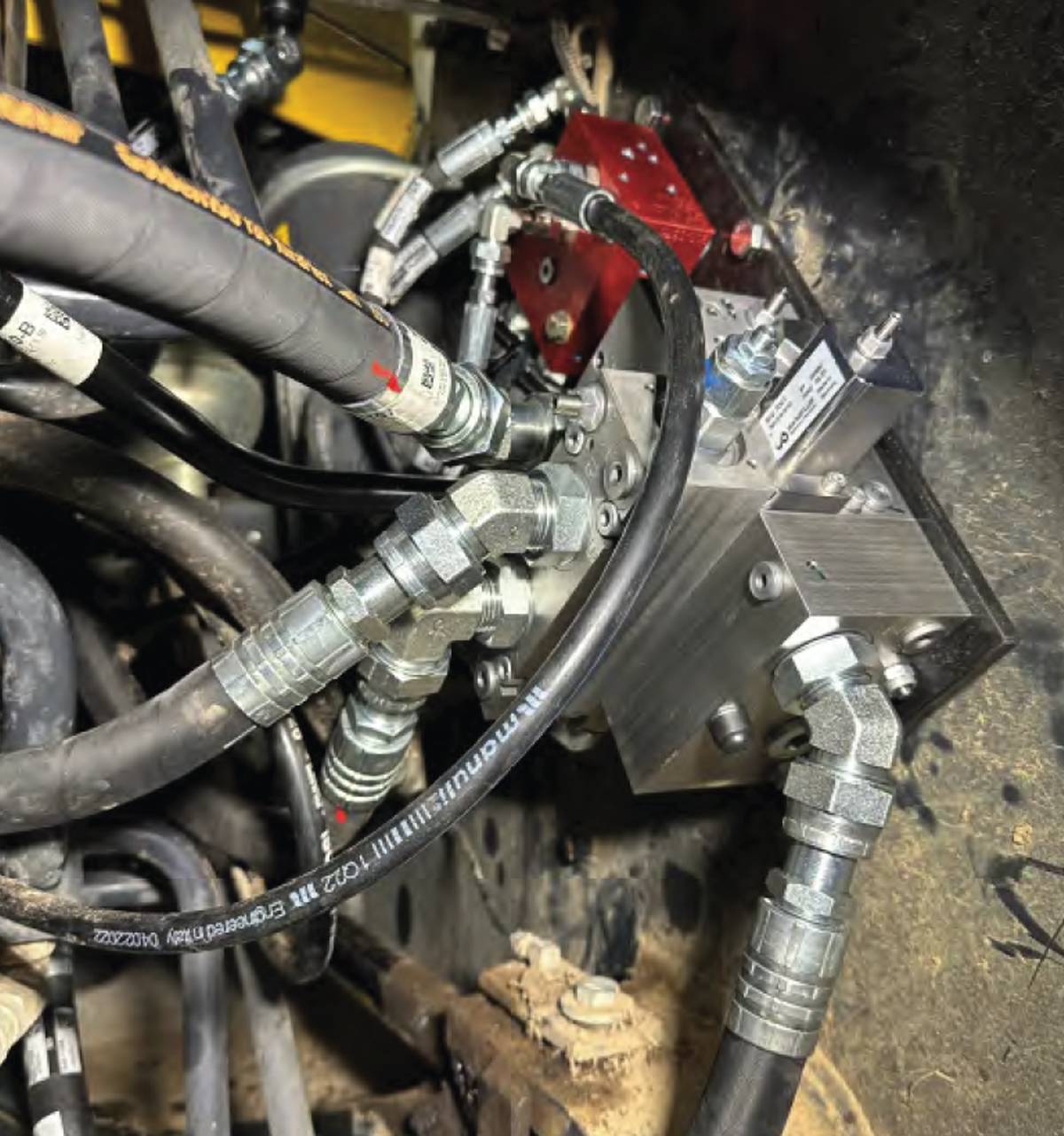
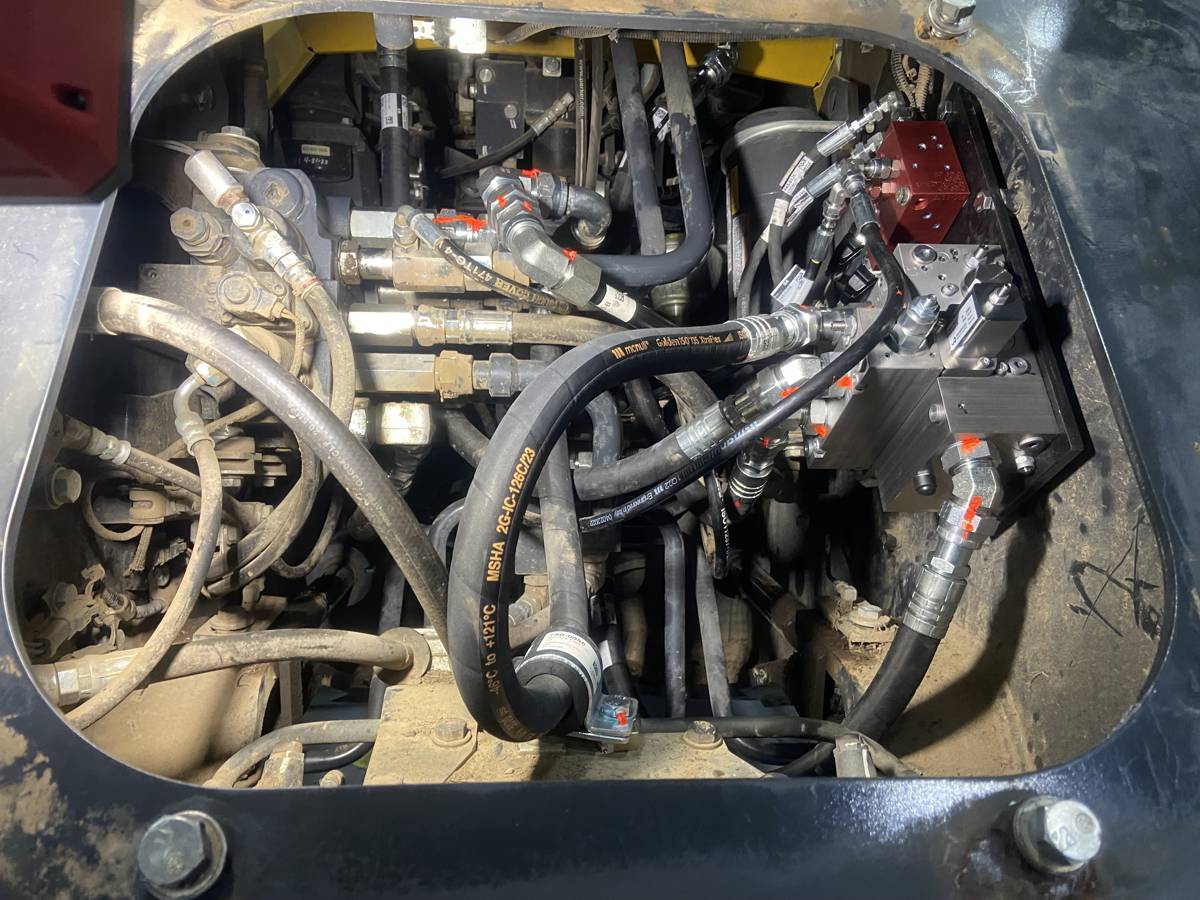
The engineering is deliberately designed around field installation rather than major intervention in the loader’s original hydraulic system. According to HKX, the kit uses a bolt-on external valve fitted at existing OEM mounting locations, so the loader’s main control valve does not have to be removed or opened during installation.
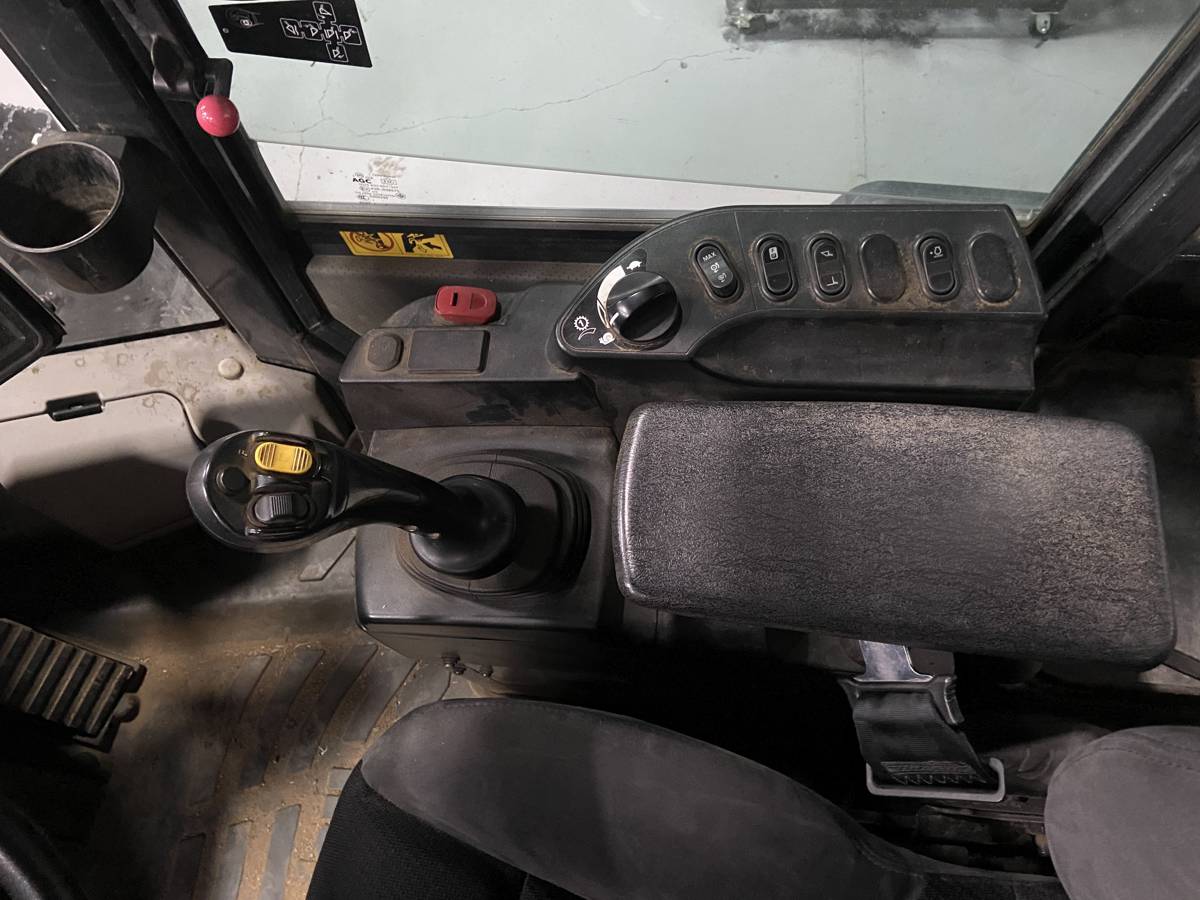
Controls connect to the existing joystick and proportional control switch, while hydraulic flow is adjusted through the machine’s operator monitor rather than through a separate control box installed in the cab. The additional function also receives adjustable relief protection, and kits are supplied pre-assembled with installation and parts documentation.
This architecture follows principles HKX already applies to its excavator products. The company’s established kits integrate attachment hydraulics with the host machine and cover applications including breakers, thumbs, shears and rotating attachments across numerous machine manufacturers and size classes.
Keeping the main control valve closed limits the extent of the intervention required during installation, an important consideration for a product intended to be fitted in dealer workshops. Integration with the existing joystick and operator monitor also avoids adding a separate control interface purely for the auxiliary circuit.
The unanswered question is how much workshop time the installation requires across different loader platforms. HKX has not provided installation-hour figures, so the comparison between days and months is best understood in relation to factory ordering lead times rather than as a specific workshop labour claim.
Komatsu Models Lead the Roll-out
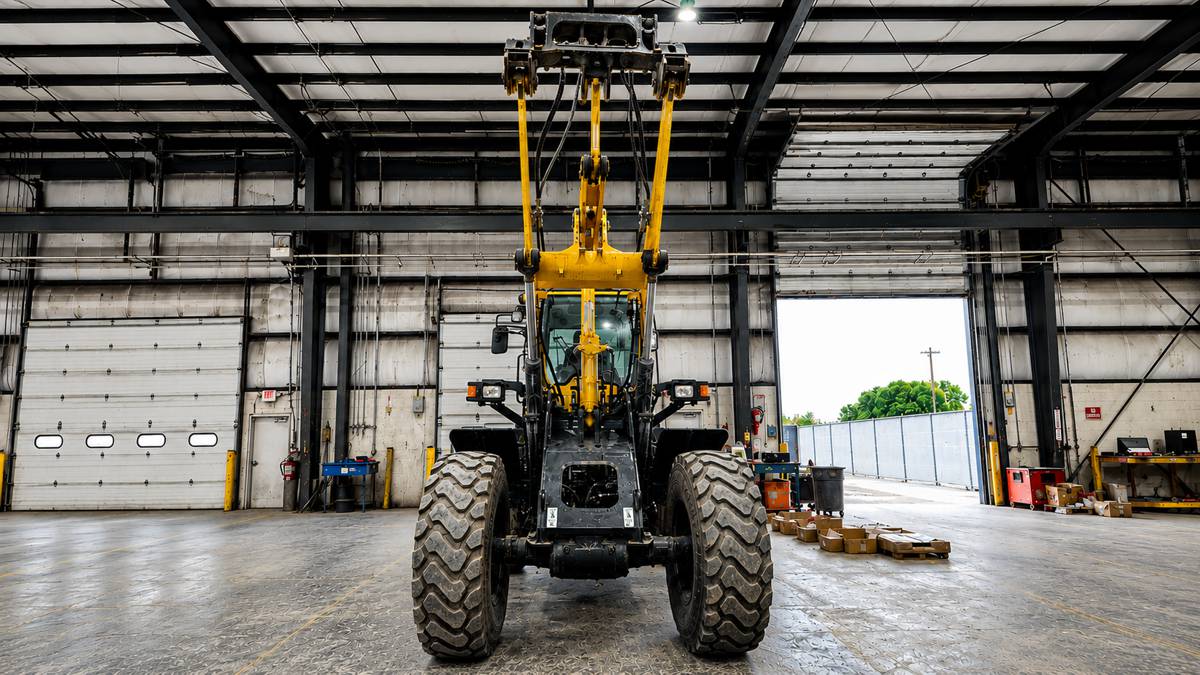
Initial availability covers the Komatsu WA200-8, WA270-8, WA320-8 and WA380-8. A kit for the WA475-11 is scheduled to follow, while HKX is also developing fourth and fifth spool configurations for applications requiring additional hydraulic functions.
Optional jumper-hose subkits with quick-disconnect terminals are available. HKX identifies potential applications including rollout buckets, grapples, bucket screeners, snow blowers, brooms, mowers and hammers.
Komatsu is familiar territory for the company. HKX has an established auxiliary hydraulic kit portfolio for Komatsu excavators, alongside systems for machines from other major manufacturers. Moving into loaders extends that field-install approach into a different machine category while retaining much of the company’s existing focus on attachment hydraulics and dealer installation.
The initial loader range is nevertheless relatively narrow. Each additional platform brings its own hydraulic architecture, mounting arrangements, controls and operating interface, so expanding the catalogue involves more than adapting hose lengths or brackets from one model to another.
Parts and Dealer Support
A field-installable system only addresses the lead-time problem if the kit and subsequent replacement components are available when needed. HKX says nearly all replacement parts are available for same-day shipment and backs the loader kits with a one-year warranty and lifetime technical support.
The company’s existing support operation includes application verification, kit-selection assistance and installation support. Those services become more important as the loader portfolio expands because dealers need to establish that the machine, hydraulic circuit and intended attachment are correctly matched before installation.
There is also a longer-term consideration. A loader may work with several attachments during its service life, particularly when machines move between owners, applications or seasonal duties. A retrofit hydraulic system therefore has to remain supportable well after the initial configuration has left the dealer workshop.
Expanding Beyond Excavators
The loader kits take HKX beyond the excavator market that has formed the core of its business since the company was founded in 1993. Rather than announcing a broad development timetable, HKX is asking dealers to identify the makes, models and size classes they want supported next.
That feedback can give the company a clearer basis for deciding where engineering resources should go. Developing a kit for another loader platform requires integration with the machine’s hydraulics, electronic controls, mounting locations and operator interface, making demand for individual models relevant to the order in which the range expands.
For equipment distributors, the attraction is less about adding another option to a specification sheet than separating two decisions that have traditionally been made together: buying the loader and deciding exactly how it will be used.
The machine can arrive first. Some of its final hydraulic capability can wait until the job is known.
Key Industry Questions
- What is a third-spool hydraulic function on a wheel loader? It provides an additional controllable hydraulic circuit for attachments requiring hydraulic power beyond the loader’s primary lift and tilt functions.
- Which wheel loaders are covered by the first HKX kits? Initial coverage includes the Komatsu WA200-8, WA270-8, WA320-8 and WA380-8. HKX says the WA475-11 will follow.
- Why would a dealer install auxiliary hydraulics rather than order them from the factory? Field installation allows a dealer to configure an existing stock machine after the customer’s attachment requirements are known, potentially avoiding the lead time associated with ordering another factory-equipped loader.
- How long does factory ordering take? HKX says ordering a wheel loader with auxiliary hydraulics from the factory can involve a plant lead time of 12 to 20 weeks. Actual lead times will depend on manufacturer, model, specification and market conditions.
- Does installation require opening the loader’s main hydraulic control valve? HKX says its design uses an external bolt-on valve mounted at existing OEM locations, so the main control valve does not need to be removed or opened.
- What attachments can use the additional hydraulic function? HKX identifies applications including rollout buckets, grapples, bucket screeners, snow blowers, brooms, mowers and hammers. Compatibility still depends on the hydraulic requirements of the individual attachment and machine.
- Are more hydraulic functions planned? Yes. HKX says fourth and fifth spool options are under development.
- Will HKX offer kits for wheel loader brands other than Komatsu? No additional manufacturers have been confirmed in the supplied material. HKX is asking dealers for feedback on the makes, models and size classes that should be prioritised for future development.
Strategic Takeaways
- Field-installed auxiliary hydraulics allow part of a wheel loader’s final specification to be deferred until an application is known.
- Dealers can potentially reduce the need to carry multiple stock machines differentiated primarily by hydraulic options.
- Integration with existing controls and external mounting are central to making retrofit installation practical at dealership level.
- The wheel loader range gives HKX a route beyond its established excavator-focused product base.
- Dealer demand will influence which loader platforms receive kits next, tying development priorities to identifiable machine populations and attachment requirements.