Baku Metro Secures $302 Million for Signalling and Digital Modernisation
Baku Metro is preparing to add approximately 20 kilometres of tunnels, nine stations and 300 additional metro cars to its network, but the expansion also requires a substantial overhaul of the systems controlling the existing railway. The Asian Development Bank (ADB) has approved a $302.38 million loan towards a $515.07 million programme to modernise signalling, train control and digital operations across Azerbaijan’s capital.
The investment will introduce communications-based train control (CBTC), upgrade the network’s operations control centre and establish integrated digital systems covering maintenance, passenger information, cybersecurity and corporate operations. The work forms part of Azerbaijan’s wider $2.6 billion metro expansion programme, intended to increase public transport capacity and reduce pressure on Baku’s congested roads.
The ADB-financed project will also receive support from the Asian Infrastructure Investment Bank (AIIB) and the Government of Azerbaijan.
“Advanced signaling technology and integrated digital operations systems will make existing services safer and more reliable, while laying the foundation for the efficient operation of Baku’s rapidly expanding metro network,” said ADB Country Director for Azerbaijan Sunniya Durrani-Jamal.
Briefing
- ADB has approved a $302.38 million loan for Baku Metro signalling modernisation and operational digitalisation.
- The $515.07 million project forms part of Azerbaijan’s wider $2.6 billion metro expansion programme.
- The existing network comprises 27 stations and approximately 41 kilometres of track, carrying 220.4 million passenger boardings in 2025.
- Communications-based train control, upgraded control facilities and integrated digital systems will support more frequent and reliable services.
- The wider expansion includes approximately 20 kilometres of tunnels, nine stations, two depots and 300 additional metro cars.
Modernising Train Control for a Larger Network
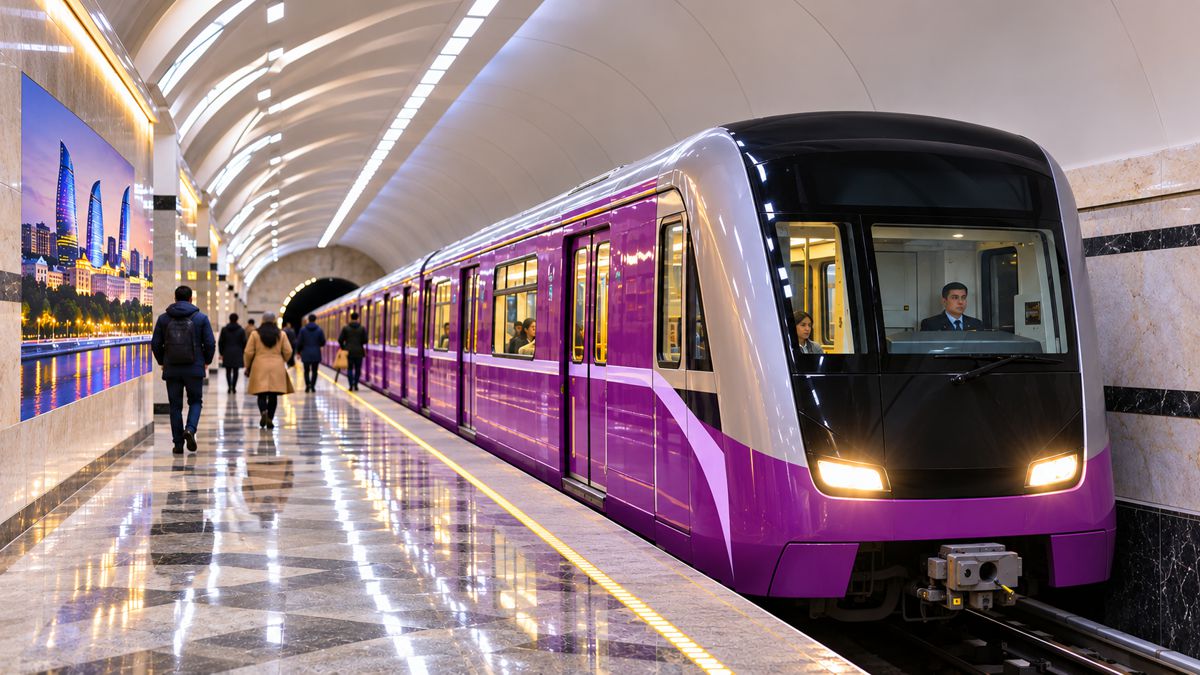
Baku Metro is operated by the state-owned Baku Metropolitan Closed Joint-Stock Company and provides an important alternative to road transport in Azerbaijan’s capital. Its 27 stations serve an established urban network that must continue operating while substantial extensions and infrastructure improvements are developed.
The government’s expansion programme includes approximately 20 kilometres of new tunnels, nine additional stations, two depots and 300 metro cars. These investments are intended to extend rail coverage, accommodate additional passengers and reduce pressure on the city’s roads.
Increasing the number of stations and trains also places greater demands on signalling, traffic management and maintenance. Train movements must be coordinated across existing and new infrastructure, particularly where services share tracks or junctions. An expanded fleet also requires additional depot capacity and operational oversight.
The central technical component of the ADB-financed project is the introduction of communications-based train control.
CBTC systems use continuous communication between trains and trackside or central control equipment to support train localisation, movement supervision and safe separation. Depending on the system architecture and operating requirements, they can allow trains to run at shorter intervals than conventional fixed-block signalling arrangements.
For Baku Metro, the replacement is expected to support more frequent services during peak periods while reducing incidents that interrupt operations. The project also includes an upgrade of the operations control centre, where train movements, service regulation and responses to operational incidents can be coordinated.
An ADB project preparation document identifies an anticipated reduction in train intervals from two minutes to one minute and 45 seconds as part of the wider investment programme. It also describes a potential increase in annual system capacity of approximately 25 million passengers.
These are programme-level expectations rather than demonstrated results from the new signalling system. Actual operating intervals will depend on the completed infrastructure, rolling stock performance, station dwell times, junction arrangements and commissioning.
Modernising signalling on an operating metro requires careful integration with existing equipment and procedures. Installation, testing and migration must be planned around passenger services, while the upgraded control system must ultimately operate across both existing lines and future extensions.
Integrating Maintenance and Passenger Operations
The investment extends considerably beyond train control.
Baku Metro will introduce integrated digital systems for asset management, corporate operations, passenger information and crowd management, supported by upgraded data centres and secure communications infrastructure.
Digital asset management can provide a consolidated record of equipment condition, inspection histories, maintenance activities and replacement requirements. For a metro operator managing track, rolling stock, electrical equipment, signalling and station facilities, these records can support more systematic maintenance planning and resource allocation.
Passenger information and crowd management systems will also be upgraded, allowing operational staff to work with more consistent information about services and conditions across the network.
The programme includes cybersecurity measures intended to protect the railway’s increasingly connected operational and enterprise systems. As signalling, control centres and maintenance platforms become more integrated, network security and access management become essential parts of operational reliability.
ADB also expects the digital investment to improve energy efficiency, although the announced project information does not establish a quantified energy-saving target attributable specifically to the modernisation.
Financing and Procurement
The $515.07 million project will be financed through three contributions:
| Financing Source | Amount |
|---|---|
| Asian Development Bank | $302.38 million |
| Asian Infrastructure Investment Bank | $79.98 million |
| Government of Azerbaijan | $132.71 million |
| Total | $515.07 million |
ADB is providing approximately 59% of the project’s estimated funding, with AIIB contributing around 16% and the Azerbaijani government approximately 26%.
The ADB project documentation identifies procurement activities associated with the programme, covering goods and consulting services under the bank’s applicable procurement framework. AIIB cofinancing will be partially administered by ADB, with universal procurement applying to the relevant contracts.
Earlier market engagement activity sought interest from railway signalling suppliers, systems integrators, digital platform providers and specialist consultants. The project brings together several disciplines, including railway signalling, telecommunications, control centre technology, data infrastructure and enterprise software.
Procurement and implementation arrangements will need to coordinate these disciplines with the physical railway expansion, particularly where new signalling interfaces must be compatible with infrastructure delivered under separate contracts.
The ADB project page provides access to procurement documentation and notices, although the availability of individual contract opportunities should be confirmed against the latest published information.
Developing Operational and Technical Capacity
Baku Metro’s modernisation programme also includes workforce development and institutional strengthening.
Technical training will support the introduction and operation of the new systems, while recruitment, certification and career development measures are intended to increase women’s participation in technical and digital roles.
The ADB project documentation identifies a target for women to account for at least 30% of new hires associated with the project’s employment measures.
The introduction of CBTC and integrated digital operations will require skills extending beyond traditional railway maintenance. Personnel will need to manage software-dependent equipment, communications networks, cybersecurity requirements and digital asset information alongside established mechanical and electrical systems.
Training and technical support will form part of the transition from existing operating arrangements to the new infrastructure.
Coordinating the Wider Metro Expansion
The signalling and digitalisation project is one component of a larger investment programme intended to increase the capacity and geographical reach of Baku’s urban railway.
AIIB has approved $180 million for the first phase of Baku Metro’s expansion, covering depot development and improvements to existing stations.
Its published Green Line expansion documentation also identifies connected investments in depot development, Green Line and Purple Line extensions, rolling stock renewal and the ADB-financed digital modernisation.
These components are being advanced through separate financing and implementation arrangements. The expansion will introduce new routes, additional rolling stock and depot facilities, while the modernisation programme will provide the signalling and operational systems needed to manage the larger network.
The practical challenge will be coordinating construction, rolling stock delivery, signalling installation and commissioning while maintaining services across the existing railway. Each element has its own technical requirements and delivery programme, but the completed network must operate as a single system.
Key Industry Questions
- How much is being invested in Baku Metro’s digital modernisation? The project has an estimated cost of $515.07 million, including a $302.38 million ADB loan, $79.98 million in AIIB cofinancing and $132.71 million from Azerbaijan’s government.
- What is communications-based train control? CBTC is a railway signalling technology that uses continuous communications to supervise train movements and maintain safe separation. It can support shorter operating intervals and more flexible train management.
- How large is Baku Metro’s existing network? The network has 27 stations and approximately 41 kilometres of track. It recorded around 220.4 million passenger boardings in 2025.
- What infrastructure is planned under the wider expansion programme? The programme includes approximately 20 kilometres of new tunnels, nine stations, two depots and 300 additional metro cars.
- Will the modernisation increase train frequency? The project is intended to support more frequent peak-hour services. Programme preparation documents identify a potential reduction in train intervals from two minutes to one minute and 45 seconds, subject to implementation and operating conditions.
- Which digital systems will be upgraded? The programme covers signalling, operations control, asset management, cybersecurity, passenger information, crowd management, enterprise systems and supporting data infrastructure.
- Are there procurement opportunities for international suppliers? ADB has published project and procurement documentation covering goods and consulting services. Specific opportunities and deadlines should be checked through the bank’s official procurement notices.
- How does the investment relate to Baku’s road congestion? The wider metro expansion is intended to increase public transport coverage and capacity, providing an alternative to private vehicle travel across the greater Baku area.
Strategic Takeaways
- CBTC modernisation is being coordinated with physical network expansion to accommodate additional trains and passenger demand.
- The $515.07 million project combines railway control technology with wider operational and enterprise digitalisation.
- Signalling integration and commissioning will be important dependencies as new lines and rolling stock enter service.
- The financing structure brings together ADB, AIIB and national government funding within a larger, multi-project infrastructure programme.
- Procurement covers specialist railway systems and digital technologies, with operational training included in the investment scope.