World of Concrete Europe 2027 Turns Attention to Concrete Manufacturing
World of Concrete Europe will return to Paris in April 2027 with a planned 200 exhibitors and a technical programme examining how concrete is manufactured, specified and used. Held alongside INTERMAT, the fourth edition will bring together materials suppliers, production equipment manufacturers and construction specialists as the industry works to reduce emissions, improve manufacturing efficiency and make greater use of recycled resources.
Taking place from 21 to 24 April at Paris-Nord Villepinte, the event will combine an exhibition, a three-day technical forum and an outdoor demonstration area. Its programme reflects the increasingly close relationship between material formulation, industrial production methods and the environmental performance of completed structures.
Briefing
- World of Concrete Europe takes place from 21 to 24 April 2027 at Paris-Nord Villepinte, alongside INTERMAT.
- Organisers are planning for 200 exhibitors covering concrete materials, manufacturing equipment, applications and technologies.
- A three-day forum will examine decarbonisation, industrialised construction, circular materials, climate resilience and workforce development.
- Technical discussions will cover alternative binders, clinker reduction, automation, prefabrication, digital twins and recycled aggregates.
- An outdoor demonstration zone and a dedicated World of Concrete Europe Innovation Award will complement the exhibition.
Reducing Carbon Without Compromising Concrete Performance
Reducing the environmental footprint of concrete remains a substantial technical challenge, particularly where alternative formulations must meet demanding structural and durability requirements.
Much of the challenge begins with cement production, particularly the manufacture of clinker. Reducing clinker content through supplementary cementitious materials and alternative binders offers one route towards lower-carbon concrete, although the suitability of different formulations depends on their mechanical properties, durability, availability and intended application.
The World of Concrete Europe Forum will examine clinker reduction, new binders, carbon capture, process electrification and improved concrete formulations. Discussions will also consider how material optimisation can reduce environmental impacts over the lifetime of a building or infrastructure asset.
For concrete producers, changes in formulation extend beyond laboratory testing. New material combinations must remain compatible with batching equipment, mixing processes, quality-control procedures and delivery requirements. Performance during placement and curing can be as commercially important as the properties of the hardened concrete.
The programme will include an economic discussion covering investment, public procurement, competitiveness and the distribution of costs and benefits across the supply chain. These considerations are particularly relevant where lower-carbon materials require additional processing, new equipment or changes to established specifications.
The ability to produce consistent results at commercial scale remains central to their wider adoption.
Industrialising Concrete Production
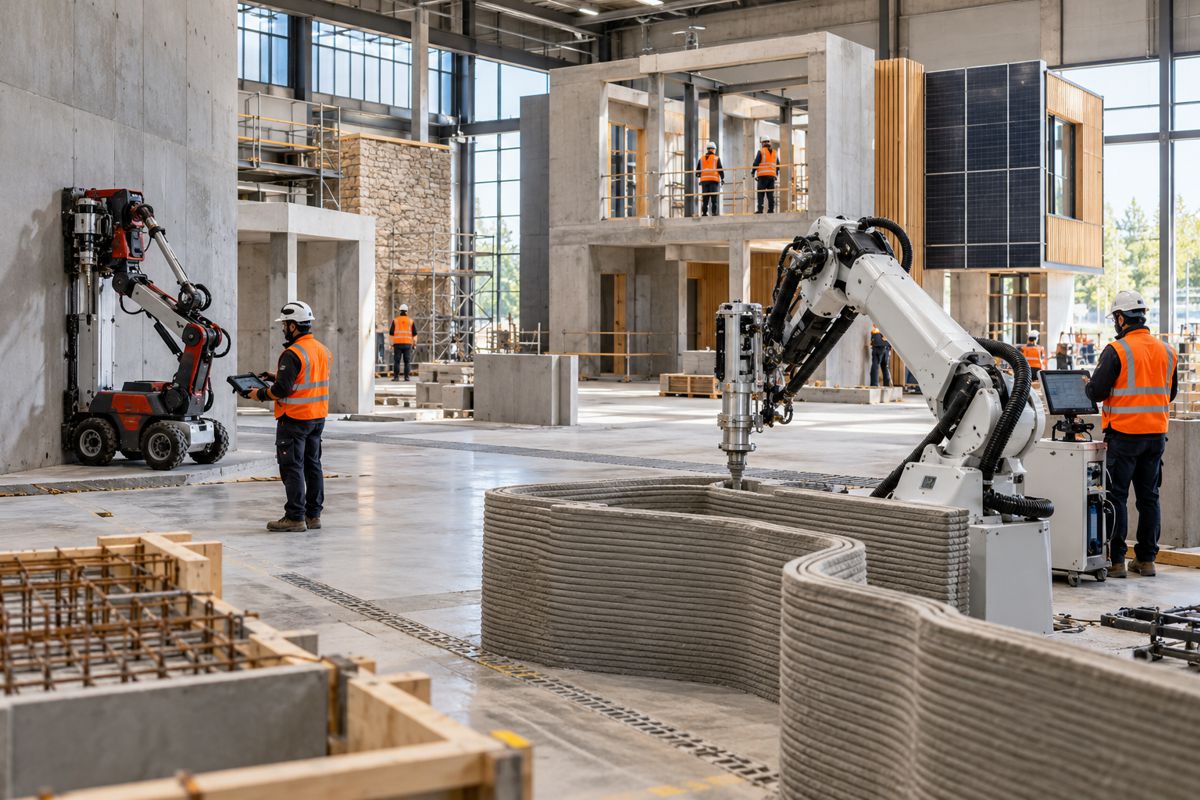
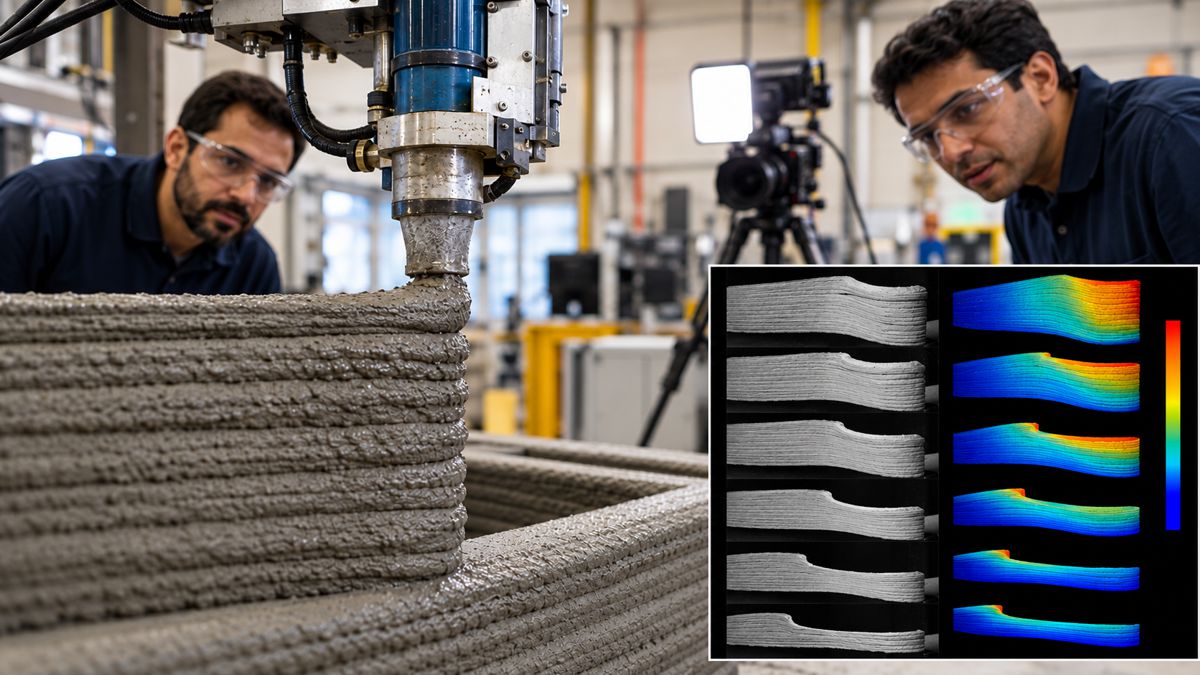
Industrialised construction will form another major part of the forum, with prefabrication, off-site production, automation and additive manufacturing among the subjects under examination.
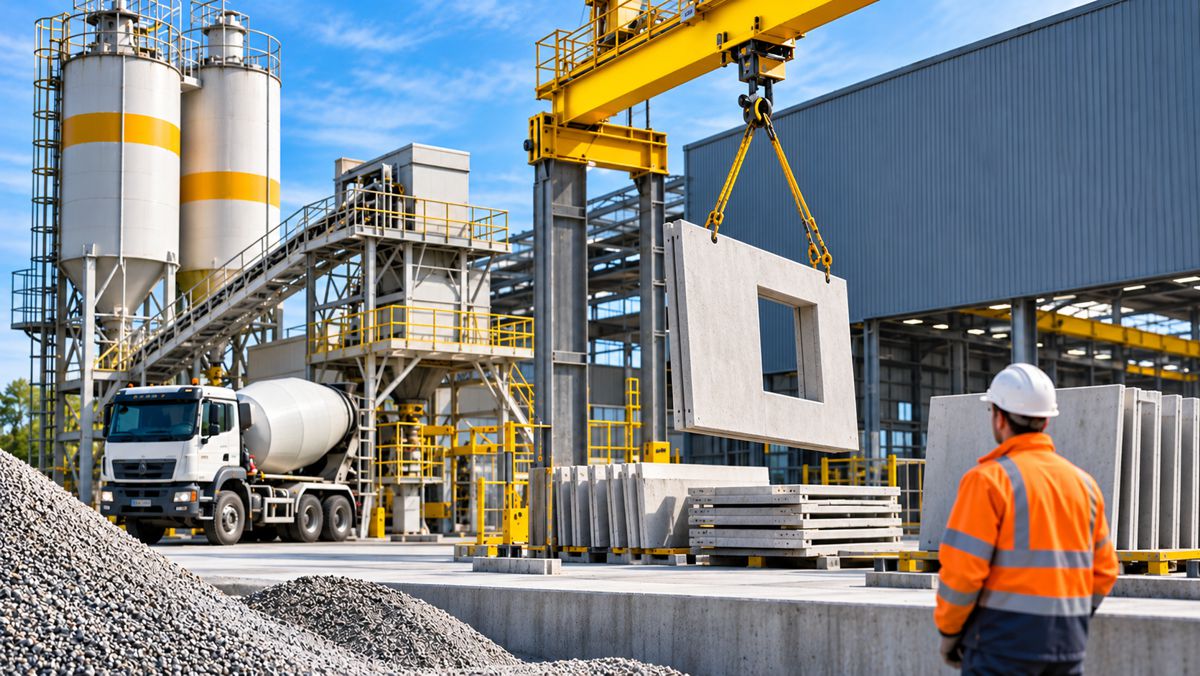
Precast concrete manufacturing already provides an established industrial environment in which production conditions, reinforcement placement, mould preparation and curing can often be controlled more closely than on conventional construction sites.
Greater automation offers opportunities to improve dimensional accuracy, production scheduling and material utilisation, particularly where manufacturers produce repeated components for housing, commercial buildings or civil engineering projects.
However, industrialised production also brings its own constraints. Factory capacity, transport dimensions, lifting requirements and installation sequences can influence the economics of prefabricated construction. Standardisation may improve manufacturing efficiency while limiting design flexibility, depending on the system being used.
Digital technology will feature prominently in the discussions, with artificial intelligence, production data and digital twins among the subjects scheduled for examination.
For concrete manufacturers, practical applications extend from monitoring batching consistency and moisture content to coordinating production orders, tracking individual components and integrating factory operations with construction schedules.
The exhibition will include companies working across these areas. Registered exhibitors named by the organisers include Command Alkon, Euromecc, Hydronix, IMER, Quadra, MCT Italy, Progress Group and Sicoma.
Their participation will give visitors opportunities to examine different approaches to concrete batching, mixing, handling, processing and manufacturing automation.
Recycling Concrete and Recovering Materials
Circular construction will also feature prominently, with recycled aggregates, selective demolition and material reuse among the subjects under discussion.
Concrete recycling is already an established activity, but recovering crushed material is only one stage in returning it to productive use. Aggregate grading, contamination, water absorption and consistency all influence whether recovered material is suitable for a particular application.
Recycled aggregates can be used in a range of construction products and civil engineering works, subject to relevant specifications and performance requirements. Their use in structural concrete requires particular attention to material characteristics and quality control.
Selective demolition can improve recovery by separating materials before crushing and processing. It may also support the reuse of components that retain sufficient structural and functional value, although inspection, documentation and compatibility with new designs can present practical difficulties.
The forum will connect these material recovery questions with the design of buildings and infrastructure that can be adapted, dismantled or reused more readily. Decisions made during initial construction can determine how easily materials and components are recovered decades later.
European Regulation and Environmental Performance
The event also takes place during an important period for European construction product regulation.
The European Union’s revised Construction Products Regulation, Regulation (EU) 2024/3110, establishes a framework intended to improve product information, support environmental sustainability and facilitate the digital transition in construction.
The regulation entered into force on 7 January 2025, with most provisions becoming applicable from 8 January 2026. However, the transition from the previous regulatory framework will take place progressively as new harmonised technical specifications are developed for individual product families. Certain provisions of the previous regulation will remain applicable until January 2040.
The revised framework places greater emphasis on consistent product information, environmental characteristics and the ability to compare performance using harmonised methods. The European Commission is developing the technical requirements needed to implement these provisions across different construction product categories.
Concrete producers developing alternative formulations or incorporating secondary materials must therefore consider how those products are assessed, documented and accepted within the relevant regulatory and technical framework.
The relationship between innovation and standardisation is particularly significant for infrastructure construction, where materials may be required to demonstrate reliable performance over several decades.
Water, Climate Resilience and Workforce Development
Resource management, climate adaptation and workforce development will form the third major theme of the forum.
Water management is a practical concern throughout concrete production. Mixing, equipment cleaning, aggregate processing and curing can all create demands on water supplies, while wastewater handling and reuse require appropriate treatment and control.
The programme will consider how manufacturers and construction businesses can manage these requirements alongside growing pressure on resources.
Climate resilience will also feature, including the adaptation of factories, construction sites and infrastructure to heatwaves, flooding and extreme weather.
For concrete operations, high temperatures can affect fresh concrete behaviour, working time and curing conditions. Extreme rainfall can disrupt material storage, site access and production schedules. Manufacturing facilities must also consider the resilience of their utilities, drainage and logistics arrangements.
Alongside these technical issues, the forum will examine recruitment, training, workplace safety and the development of skills associated with digital systems and automation.
Modern concrete production increasingly combines traditional materials expertise with process control, electrical systems, data management and automated equipment. Maintaining those capabilities requires both experienced personnel and training pathways for new entrants.
A concluding forum discussion will look towards 2035, considering potential developments in materials, manufacturing methods, industrialisation, circularity and business models.
Equipment, Demonstrations and Industry Recognition
World of Concrete Europe will combine its conference programme with an exhibition covering the concrete value chain, from raw materials and production machinery to handling equipment, specialist applications and digital systems.
A dedicated outdoor demonstration area will allow participating companies to present equipment, techniques and applications in operation, complementing the forum’s technical discussions.
Concrete-related developments will also feature in the INTERMAT Innovation Awards, which recognise equipment, technologies, products and services across the exhibition’s five areas of expertise.
A separate World of Concrete Europe award will recognise an innovation specifically developed for the concrete market. The award will be presented by Alessio Rimoldi, Secretary General of BIBM, the Federation of the European Precast Concrete Industry.
Bringing the Concrete Supply Chain Together in Paris
World of Concrete Europe will operate alongside the wider INTERMAT 2027 exhibition, bringing concrete manufacturers and suppliers into contact with contractors, equipment businesses, infrastructure professionals and construction technology developers.
The forum programme is being coordinated by a ten-member steering group drawn from industry organisations, manufacturers, construction businesses and specialist publications. Its membership includes representatives of SNBPE, UMGO-FFB, SYNAD, FIB, AGYRE, CIMbéton, CERIB and École Française du Béton.
The organisers are finalising the detailed conference timetable and speaker programme.
With material suppliers, machinery manufacturers, precast specialists and construction businesses represented, the exhibition will provide a practical setting for examining how changes in concrete formulation translate into production processes and finished construction products.
Key Industry Questions
- When and where is World of Concrete Europe 2027 taking place? The exhibition runs from 21 to 24 April 2027 at Paris-Nord Villepinte, France, alongside INTERMAT.
- How many exhibitors are expected? Organisers are planning for 200 exhibitors representing concrete materials, manufacturing equipment, production systems, applications and related technologies.
- What are the main subjects of the technical forum? The programme covers concrete decarbonisation, industrialised construction, circular materials, digital technology, resource management, climate resilience and workforce development.
- How can concrete production reduce carbon emissions? Potential approaches include reducing clinker content, using alternative binders, optimising concrete formulations, improving production efficiency and introducing lower-emission manufacturing processes.
- What role does automation play in precast concrete production? Automation can support repeatable manufacturing processes, improve dimensional consistency, coordinate production activities and reduce manual handling in suitable applications.
- Can recycled aggregates be used in structural concrete? They can be used where the material properties, applicable standards and project specifications permit. Suitability depends on factors including aggregate quality, grading, contamination and the required concrete performance.
- What is the relationship between World of Concrete Europe and INTERMAT? World of Concrete Europe is a specialist event held alongside INTERMAT, giving visitors access to both concrete-specific technologies and the wider construction equipment industry.
- Will equipment demonstrations be available? Yes. The organisers are planning a dedicated outdoor area for demonstrations of concrete-related equipment, applications and technologies.
- How does the new EU Construction Products Regulation affect concrete manufacturers? The revised framework introduces provisions addressing environmental performance and product information. Requirements will apply progressively to relevant product families as harmonised technical specifications are developed.
- Where can visitors find the conference programme? The full timetable and speaker details are being finalised and will be published through the official INTERMAT and World of Concrete Europe channels.
Strategic Takeaways
- Lower-carbon concrete development must account for manufacturing consistency, durability, specification requirements and commercial production costs.
- Prefabrication and automation can improve production control, although transport, installation and factory utilisation remain important economic considerations.
- Recycled materials require reliable processing, testing and quality assurance before they can replace conventional inputs in demanding applications.
- European construction product regulation is placing increasing emphasis on harmonised performance information and environmental characteristics.
- Climate adaptation and digital manufacturing are expanding the technical skills required across concrete production and construction.