Mips and Koroyd Expand Impact Protection from Motorcycle Helmets to Industrial Safety
When Swedish safety technology company Mips acquired Koroyd for an initial €40 million in December 2025, it brought two complementary approaches to impact protection under common ownership. One manages rotational motion during angled impacts, while the other uses engineered structures that deform to absorb energy. Almost a year later, the acquisition is contributing to growth in motorcycle helmets and extending the group’s reach into industrial protective equipment.
The combination comes as helmet manufacturers face increasingly demanding testing requirements and the continuing challenge of improving protection without adding unnecessary weight or restricting ventilation. For Mips, the purchase also provides access to materials technology already used in helmets, body protection and other safety products, creating opportunities beyond its established position in rotational-impact management.
Briefing
- Mips completed its acquisition of Koroyd on 18 December 2025 for an initial €40 million.
- Additional performance-related consideration could bring the total transaction value to €65 million.
- Mips develops low-friction systems to manage rotational motion, while Koroyd manufactures energy-absorbing tubular structures.
- Motorcycle-category sales increased 116% in Q3 2026, including 46% organic growth.
- Industrial safety is becoming an important growth market, with applications extending beyond helmets into other protective equipment.
Managing Different Forces During an Impact
Conventional motorcycle helmets typically combine a rigid outer shell with an energy-absorbing liner, commonly manufactured from expanded polystyrene (EPS). The shell helps distribute impact loads, while the liner compresses to reduce the acceleration transmitted to the head. This arrangement remains fundamental to helmet construction, although its effectiveness depends on impact speed, location, angle and the behaviour of the complete assembly.
An oblique impact introduces additional forces. When a rider’s helmet strikes the road while moving forwards or sideways, the resulting acceleration can produce rotational motion of the head alongside linear deceleration. Research into head injury biomechanics has established that rotational motion contributes to brain tissue deformation, making it an important consideration in protective equipment design.
Mips addresses this through a low-friction system that permits limited relative movement between the helmet and the head. Depending on the helmet design, the technology may use a recognisable internal layer or a more closely integrated arrangement. According to Mips’ technical documentation, its systems are designed to allow approximately 10 to 15 mm of movement during certain angled impacts, helping to reduce the rotational motion transferred to the head.
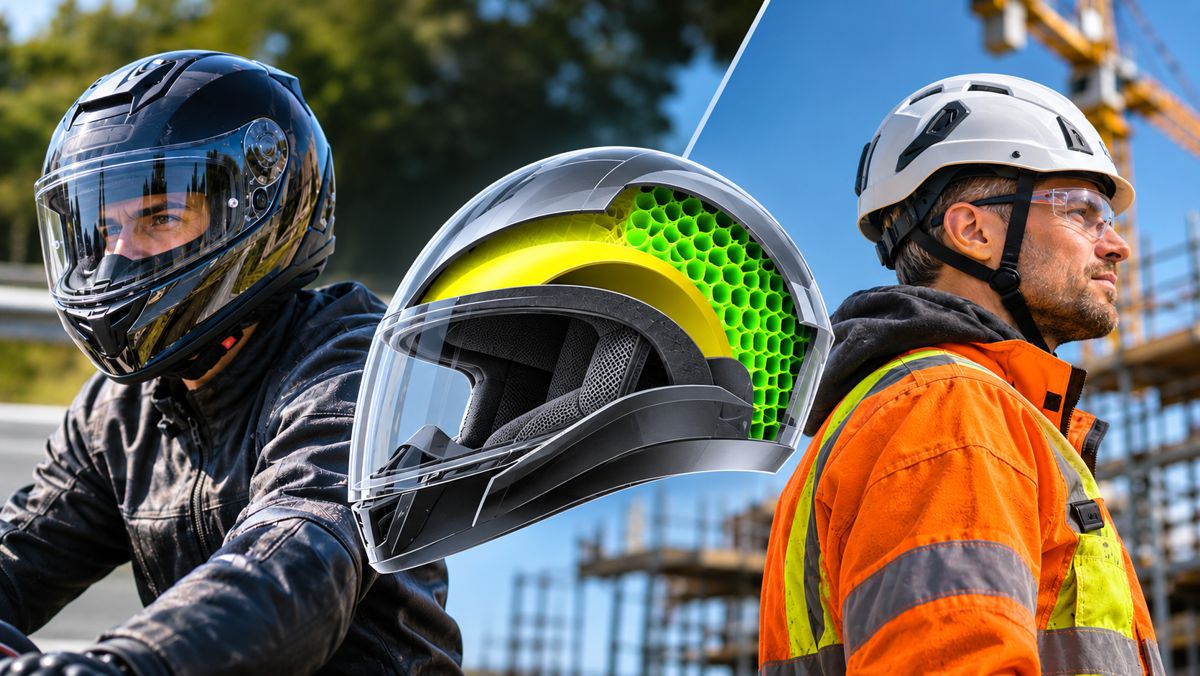
Koroyd approaches impact management through a different mechanism. Its protective material comprises closely packed, thin-walled polymer tubes engineered to deform under compression. As the tubes buckle, the structure absorbs mechanical energy and helps manage deceleration. The open cellular arrangement can also provide airflow through sections of the protective liner, an attractive characteristic for demanding applications such as off-road motorcycling and industrial work.
The two technologies were already being incorporated into some of the same products before the acquisition. Their combination is therefore an established design possibility rather than an entirely new concept. Bringing the businesses together creates greater scope for coordinated research, engineering and product development, although the performance of any finished helmet still depends on the complete assembly.
Helmet Standards and Design Requirements
Motorcycle helmet testing has become more demanding as regulators and researchers have developed a better understanding of head injuries. UNECE Regulation 22.06 introduced a wider range of test conditions than its predecessor, including additional impact locations, different impact velocities and oblique impact assessments intended to examine rotational behaviour.
For manufacturers, these requirements influence material selection, liner geometry, shell construction and the interaction between protective components. An effective energy-management system must operate within a helmet that also satisfies requirements for fit, durability, retention and other aspects of safety.
The acquisition gives helmet manufacturers access to two specialist technologies within the same corporate group, potentially simplifying technical collaboration during product development. However, incorporating both systems does not automatically establish better protection. Their combined performance must be demonstrated through appropriate testing of the finished helmet.
Independent assessment remains useful when comparing products. The UK’s SHARP motorcycle helmet safety scheme evaluates helmets beyond minimum legal approval requirements and publishes comparative ratings to support purchasing decisions. It also emphasises the importance of correct helmet fit, regardless of the protective technologies used.
A Broader Protective Equipment Business
Both Mips and Koroyd operate through an ingredient-brand business model, supplying specialist technologies for integration into products manufactured and sold by other companies. This allows helmet and protective equipment brands to incorporate externally developed safety systems without undertaking the full research and material development programme themselves.
When the acquisition was completed in December 2025, Koroyd brought an established customer base and a portfolio extending beyond conventional helmet applications. The initial purchase price was €40 million, with further consideration of up to €25 million dependent on agreed performance targets.
The commercial contribution is now visible in Mips’ financial results. According to its third-quarter 2026 report, group sales reached SEK 215 million, representing reported growth of 59% compared with the same period in 2025. Organic growth, excluding acquisition effects and other adjustments, was 24%.
Motorcycle-category sales increased 116%, including organic growth of 46%. Off-road helmets continued to represent the largest part of the category, although on-road products recorded particularly strong growth. The performance suggests continued demand for specialist helmet technologies as manufacturers respond to more complex certification requirements and changing customer expectations.
Koroyd also contributed to the group’s reported expansion, although acquisition-related growth needs to be distinguished from demand generated by the existing business. The financial figures demonstrate the enlarged company’s commercial scale without establishing that any individual protective technology was responsible for the increase in motorcycle sales.
Expanding into Industrial Safety
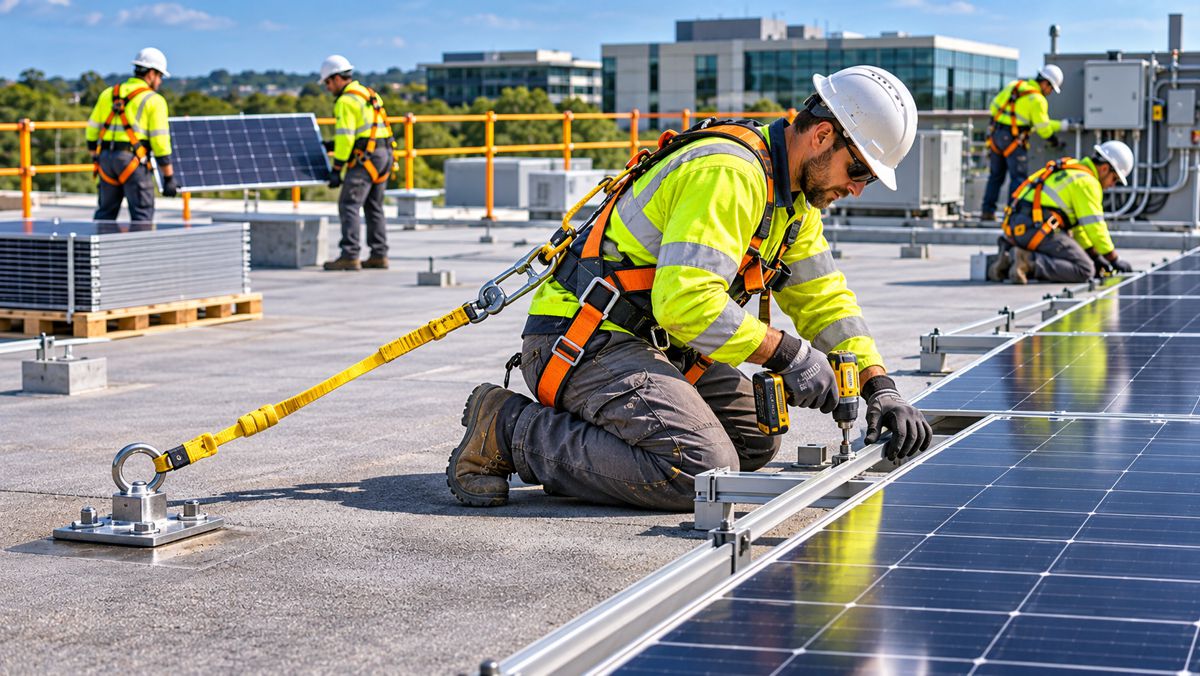
Industrial protective equipment offers a substantial adjacent market for the combined business. Construction workers, infrastructure maintenance teams and industrial personnel routinely wear head protection for extended periods, often in environments where heat, physical exertion and restricted movement make comfort an important consideration alongside impact resistance.
Koroyd’s material properties are relevant to such applications. Its cellular structures can be engineered to absorb energy while providing airflow, potentially helping manufacturers balance protective performance with the practical demands of prolonged use. Mips’ rotational-management technology addresses a different aspect of head protection, particularly where angled impacts are relevant to the equipment’s intended use.
Industrial helmets are designed for different hazards from motorcycle helmets and are subject to different certification requirements. Depending on their application and jurisdiction, they may need to satisfy standards covering falling-object impacts, penetration, electrical insulation and other workplace hazards. Manufacturers must assess the complete product against the requirements applicable to its intended use rather than relying on the performance characteristics of individual components.
Mips’ Safety category recorded reported sales growth of 396% in the third quarter of 2026, with organic growth of 34%. The substantial difference between these figures reflects the contribution of acquired activities, particularly Koroyd, alongside expansion in the existing business.
During September, Mips and Koroyd exhibited together at the National Safety Council Safety Congress & Expo in the United States. Industrial helmet manufacturer Studson, identified by Mips as Koroyd’s largest customer in the Safety category, introduced a helmet incorporating Koroyd technology.
The group has also reported interest in applications involving protective gloves, footwear and body protection. These products present different engineering challenges, but they share the requirement to manage mechanical energy within materials that remain practical to wear.
For construction equipment manufacturers and PPE suppliers, access to specialist impact-absorbing materials could support new product designs. Commercial adoption will depend on certification, manufacturing costs, durability and demonstrable performance in the intended operating environment.
Materials Research and Connected Safety
The acquisition also broadens Mips’ research capabilities. Bringing expertise in rotational-impact management and engineered energy absorption into the same group creates opportunities to examine how different protective components interact, particularly as helmet designs become more integrated.
Alongside materials engineering, Mips has been developing its involvement in connected safety technology. In July 2026, the company increased its ownership in Quin, a business developing sensor-based safety systems, to 30%.
Information gathered from sensors could contribute to understanding the conditions helmets encounter outside controlled laboratory environments. Combined with computer simulation and physical testing, such data may help researchers investigate impact patterns and refine product development.
There are limits to what the information can establish. Sensor measurements, laboratory results and actual injury outcomes provide different forms of evidence, and improvements observed in one do not necessarily demonstrate equivalent benefits in another. Nevertheless, access to more detailed information about real-world events could help guide future research.
Mips and Koroyd continue to operate as separate brands, preserving their existing product identities and commercial relationships while benefiting from the resources of the wider group.
For motorcycle helmet manufacturers, the relationship offers opportunities to explore more closely integrated approaches to impact management. In industrial safety, the greater opportunity may lie in adapting established materials and protective technologies to different products and working conditions.
The company’s next developments will be judged through finished products rather than the individual technologies they contain. Certification results, independent testing, manufacturing economics and performance in everyday use will determine how widely the combined portfolio is adopted. With Koroyd contributing to the group’s financial performance and industrial safety becoming a more substantial part of the business, Mips now has a considerably broader platform for developing protective equipment.
Key Industry Questions
- What is the difference between Mips and Koroyd technology? Mips develops systems designed to reduce rotational motion transferred to the head during certain angled impacts. Koroyd manufactures engineered structures that deform under compression to absorb impact energy. The technologies address different aspects of impact protection.
- Can motorcycle helmets incorporate both technologies? Yes. Some helmets incorporated both Mips and Koroyd before the acquisition. Their effectiveness together depends on the complete helmet design and must be demonstrated through appropriate testing.
- What is UNECE Regulation 22.06? It is a motorcycle helmet approval regulation introducing more extensive testing requirements than the previous 22.05 standard, including additional impact conditions and assessments of rotational behaviour.
- Does either technology guarantee protection against concussion? No. Neither system can guarantee prevention of concussion or other brain injuries. Injury risk depends on the characteristics of the impact, the complete helmet design and numerous other factors.
- How does Koroyd absorb impact energy? Its thin-walled polymer tubes deform under compression. This controlled deformation absorbs mechanical energy and helps manage the forces transmitted through the protective structure.
- Why are helmet weight and ventilation important? Excessive weight and inadequate ventilation can reduce comfort during prolonged use. Manufacturers must balance impact performance with fit, airflow, durability and practical operating requirements.
- Are motorcycle and industrial helmets subject to the same standards? No. They are designed for different hazards and assessed against different technical requirements. A helmet approved for one application is not automatically suitable for another.
- What are the commercial advantages of an ingredient-brand model? Manufacturers can integrate specialist safety technologies into their products without developing every component internally. The model also allows technology suppliers to work with multiple brands across different markets.
- How much did Mips pay for Koroyd? The acquisition involved an initial consideration of €40 million, with additional performance-related payments of up to €25 million, creating a potential total value of €65 million.
Strategic Takeaways
- Combining rotational-motion management and structural energy absorption offers additional design possibilities, but completed products still require appropriate performance testing.
- More demanding helmet standards are increasing the technical requirements facing manufacturers and reinforcing demand for specialist engineering expertise.
- Koroyd has expanded Mips’ commercial reach, with its contribution now visible in the group’s reported financial performance.
- Industrial safety offers opportunities to apply established impact-management technologies beyond motorcycle and sporting helmets.
- Materials research, laboratory testing and connected safety data could support more sophisticated protective equipment, provided performance claims remain grounded in verifiable evidence.