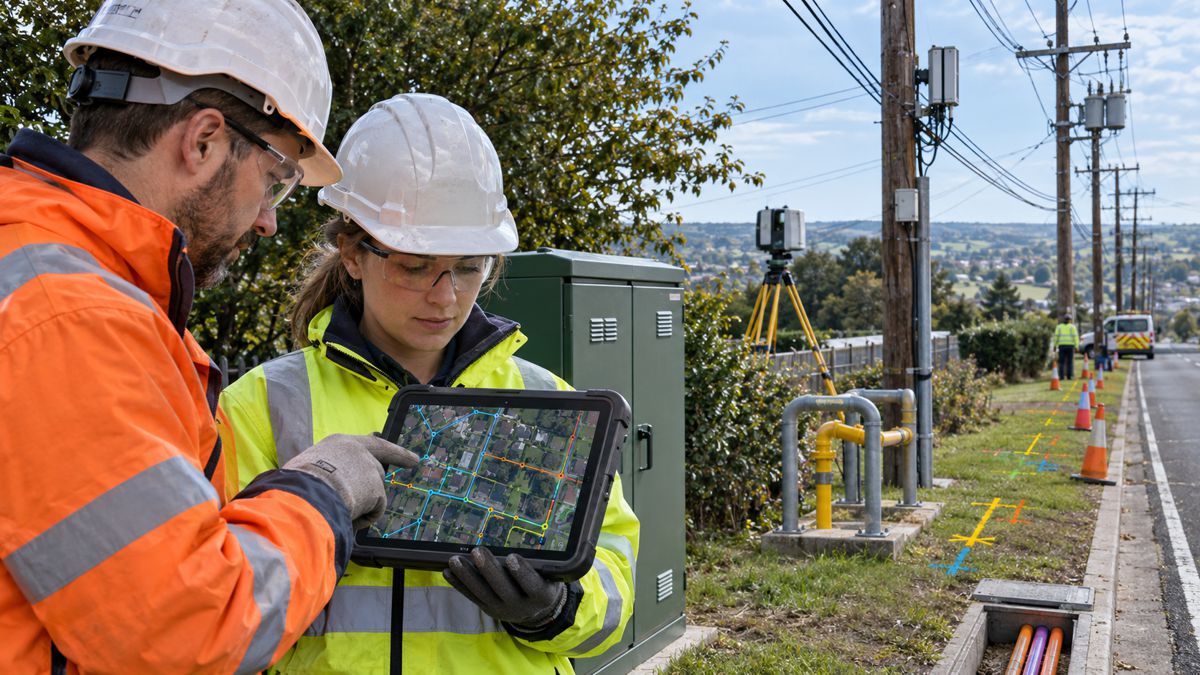
What If Engineers Designed Society Instead of Politicians?
Engineers are trained to question assumptions, solve problems and improve systems. What might happen if governments approached the world in the same way?
England has committed to delivering 1.5 million additional homes during the current Parliament, equivalent to an average of approximately 300,000 a year over five years. Yet official statistics recorded just 208,600 net additional dwellings in 2024–25, while provisional government estimates put the following year at approximately 196,900.
The construction industry has the knowledge, machinery and technologies required to build housing at scale. Modern methods of construction, industrialised production and digital design offer further opportunities to improve efficiency. Nevertheless, delivering enough homes remains a persistent challenge, shaped by land availability, planning requirements, infrastructure capacity, financing, workforce constraints and political priorities.
An engineer examining such a problem would begin by establishing the requirement, identifying the constraints and determining what resources and changes were necessary to meet it. Government must undertake much of the same work, but within an institutional framework shaped by legislation, budgets, political commitments and competing public interests.
Engineers continually redesign machinery, structures and processes when better approaches become available. The economic and political systems governing those activities receive rather less scrutiny as interconnected systems, despite having evolved over centuries to address circumstances very different from those of today.
Money, taxation, corporations and government institutions are human creations. Many have served society remarkably well, but their arrangements have been developed, modified and occasionally replaced as human needs and capabilities have changed. Artificial intelligence, robotics, automated manufacturing and advanced energy technologies are now transforming what humanity can produce and how efficiently it can operate. The question for Construction Innovation Month is whether the institutions responsible for organising those capabilities are evolving with equal imagination.
Briefing
- Engineering methods offer useful principles for improving public institutions, including requirements analysis, testing, risk management and continuous evaluation.
- Universal Basic Services and wellbeing-focused budgeting provide established precedents for measuring prosperity through access to essential services and quality of life.
- Major infrastructure programmes demonstrate how political decisions, regulatory requirements and technical shortcomings can combine to undermine delivery.
- AI and automation raise questions about employment, productivity, economic security and the ownership of essential technologies.
- Alternative economic arrangements could be tested through practical programmes while preserving private enterprise, personal ambition and democratic accountability.
The Engineering Mindset
An engineer approaching a problem begins with a specification. What must the system achieve? What resources are available? Which constraints cannot be changed, and how will performance be measured?
The existing design provides a starting point, but it does not necessarily determine the answer. Alternatives are modelled, new methods assessed and performance tested against the intended outcome. When something fails, the causes are investigated and the design reconsidered.
Political decision-making operates under different pressures. Governments must reconcile competing interests, public expectations, legislation, electoral commitments and the priorities of different communities. Decisions frequently involve values and preferences for which there is no single technically correct solution.
These responsibilities are legitimate, but they can make fundamental redesign difficult. Established arrangements may survive because changing them would create political, financial or institutional complications, even when their original assumptions deserve reconsideration.
Returning to housing, an engineering assessment would examine the number and location of homes required, available land and materials, construction capacity, workforce requirements and the infrastructure necessary to support new communities. Planning and financial arrangements would be assessed alongside those physical requirements.
A conventional policy debate may begin with subsidies, taxation, planning regulations and departmental budgets. These are essential considerations, but they can become the boundaries of the discussion before the underlying requirements have been established. Both perspectives are necessary, with technical analysis identifying what can realistically be delivered and democratic decision-making determining priorities, acceptable trade-offs and how costs and benefits should be distributed.
Bringing them together more effectively could allow society’s needs and the practical requirements of meeting them to inform the design of financial and administrative systems, rather than accepting inherited arrangements as permanent constraints. Engineering’s treatment of failure also offers something useful. When infrastructure performs badly, investigation and redesign are recognised parts of professional practice. Public policy could benefit from a similar culture of evaluation, where unsuccessful programmes are examined openly and improved without every correction becoming a political contest.
When Engineering Meets the Political System
Technically achievable infrastructure projects can become extraordinarily difficult to deliver within the institutions governing them. Major programmes must navigate planning procedures, environmental obligations, public consultation, land acquisition, procurement requirements, funding approvals and changing government priorities. Each may serve a legitimate purpose, but their combined effect can introduce substantial uncertainty into projects dependent on long-term investment and consistent decision-making.
Britain’s HS2 programme illustrates the complexity. Reviews by the National Audit Office have examined the consequences of changes to scope, planning assumptions, costs and delivery arrangements. Political decisions to alter and subsequently curtail the railway have intersected with difficulties involving design maturity, programme management and construction delivery.
Responsibility cannot be attributed exclusively to politicians, regulators or engineers. Political decisions can fundamentally change a project’s scope or financing, while technical teams and delivery organisations remain responsible for realistic design, cost estimation, risk assessment and execution.
Professor Bent Flyvbjerg and colleagues documented persistent cost underestimation in a study of 258 transport infrastructure projects. Their research and subsequent work on megaproject performance examine the influence of optimism bias, forecasting weaknesses and strategic behaviour on major investment decisions.
Engineering expertise offers no guarantee against poor judgement or institutional pressure. Equally, project overruns cannot automatically be treated as evidence of engineering failure when decisions affecting scope, funding and approvals are made elsewhere. An engineering approach to government would examine these relationships across the entire project lifecycle, using stable objectives, realistic specifications, coordinated approvals, independent scrutiny and credible funding arrangements to reduce uncertainty without sacrificing necessary regulatory protections.
The systems responsible for commissioning and governing infrastructure deserve the same attention to performance as the assets they are intended to deliver. This would include evaluating the cumulative impact of regulation, the consistency of investment decisions and the effectiveness of accountability throughout the project.
Infrastructure as the Foundation of Prosperity
Modern societies depend on remarkably similar foundations, regardless of their political or economic arrangements. People require housing, clean water, sanitation, energy, transport and communications. They need access to healthcare, education and a reasonable degree of personal security. Without these essentials, opportunities for employment, entrepreneurship and personal development become severely restricted.
Construction and infrastructure professionals understand these dependencies particularly well. An industrial development requires electricity, water, transport access and a capable workforce. Housing needs roads, drainage, utilities and public services long after construction is complete.
Provision remains uneven. The International Energy Agency reported that approximately 730 million people worldwide lacked access to electricity in 2024, while WHO and UNICEF estimated that 2.1 billion people lacked safely managed drinking water.
The technologies required to generate electricity, treat water and construct essential infrastructure are well established. The obstacles involve investment, geography, affordability, resource availability, institutional capacity and the organisation of delivery. A different approach to national development could begin by establishing a guaranteed minimum standard of essential services, supported by long-term programmes to develop and maintain the necessary infrastructure.
This principle has a substantial history. In 2017, University College London’s Institute for Global Prosperity developed a Universal Basic Services proposal that examined the extension of universal public provision into housing, transport and communications.
Its approach focused on access to services rather than relying entirely on income transfers to help households purchase necessities privately. The original UK proposal estimated additional annual expenditure of approximately £42 billion, financed through changes to taxation, although this was a modelled proposal rather than a demonstrated national delivery cost.
The concept provides an alternative way to consider government responsibilities. Housing, electricity, water and communications could become explicit national performance obligations, with governments accountable for anticipating demand, developing capacity and maintaining reliable access.
That would require considerably more than new expenditure commitments. Infrastructure needs land, equipment, skilled people, maintenance and effective management, supported by investment programmes extending beyond electoral cycles. The OECD’s Recommendation on the Governance of Infrastructure already emphasises strategic planning, evidence-based investment, coordination and accountability. Applying those principles consistently across essential services would provide a starting point for a broader assessment of national prosperity.
Measuring What Matters
Gross Domestic Product provides a useful measure of economic activity, capturing the value of goods and services produced within an economy. It informs public finances, investment decisions and comparisons between countries, but it does not directly measure whether people can afford housing, access reliable healthcare or enjoy sufficient security to pursue their ambitions.
An engineer assessing a water supply network would examine reliability, capacity, leakage, water quality and resilience. The amount spent operating it would be important, but expenditure alone would reveal little about the quality of the service delivered.
Similar thinking has already influenced economic policy. The 2009 Stiglitz-Sen-Fitoussi Commission examined the limitations of conventional economic indicators, while the OECD has developed extensive work on wellbeing and quality of life.
New Zealand’s 2019 Wellbeing Budget incorporated objectives involving mental health, child wellbeing, social outcomes and environmental sustainability into public spending priorities. It retained conventional financial constraints while attempting to connect expenditure more directly to the conditions citizens experienced.
A broader prosperity framework could assess governments through housing security, access to essential services, health outcomes, education, infrastructure reliability, environmental quality and opportunities for personal development. GDP would remain useful, particularly when assessing productive capacity and public finances. Its role would be to help explain how the economy is performing, alongside measures of what that economic activity delivers.
Economic growth creates opportunities to improve living standards and expand services. A country with stable production, reliable infrastructure and a high standard of living should also be able to demonstrate progress through efficiency, accessibility and improvements in everyday life.
Security, Opportunity and Ambition
Providing a universal foundation raises familiar questions about economic incentives and the responsibilities of government. Work provides more than income. It offers purpose, achievement, social connection and opportunities for development, while private enterprise creates employment, attracts investment and allows individuals to pursue ideas that might never emerge through public institutions.
A society built around collective security would therefore need to preserve individual ambition, commercial freedom and the rewards associated with achievement. One possible model would guarantee a basic foundation of essential services while allowing people to work, compete, invest, establish businesses and accumulate wealth.
Healthcare, education, clean water, essential electricity, basic communications and secure accommodation could become universal entitlements. Minimum income support would provide additional protection for people unable to meet their needs through employment.
Where practical, services could be free at the point of use, subject to defined standards or consumption allowances. People wishing to purchase larger homes, additional energy or premium services would continue to participate in the commercial economy.
The objective would be a common foundation rather than equal economic outcomes. An entrepreneur could establish a successful business and employ thousands of people, while someone else might choose stable employment, family life or creative pursuits. Both would retain the opportunity to shape their circumstances.
Greater security might also encourage innovation by reducing the personal consequences of commercial failure. Someone developing an engineering invention could be more willing to experiment if leaving employment did not immediately threaten access to essential services.
The effects on incentives would need proper evaluation. Finland’s basic income experiment, conducted between 2017 and 2018, provided 2,000 unemployed people with unconditional monthly payments of €560. Researchers found small employment effects alongside improvements in perceived economic security and mental wellbeing, although concurrent policy changes complicated the interpretation.
Cash payments to unemployed participants are not equivalent to universal housing, healthcare or utility provision. The experiment does, however, demonstrate the value of testing assumptions about economic behaviour rather than relying entirely on ideological expectations.
The strongest objections to universal services are substantial: the continuing fiscal cost, possible changes in work incentives, the difficulty of defining entitlements and the risk of inefficient public delivery. Any proposed expansion would need to show that its benefits justified those costs and that services could be maintained through economic downturns.
Financing the Foundations of Society
Universal essential services would require considerable resources, and their financing cannot be separated from their design. Governments generally rely on taxation, borrowing and other revenues to fund public expenditure. Modern monetary systems also involve money creation through central banking operations and commercial lending, although countries operate under different monetary and institutional constraints.
A government planning a major housing programme must ultimately secure land, materials, skilled workers, equipment and supporting infrastructure. Financing is essential, but it does not eliminate those physical requirements.
Creating additional money cannot produce unlimited construction materials, medical professionals or electricity. Expenditure that increases demand beyond available productive capacity can contribute to inflation and instability, while countries using shared currencies or relying heavily on imported essentials face additional constraints.
The financing of long-term productive infrastructure nevertheless deserves continued examination. Electricity generation, water treatment facilities, transport networks and public housing can deliver value for decades after construction. Alternative arrangements might place greater emphasis on financing productive assets and managing their performance over their full operating lives.
Options include public investment institutions, infrastructure bonds, returns from publicly owned assets, revised taxation and, under appropriate conditions, carefully constrained monetary financing. Each carries different risks. Public investment can be misallocated, infrastructure borrowing creates continuing obligations, and poorly governed public ownership may lead to inefficiency or political interference.
Even an essential service can become financially unsustainable if its operating costs are ignored. The appropriate financing mechanism would depend on the asset, the economy and the evidence available. Engineering analysis can help establish the resources required, the capacity created and the performance expected, while economic and democratic institutions determine how the costs and risks are managed.
Competition, Innovation and Public Infrastructure
Private enterprise depends on opportunities for new businesses to challenge established competitors. Yet markets can become increasingly concentrated through acquisitions, control of essential technologies and barriers that make entry difficult for smaller firms.
Construction equipment, specialist materials, software and digital infrastructure frequently involve substantial investment requirements. Consolidation can improve efficiency and commercial scale, but it can also restrict competition or concentrate control over technologies upon which other businesses depend.
The growing role of artificial intelligence adds further complexity. A July 2026 OECD study on competition in the age of AI found associations between concentration in AI innovation and sales concentration, while also identifying opportunities for smaller businesses. Its findings did not establish that AI adoption inevitably increases market power.
Competition authorities have an important responsibility to examine mergers, protect market access and prevent established businesses from unlawfully excluding potential competitors. There is also a question about when commercially developed services become essential public infrastructure. The internet demonstrates how privately owned networks can become fundamental to education, commerce, healthcare and everyday communication.
Similar dependencies may develop around AI computing infrastructure, digital payment systems and other technologies. Public obligations could include interoperability, open access, independent regulation or structural separation, without necessarily requiring public ownership.
The challenge is to preserve commercial incentives while preventing control over essential systems from restricting the opportunities available to everyone else. Public intervention must itself remain transparent and accountable, particularly where regulation could discourage investment or favour established participants.
AI and the Changing Capabilities of Society
Artificial intelligence provides another reason to reconsider the relationship between productive capacity, employment and economic security. Technological improvements have repeatedly enabled industries to produce more with fewer resources. Mechanisation changed agriculture, automation transformed manufacturing, and digital systems altered the organisation of services. AI extends those capabilities into analysis, design, administration, programming and decision support.
For construction and infrastructure, applications include engineering design, automated equipment, predictive maintenance, project planning and the management of transport, energy and water networks.
Advanced modelling could strengthen government’s ability to anticipate demand and identify shortages. Electricity requirements can be assessed against generating capacity, water networks monitored for deterioration, and housing needs examined alongside demographic change and transport accessibility.
These activities have long been possible in simpler forms, but digitalisation and advanced computing are increasing their sophistication.
AI may also change the relationship between employment and economic output. Some tasks will disappear, others will evolve, and new occupations may emerge. The scale and timing of displacement remain uncertain, but companies may increasingly produce the same output with fewer employees in particular functions.
Greater productivity does not necessarily distribute its benefits evenly. Companies may improve profitability while reducing labour requirements, raising questions about how technological gains are reflected in wages, prices, investment, working hours and wider economic security.
A framework providing access to essential services could offer greater stability during employment transitions, supported by education and retraining. It would not remove the need for work or eliminate commercial incentives, but it could reduce the consequences of technological disruption for individuals.
AI itself cannot decide how those benefits should be distributed. The UNDP’s 2025 Human Development Report emphasises the importance of human choices and institutional arrangements in determining how the technology affects development. As AI expands the range of possible solutions, governments will face increasing pressure to reconsider which problems their economic and social systems are intended to solve.
Engineering Government Without Replacing Democracy
Applying technical expertise to the organisation of society has a long history. During the early twentieth century, technocratic movements argued that complex industrial economies could be managed through scientific and engineering expertise. Howard Scott and Technocracy Inc. became associated with proposals to organise production and resource allocation through technical administration rather than conventional financial and political arrangements.
Such ideas also demonstrated the limitations of treating society as an engineering problem. Technical expertise can identify efficient ways to achieve an objective, but it cannot independently determine which objectives a society should value. A city designed exclusively around transport efficiency might overlook historic neighbourhoods or community preferences, while an infrastructure programme optimised for economic returns could distribute benefits in ways citizens regard as unfair.
Political scientist James C. Scott examined related problems in Seeing Like a State, arguing that large-scale planning can produce damaging outcomes when central authorities overlook local knowledge and the complexity of human behaviour.
Human societies cannot be modelled with the predictability of machines, and no single discipline can resolve questions involving rights, values and democratic legitimacy. Any redesign of government through technical expertise would need to recognise those limits rather than treating citizens as variables in a centrally managed system.
A more practical approach would apply engineering methods to public institutions without transferring political authority to technical specialists. Citizens and elected representatives would determine objectives and acceptable trade-offs. Engineers, economists, scientists and other specialists would assess what could realistically be delivered, which resources were required and where risks might emerge.
Policies could then be evaluated against measurable outcomes, with independent scrutiny and a willingness to revise arrangements that perform badly. Government would remain accountable to the people while becoming more accountable for the performance of the systems it manages.
Existing institutions already undertake parts of this work. The UK’s National Infrastructure and Service Transformation Authority, established in April 2025, combines long-term infrastructure assessment with expertise in major project delivery. Infrastructure Australia provides another example of independent advice intended to inform national infrastructure priorities.
Their existence confirms that technical assessment is already recognised as valuable. The more difficult issue is how governments use that advice, whether investment decisions remain consistent with long-term requirements and who is accountable when recommendations are not followed. Better technical evidence cannot guarantee better government, but it can make choices and their consequences more transparent.
Testing Better Systems
Comprehensive economic reform would introduce substantial risks. Universal services require continuing resources, alternative financing arrangements must protect stability, and stronger public oversight must not create institutions that are themselves unaccountable. Engineering offers a familiar response to uncertainty through controlled experimentation, independent evaluation and incremental improvement.
Governments could begin with programmes addressing individual essential services. One region might provide a guaranteed basic electricity allowance supported by investment in generating capacity. Another could examine publicly owned, open-access digital infrastructure, while a housing programme could combine industrialised construction with long-term provision and independent performance monitoring.
Results would be assessed through capital expenditure, affordability, reliability, operating costs, workforce requirements and wider social outcomes. Evaluations would also need to identify unintended consequences, including distorted incentives, excessive liabilities or effects on private investment.
Several countries could cooperate in developing common standards and sharing evidence without adopting identical economic systems. International institutions could support research, technical cooperation and independent assessment while leaving decisions about implementation to individual countries.
Some programmes would fail, others would require modification, and successful approaches could be adapted to different circumstances. The objective would be to establish what works under real operating conditions rather than attempting to settle every question through competing economic theories.
Beyond the Machinery
Construction Innovation Month naturally concentrates on machinery, materials, software, production methods and the companies developing them. Better concrete, more productive equipment, automated construction and digital engineering can improve the industry’s capacity to deliver infrastructure. Yet the value of those innovations depends partly on the systems within which they operate.
Technology capable of constructing affordable housing cannot achieve its potential if land markets, planning arrangements or infrastructure shortages prevent homes from being delivered at affordable prices. More efficient transport networks offer limited wider benefits if the communities that need them cannot access them.
The industry’s experience with major projects demonstrates how decisions about investment, approvals, scope and procurement can be as consequential as the technology selected for construction. The economic and political institutions governing those decisions are themselves designs, developed by previous generations and amended as circumstances change.
Universal Basic Services, wellbeing budgeting and independent infrastructure planning show that alternatives are already being developed. Their limitations also demonstrate why change requires evidence, democratic accountability and an understanding of unintended consequences.
Engineering progresses through questioning assumptions, identifying constraints, testing alternatives and learning from failure. Those methods have improved the physical world and could help strengthen the institutions responsible for its development.
Better-defined requirements, more realistic project assessment, transparent decisions and procurement systems capable of delivering long-term public value would be the starting point. The next significant innovation in infrastructure may emerge as much from improving the systems that determine what gets built, how it is financed and who benefits as from the technologies used to construct it.

Key Industry Questions
- How could engineering methods improve government decision-making? Requirements analysis, systems modelling, risk management and independent review can strengthen infrastructure planning and public service delivery. Democratic institutions remain responsible for objectives and acceptable trade-offs.
- Are Universal Basic Services a new economic idea? No. UCL’s Institute for Global Prosperity published a proposal in 2017 extending universal provision into areas including housing, transport and communications, building on established public services.
- Why do major infrastructure projects exceed their budgets? Cost overruns can result from immature designs, inaccurate estimates, unforeseen conditions, procurement weaknesses, regulatory complexity, scope changes and political decisions. Responsibility often spans several organisations.
- Would universal services reduce incentives to work? The effects depend on programme design, labour markets and financing. Cash-based experiments such as Finland’s basic income trial provide some evidence, but cannot establish the effects of comprehensive universal service provision.
- When should private infrastructure face stronger public oversight? Additional obligations may be justified where services become essential, alternatives are limited, market power is substantial or disruption could cause widespread harm. Regulation does not necessarily require public ownership.
- How can AI improve infrastructure planning? AI can support design optimisation, demand forecasting, network management, predictive maintenance and automated inspection. Effective deployment depends on reliable data, suitable investment and operational oversight.
- What are the risks of applying engineering approaches to government? Overreliance on technical models can overlook democratic rights, local knowledge, community preferences and unpredictable human behaviour. Independent scrutiny and public participation remain essential.
Strategic Takeaways
- Long-term infrastructure planning benefits from connecting defined public needs with realistic resource requirements, delivery capacity and measurable performance standards.
- Major project failures frequently result from interactions between political decisions, regulatory systems, project governance and technical delivery.
- Universal essential services and wellbeing-focused investment have established precedents, but wider implementation requires credible financing and independent evaluation.
- Competition regulation and open infrastructure access can help prevent technological progress from reinforcing entrenched market positions.
- Engineering methods offer practical tools for improving public institutions when combined with democratic accountability, transparent decision-making and a willingness to learn from failure.