Are we taking hostile vehicle threats seriously enough?
Hostile Vehicle Mitigation (HVM) has become increasingly important when protecting public spaces, commercial premises and critical national infrastructure. Yet, despite the evidence of the devastating consequences of vehicle-borne attacks, Richard Hilson of PFL – Access Management asks if it is receiving the attention it deserves.
The way we think about security has changed considerably in recent years, with cyber attacks being taken seriously by business owners, while the threat posed by drones is attracting increasing attention, particularly around critical infrastructure and public spaces. And as such, organisations are investing in technology, expertise and preventative measures to protect themselves against an evolving, and growing, range of risks.
But what about the threat posed by vehicles? Hostile Vehicle Mitigation (HVM) is not a new concept, but whether it’s given the same strategic consideration as other security threats is definitely up for debate. Likewise, are we considering it early enough in the design of the buildings, developments and public spaces where people live, work and gather?
The scale of the threat isn’t slowing down
Figures published by the National Protective Security Authority (NPSA) reveal that, since 2014, vehicles have been used as weapons in more than 140 attacks around the world. A quarter of those attacks resulted in deaths, while two-thirds caused significant injuries. But what’s most concerning, is that nine out of ten attack locations did not have significant security barriers in place.
Vehicles are readily available, capable of causing catastrophic harm and can be used in attacks that require relatively little preparation. The advent of the electric vehicle has meant swift acceleration can be achieved with a relatively short run up, and vehicles of all types can be used deliberately to target crowds, damage buildings or disrupt infrastructure. Among those 140 attacks, some were organised and terror-related, others were standalone criminal acts.
And unfortunately, we’ve all witnessed the devastating effect of this in recent years, most notably the attack on the Christmas market in Magdeburg, Germany, which killed six people and injured hundreds and here in the UK a driver deliberately drove into crowds celebrating Liverpool FC’s Premier League victory, injuring 134 people.
We are at the stage where simply assuming that existing access arrangements will be sufficient, isn’t sufficient.
There is, of course, growing recognition of the need for HVM, and the NPSA has published guidance on protecting public spaces, including its Public Realm Design Guide, which encourages security to be integrated into the design of the environment.
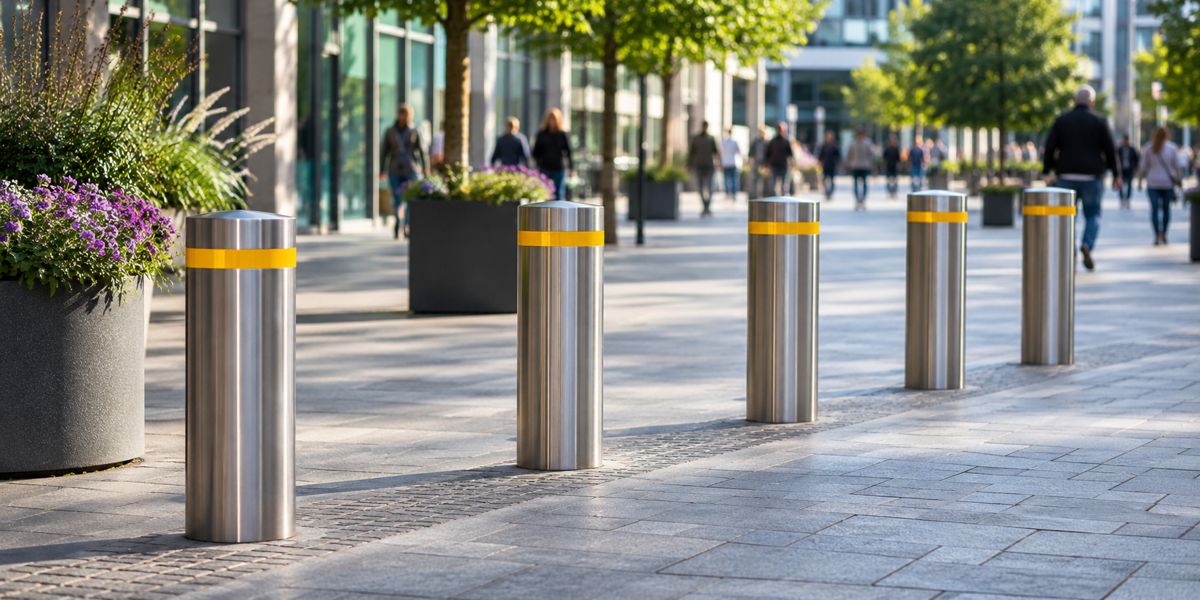
That means looking beyond conventional barriers and considering how landscaping, street furniture, planters, road layouts and other features can help prevent or restrict hostile vehicle access without compromising the appearance or usability of a space.
Likewise, the ProtectUK guidance on HVM makes it clear that effective protection needs to be based on an assessment of threats, vulnerabilities and potential consequences.
But the right measures will depend on the location and the risks it faces, and guidance and awareness can only take us so far. The real test is whether we are translating that understanding into practical decisions.
Despite the availability of detailed guidance from the NPSA, HVM still needs to be considered much earlier in the planning of buildings, venues and public spaces. It makes clear that effective mitigation requires a risk-based approach encompassing site design, operational security, traffic management and incident response.
Yet these considerations can easily be pushed down the priority list when commercial pressures, design decisions and operational requirements take precedence.
If that is how organisations are approaching vehicle security, we have to question whether the threat is being taken seriously enough.
Why isn’t HVM part of the design conversation?
One of the biggest problems is timing, because security considerations can sometimes enter a project relatively late, when the building has already been designed, the surrounding landscape established and access arrangements agreed. At that stage, introducing effective HVM can be more complicated and potentially expensive.
It can also mean compromising on the available solutions because the design has already restricted the options, which is hard to grasp when we consider how organisations approach other security risks.
Cyber security, for example, has become an established board-level responsibility. The government’s Cyber Governance Code of Practice, launched in 2025, specifically sets out the actions directors should take to manage digital risks, establish accountability and embed cyber security into wider organisational governance.
And drone threats are also increasingly part of security planning around airports, critical national infrastructure and major public events.
I’m not suggesting that these threats are identical or require the same solutions, but why should the principle of early consideration and strategic planning not apply equally to HVM?
We wouldn’t expect an organisation to wait until its IT infrastructure is installed before thinking about cyber security. Nor should we wait until a building or public space is complete before considering how to protect the people using it from hostile vehicles.
Making HVM a fundamental part of the design process does not mean turning every public space into a fortress or surrounding every building with rows of concrete barriers, it can be integrated into the environment. Appropriately specified bollards, street furniture, planters, landscaping and changes to vehicle routes can all contribute to a more secure space. The important point is that the measures need to be appropriate to the assessed threat and capable of providing the required level of protection.
That requires early collaboration between developers, architects, planners, property owners, facilities managers and security specialists. It also requires a clear understanding of how a site will operate, including pedestrian movement, vehicle access, deliveries and emergency arrangements.
Importantly, the presence of a physical barrier does not automatically mean a location is adequately protected. Products need to be selected according to their tested performance, the specific risks and the conditions in which they will be installed. Access points and emergency routes must also be considered as part of the overall security arrangement.
HVM is therefore about understanding how people and vehicles interact with a space, identifying potential vulnerabilities, and designing protection around them.
The NPSA statistics demonstrate that vehicle-borne attacks are a significant and established threat, and we have made considerable progress in recognising cyber security and other emerging threats as strategic considerations. I believe it’s time we applied the same thinking to hostile vehicles.
Article by Richard Hilson of PFL – Access Management.