When Construction Sites Start Seeing Risk Before It Happens
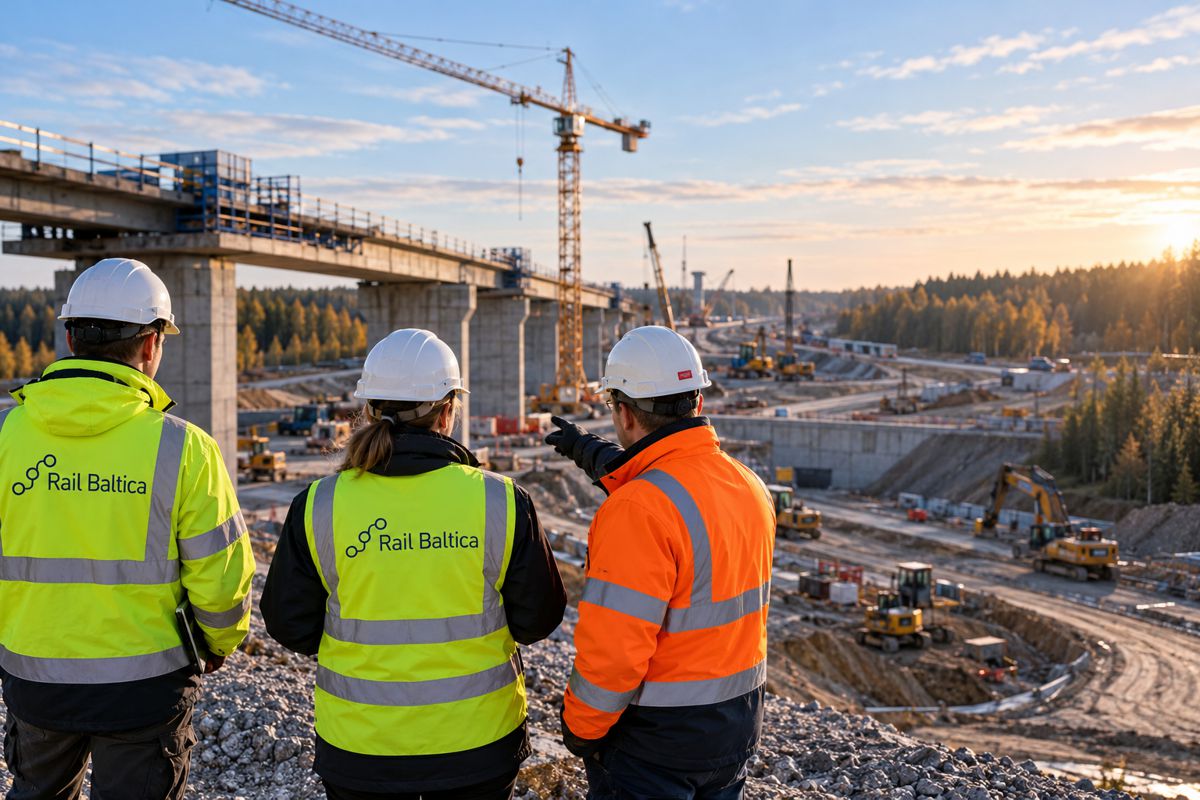
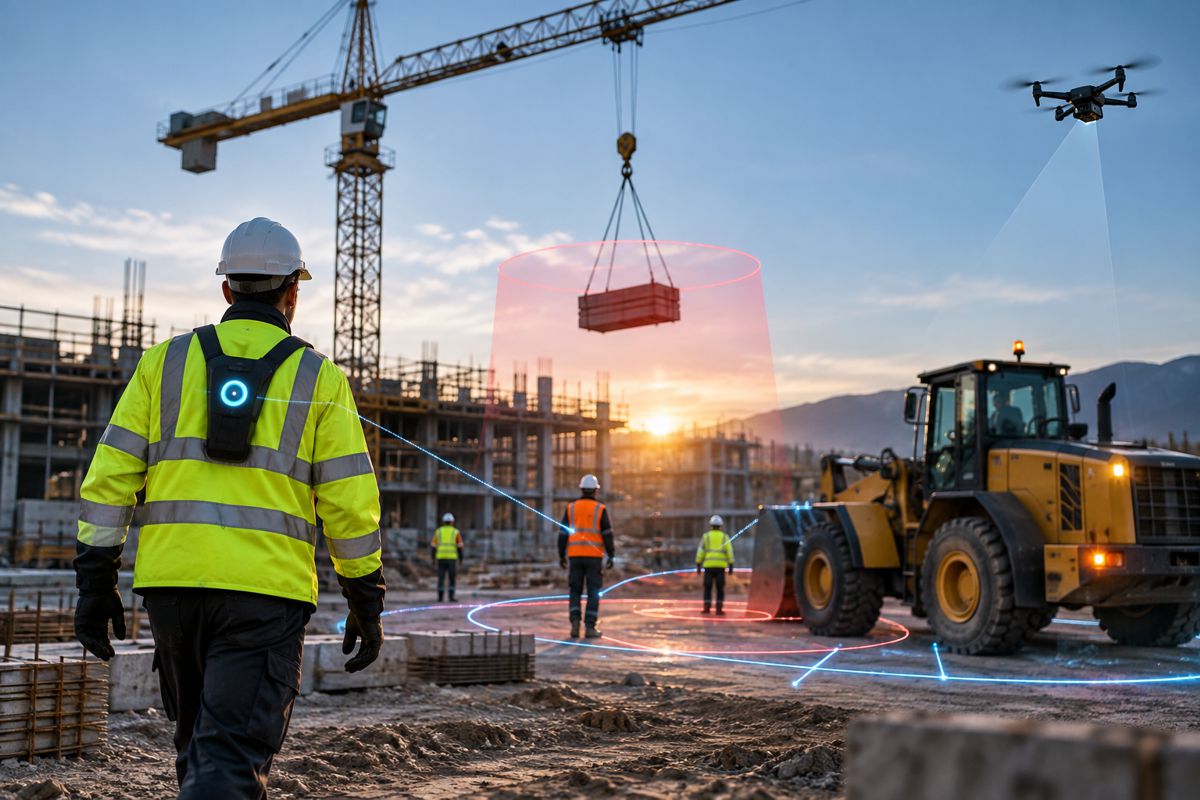
A crane operator cannot see an entire construction site. At a REN+HOMES demonstration project in La Garriga, Spain, connected sensors are being used to close part of that blind spot, tracking workers around hazardous areas and warning them when they move too close.
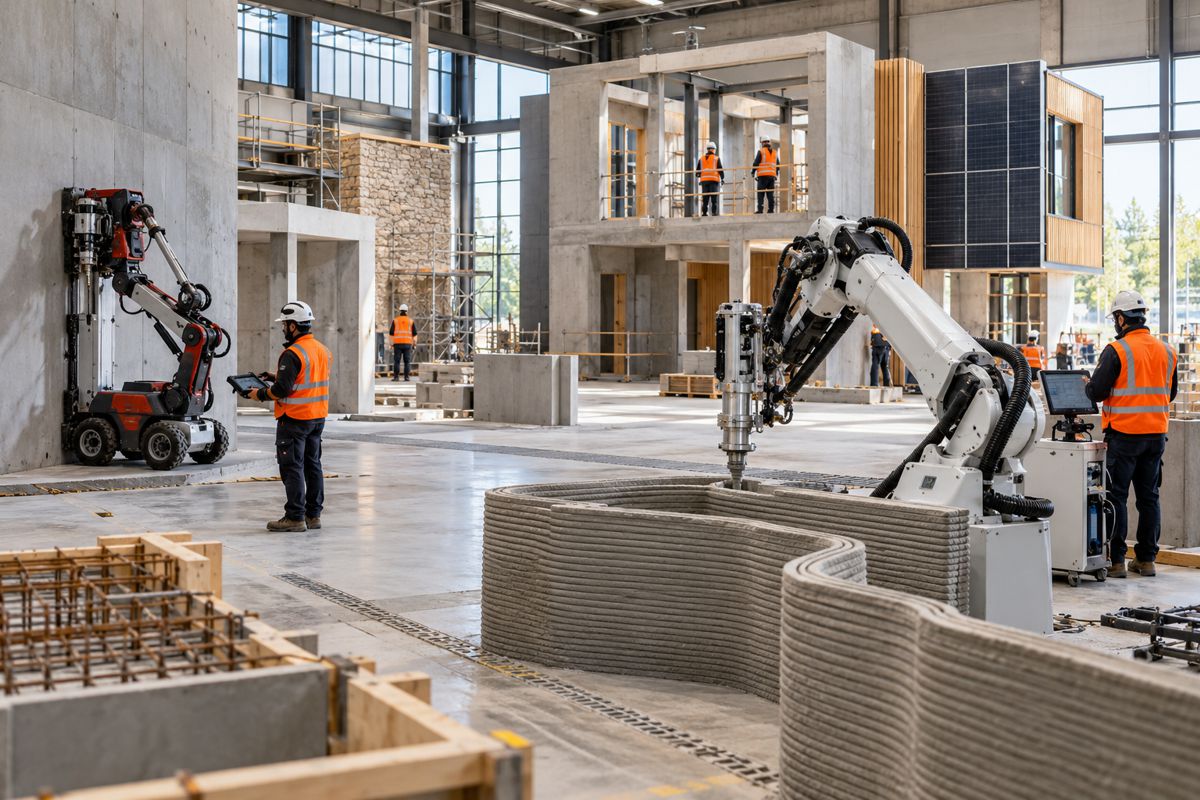
The technology forms part of an EU-funded programme testing new approaches across demonstration projects in Spain, Romania, Austria and Estonia. Its Resilient Construction Site work brings sensors, connected protective equipment, environmental monitoring and digital dashboards together so that safety personnel and site managers can see information that would otherwise remain scattered across different systems.
Elsewhere in Europe, the principle is being pushed further. On an Italian road construction demonstration associated with the BEEYONDERS research project, connected workers, an autonomous loader, a drone and a digital twin have been combined so that machinery can respond to the known position of people around it.
These remain research and demonstration projects rather than the everyday reality of European construction. They nevertheless point towards a different model of site safety, one in which risk information can move between workers, machines and management systems quickly enough to prevent an incident rather than document it afterwards.
Briefing
- The EU recorded 3,298 fatal workplace accidents in 2023, with construction accounting for 24% of them.
- Construction recorded the EU’s highest non-fatal workplace accident incidence rate in 2023, at 2,899 cases per 100,000 workers.
- REN+HOMES is testing technologies across demonstration projects in Spain, Romania, Austria and Estonia, including its Resilient Construction Site work.
- A BEEYONDERS demonstration on Italy’s A24 motorway has connected worker wearables with autonomous machinery, a drone and a digital twin.
- Connected safety systems are moving beyond individual alarms towards environments where workers, machines and site-management systems can exchange information.
Construction’s Persistent Safety Problem
Europe does not lack construction safety regulation. The EU Strategic Framework on Health and Safety at Work 2021-2027 places accident prevention and a “Vision Zero” approach to work-related deaths among its central priorities. Enforcement, training, prevention services and workplace practice ultimately determine how effectively those ambitions reach individual sites.
The latest Eurostat figures show how much remains to be done. There were 3,298 fatal accidents at work in the EU in 2023, 12 more than in 2022, alongside 2.82 million non-fatal accidents resulting in at least four calendar days of absence. Construction accounted for 792 fatalities, or 24% of the EU total, more than any other economic activity. Its fatal accident incidence rate was also 6.3 deaths per 100,000 employed people, while the sector recorded the highest incidence rate for non-fatal accidents at 2,899 per 100,000 workers.
Construction combines several characteristics that make conventional safety management particularly difficult. Sites change continuously, workers move between locations, subcontractors overlap, temporary access routes appear and disappear, and heavy machinery frequently operates close to people on foot.
Domenico Campogrande, Director General of the European Construction Industry Federation, FIEC, points to precisely that operating environment: “But construction sites are constantly changing environments, where multiple contractors and activities take place simultaneously, and workers are regularly exposed to high-risk tasks such as working at height or operating heavy machinery, that is what keeps construction among Europe’s highest-risk industries.”
Rules remain fundamental, but compliance is more complicated than publishing another set of requirements. EU-OSHA’s work on occupational safety and health compliance identifies legislation as the essential framework while recognising that regulation alone is insufficient. Enforcement, prevention services, company networks and support mechanisms all influence what happens at workplace level, with digital technology increasingly being added to that mix.
Building a Connected Safety Layer
REN+HOMES has approached the problem by concentrating information that already exists or can readily be collected around a construction project.
Its programme includes demonstration projects in La Garriga in Spain, Cluj-Napoca in Romania, Innsbruck in Austria and Tallinn in Estonia. Within that wider work, the Resilient Construction Site concept incorporates IoT technology including anti-collision systems, wearable protection devices, dangerous-area access control and environmental monitoring, with information presented through a common dashboard.
Jairis Arleen Alvarez Trujillo, Project Manager for Research and Development at RINA Consulting, describes fragmentation as one of the problems the project is trying to overcome: “The tools exist, sensors for safety, environmental monitoring, waste tracking, but they all work separately and they don’t talk to each other.”
The objective is not an automated replacement for the safety engineer. It is an additional information layer capable of giving project and facility managers a broader view of conditions across the site.
“We wanted to bring all relevant information into a single platform, allowing stakeholders such as project managers and facility managers to instantly understand what is happening on site,” Alvarez Trujillo says. “However, the tool is not intended to replace the site safety engineer; rather, it serves as a decision-support tool that enhances visibility, coordination, and situational awareness.”
REN+HOMES divides that information between dashboards covering waste management, real-time monitoring, historical information and safety. Environmental monitoring can identify conditions such as excessive heat, while proximity systems can detect workers entering hazardous zones.
The project has deliberately included relatively small construction and renovation sites. Major infrastructure projects increasingly have the budget, personnel and digital systems to support sophisticated monitoring. Smaller projects present a harder deployment problem despite representing a substantial part of the European construction market.
“If you can digitalise a small site, it means it can be replicated on larger ones, which usually have more resources to do it,” Alvarez Trujillo says.
Connecting Workers and Machines
BEEYONDERS is exploring a more machine-centred version of the same idea. At an Italian demonstration on the A24 motorway near L’Aquila, workers have been equipped with connected vests while an autonomous loader operates alongside a digital twin and drone. The machine can use worker-position information when calculating its movements and stop when someone enters its operating area.
Instead of the machine discovering a person only when its own sensor detects an obstruction, worker location becomes part of the information available to the operating system.
“The machine doesn’t just react, it already knows their position before the work begins,” says Fabrizio Federici, BEEYONDERS lead for autonomous machinery and wearables at AISCAT Servizi. “That’s the difference between safety as a response and safety as a prerequisite.”
According to the project, continuously recalculating the loader’s route around workers and obstacles produced an 11% reduction in energy consumption during the Italian demonstration. That does not establish that autonomous construction machinery will routinely deliver comparable savings elsewhere, since site geometry, duty cycles, equipment utilisation and operating conditions vary enormously. The same data that prevents a loader entering an occupied area can, however, also help it avoid unnecessary movements.
Moving Beyond the Pilot
Technology does not remove the organisational problems surrounding construction safety. A system that works on a controlled demonstration still has to survive changing projects, contractors, clients, equipment fleets and digital environments.
EU-OSHA’s research into smart digital safety systems identifies wearables, monitoring software and smart personal protective equipment among technologies capable of detecting hazards and supporting more proactive safety management. Turning those capabilities into repeatable construction workflows remains difficult.
Campogrande sees integration as one of the principal obstacles: “The main barrier is the difficulty of turning isolated pilots into reliable, integrated construction workflows.”
Equipment and workers move between projects. Contractors work for different clients under different contractual arrangements, and technology bought for one site may have to integrate with an entirely different digital environment on the next. For smaller businesses, capital expenditure also has to be justified across multiple projects rather than absorbed by a single large programme.
“Construction goes from one project to another,” Campogrande says. “We need to make sure an innovation can be used across several, not just one, that means improving industrialisation.”
Country-specific requirements add another layer. REN+HOMES has designed its system around modular and country-specific concepts, recognising that technology intended for wider European deployment cannot assume that every jurisdiction operates identically.
Workers, Privacy and Responsibility
A connected vest that tells an autonomous loader where a worker is standing can prevent a collision. The same ability to continuously record a person’s location raises questions about who owns that information, how long it is retained and what else an employer might use it for.
EU-OSHA’s research into smart digital occupational safety systems identifies concerns around privacy, data ownership, over-reliance on technology, worker stress and standardisation. Worker consultation and transparency therefore sit alongside technical performance when these systems are introduced.
Annick Starren, Senior Research Project Manager at EU-OSHA, argues that workers need to be involved before deployment rather than presented with finished technology: “Do not automate for the sake of modernisation. It is key to have end users represented in the design phase, not just the implementation phase. Next to privacy aspects and transparency in how AI is exactly used, the most important element is task autonomy and task variety.”
A temperature sensor providing an alert is relatively straightforward. A machine automatically changing its behaviour because of worker-position data represents a deeper intervention in the organisation of work, but responsibility does not transfer with the decision.
“The responsibility for safety remains with the employer,” Starren says. “It cannot be outsourced to an AI-based machine.”
As autonomous equipment, computer vision, connected PPE and AI-assisted safety platforms converge, the technology will have to fail safely, communicate clearly and operate within established occupational safety procedures. More information is useful only if workers and supervisors can understand what the system is telling them and know where human responsibility begins and ends.
From Demonstration Site to Everyday Site
The technical ingredients of a more observant construction site are increasingly familiar. Connected PPE can establish where workers are. Environmental sensors can identify heat, noise and other conditions. Machinery can detect people and obstacles, digital twins can provide spatial context, and dashboards can bring information together for supervisors.
The difficult stage is connecting those elements reliably without creating a system so expensive, complicated or intrusive that contractors avoid using it.
REN+HOMES is already looking towards greater integration with building information modelling, allowing environmental and safety information generated during construction to sit within a broader project data environment. That could make safety information another component of the digital thread rather than an isolated site application.
Construction will still depend on competent supervisors, trained operators, sensible planning and workers making judgements in changing conditions. Connected technology adds something those systems have traditionally struggled to provide: continuous awareness across multiple parts of a site at the same time.
Europe’s 792 construction fatalities in 2023 are a reminder of the distance still to travel. The emerging generation of connected sites will ultimately be judged less by the sophistication of their dashboards than by whether technologies demonstrated in La Garriga, Innsbruck or on the A24 can become practical equipment on ordinary projects. Sensors can already see some hazards coming; turning that capability into routine construction practice is now the harder engineering, commercial and organisational problem.
Key Industry Questions
- How many fatal construction accidents occur in the EU? Eurostat recorded 792 fatal accidents in construction in 2023, representing 24% of all fatal workplace accidents in the EU.
- How common are non-fatal accidents in European construction? Construction recorded the highest non-fatal workplace accident incidence rate of any EU economic activity in 2023, at 2,899 cases per 100,000 workers.
- What is a Resilient Construction Site? REN+HOMES uses the term for a modular digital system that aggregates information from IoT sensors and safety technologies to support site managers and safety personnel.
- Where is REN+HOMES testing its technologies? The wider programme includes demonstration projects in Cluj-Napoca, Innsbruck, La Garriga and Tallinn, with its Resilient Construction Site work forming part of that research.
- Can connected machinery automatically avoid construction workers? Demonstration projects are already testing this principle. BEEYONDERS has connected worker wearables, an autonomous loader, a drone and a digital twin on an Italian road construction site so that machinery can respond to worker positions.
- Will AI replace construction safety managers? The systems described here are intended to support rather than replace safety professionals. Responsibility for occupational safety remains with employers.
- What are the risks of digital worker monitoring? EU-OSHA identifies issues including privacy, data handling, worker stress, over-reliance on technology and standardisation. Worker consultation and transparency are important parts of deployment.
- Why are small construction sites important for safety technology? Small contractors and projects often have fewer resources for digitalisation. Technology that can be deployed economically in these environments has greater potential for wider adoption than systems requiring the infrastructure of a major project.
- Can digital safety technology improve productivity? Potentially, although results are application-specific. The BEEYONDERS Italian demonstration reported an 11% reduction in energy consumption as an autonomous loader recalculated its route around workers and obstacles.
Strategic Takeaways
- Construction remains the largest contributor to fatal workplace accidents in the EU by absolute number despite a mature regulatory framework.
- Connected safety systems are moving from individual alarms towards environments where workers, machinery, sensors and site-management systems exchange information.
- Smaller construction projects will be an important test of whether smart safety technology can move beyond well-funded demonstration programmes.
- Worker acceptance, privacy and integration with existing safety procedures are deployment requirements rather than secondary considerations.
- Contractors need systems that can move between projects, clients and regulatory environments without being rebuilt each time.