Digital Engineering Awards Celebrate AI Driven Transformation
The fourth edition of the Digital Engineering Awards concluded in Boston, Massachusetts, bringing together technology leaders, engineers and research pioneers from across the globe. The event, hosted by L&T Technology Services (LTTS) in partnership with ISG and supported by CNBC-TV18, recognised organisations and individuals whose work is reshaping the role of digital engineering and artificial intelligence in modern industry.
More than a ceremonial gathering, the awards have evolved into a barometer of technological progress. With participants representing 17 countries across North America, Europe and Asia, the event highlighted how digital engineering now sits at the centre of industrial transformation. From AI driven research platforms and robotics systems to digital twins and smart infrastructure, the projects recognised in Boston illustrate how engineering intelligence is increasingly powering decision making across manufacturing, energy, transport and construction.
In total, 258 nominations competed across team and individual categories. The awards were divided between Engineering the Change, recognising organisational innovation, and Engineer at Heart, which celebrated individual engineering leadership. Across twelve categories, the finalists demonstrated how engineering innovation is moving well beyond laboratory experimentation and into practical industrial deployment.
Digital Engineering Becomes the Backbone of Industrial Transformation
The significance of the awards lies in what they reveal about the current direction of global industry. Digital engineering has rapidly evolved from a niche discipline into a strategic capability that underpins everything from infrastructure planning to manufacturing and asset management.
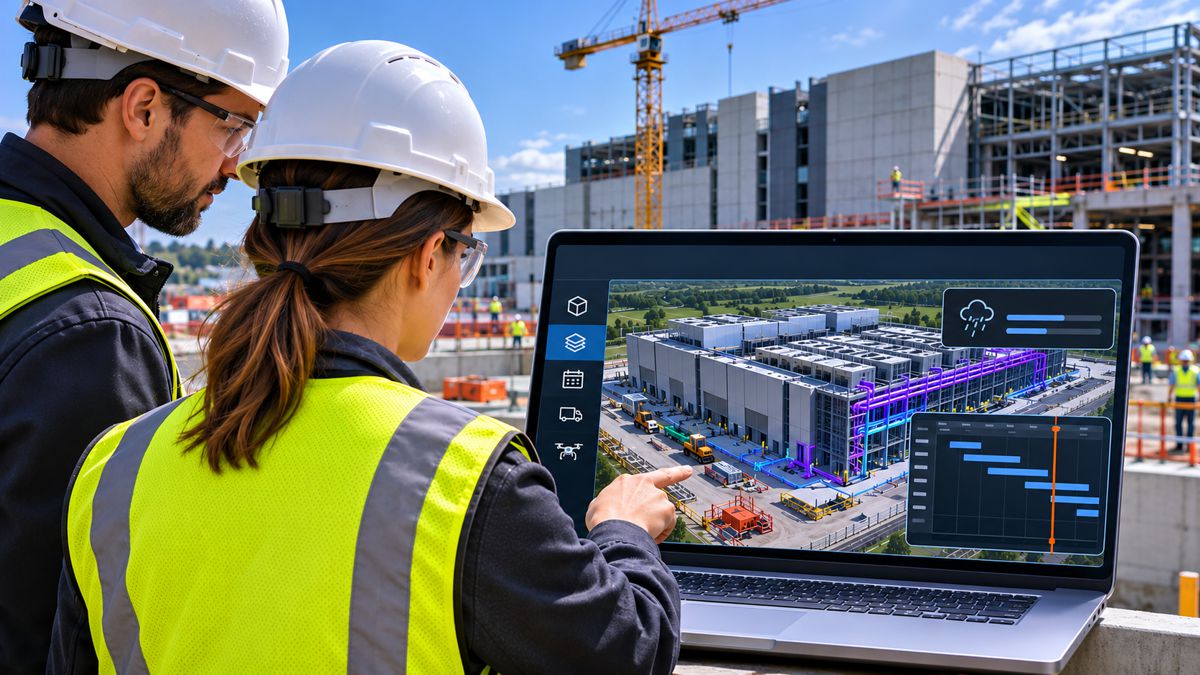
In sectors such as construction and infrastructure, digital engineering tools like simulation platforms, AI driven analytics and digital twins are becoming critical. According to research from McKinsey, digital technologies could improve productivity in the global construction industry by as much as 15 percent, a sector historically challenged by inefficiencies and fragmented workflows.
The Boston awards reflected this broader transformation. Several winning projects focused on improving operational visibility and automation across complex industrial environments. From integrated production models in the energy sector to digitally connected manufacturing systems, the projects recognised show how engineering intelligence is helping organisations manage increasingly complex infrastructure and supply chains.
As Todd Lavieri, vice chairman and president of ISG Americas and Asia Pacific, explained: “This year’s awards reflect the growing relevance of AI and digital engineering across industries, demonstrating how innovation and precision drive real business outcomes. The AI-focused categories showcased the industry’s commitment to harnessing AI and engineering excellence for overall growth. The success of the Digital Engineering Awards is a testament to the power of engineering in our era of rapidly evolving technologies.”
Global Technology Leaders Recognised Across Multiple Industries
The list of winning organisations reads like a cross section of global industry. Companies such as NVIDIA, AWS, Shell, Rockwell Automation, Philips, and IKEA Retail (Ingka Group) were among the firms recognised for their digital engineering initiatives.
These organisations operate in industries ranging from energy and manufacturing to healthcare and consumer retail. Their presence at the awards highlights a key shift in the technology landscape. Digital engineering is no longer confined to traditional engineering companies. Instead, it is becoming a universal capability across sectors.
The awards also recognised government and public sector initiatives. For instance, the Maharashtra Cyber Security Project secured the champion position in the Digital Transformation of the Year category. Projects such as this demonstrate how digital engineering techniques are increasingly applied to large scale governance and security systems.
Meanwhile, major industrial programmes also received recognition. Energy company Santos won the Digital Engineering Project of the Year award for its next generation Integrated Production Model, which aims to improve operational planning and asset management in energy production.
For infrastructure professionals, such developments highlight how digital modelling tools are reshaping project delivery. Integrated planning models allow engineers to simulate operational scenarios long before physical assets are constructed, reducing risk and improving investment decisions.
AI Driven Innovation Takes Centre Stage
Artificial intelligence featured prominently throughout the awards, reflecting the technology’s growing influence across engineering disciplines.
In the AI Impact of the Year category, Partex.AI secured the champion position for its biomedical intelligence ecosystem. The platform applies advanced machine learning techniques to accelerate research and development processes in the life sciences sector.
Other finalists demonstrated AI applications across aerospace development, industrial software and data driven decision systems. For example, AWS Automated Reasoning Checks illustrated how formal verification techniques can help identify software errors before deployment, an increasingly important capability in safety critical environments.
AI also played a major role in the Physical AI Impact of the Year category. Here, Etihad Rail received top recognition for its TrackEI locomotive inspection system, which uses advanced sensing and analytics to monitor railway infrastructure in real time.
Such technologies are becoming central to infrastructure maintenance worldwide. Automated inspection systems allow operators to monitor track conditions, bridges and other assets continuously, significantly reducing the need for manual inspection and improving safety.
Industry analysts increasingly refer to this convergence of artificial intelligence and engineering systems as Engineering Intelligence, a concept that merges data analytics, digital modelling and automation into integrated operational ecosystems.
Engineering Products Demonstrate Practical Innovation
Beyond software and analytics, the awards also highlighted tangible engineering products that illustrate how digital capabilities are embedded into physical systems.
The Engineering Product of the Year category was won by the Dubai Electricity and Water Authority R&D Centre for its OmniHub IoT terminal, a device designed to integrate sensors and communication systems for smart infrastructure networks.
Other recognised innovations included Komatsu’s WX04B battery electric load haul dump vehicle, which reflects the mining industry’s accelerating shift toward electrified equipment. Electric mining machinery has gained significant attention as companies seek to reduce carbon emissions and improve operational efficiency.
According to the International Energy Agency, electrification of heavy industrial equipment could play a crucial role in reducing emissions across resource extraction sectors. Battery powered machines are also quieter and require less maintenance, making them attractive for underground operations.
Another recognised product, Vanderlande’s SPOX parcel sorting system, illustrates how automation is transforming logistics infrastructure. With global e commerce continuing to grow rapidly, automated parcel handling technologies are becoming critical components of modern logistics networks.
Sustainability and Efficiency Gain Engineering Focus
Environmental performance also featured prominently at the Digital Engineering Awards, reflecting a growing expectation that engineering innovation must support sustainability goals.
The Top Sustainability Initiative award went to HPE Professional Services Delivery for its Adaptive Green AI project, which focuses on reducing the environmental footprint of artificial intelligence infrastructure.
AI computing systems are energy intensive. Research from the International Energy Agency indicates that global data centre electricity demand could more than double by 2030 due to the growth of AI and digital services. Technologies designed to optimise computing efficiency will therefore play an increasingly important role in reducing environmental impact.
Other sustainability focused initiatives recognised in the awards included aircraft water monitoring technologies, battery packaging innovations, and AI assisted lifecycle sustainability analytics.
For infrastructure sectors such as construction, such developments underline the growing integration of sustainability metrics into engineering processes. Digital modelling tools now allow engineers to assess carbon impacts, energy consumption and lifecycle performance during the design stage of projects.
Individuals Recognised for Engineering Leadership
Alongside organisational achievements, the awards also celebrated individual engineering leaders who have shaped technological progress in their fields.
The Distinguished Digital Engineering Leader category recognised professionals including Frank van Dijck of Vanderlande, Keisuke Suzuki of Japan Lifeline, and Prahlad Venkatapuram of Meta.
Meanwhile, the Digital Engineer of the Year category honoured innovators such as Beena Anand from Intel and Pankaj Goel from ExxonMobil, whose work reflects the increasing integration of digital capabilities into core industrial operations.
The Woman Engineer of the Year award highlighted the contributions of female leaders in engineering innovation, recognising Dr. Marry Gunaratnam, Jyotika Athavale, and Madina Doup.
Celebrating individuals alongside organisations serves an important purpose. Engineering breakthroughs rarely happen in isolation. They are driven by teams led by individuals capable of translating technological potential into practical industrial solutions.
MIT Media Lab Experience Connects Research and Industry
The event also provided finalists with the opportunity to visit the MIT Media Lab, one of the world’s leading centres for interdisciplinary research in technology and design.
Exposure to emerging research environments such as the Media Lab reflects the increasingly close relationship between academic innovation and industrial development. Universities play a vital role in early stage research, while companies translate those discoveries into commercial applications.
This partnership between research institutions and industry has historically driven major technological revolutions. From the development of the internet to advances in robotics and artificial intelligence, many transformative technologies emerged from collaborative research ecosystems.
By connecting award finalists with research laboratories, the Digital Engineering Awards aim to encourage knowledge exchange between innovators operating at different stages of the technology lifecycle.
Digital Engineering Emerges as Strategic Capability
The fourth edition of the awards highlights a broader trend shaping global industry. Digital engineering is no longer simply a support function within technology companies. It is rapidly becoming a strategic capability across nearly every industrial sector.
Engineering teams increasingly rely on digital tools to simulate systems, analyse operational data and optimise performance before physical assets are built. This approach reduces project risk, improves design quality and accelerates innovation.
S. Shivakumar, CEO of News18 Studios, reflected on the significance of the initiative: “The fourth edition of the Digital Engineering Awards continue to be a well-rounded initiative by scaling and adopting to the latest trends of the industry. We are inspired by the diversity and agility shown by this year’s participants, and it is gratifying that this collaboration offers a robust platform for industry leaders to share transformative stories and inspire others toward impactful solutions.”
Meanwhile, L&T Technology Services CEO Amit Chadha emphasised the long term potential of engineering intelligence: “We are proud to celebrate the extraordinary innovation shaping our industry through the Digital Engineering Awards. This year’s entries reflected a powerful shift underway, as AI continues to evolve. Its convergence with Engineering Intelligence (EI) will be transformative, dramatically accelerating real-world impact across industries and everyday life. We are honored to be part of this unique innovation journey and remain steadfast in celebrating the organizations and individuals who are boldly engineering a smarter, more sustainable future.”
Engineering Innovation Shapes the Future of Infrastructure and Industry
As industries navigate an era defined by digital transformation, the Digital Engineering Awards provide a snapshot of where technology is heading next.
Artificial intelligence, advanced simulation, robotics and connected infrastructure are no longer experimental technologies. They are becoming fundamental tools used to design, build and operate the modern world.
For sectors such as construction, transport and energy infrastructure, the implications are significant. Digital engineering enables more efficient planning, predictive maintenance and integrated asset management, helping governments and companies deliver large scale projects more reliably.
The innovations recognised in Boston suggest that the next decade of engineering will be shaped by the convergence of data, automation and intelligent systems. Organisations that successfully integrate these capabilities into their operations will likely lead the next wave of industrial transformation.