Panasonic Toughbook Strengthens Connectivity with Anterix Private Networks
Utility operators across North America are under growing pressure to modernise ageing infrastructure, strengthen grid resilience, and maintain operations during increasingly severe weather events. At the same time, the sector is grappling with mounting cybersecurity concerns and the practical challenges of keeping field teams connected across remote, rugged and often hazardous environments. Against that landscape, rugged mobile hardware and private wireless communications are becoming tightly linked parts of the same operational strategy.
It’s within this shifting industrial technology environment that Panasonic Corporation and Anterix have moved to deepen interoperability between rugged field hardware and utility-grade private broadband infrastructure. The announcement that the newly launched TOUGHBOOK 56 has earned the AnterixActive designation may sound like a technical certification on the surface, yet the broader implications run much deeper for utilities, transport infrastructure operators and industrial asset owners.
Private LTE and broadband communications operating in dedicated spectrum bands are increasingly viewed as essential infrastructure rather than optional technology upgrades. Public mobile networks, while widespread, can become congested or unavailable during emergencies. Utilities, transport operators and energy providers are therefore investing heavily in privately controlled wireless ecosystems that offer greater reliability, security and operational control. Rugged field devices capable of operating seamlessly within those networks are quickly becoming mission-critical tools.
Briefing
- Panasonic’s TOUGHBOOK 56 has received the AnterixActive designation for operation on 900 MHz private broadband networks
- The certification supports utility operators deploying secure private wireless infrastructure for field operations
- Private LTE and broadband systems are gaining traction across energy, transport and critical infrastructure sectors
- Rugged mobile devices are increasingly central to emergency response, maintenance and remote asset management
- Utilities are investing heavily in resilient communications to support grid modernisation and cybersecurity strategies
Private Wireless Networks Move Into The Mainstream
For decades, utilities relied heavily on narrowband radio systems and fragmented communications infrastructure to support field operations. While those systems proved dependable for voice communication, they struggled to support the growing demand for real-time data, video diagnostics, remote monitoring and advanced operational analytics.
The transition towards private broadband networks has accelerated as utilities modernise transmission infrastructure, renewable energy integration, smart grid systems and distributed energy assets. According to industry analysts at Deloitte and Guidehouse Insights, utilities are increasingly prioritising dedicated wireless infrastructure as part of long-term grid resilience programmes, particularly following major outage events linked to storms, wildfires and cyber threats.
Anterix has positioned itself at the centre of this transition by building what it describes as the largest licensed 900 MHz spectrum portfolio in the United States. The company focuses specifically on providing utilities and critical infrastructure operators with dedicated broadband spectrum that they own and control themselves.
That ownership model matters. Unlike public cellular services, private wireless systems allow operators to prioritise traffic, maintain tighter security controls and ensure operational continuity during periods of public network congestion. For industries managing electricity transmission, water systems, transport infrastructure or emergency response operations, the ability to maintain communications during a crisis can directly influence public safety and service restoration times.
The 900 MHz Spectrum
Spectrum choice plays a significant role in determining how well a wireless network performs across industrial environments. The 900 MHz band offers particular advantages for utilities because lower-frequency signals travel longer distances and penetrate obstacles more effectively than higher-frequency alternatives.
That characteristic becomes especially important in remote substations, rural transmission corridors, mountainous terrain and dense industrial facilities where connectivity gaps can hamper operations. Utility crews working in forests, deserts, coastal infrastructure zones or isolated renewable energy facilities often struggle with inconsistent mobile coverage.
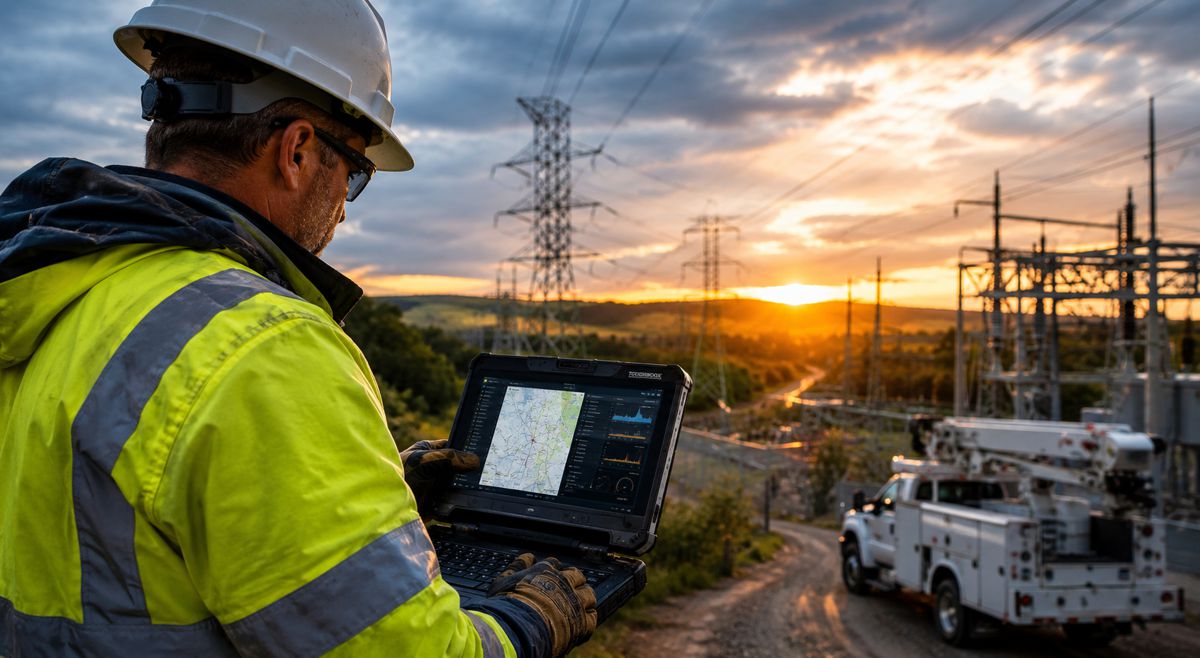
By enabling the TOUGHBOOK 56 to operate directly on Anterix-enabled private broadband networks, Panasonic is effectively aligning rugged computing hardware with the operational realities of utility infrastructure management. Workers inspecting transmission lines, maintaining substations or responding to outages can access more reliable communications while remaining connected to enterprise-controlled systems.
The growing reliance on distributed renewable energy infrastructure only increases the importance of dependable connectivity. Wind farms, solar installations, battery storage systems and remote grid assets require continuous monitoring and maintenance. Field teams increasingly depend on rugged mobile platforms for diagnostics, mapping, inspection reporting and asset management applications delivered in real time.
Rugged Devices Become Core Operational Infrastructure
Rugged devices have evolved well beyond their original role as durable laptops for harsh environments. Modern field hardware now functions as a central operational gateway linking workers to cloud platforms, GIS systems, predictive maintenance software, remote monitoring tools and AI-assisted analytics.
The TOUGHBOOK brand has long held a strong presence within emergency services, utilities, transport and defence sectors because of its durability under demanding operational conditions. Devices are commonly deployed in environments exposed to vibration, moisture, dust, extreme temperatures and rough handling.
The TOUGHBOOK 56 certification marks the first Panasonic rugged device to receive the AnterixActive designation. That interoperability reduces deployment friction for utilities already investing in private wireless infrastructure and may help accelerate adoption among operators seeking integrated technology ecosystems rather than isolated solutions.
“At Panasonic Connect, we understand the role that private networks play when it comes to field work – a critical mission that our customers rely on,” said Dominick Passanante, senior vice president and general manager, Mobility Business, Panasonic Connect North America.
“Through our collaboration with Anterix, customers have confidence that our next generation of rugged solutions offer out-of-the-box functionality on 900 MHz private broadband networks to support advanced connectivity needs and help their teams work effectively, whether they are restoring power after a storm or maintaining energy infrastructure.”
The operational implications extend beyond utilities alone. Rail operators, airports, ports, highways agencies and industrial operators are all exploring private wireless infrastructure to support connected operations and automation programmes.
Grid Resilience And Cybersecurity Drive Investment
The timing of the announcement reflects wider industry concern surrounding infrastructure resilience and cybersecurity. Utilities worldwide are facing heightened pressure from regulators and governments to strengthen operational technology networks against both physical and digital threats.
Cyberattacks targeting critical infrastructure have increased substantially in recent years. Meanwhile, severe weather events continue placing unprecedented stress on energy and transport networks. Utilities are therefore investing in communications systems that reduce dependence on public infrastructure while improving operational visibility.
Private wireless broadband networks allow utilities to maintain greater control over security architecture, authentication systems and network management. Combined with ruggedised hardware designed specifically for field deployment, operators gain a more controlled operational environment.
Anterix has focused much of its business strategy around enabling what it describes as utility-grade broadband infrastructure. The company’s ecosystem approach also involves encouraging compatibility between network infrastructure and operational devices used by field crews.
“The AnterixActive badge designation of Panasonic’s TOUGHBOOK 56 represents another step forward in expanding a trusted ecosystem for utility private networks,” said Steve Ryan, vice president of ecosystem and partnerships at Anterix.
“We’re focused on ensuring utilities have access to the devices and solutions they need to deploy secure, resilient communications at scale.”
This ecosystem model mirrors broader industrial digitisation trends where interoperability increasingly determines procurement decisions. Utilities no longer simply purchase standalone hardware or connectivity services independently. Instead, they seek integrated operational platforms capable of supporting long-term infrastructure modernisation programmes.
Industrial Connectivity Expands Beyond Utilities
Although the immediate focus remains on utilities, the broader market for private industrial broadband is expanding rapidly across multiple infrastructure sectors. Mining operations, transport authorities, ports, airports and manufacturing facilities are all deploying private LTE and emerging 5G networks to support automation and operational efficiency.
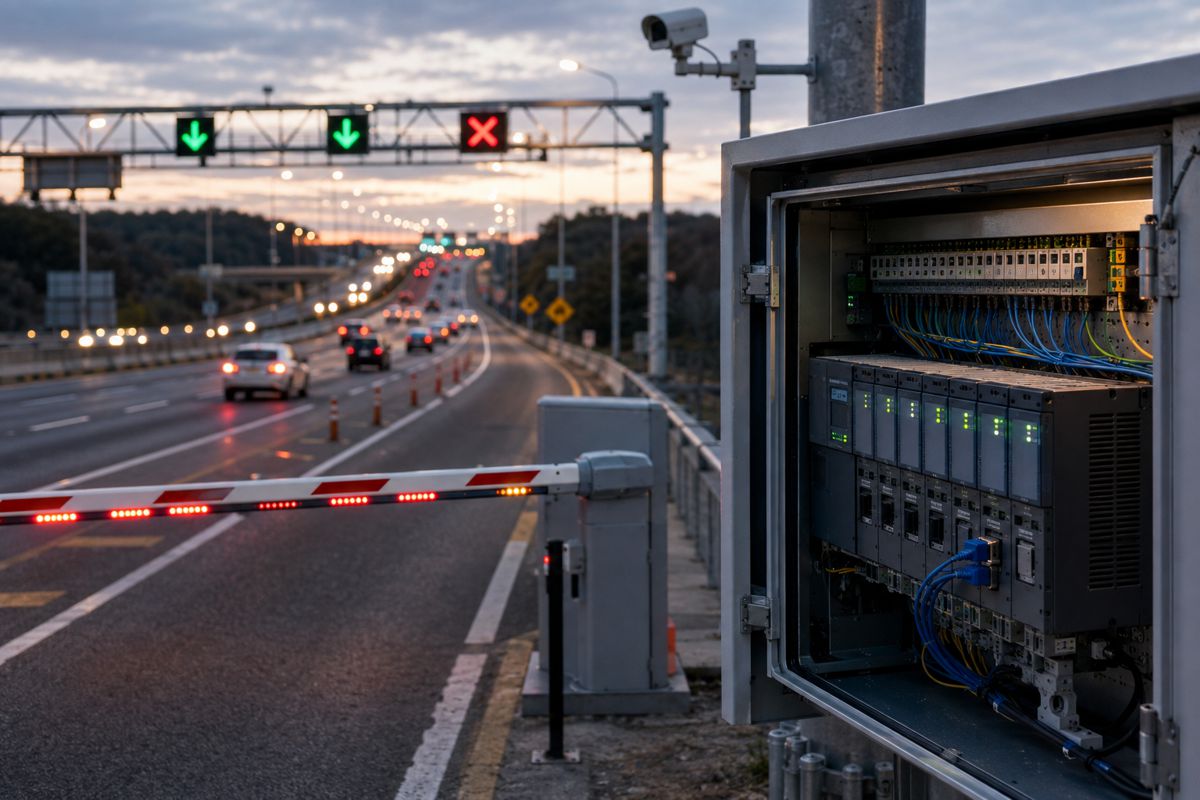
Transport infrastructure operators, in particular, are facing growing demand for resilient digital connectivity. Smart highways, connected maintenance systems, autonomous inspection technologies and intelligent traffic operations all rely on secure communications infrastructure operating across large geographic areas.
Rugged field devices capable of operating within those networks are therefore becoming increasingly valuable across the wider infrastructure ecosystem. As industrial operations become more data-intensive, field personnel require uninterrupted access to diagnostics, digital twins, maintenance systems and operational intelligence platforms.
The combination of dedicated spectrum ownership, rugged mobility hardware and enterprise-controlled networking aligns closely with the long-term direction of infrastructure digitisation. Operators are gradually shifting away from fragmented legacy systems towards integrated operational technology environments capable of supporting automation, predictive maintenance and AI-assisted decision-making.
The Growing Role Of Connected Field Operations
Field operations are undergoing a major technological transition. Paper-based workflows and disconnected maintenance systems are steadily giving way to real-time digital operations where data flows continuously between workers, infrastructure assets and central command systems.
The ability to maintain connectivity during emergencies remains especially important. Following hurricanes, wildfires, floods or large-scale outages, public cellular infrastructure can become unreliable precisely when operational communications matter most. Private broadband systems help utilities retain operational continuity under those conditions.
At the same time, regulators and infrastructure owners are demanding faster restoration times, improved operational visibility and stronger resilience planning. Connected field operations supported by rugged devices and secure private wireless infrastructure are increasingly central to meeting those expectations.
Panasonic’s latest certification milestone may therefore represent more than a straightforward hardware compatibility announcement. It reflects the wider industrial shift toward integrated, utility-owned communications ecosystems designed to support the next generation of critical infrastructure operations.
Building The Communications Backbone For Modern Infrastructure
As infrastructure sectors continue their digital transformation, resilient communications systems are becoming as important as the physical assets they support. Electricity grids, transport corridors, water systems and industrial facilities now rely heavily on continuous data exchange and secure operational visibility.
The partnership between Panasonic Connect North America and Anterix illustrates how rugged mobility, private broadband infrastructure and field operations are converging into a single operational ecosystem. For utilities facing mounting pressure to modernise infrastructure while improving resilience and cybersecurity, that convergence could prove increasingly significant over the coming decade.
Private wireless broadband may once have been viewed as a specialist technology reserved for a handful of industrial operators. Today, it’s steadily becoming part of the foundational infrastructure supporting modern energy and transport systems.