bauma SHANGHAI Evolves and Expands with a Second Venue for 2026
The construction machinery calendar’s most important Asian fixture is about to grow in the most literal sense. bauma SHANGHAI 2026, the biennial trade fair that anchors the sector across the Asia-Pacific region, will for the first time be staged across two exhibition centres in Shanghai’s Pudong district.
Organiser Messe München is framing the change as the most consequential in the show’s two-decade history, and the reasoning behind it tells a wider story about where China’s heavy equipment industry believes it is heading.
Under a “One Show, Two Venues” format, the fair will run at the Shanghai World Expo Exhibition and Convention Center (SWEECC) from 23 to 26 November 2026 and at the long-established Shanghai New International Expo Centre (SNIEC) from 24 to 27 November 2026.
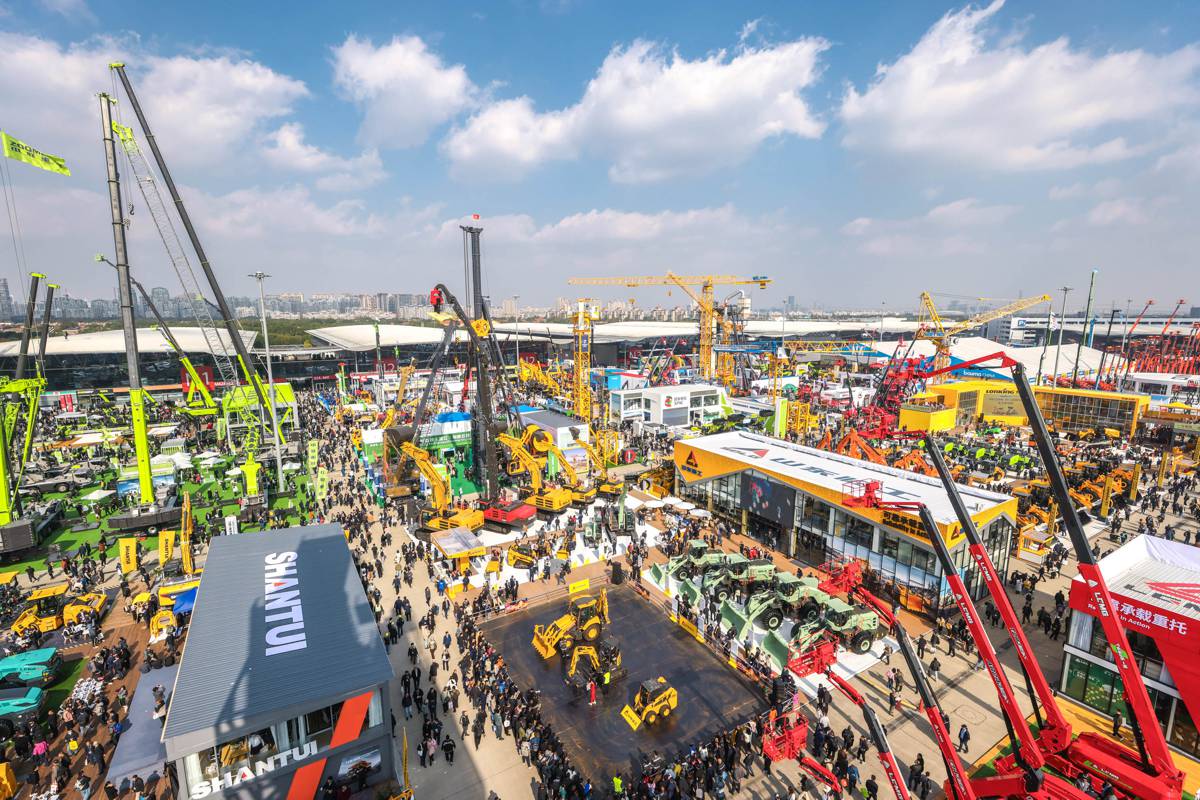
The two sites sit roughly ten kilometres apart in Pudong and will operate under a single brand, a shared product portfolio and one ticket. For an event known internationally as bauma CHINA, and one that drew more than 281,000 trade visitors to a single hall in 2024, the decision to add a second venue is a deliberate wager that demand still has room to expand.
Briefing
- bauma SHANGHAI 2026 will be held across two Pudong venues for the first time, with SWEECC running from 23 to 26 November and SNIEC from 24 to 27 November under a “One Show, Two Venues” concept.
- The expansion responds to a surge in exhibitor applications as China’s construction machinery sector returns to growth, with key enterprises reporting a 10.5 per cent revenue rise in 2025 and 8.44 per cent growth in the first quarter of 2026.
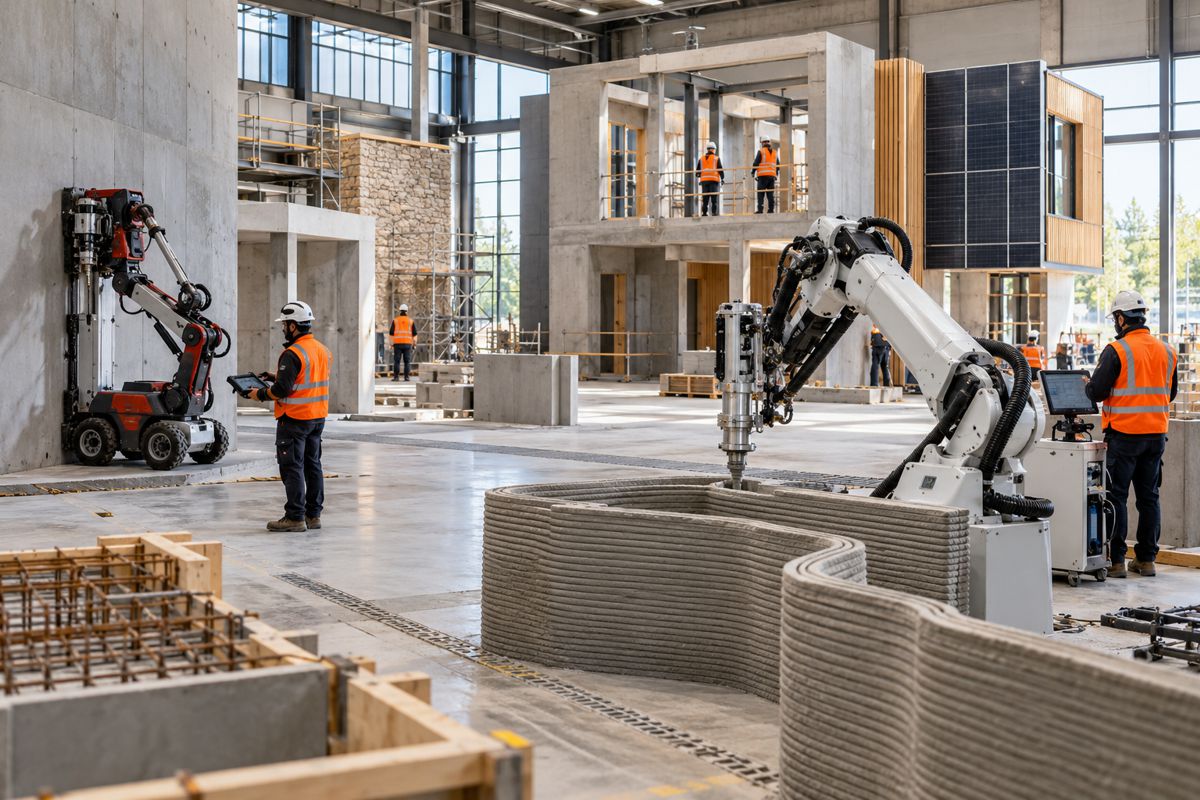
- SWEECC will house dedicated zones for new energy technologies, intelligent equipment and digital solutions, and will open the inaugural Construction Machinery Technology and Innovation Conference on 23 November.
- Komatsu, LiuGong and Sunward Intelligent are among the brands already confirmed to return.
- A “One Badge, Two Venues” policy, complimentary shuttle buses and metro links will connect the sites, with targeted buyer delegations invited from Southeast Asia, the Middle East, Africa, Europe and the Americas.
A Market Climbing Out of Its Trough
The timing is not coincidental. China’s construction machinery industry has spent several years grinding through a deep cyclical correction, and the second venue is essentially a vote of confidence that the recovery is real. According to the China Construction Machinery Association, key enterprises recorded a 10.5 per cent year-on-year increase in revenue in 2025 and carried an 8.44 per cent growth rate into the first quarter of 2026. Those figures sit on top of a domestic excavator market that returned to expansion last year, with national sales rising by roughly 17 per cent.
The export picture is doing much of the heavy lifting. China’s construction machinery shipments abroad reached around US$60 billion in 2025, and the first two months of 2026 saw exports climb more than 30 per cent year on year, with particularly steep gains across African and Belt and Road markets. Electrification is sharpening that competitive edge. China remains the only market where battery-powered construction equipment has reached genuine scale, and electric loaders have already pushed past a 30 per cent penetration rate domestically. For overseas buyers facing tightening emissions rules and rising tender requirements, that head start in zero-emission machinery is becoming a commercial argument rather than a marketing line.
Su Zimeng, Chairman of the China Construction Machinery Association, set the expansion against this structural shift: “The construction machinery industry is rapidly moving toward intelligent, electrified, green, and international development. Leveraging world-class trade fairs to foster technological innovation, global cooperation, and cross-industry integration will effectively drive the industry to achieve high-quality growth.”
The Case for a Second Hall
The addition of SWEECC is not simply about square metres. Messe München has positioned the new venue as the showcase for the technologies reshaping the sector, with dedicated exhibition zones for new energy, intelligent equipment and digital solutions sitting alongside live demonstration areas and high-level forums.
The hall will also open the programme a day early by hosting the inaugural bauma SHANGHAI 2026 Construction Machinery Technology and Innovation Conference on 23 November, co-organised with the China Construction Machinery Association. Anchoring the fair’s first day around a forward-looking conference signals an intent to lead the industry conversation rather than simply host the trade.
Stefan Rummel, CEO of Messe München with responsibility for the event, described the move as a turning point for the show: “The expansion to two venues marks a defining milestone for bauma SHANGHAI. Beyond increasing scale, the new venue (SWEECC) creates a dedicated platform for next-generation construction solutions – bringing together global innovators, accelerating knowledge exchange, and actively shaping the future of the industry.” The framing matters for exhibitors deciding where to place their stands, because a hall built around electrification, autonomy and digitalisation effectively becomes the room where buyers go looking for what comes next.
Exhibitor Demand and the Competitive Field
The structural change is being driven by capacity pressure as much as by ambition. Booth applications from both domestic and international companies have run ahead of expectations, and a single venue would have struggled to absorb the interest. Komatsu, LiuGong and Sunward Intelligent have already confirmed their return, a roster that spans Japanese, Chinese and intelligent-equipment specialists and points to the breadth of competition expected on the floor.
The 2024 edition provides the benchmark that organisers are now trying to exceed. That show occupied more than 330,000 square metres at SNIEC, drew 3,542 exhibitors from 32 countries and regions, and attracted 281,488 trade visitors from 188 countries and regions, with overseas attendance above 20 per cent and around 700 international brands present.
Evan Sha, President China and Chief Executive Officer of Messe Muenchen Shanghai, was careful to cast the expansion as a continuation of that trajectory rather than a departure from it: “The dual-venue expansion of bauma SHANGHAI 2026 represents far more than an increase in exhibition scale; it continues our long-standing commitment to quality, professionalism, and industry leadership. Operating under a unified brand identity and show concept, both venues will integrate to deliver a more comprehensive, full-spectrum ecosystem platform that strengthens global collaboration across the entire construction machinery value chain.”
Moving a Trade Fair Between Two Halls
Splitting an event of this scale across two locations introduces an obvious logistical problem, and the organiser’s answer is a tightly integrated operational framework. A “One Badge, Two Venues” policy will let visitors move freely between sites, supported by complimentary shuttle buses running on a regular schedule, enhanced metro guidance and upgraded on-site wayfinding.
The two centres are also linked by Shanghai’s metro network, and digital tools including a WeChat Mini Program and a round-the-clock AI customer service function are intended to help attendees plan routes between halls without losing time.
Visitor recruitment is shifting in parallel. Rather than broad outreach, organisers plan to lean on the bauma NETWORK to invite trade buyer delegations from Southeast Asia, the Middle East, Africa, Europe and the Americas, the same regions where Chinese exporters have been gaining ground fastest.
Within China, promotion is being widened across the upstream and downstream supply chain. For exhibitors weighing the return on a larger stand, the quality and international spread of those delegations will matter at least as much as the headline visitor count.
Pudong’s November Test
The dual-venue model is, in effect, a confidence indicator for the wider sector. Doubling the physical footprint of a flagship fair only makes commercial sense if exhibitors expect orders to justify the larger stands and buyers expect enough new technology to warrant the trip. The early signals, from confirmed returns to oversubscribed applications, suggest that bet is being placed with conviction.
What unfolds in Pudong this November will be read closely by manufacturers, investors and policymakers far beyond China. A successful two-venue debut would confirm that Asia’s construction machinery market has not only recovered its footing but has the depth to sustain the largest gathering the industry stages anywhere in the region.
The execution, particularly the movement of tens of thousands of professionals between two halls, will determine whether the format becomes the new template or a one-off experiment shaped by a single buoyant cycle.