Building Resilience as The Hague Plans its Coastline for 2100
The City of The Hague has set out how it believes its coastline should be managed through to the year 2100 and beyond, and for the firms that build and maintain sea defences the document reads less like a single landscaping idea and more like a century-long demand signal.
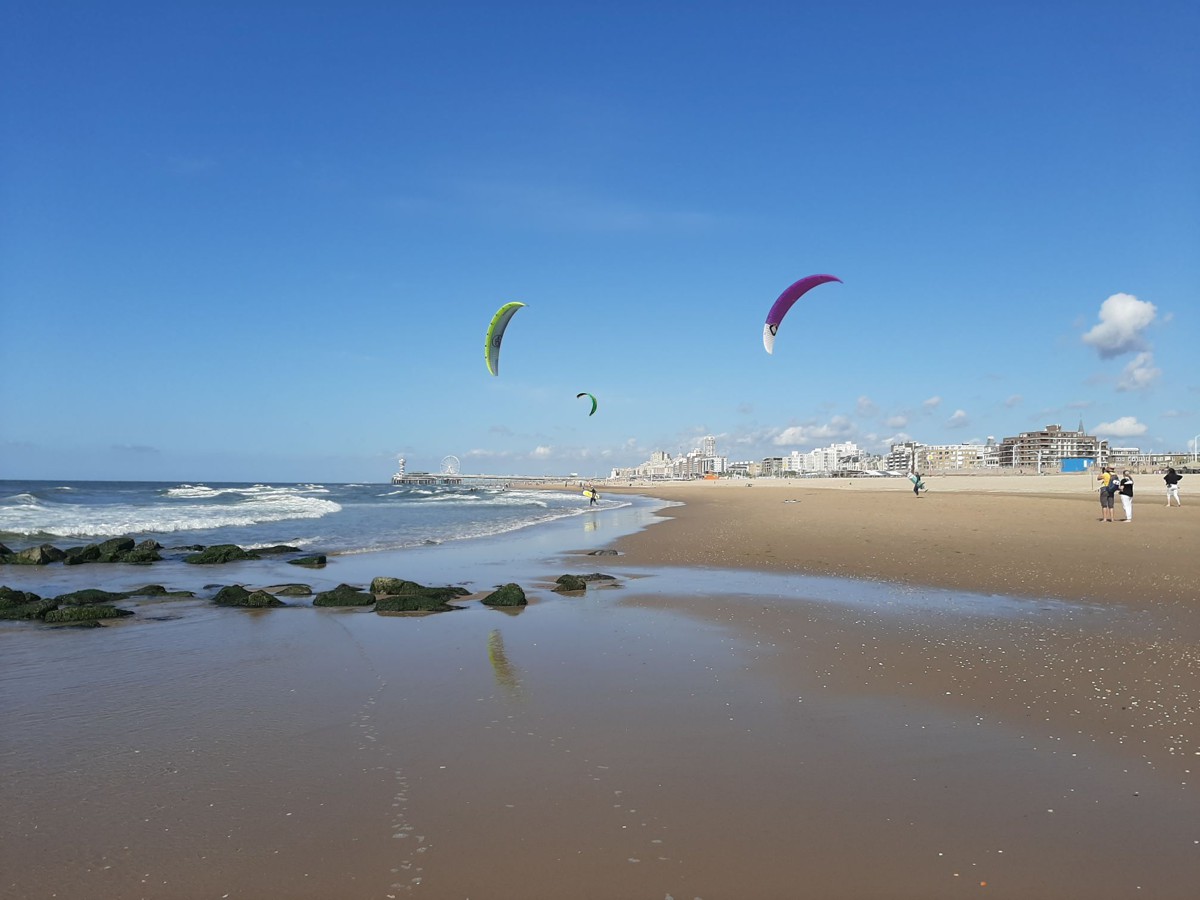
At its centre sits a scenario the municipality calls City Behind the Dunes, under which a dune belt roughly 200 metres wide would be coaxed into existence along the Scheveningen seafront through sustained sand nourishment and dynamic dune management. That commitment, if it holds across the decades and the political cycles between now and the end of the century, implies a long and recurring pipeline of marine sand supply, dredging mobilisations and nature-based engineering work along one of the most heavily used stretches of the Dutch coast.
What gives the vision weight beyond its own borders is the position from which it is being issued. The Hague is the only major city sitting directly on the Dutch coast, which makes it the test case for how a dense, economically valuable urban seafront adapts to rising water without simply walling itself off behind concrete.
The municipality is also doing something that matters to policymakers as much as to contractors, stepping forward as a local author of coastal strategy while acknowledging that the national government and the regional water authorities retain primary legal responsibility. By writing its own long-horizon perspective, the city is attempting to embed local ambitions into regional and national decision-making before the next major recalibration of Dutch flood policy arrives.
Briefing
- The Hague has published a long-term coastal vision to 2100, built around a City Behind the Dunes scenario that would grow a dune landscape around 200 metres wide along the Scheveningen seafront using sand nourishment and dynamic dune management.
- The method mirrors the building-with-nature approach proven at the nearby Zandmotor, a mega-nourishment of about 21.5 million cubic metres of sand placed off the South Holland coast in 2011 at a cost of roughly 70 million euros and judged a success at its ten-year evaluation.
- Scheveningen is the most difficult section to defend because its urbanised boulevard leaves little room to raise or widen existing sea walls, and it lacks the natural dune buffer that protects Westduinpark and Oostduinpark.
- Preserving Scheveningen Harbour may eventually require hard infrastructure such as a storm surge barrier or lock system, echoing the movable barriers of the Delta Works.
- The vision is described as a strategic direction rather than a fixed plan, positioning the city to feed local priorities into national flood planning ahead of the Delta Programme’s scheduled 2027 review.
A Long Order Book For Sand And Dredging
The commercial substance of the plan lies in its arithmetic rather than its imagery. Building and then holding a 200-metre dune at Scheveningen over several decades does not happen through a one-off intervention, it happens through a maintained regime of nourishment that keeps feeding sediment into a system designed to redistribute it. The Netherlands has run exactly this kind of regime nationally since the 1990s, when Rijkswaterstaat adopted a policy of preserving the coastline at its 1990 position through regular sand nourishment. The Delta Programme has been explicit that rising seas raise the bill over time, noting that more and more sand will be needed in the future simply to keep the coast where it is, which turns nourishment from an occasional project into a structural, long-dated procurement category.
That backdrop matters because the Netherlands is home to the world’s two largest dredging contractors, and a sustained domestic nourishment programme underpins the order books on which their global operations depend. The economics are already well understood from the Zandmotor experiment immediately south of The Hague, where roughly 21.5 million cubic metres of sand were placed in 2011 for about 70 million euros, a unit cost of a little over three euros per cubic metre.
The attraction of the building-with-nature model is that a single concentrated placement can do the work that several conventional nourishment cycles would otherwise require, spreading naturally along the coast and reducing the frequency of ecological disturbance. For investors tracking marine construction and coastal adaptation as an asset class, a coastal capital formally committing to that model across a multi-decade horizon is the kind of demand signal that tends to be more durable than a one-line capital budget.
Why Scheveningen Is The Hard Case
Engineers tend to find the urban seafront harder to defend than the open coast, and Scheveningen illustrates why. The boulevard is fixed, the hinterland behind it is dense and valuable, and there is limited room to raise or broaden the existing sea defences in the way a rural coast allows. Crucially, Scheveningen does not enjoy the natural dune buffer that shelters the city’s other coastal districts at Westduinpark and Oostduinpark, where dunes can in principle grow in step with rising water. Without that natural growth mechanism, the seafront cannot quietly absorb sea level rise the way a vegetated dune system can, which is precisely the gap the new vision is trying to close.
The proposed answer is to manufacture the missing buffer rather than reinforce the wall. Under the scenario, a new dune system would be developed seaward of the existing boulevard while the beach itself migrates gradually further out to sea, allowing the coastline to thicken and advance instead of simply being held in place.
Dynamic dune management would let wind and tide shape and feed that landscape over time, the same principle validated along the Delfland coast at the Zandmotor. Hard engineering does not disappear from the picture entirely, because Scheveningen Harbour would still need protecting, and the city acknowledges that a storm surge barrier or lock system may eventually be required to keep the port viable.
That combination of soft defence for the open seafront and movable hard infrastructure at the harbour sits squarely within the Dutch tradition that produced the storm surge barriers of the Delta Works.
A City Stakes A Claim In National Flood Planning
The governance dimension of the announcement may prove as consequential as the engineering. Responsibility for Dutch flood safety is shared across the national government, the provinces, the municipalities and the district water boards, with the heavy lifting historically coordinated through the national Delta Programme rather than by individual cities. By issuing its own perspective and explicitly framing it as a contribution to regional and national decision-making, The Hague is positioning itself to influence a system in which it is not the lead authority.
Alderman Nur Icar, who holds the climate adaptation portfolio, set out the city’s reasoning in plain terms: “The Hague is the only major city on the Dutch coast. That makes us unique. We can be proud of our diverse coastline, which offers space for recreation, businesses, hospitality, nature, sports and tourism. At the same time, our location by the sea brings challenges. It makes us vulnerable to rising sea levels.”
The timing is deliberate in policy terms. Dutch flood strategy is reviewed on a roughly six-year cycle, with the next major iteration of the Delta Programme due in 2027, and the science feeding that review has grown more sobering. National projections suggest sea levels along the Dutch coast could be anywhere between about 30 centimetres and 1.2 metres higher by 2100, with a faster melt of the Antarctic ice sheet capable of pushing that towards two metres.
Recent academic work on Dutch coastal risk management has argued that the current programme offers diminishing certainty beyond 2050, which helps explain why a city would choose to publish a vision reaching to 2100 and past it. Producing a strategic direction now, rather than a fixed plan, lets the municipality keep options open while still claiming a seat at the table, an approach consistent with the long-standing Dutch principle of soft defences wherever possible and hard ones only where necessary.
Sightlines, Beaches And The Business Of The Boulevard
Coastal adaptation in an urban setting is never purely an engineering question, because the value of a seafront is bound up with the businesses, views and visitors it supports. Scheveningen’s boulevard economy depends on its relationship with the sea, and the prospect of a 200-metre dune landscape advancing seaward raises immediate questions for operators about access, sightlines and footfall.
The municipality says it developed the vision in collaboration with experts, government partners, residents and trade bodies, including the Scheveningen Boulevard Entrepreneurs Association and the Association of Beach Operators, which signals an attempt to manage that tension early rather than impose a scheme later. For a sector where coastal real estate, hospitality and tourism revenues are directly exposed to both flooding and disruptive construction, that consultation is not a courtesy but a commercial necessity.
The trade response captured in the announcement reflects a pragmatic acceptance that change is coming. Henk Kool, chairman of the boulevard entrepreneurs, framed the calculation directly, saying “It is important to explore how Scheveningen and The Hague can continue to exist safely behind the dunes,” before adding “For entrepreneurs along the boulevard, maintaining a view of the sea is an important consideration. But doing nothing is simply not an option.”
Martin Wörsdörfer, who chairs the beach operators, set the same balance in a phrase the city will likely return to, arguing that “The Hague must remain a city by the sea, not a city in the sea. It is good that entrepreneurs are involved and will continue to be involved in shaping the future direction. We want to continue welcoming beach visitors in a safe and hospitable environment.” The challenge for planners will be to translate that conditional support into designs that protect the seafront without hollowing out the very economy the defences are meant to preserve.
What A Coastal Capital’s Century Plan Signals
The wider significance of the vision extends well beyond a single Dutch beach. Dutch coastal expertise is an export in its own right, and the building-with-nature techniques being proposed for Scheveningen have already travelled, informing schemes such as the sand engine built to protect the Bacton gas terminal in Norfolk and drawing study interest from the United States, Vietnam, South Africa and Indonesia.
A formal commitment by a coastal capital to that model, across a horizon stretching to 2100, gives the approach a high-profile urban reference point that other exposed cities and their advisers will watch closely. The same logic that pushes The Hague towards manufactured dunes and movable harbour barriers applies to seafront cities across Europe and beyond, which means the strategic and procurement choices made here have a demonstration value disproportionate to the length of coast involved.
For the construction and infrastructure sector, the message is about horizon as much as scope. Coastal adaptation is shifting from discrete defensive projects towards permanent, maintained systems that generate sustained demand for sand, dredging capacity, monitoring, and the engineering services that knit soft and hard defences together.
The Hague’s decision to plan to 2100, and to insert itself into national flood policy while doing so, is a reminder that the most important coastal investment decisions are increasingly being framed in century-long terms rather than budget cycles. Whether the City Behind the Dunes scenario survives feasibility testing or gives way to some combination of alternatives, the direction of travel is clear, and an industry that supplies the sand, the vessels and the barriers has every reason to read it as the opening of a very long order book.