Samsara’s Rebrand Puts Construction at the Centre of Connected Operations
A logo refresh would not normally trouble a construction trade desk, and Samsara’s first major visual overhaul since its founding could easily be filed under corporate housekeeping. The detail that makes it worth reading is where the company went looking for its new visual language. Samsara worked in partnership with Base Design, an international network of creative studios, to create the new brand, which grounds their new identity in worksites, truck cabs and field operations, with a custom typeface from the handwriting of Samsara’s own engineers, and a high-visibility yellow drawn directly from the site environment. A business that began life selling telematics into road fleets has chosen the vocabulary of plant and civils work to describe itself, and that choice is a commercial statement rather than a design one.
The timing sharpens the point. Samsara reported annual recurring revenue of $1.991 billion for the quarter ended 2 May 2026, up 30% year on year, with $101 million of net new ARR and a third consecutive quarter of GAAP profitability. Construction has been the strongest single contributor to that growth for several years running, and analysis of the company’s fiscal 2026 results identified construction as the largest source of net new annual contract value for the tenth consecutive quarter.
When a vendor of that scale rebuilds its brand around excavators and site compounds rather than tractor units and distribution centres, contractors, plant hirers and infrastructure owners are being told, in the most public way available, who the company now intends to sell to and how it expects to be judged.
Briefing
- Samsara has introduced its first major brand identity change since founding, grounded in worksite visual language including a high-visibility yellow, a reimagined owl and a typeface built from its engineers’ handwriting.
- The company reached $2 billion in ARR growing at 30% year on year, with emerging products such as AI-powered coaching and asset tracking collectively approaching $150 million in ARR and driving more than 20% of net new business.
- Construction has been Samsara’s leading vertical for net new annual contract value across ten consecutive quarters, making the sector the practical centre of gravity for its platform strategy.
- More than $1 billion has been committed to research and development since founding, with over 200 tested features released annually, including the recent Agent Studio, Samsara Tracking Label and AI Multicam releases.
- Rival Motive filed for a New York Stock Exchange listing in December 2025 under the ticker MTVE, setting up a public comparison that will reprice the entire connected operations category for buyers and investors alike.
Construction Has Become The Platform’s Growth Engine
The commercial architecture behind Samsara’s growth is straightforward and unusually well suited to contracting businesses. The company ended its most recent quarter with 3,363 customers spending more than $100,000 a year and 190 spending more than $1 million, with the larger accounts growing fastest; ARR from $1 million customers rose 62% year on year, accelerating for a fourth consecutive quarter.
Ninety-six per cent of six-figure customers now subscribe to two or more products and 70% to three or more, which is the signature of a platform that lands on one problem and expands into adjacent ones. For a civils contractor, that pattern usually begins with vehicle compliance and safety cameras before extending into plant tracking, maintenance scheduling and site workflow digitisation.
That expansion matters more in construction than in most sectors because of where the costs sit. Samsara has noted that among its largest customers, operating costs typically account for around 80% of revenue, which describes the economics of a heavy civils or utilities contractor with uncomfortable accuracy.
Margin improvement in that structure does not come from pricing, it comes from utilisation, fuel, insurance claims, unplanned downtime and the administrative hours consumed by paperwork. Software that measurably reduces any one of those line items competes for capital against a new machine purchase, and increasingly wins, because the payback is spread across the whole fleet rather than a single asset.
The Capital Cycle Behind The Repositioning
The wider backdrop explains why a telematics business would want to be seen as an infrastructure company. Samsara has pointed to McKinsey estimates that roughly $106 trillion of infrastructure investment will be required by 2040, driven by data centre construction, grid modernisation and the replacement of ageing public assets. Those programmes are asset-heavy and labour-intensive by definition, and the operators delivering them are managing more machines, more sites and more subcontracted crews than their systems were designed to handle.
Chief executive Sanjit Biswas has framed the constraint in reporting the company’s first quarter, describing customers facing unprecedented demand while limited by worker capacity.
Labour scarcity is what converts operational software from a nice-to-have into a procurement priority. When a contractor cannot recruit additional supervisors, plant managers or compliance administrators, the only route to higher output is to raise the productivity of the people already employed. Automated defect reporting, exception-based supervision and remote plant monitoring all address that problem directly, and they do so without the recruitment lead times and training overheads that constrain conventional scaling.
The same logic applies across highways maintenance, utilities and rail renewals, where framework contracts have expanded faster than the available workforce and where clients increasingly demand evidence of performance rather than assurances about it.
From Telematics Box To Operational AI Layer
The technical direction of travel supports the repositioning. Samsara now captures more than 25 trillion data points annually across more than 100 billion miles driven, covering 99% of major roads in the United States, and it has begun converting that asset into applied tooling rather than dashboards. At its Beyond conference in June 2026 the company launched Agent Studio, a build environment that lets operations teams configure automated agents from more than fifteen pre-built templates covering safety and maintenance workflows, without developer involvement.
Alongside it came a 360 Camera aimed specifically at operated equipment, extended AI Multicam capability and two-way voice through the dash cam, addressing the blind spots that make an excavator or a telehandler dangerous in a congested compound.
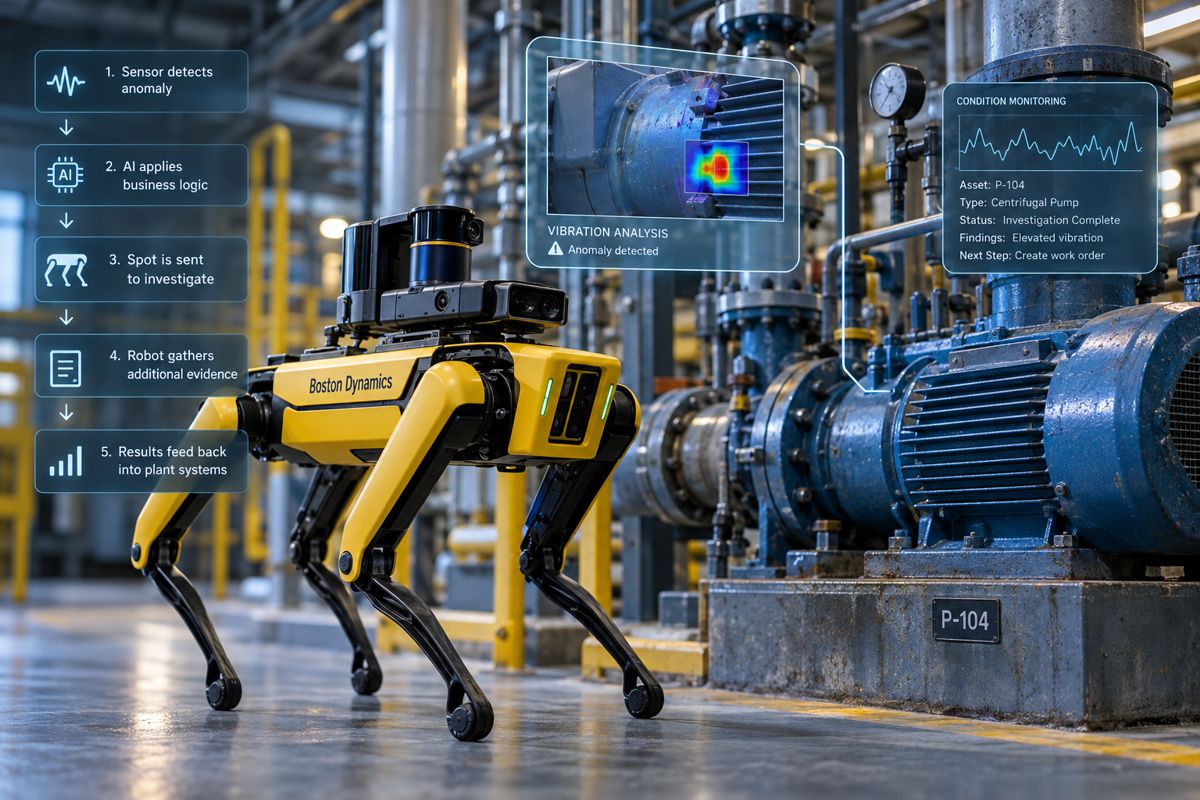
The distinction worth drawing for procurement teams is between visibility and action. First-generation telematics told a plant manager where a machine was and how many hours it had run, leaving interpretation and response to human attention that rarely existed in sufficient quantity. Agentic tooling closes that loop by triggering the maintenance request, the supplier communication or the operator coaching intervention automatically, which changes the value calculation from information provision to labour substitution.
That shift also raises the switching cost considerably, because a contractor that has embedded automated workflows into its maintenance and safety processes is no longer buying a replaceable hardware subscription.
Asset Tracking, Theft Economics And The Insurance Argument
Asset tracking is the clearest illustration of how quickly the commercial case can move, and it is the product line where construction leads every other vertical. Samsara’s February 2026 release introduced a latest-generation Asset Tag and a compact Asset Tag XS alongside an AI-driven theft and loss workflow, with the Samsara Network supplemented by an integration with Hubble’s terrestrial network of around 90 million consumer smartphones to extend coverage inside buildings.
An equipment superintendent at United States contractor DeSilva Gates reported a full recovery rate on thefts ranging from $1,000 petrol saws to machinery worth $2.8 million. Samsara’s own reporting indicates Asset Tag ARR tripled year on year, which is a demand signal rather than a marketing claim.
British and European readers will recognise why that product finds buyers so readily. Construction site theft in the United Kingdom now costs the industry more than £1 billion a year on industry estimates, with over 11,000 plant and equipment thefts reported annually and recovery rates historically poor.
The industry response has been collective, through the Construction Equipment Association’s CESAR scheme, which has registered more than 650,000 machines, and through the National Construction and Agricultural Theft Team funded jointly by the CPA, the CEA, CESAR donors and insurers.
Telematics-based recovery sits alongside those schemes rather than replacing them, and its commercial appeal lies in the insurance conversation, where demonstrable tracking and recovery performance influences premiums, excesses and the willingness of underwriters to cover high-value plant at all.
A Competitive Field About To Be Repriced
Samsara is not repositioning into an empty market. Motive, formerly KeepTruckin, filed a registration statement with the Securities and Exchange Commission in December 2025 seeking a New York Stock Exchange listing under the ticker MTVE, disclosing $327.3 million of revenue and a $138.5 million net loss for the nine months to 30 September 2025.
The company reports close to 100,000 customers including Halliburton, KONE, Komatsu, Maersk and NBCUniversal, and it has been explicit about pushing into construction and field service. As of mid-July 2026 the listing had not priced and the business remained privately held, with secondary market data indicating a post-money valuation around $3.08 billion.
The rivalry has already been litigated. Samsara disclosed a $30.3 million arbitration award over Motive’s marketing claims in early 2026, while Motive prevailed in an International Trade Commission investigation in which Samsara had sought exclusion orders covering AI dashcams and gateways, with the administrative law judge finding no Section 337 violation and no import ban taking effect.
Behind the legal exchanges sits a fleet telematics market valued at $10.42 billion in 2025 and forecast to reach $21.95 billion by 2032, contested by Geotab, Lytx, Verizon Connect and Trimble alongside the two leaders. For buyers, a Motive listing would create the first genuine public comparison of unit economics, retention and pricing power in the category, which is exactly the transparency that strengthens a contractor’s hand at contract renewal.
Built With Operators As A Procurement Signal
The brand ethos, described by Samsara as “Built with operators,” is the part of the announcement most likely to be dismissed as marketing and most worth taking seriously as a roadmap commitment.
Chief marketing officer Meagen Eisenberg described a research process running to dozens of customer interviews and site visits, saying “We approached the new brand exactly how we build products: side by side with operators. We ran dozens of customer interviews and on-site visits, and that research shaped every detail of the new brand, down to the environments we drew from and the details we chose to include. The result is a brand that matches our customers’ aspirations for the next decade.” Whether that process produced a better owl is a matter for designers, but the underlying claim about product development is testable against the release record.
Customers involved in the work describe the same feedback loop operating on the product side.
James Banner, senior vice president of administration and safety at Pike, which builds and maintains critical utility infrastructure, advised on the identity and said “Pike builds and maintains critical infrastructure that communities depend on. That’s the work I came up doing starting as a groundman in 1997, and it’s work Samsara understands in a way few technology companies do. They are a rare tech partner where I can see a straight line from operators’ feedback to the products they launch. What stands out now is seeing that same focus and collaboration showing up in the brand itself.”
Tom Olitsky, vice president of safety at Performance Food Group, framed the value in operational terms, noting “When it comes to innovation, what matters to PFG is impact — and Samsara delivers. Safer operations. Smarter decisions. Real results for our teams. The new brand reflects that same operators-first approach, and it’s an exciting next chapter for a partner that’s earned our trust.” For procurement teams, the useful question is not whether a vendor says it listens, but whether the release cadence of more than 200 tested features a year, funded by over $1 billion of research and development since founding, reflects the priorities of site operations or the priorities of a sales roadmap.
What Asset Owners Should Take From This
The practical consequence for construction and infrastructure businesses is that the connected operations market has moved from device procurement to platform procurement, and contract structures need to follow. Multi-product adoption is now the norm among large accounts, which delivers genuine integration benefits but also concentrates operational dependency in a single supplier and a single data model.
Contractors should be negotiating data portability, application programming interface access and exit terms with the same seriousness they apply to price per asset per month, because the value being created in maintenance automation and asset recovery will be difficult to reproduce elsewhere once workflows are embedded.
There is also a competitive window worth using. With Motive preparing a public listing, Samsara pushing into Europe through initiatives such as its United Kingdom pre-delivery installation programme with body builder Paneltex, and hardware costs falling as tags shrink and networks densify, buyers have more leverage than at any point in the past five years.
The operators who benefit most will be those treating telematics not as a compliance obligation but as the measurement layer for utilisation, fuel, insurance and labour productivity, and who can demonstrate that measurement to clients bidding increasingly outcome-based frameworks. A rebrand does not change any of that on its own, though it does confirm which customers the market leader now considers central to its next decade.

Key Industry Questions
- Why would a construction contractor care about a technology company’s rebrand? Brand decisions at this scale usually follow strategy rather than precede it, and the visual choices signal which customers a vendor intends to prioritise in product development, sales coverage and support. Samsara drew its new identity from worksites, truck cabs and field operations and adopted a high-visibility yellow taken from site environments, which aligns with construction having been its largest source of net new annual contract value for ten consecutive quarters. For contractors, that indicates roadmap attention is likely to concentrate on plant tracking, operated equipment safety and site workflow automation rather than long-haul freight features. It also has practical implications for support resourcing, integration partners and the specification of hardware designed for the vibration, dust and duty cycles of plant rather than trucks.
- What is the difference between fleet telematics and a connected operations platform? Fleet telematics is essentially location, engine diagnostics and compliance reporting for road vehicles, priced per vehicle per month and largely interchangeable between suppliers. A connected operations platform extends the same data foundation across non-road plant, unpowered assets, hand tools, site cameras, maintenance systems and workforce applications, then automates the response rather than simply reporting the event. The commercial distinction shows up in adoption patterns, with 96% of Samsara’s six-figure customers subscribing to two or more products and 70% to three or more. That breadth improves the return on the underlying data, though it also creates a deeper operational dependency that should be reflected in contract terms and exit planning.
- How significant is agentic AI for site operations in practice? The immediate application is administrative rather than autonomous. Samsara’s Agent Studio allows operations teams to configure automated agents from more than fifteen pre-built templates across safety and maintenance, handling tasks such as paperwork processing, vendor communication and driver messaging without developer involvement. The value is measured in supervisory hours released rather than machines controlled, which matters most where recruitment constraints prevent contractors from adding administrative capacity. Realistic expectations are important, because the company itself has noted that most operators remain early in adoption, and the benefit depends heavily on data quality and process discipline already existing within the business.
- Does plant tracking actually reduce theft losses? Tracking improves recovery rates and shortens the window between theft and detection, which is where most of the financial damage accumulates through hire replacement, programme delay and claims history. United Kingdom industry estimates put construction theft above £1 billion a year with more than 11,000 plant and equipment thefts reported annually, and historic recovery rates have been poor. Telematics complements established measures including the CESAR registration scheme, which covers more than 650,000 machines, and the work of the National Construction and Agricultural Theft Team. The strongest commercial argument is often the insurance one, since demonstrable tracking and recovery performance influences premium levels, excess structures and underwriter appetite for high-value plant.
- How should a contractor evaluate Samsara against Motive, Geotab or Trimble? Feature comparisons converge quickly, so the meaningful differences sit in total contract cost, integration with existing maintenance and enterprise resource planning systems, hardware suitability for non-road plant, and the commercial terms governing data access. Contract lengths of three to five years are common in this market, which makes exit provisions and application programming interface access as important as headline pricing. The competitive picture is also about to become clearer, since Motive’s pending New York Stock Exchange listing under the ticker MTVE would expose its retention, growth and margin profile to public scrutiny for the first time. Buyers approaching renewal in the next twelve months have a reasonable case for waiting until that comparison is available.
- What does the Motive listing mean for buyers and investors? Motive disclosed $327.3 million of revenue and a $138.5 million net loss for the nine months to 30 September 2025 in its December 2025 filing, against Samsara’s $1.991 billion of ARR and third consecutive quarter of GAAP profitability. The contrast between a profitable incumbent and a faster-scaling challenger will set valuation benchmarks for the whole category, including private suppliers seeking funding. For contractors, listed competitors mean published customer retention data, disclosed pricing dynamics and clearer visibility of vendor financial stability, all of which strengthen negotiating positions. The two companies also carry a litigation history, including a $30.3 million arbitration award to Samsara and an International Trade Commission ruling in Motive’s favour, which is worth noting in supplier risk assessments.
- Is the European market developing differently from North America? European adoption has lagged North America, partly because compliance drivers differ and partly because the installed base of construction-specific telematics from equipment manufacturers is well established. Samsara has reported accelerating European ARR growth across successive quarters and has extended its pre-delivery installation programme to the United Kingdom with body builder Paneltex, which reduces the downtime associated with retrofitting connected hardware. Regulatory context also differs, with tachograph rules, driver hours enforcement and data protection requirements shaping product localisation. European contractors should test whether a platform’s construction functionality has been genuinely localised or simply translated, particularly around compliance reporting and integration with local hire and maintenance systems.
- What should be included in a connected operations contract? Data portability is the first priority, covering the format, frequency and retention of exported data as well as continued access after termination. Application programming interface availability should be specified rather than assumed, since integration with maintenance management, hire management and enterprise resource planning systems determines whether the platform generates savings or merely another dashboard. Hardware ownership, replacement terms and the treatment of assets sold or disposed of during the contract are frequent sources of dispute in multi-year agreements. Contractors should also define measurement baselines at the outset for utilisation, fuel consumption, incident rates and downtime, because without them the return on investment case becomes impossible to audit at renewal.
Strategic Takeaways
- Construction has moved from being a secondary vertical for connected operations vendors to the leading source of new revenue, which means product roadmaps, hardware design and support models will increasingly be shaped by site requirements rather than road fleet requirements.
- The commercial case for operational software in contracting is now built on labour substitution rather than information provision, and businesses constrained by recruitment rather than capital will see the fastest payback from automation of supervisory and administrative work.
- Multi-product platform adoption delivers real integration benefits while concentrating operational dependency, making data portability, application programming interface access and exit terms as commercially significant as price per asset.
- Asset tracking has become the fastest-moving product category in construction technology because it connects directly to insurance economics, and demonstrable recovery performance is increasingly a factor in premium negotiation as well as loss prevention.
- A public listing by Motive would create the first transparent comparison of financial performance in the connected operations market, and contractors approaching renewal within the next year stand to gain negotiating leverage from that disclosure.