Trump Tower Tbilisi Anchors $2 Billion Downtown Development
A 280-metre skyscraper planned beside Tbilisi’s Central Park will become the first tower in a much larger attempt to create a new commercial and residential district in the Georgian capital.
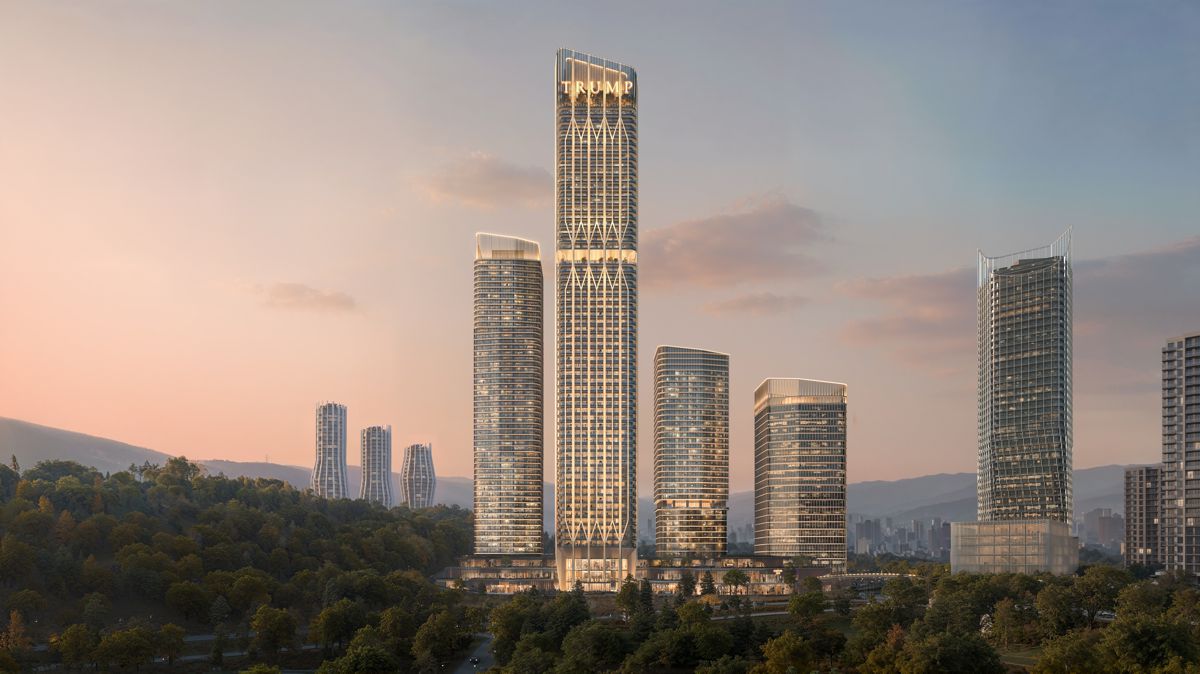
Trump Tower Tbilisi is now specified as a 62-storey building and is intended to become the tallest building in Georgia. Yet its height is only one part of a considerably larger construction programme. The tower will anchor Downtown Tbilisi, an approximately US$2 billion mixed-use development planned across an eight-hectare site with six towers and around 600,000 square metres of gross building area.
The scheme brings together Georgian developers Archi Group and INVIA with The Trump Organization, The Sapir Organization and several investment partners. Gensler’s Washington, D.C. office is responsible for the design of the tower.
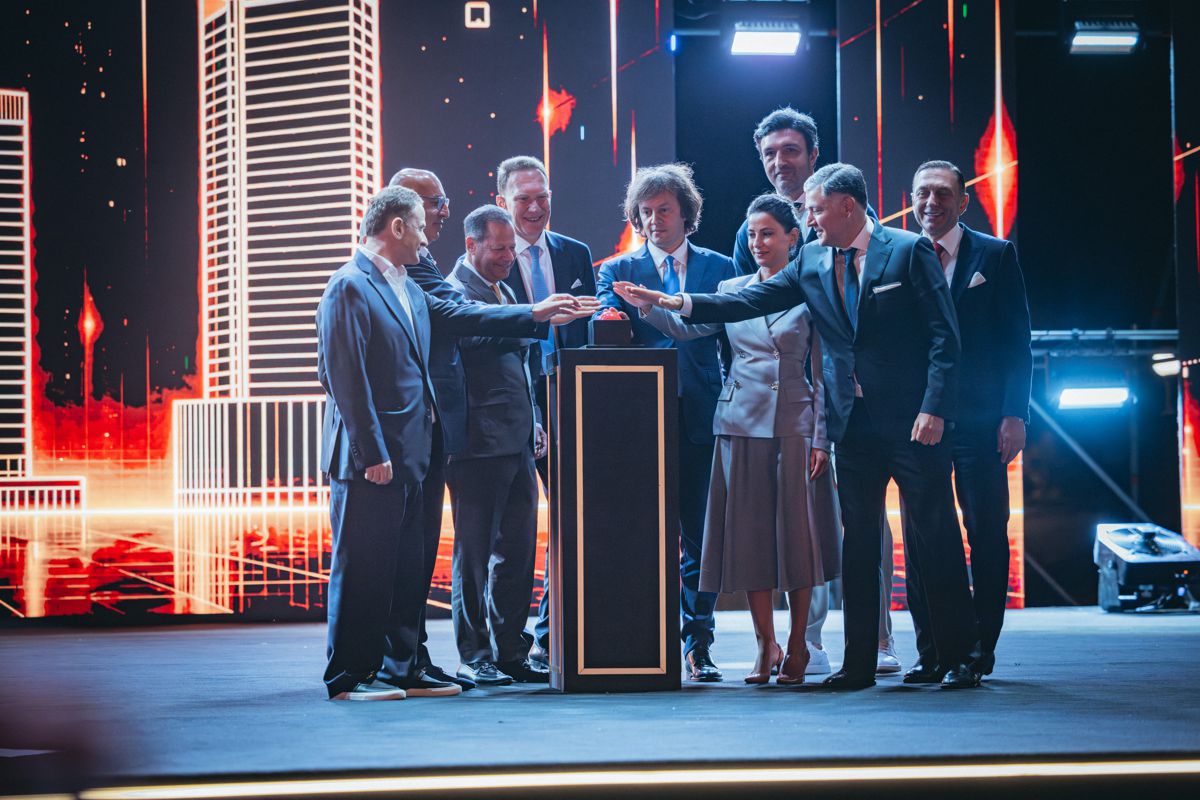
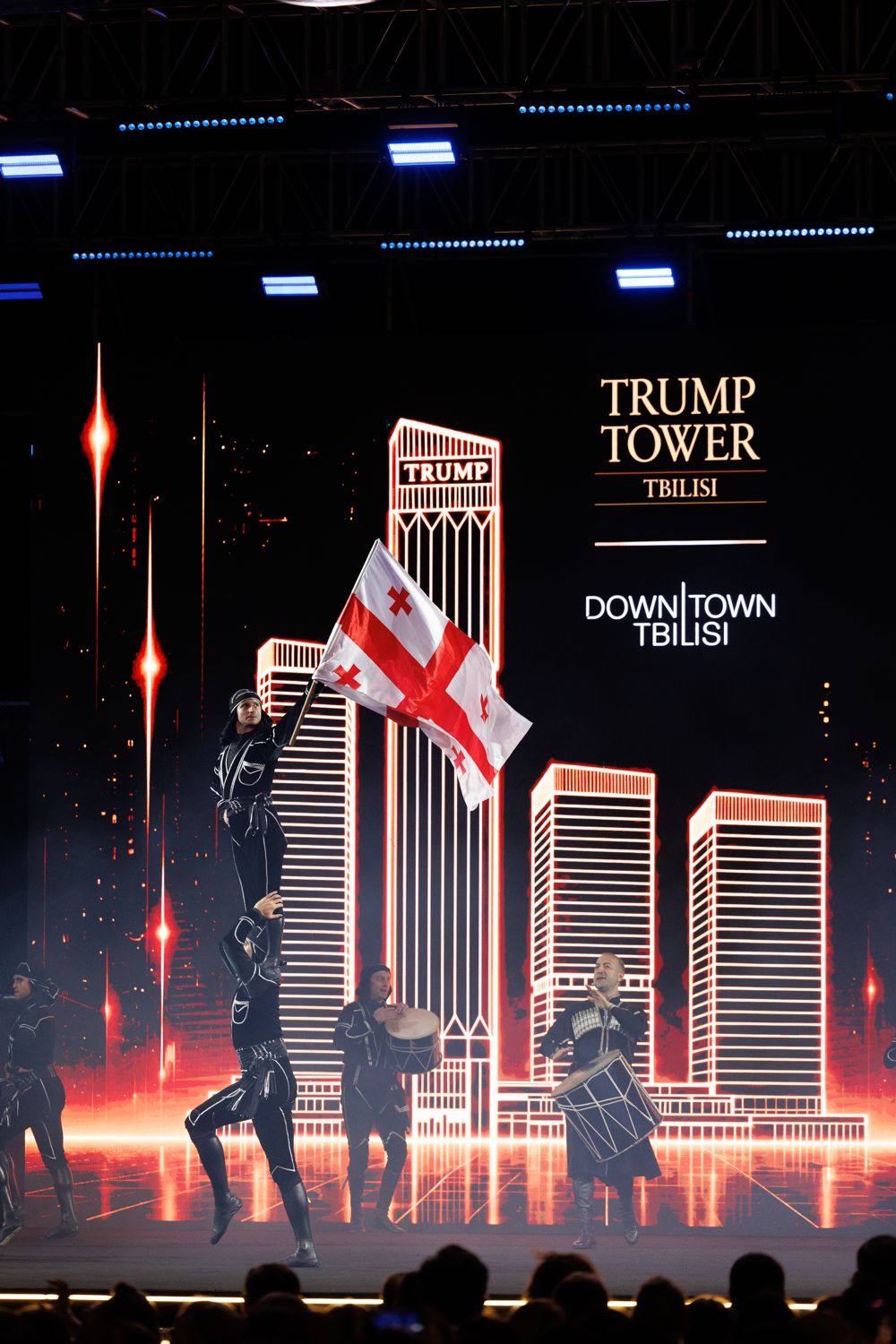
The project was formally unveiled in Tbilisi on 15 September, moving the development beyond the initial announcement made earlier in 2026 and providing considerably more detail about its scale, financing and commercial programme.
Briefing
- Trump Tower Tbilisi is planned as a 62-storey, approximately 280-metre tower beside Tbilisi’s Central Park.
- It will anchor the approximately US$2 billion Downtown Tbilisi development, comprising six towers and around 600,000 square metres of gross building area.
- The wider scheme includes residential, office, hotel, retail and dining space across an eight-hectare site.
- Joint credit facilities are being provided by TBC Bank and Bank of Georgia.
- Trump Tower is reported to be scheduled for completion in 2031, with the wider Downtown Tbilisi development following in 2033.
Building a New District
The physical scale of Downtown Tbilisi puts the tower into better perspective.
Current plans allocate approximately 2.7 million square feet to residential development, alongside 500,000 square feet of retail, 450,000 square feet of offices and another 450,000 square feet of hotel space. The podium is intended to connect the commercial development with the neighbouring Central Park through retail, restaurants and outdoor areas.
Rather than developing an isolated prestige tower, the partners are attempting to establish an entirely new mixed-use destination with sufficient residential and commercial density to operate as a district in its own right. Six towers will require roads, utilities, servicing, public realm, parking, pedestrian circulation and connections into the surrounding city, while the retail and hospitality components will depend on footfall extending beyond residents of the development itself.
The tower is planned to contain high-end residences alongside amenities and access to retail and dining within the wider development. Studio residences are being marketed from approximately US$290,000, with prices quoted by the developers at approximately US$650 to US$1,000 per square foot.
More than one quarter of Archi Group’s buyers are international, according to the company, giving some indication of the overseas market being targeted by the scheme. Downtown Tbilisi is being positioned towards international purchasers as well as domestic demand, placing the scale of the development partly on its ability to attract capital from beyond Georgia.
From 70 Storeys to 62
The design has already evolved since Trump Tower Tbilisi was first announced.
The Trump Organization described the project in April 2026 as an approximately 70-storey building designed by Gensler. The plans presented in September specify 62 storeys and a height of approximately 280 metres.
Such changes are not necessarily unusual for a skyscraper moving through design development. Floor counts, internal layouts, structural requirements and the relationship between occupied floors and architectural height can change considerably before detailed design and construction.
The 280-metre figure nevertheless puts the building into a different category from conventional high-rise development in Georgia. A tower of that height introduces engineering demands around foundations, wind loading, vertical transportation, fire and life-safety systems, façade performance and construction logistics, all while the surrounding district remains under development.
Local reporting following the September presentation indicates a target completion date of 2031 for Trump Tower, with Downtown Tbilisi expected to continue towards completion in 2033.
Financing the Development
Joint credit facilities for Downtown Tbilisi are being provided by TBC Bank and Bank of Georgia, two of the country’s largest financial institutions, whose respective parent groups are listed in London.
Large mixed-use schemes consume capital over long construction periods while individual components can generate returns at different stages. Residential sales, retail leasing, offices and hotels each have their own financing and demand cycles, making the sequencing of the wider master plan as important commercially as the delivery of its first tower.
The involvement of domestic lenders also places part of the project’s financial architecture within Georgia rather than relying exclusively on external capital. The precise construction programme, procurement structure and sequencing of the six towers have not yet been publicly detailed, leaving open how much of the US$2 billion master plan will be developed concurrently and how much will follow demand across successive phases.
The Legal Architecture Behind the Development
Financing is only one part of the structure required to carry a development of this scale through to completion. With international partners, domestic lenders, multiple construction phases and potentially thousands of individual property interests eventually involved, Downtown Tbilisi will also depend on a legal framework capable of remaining coherent as the project moves from planning and finance into construction, sales and long-term operation.
Davit Kortava, Attorney-at-Law and Managing Partner at Kortava Khatashvili Legal Intelligence, argues that this element deserves to be considered alongside the project’s engineering and financial arrangements.
“The legal architecture of a project of this scale is just as important as its physical architecture.”
Kortava points to the interaction between land and property rights, construction regulation, financing arrangements, developer obligations and investor protection. These elements do not operate independently: difficulties in one area can affect financing, construction programmes, sales or the rights of future owners.
That becomes particularly important where a development is intended to attract substantial international investment. Predictable contracts, clearly defined property rights and effective mechanisms for protecting investors can influence confidence in both the individual project and the wider Georgian property market.
Kortava’s perspective comes from working across different sides of complex construction projects, including representing developers and investors, restructuring developments with legal difficulties, construction litigation and work involving private property rights. His argument is that resolving the legal structure at the beginning is considerably easier than attempting to correct fundamental problems after construction, financing and property sales are already under way.
For Downtown Tbilisi, that raises a broader question than whether its six towers can be successfully delivered. If the development can combine international investment, Georgian development capacity, sophisticated financing and a predictable legal framework over a programme extending into the next decade, it could provide a useful model for other large-scale developments in the country.
Georgia’s Expanding Economy
The development is arriving during a period of strong economic growth in Georgia.
International Monetary Fund figures show real GDP expanding by 9.7 per cent in 2024 and 7.5 per cent in 2025. In its June 2026 Article IV assessment, the IMF projected growth of 6.5 per cent for 2026 before gradually moderating towards an estimated medium-term potential of around 5 per cent.
Georgia’s nominal GDP is projected by the IMF at approximately US$43.5 billion in 2026. Against an economy of that size, a development carrying an indicated investment value of around US$2 billion is substantial.
The IMF has also pointed to stronger fiscal and external buffers, public debt below 35 per cent of GDP and continued strength in sectors including information and communications technology and transport. It nevertheless identifies structural challenges and external risks, while noting that uncertainty in the wider region remains elevated.
Georgia’s geography continues to influence its investment landscape. Sitting between the Black Sea and the Caspian region, the country occupies part of the transport corridor connecting Europe with Central Asia and China. Infrastructure investment associated with the Middle Corridor has increased the economic importance of logistics and transit alongside tourism, property and services.
International Capital and Local Development
Downtown Tbilisi remains principally a Georgian development despite the international name attached to its first tower.
Archi Group and INVIA are the principal development partners, with The Sapir Organization serving as co-developer. Block Stone Capital, Finvest Georgia and Vector Group are identified as minority partners. The Trump Organization brings its branded real-estate model to the project, while Gensler provides the international architectural component.
The structure combines Georgian developers, lenders and investors with international design and branding, while a significant part of the residential proposition is directed towards overseas buyers. Applied across an eight-hectare master plan rather than a single building, that model will depend on sustained demand as successive parts of the development reach the market.
There are also political sensitivities surrounding an international real-estate development carrying the Trump name while Donald Trump is serving as US president. Those questions form part of the wider context surrounding the project and have attracted scrutiny in international reporting, although they are separate from the engineering and construction of Downtown Tbilisi.
For the construction market, much remains to be determined around procurement, phasing and the progression of the six towers from master plan to built development. A 280-metre tower alone would be a significant Georgian construction project. Delivering the wider scheme would create a multi-year programme involving contractors, consultants, specialist subcontractors, building systems suppliers and materials producers.
Delivering Downtown Tbilisi
Downtown Tbilisi is attempting to combine residential density, offices, hospitality, retail and public realm beside an established city park while drawing part of its customer and investment base from outside Georgia.
Trump Tower provides the landmark around which that proposition is being marketed. At approximately 280 metres, the building would establish a new high point on the Tbilisi skyline, but most of the construction programme lies beyond the tower itself.
The announced master plan extends to six towers and around 600,000 square metres of gross building area, with development expected to continue into the next decade. Its delivery will depend on financing, procurement, construction capacity and demand across several property sectors over a period of years.
The architectural proposition is already clear. The next stage is considerably more practical: turning an eight-hectare master plan into a functioning part of Tbilisi.
Key Industry Questions
- How tall will Trump Tower Tbilisi be? The current design specifies an approximate height of 280 metres across 62 storeys. Earlier plans referred to approximately 70 storeys, indicating that the design has developed since the project was first announced.
- Who is developing Downtown Tbilisi? Archi Group and INVIA are the principal developers. The Sapir Organization is a co-developer, with Block Stone Capital, Finvest Georgia and Vector Group participating as minority partners. Trump Tower Tbilisi is being developed in collaboration with The Trump Organization.
- Who designed Trump Tower Tbilisi? The tower has been designed by the Washington, D.C. office of global architecture practice Gensler.
- How large is Downtown Tbilisi? The current master plan covers approximately eight hectares beside Central Park and provides around 600,000 square metres of gross building area across six towers.
- What will the development contain? Plans include residential accommodation, offices, hotels, retail, restaurants, landscaped areas and associated amenities.
- How much will Downtown Tbilisi cost? The development partners describe the scheme as an approximately US$2 billion investment. A detailed public breakdown of construction costs across individual phases has not been released.
- How is the project being financed? The developers say joint credit facilities are being provided by TBC Bank and Bank of Georgia. Further details of the financing package have not been publicly disclosed.
- When will Trump Tower Tbilisi be completed? Georgian reporting following the September 2026 launch gives 2031 as the planned completion year for Trump Tower and 2033 for the wider Downtown Tbilisi development.
- Why is the project significant for Georgia’s construction sector? Beyond the tower itself, the proposed master plan would require a multi-year programme involving high-rise construction, infrastructure, utilities, façades, building services, fit-out, landscaping and public realm works.
- What legal issues does a development of this scale need to address? Land and property rights, construction regulation, financing, developer obligations and investor protection all need to work within a clear and predictable legal framework.
Strategic Takeaways
- Downtown Tbilisi is a district-scale development rather than a standalone skyscraper project.
- Domestic bank financing gives the scheme a substantial Georgian financial component despite its international branding and partnerships.
- A 280-metre first tower introduces high-rise engineering and construction requirements beyond those of conventional Georgian property development.
- The planned 2031 and 2033 completion dates imply a lengthy construction and procurement programme if the master plan proceeds as announced.
- International branding is being combined with Georgian developers, lenders and investment partners to address a property market extending beyond domestic buyers.