Closing the Loop on PVC: Construction Waste as Feedstock for Premium Synthetic Oils
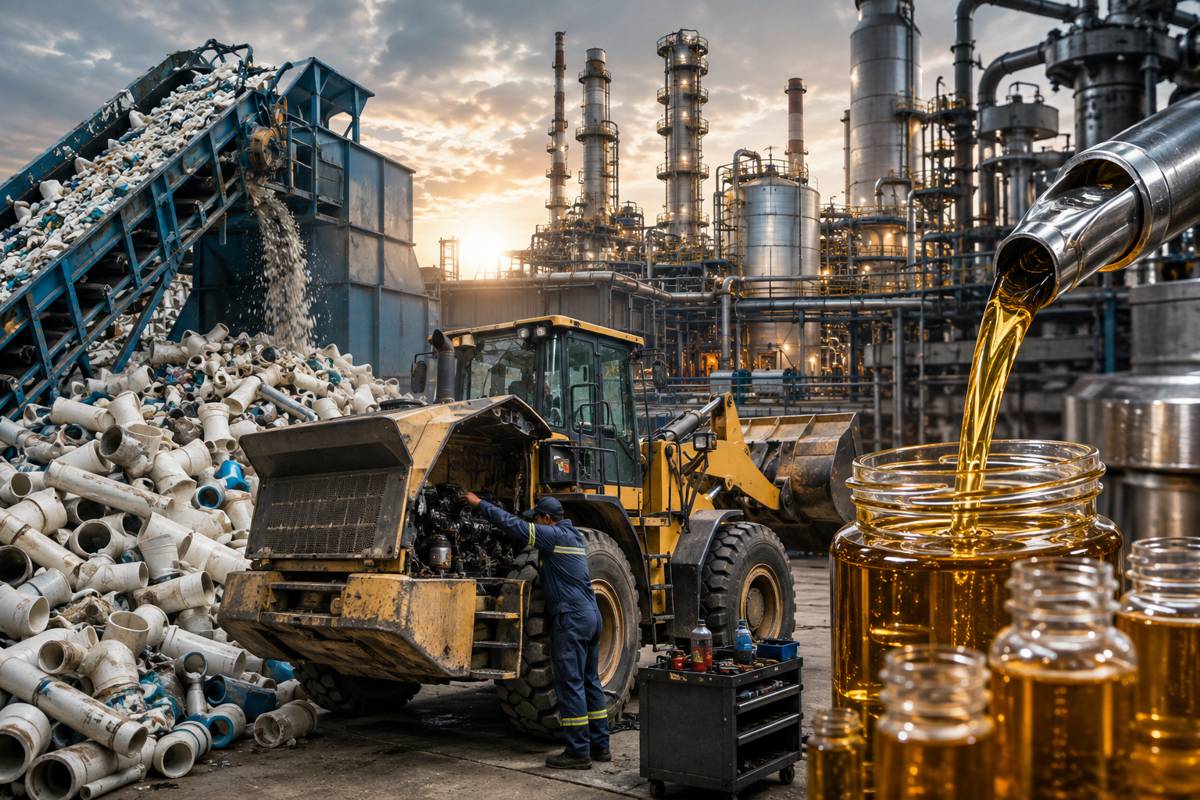
A chemistry group at Virginia Tech has published a process that converts polyvinyl chloride, one of the most stubborn plastics in the built environment, into polyalphaolefin, the premium synthetic base oil that sits at the top of the lubricant market.
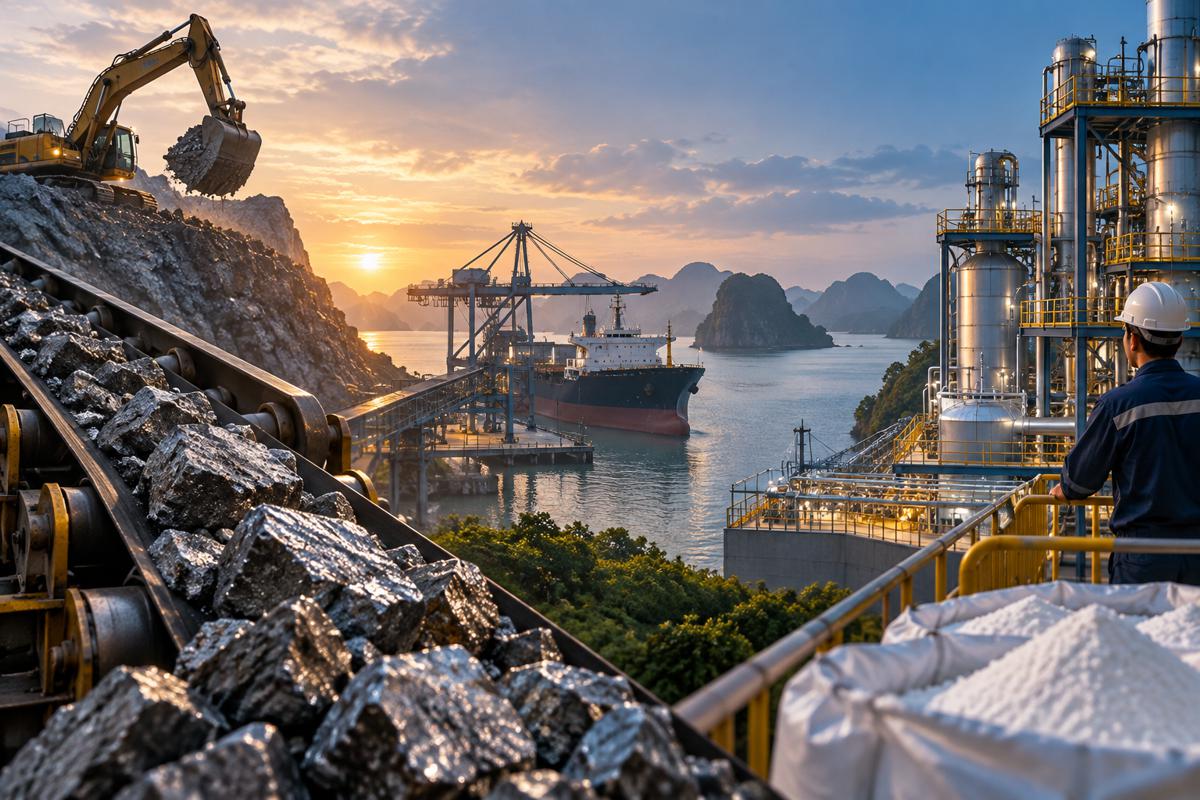
The work, led by chemist and chemical engineer Guoliang “Greg” Liu and reported in Nature, matters to construction and infrastructure for a reason that has little to do with laboratory novelty and everything to do with where two industrial markets are heading. PVC is overwhelmingly a construction material, and it is the sector’s single largest plastic-waste liability. Polyalphaolefin, by contrast, is a high-value fluid whose growth is constrained by a tight feedstock market. A credible chemical bridge between the two connects a disposal cost the industry already carries to a product the same industry buys in volume.
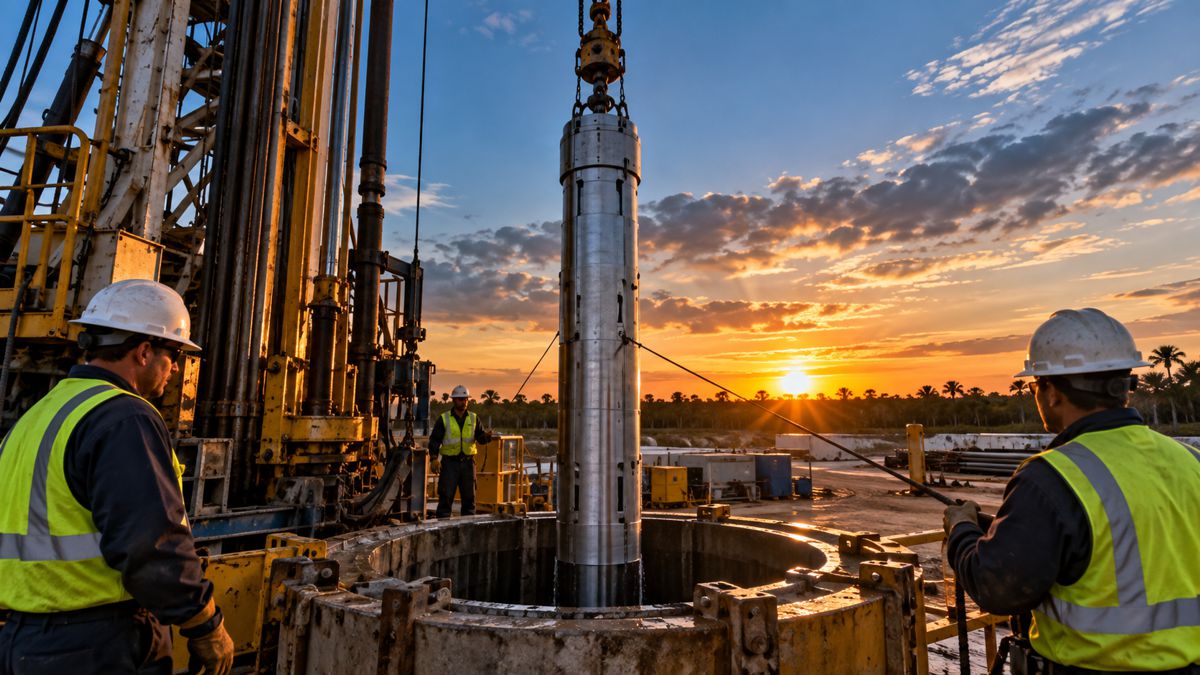
The commercial significance rests on that pairing rather than on the recycling headline. Construction accounts for the bulk of global PVC consumption in pipes, window profiles, cladding, ducting and cable insulation, and the same sector generates most of the PVC that eventually reaches landfill. At the other end of the value chain, the machines that build and maintain infrastructure, along with the wind turbines and electrified fleets increasingly tied to it, depend on synthetic lubricants whose base oils are becoming harder to supply at the required grade.
A route that turns a waste stream the industry produces into a feedstock for a fluid the industry consumes is the kind of loop that changes procurement logic, not just environmental reporting. That is the development worth examining in detail.
Briefing
- Virginia Tech’s Liu lab has converted polyvinyl chloride into polyalphaolefin, a premium synthetic base oil used in engine and industrial lubricants, in work published in Nature on 5 August.
- PVC is the third most-produced thermoplastic and among the hardest to recycle, with most waste sent to landfill and recycling rates running below 3 per cent, while construction accounts for the majority of both its use and its disposal.
- Polyalphaolefin is a supply-constrained product, with producers already shifting to mixed alpha-olefin feeds because the 1-decene that has fed the market since the 1970s is in tight supply against rising demand.
- The laboratory process combines waste PVC with alpha-olefins and an aluminium trichloride catalyst, heating the mixture to roughly 70 degrees Celsius for three hours to yield a thick lubricant oil.
- The route remains a bench-scale result validated by external tribology testing and cost modelling, and its industrial relevance will depend on scale-up economics, feedstock logistics and consistent product quality.
Construction’s Hardest Plastic Is Also Its Largest Waste Liability
PVC occupies an awkward position in the materials economy. It is durable, cheap and versatile, which is precisely why it dominates buried infrastructure and building envelopes, yet those same qualities make it a long-lived problem at end of life. The polymer is the third most widely produced thermoplastic after polyethylene and polypropylene, representing roughly an eighth of global plastic output, with worldwide production capacity now exceeding 50 million tonnes a year.
Chlorine makes up more than half its mass, and that chlorine, together with the wide variety of stabilisers, plasticisers and pigments that different manufacturers blend in, is what defeats conventional recycling. Mechanical reprocessing degrades machinery and rarely produces material of usable quality, and incineration carries the risk of generating dioxins and other hazardous by-products.
The result is a recycling rate that sits stubbornly in the low single digits, with the great majority of PVC waste consigned to landfill. That failure lands squarely on construction, which uses the largest share of PVC and generates most of the material that reaches disposal when buildings are refurbished or demolished and when infrastructure is renewed.
For asset owners and contractors, this is not an abstract sustainability concern but a growing cost and compliance exposure as extended producer responsibility rules, landfill restrictions and embodied-carbon reporting tighten across Europe and beyond. Any process that offers a genuine outlet for PVC waste therefore addresses a liability the sector is already being asked to manage, and it does so for a material that mechanical recycling has largely written off. That is the demand side of the equation the Virginia Tech work speaks to.
The Base Oil Squeeze Behind the Lubricant Market
The supply side is where the commercial thesis sharpens. Polyalphaolefin is the dominant synthetic base oil in high-performance lubrication, prized for its thermal stability, oxidation resistance, low-temperature flow and high viscosity index, and it underpins a synthetic base-oil market worth several billion dollars that continues to grow year on year.
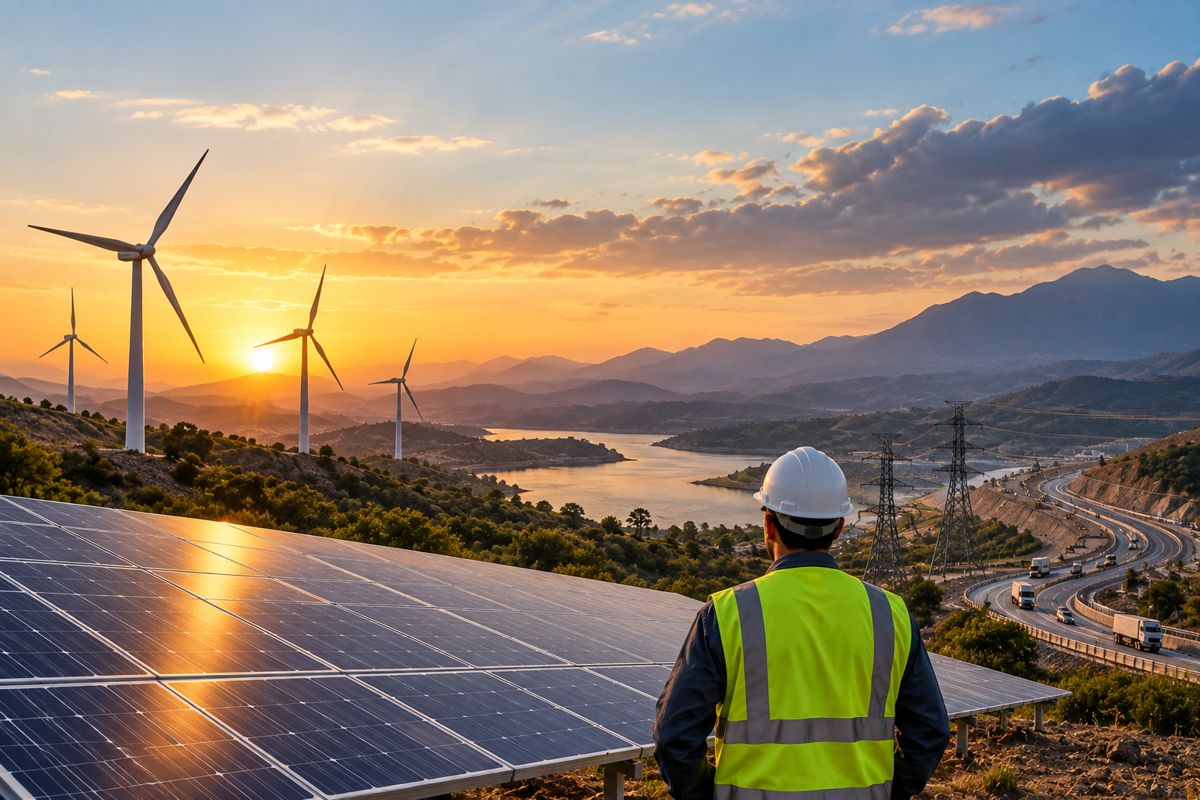
Europe and North America account for the largest regional shares, and the fluid’s premium positioning has been reinforced by three converging demand drivers: the shift to low-viscosity engine oils formulated for fuel economy, the rapid growth of electric-drive thermal management fluids, and the heavy reliance of the wind-power sector on PAO-based gear and turbine oils. Each of those trends ties directly to infrastructure and energy transition programmes that construction and civil engineering firms are increasingly delivering.
What makes the material strategically interesting is that its growth is throttled at the feedstock. Conventional polyalphaolefin is oligomerised from 1-decene, a linear alpha-olefin derived from ethylene cracking, and that specific cut has been the feedstock of choice since the early 1970s. Industry commentary from major producers has been candid that decene supply is tight against rising PAO demand, and that limited growth in linear alpha-olefin capacity has forced manufacturers such as ExxonMobil and Chevron Phillips Chemical to move toward mixed alpha-olefin feeds to keep customers supplied.
In other words, the premium lubricant market is not short of buyers, it is short of the right molecules. A process that introduces an additional carbon source into base-oil production speaks to exactly that constraint, which is why the Virginia Tech route deserves to be read as a feedstock story rather than a waste story.
What the Liu Process Actually Does
The chemistry is more considered than a simple waste-to-oil conversion, and the detail matters for judging its industrial relevance. The team dissolves PVC, of the kind found in domestic plumbing, window frames and even credit cards, in a solvent, adds alpha-olefins and aluminium trichloride as catalyst, and heats the mixture to around 70 degrees Celsius for three hours.
The product recovered from the solvent is a relatively thick oil that behaves as a lubricant. The alpha-olefins are not incidental; they are part of the recipe, which means the process supplements rather than replaces the alpha-olefin chemistry that PAO production already relies on, while drawing additional carbon from the waste PVC. The published work does not quantify how far that displaces virgin feedstock, and that figure will be central to any commercial assessment.
The breakthrough came from a shift in objective rather than a single reaction. Liu’s group had already established a track record in converting polyolefin waste into surfactants such as soaps and detergents, work published in Science and Nature Sustainability, and it turned that experience toward PVC with recycling in mind. Early attempts to swap out the chlorine atoms produced material that was soft and gooey rather than functional, and the decisive move was to stop trying to preserve the polymer and instead keep cleaving it into smaller segments.
As Liu put it, “One day I realized — if this polymer is so gooey and so soft, why don’t I just keep breaking the polymer chains down to smaller segments?” That change of tack turned an underwhelming recycling attempt into something with a defined commercial target. Liu summarised the two claims the group is prepared to stand behind: “Number one, we have proved that it is feasible to use plastic waste to make high-performance lubricants. Number two, these lubricants are green, and they can meet the emerging needs for sustainability by the market.”
From Bench Result to Industrial Question
A laboratory oil that passes internal tests is a long way from a base stock a formulator will buy, and the Virginia Tech team appears to understand that the validation and the economics are where the argument is won. Liu sent samples to Ali Erdemir at Texas A&M University for tribological testing of the finished material, worked with William Goddard at Caltech on the chemical computations, and drew on Virginia Tech colleague Xi Chen for production and cost modelling aimed at understanding how the oil might be made at scale.
That combination of external performance testing and techno-economic analysis is the right shape for a result intended to reach market, and it distinguishes the work from purely academic recycling demonstrations. The doctoral researcher Eric Munyaneza Nuwayo led the effort, supported by graduate students Connor S. Thompson and Abby Civiello, a group Liu affectionately described when he said, “I often called them the three musketeers.”
The open questions are the familiar ones for any chemical-recycling route, and they are commercial rather than scientific. Feedstock logistics will determine whether enough clean, sorted PVC waste can be gathered economically, given how contaminated and additive-laden real-world PVC tends to be. Catalyst cost and recovery, solvent handling and the fate of the chlorine stripped from the polymer will all shape the process economics and the environmental case.
Product consistency will decide whether the oil can meet the tight specifications that lubricant formulators demand across viscosity grades. None of this diminishes the significance of the result, but it does frame what has to be demonstrated next. Liu was clear that scale and reach are the priority, describing lubricants as “the silent hero out there” and setting out the ambition to “produce the oil on a larger scale to reach more people in the world.”
What It Means for Infrastructure Owners, Investors and Formulators
For construction and infrastructure decision-makers, the strategic interest lies in the loop rather than in any single technology. An industry that generates PVC waste in enormous quantities and buys synthetic lubricants for its plant, its renewable-energy assets and its vehicle fleets has an obvious reason to care about a chemistry that connects the two. If the route matures, it offers a potential answer to two costs at once: the rising expense and reputational exposure of PVC disposal, and the supply pressure on premium base oils that keeps high-grade lubricant prices firm.
That is a rare alignment, and it is the kind of circular proposition that investors and policymakers pursuing genuine material circularity, rather than symbolic recycling, will find compelling. It also fits the direction of regulation, as extended producer responsibility and embodied-carbon accounting increasingly reward outlets that keep difficult materials out of landfill.
The competitive implications are worth watching for anyone in the chemical-recycling, lubricants or waste-management value chains. Base-oil producers already searching for feedstock flexibility have a clear incentive to evaluate any route that broadens the carbon base of PAO production, and waste handlers sitting on PVC streams they currently pay to dispose of have an incentive to find higher-value outlets.
The commercial value in this development is likely to concentrate wherever the feedstock aggregation, the process licensing and the product qualification meet, which is to say at the intersection of waste logistics and specialty chemistry rather than in the laboratory itself. Industry leaders reading this should treat it as an early signal about where circular-materials value may accumulate, monitor the scale-up evidence closely, and factor the possibility of PVC-derived base oils into longer-term thinking on both waste strategy and lubricant procurement.
The proof will be in tonnes produced and specifications met, but the direction of travel is one the built environment has good reason to encourage.
Key Industry Questions
- Why does a plastics-recycling breakthrough matter to construction specifically? Construction is the dominant consumer of PVC, using it across pipes, window profiles, cladding, ducting and cable insulation, and it is also the largest source of PVC that reaches landfill when assets are refurbished or demolished. The sector therefore carries most of the disposal cost and compliance exposure attached to a material that conventional recycling has largely failed to address. A process that turns that waste into a saleable product speaks directly to a liability the industry already manages, which is why a chemistry result reported in a scientific journal has practical relevance for asset owners, contractors and waste handlers rather than only for chemists.
- What is polyalphaolefin and why is it valuable? Polyalphaolefin, or PAO, is the leading synthetic base oil used in high-performance lubricants, including engine oils, industrial gear oils, compressor fluids and increasingly electric-drive thermal management fluids. It is prized for thermal stability, oxidation resistance, low-temperature flow and a high viscosity index, which allow lubricants to protect equipment across demanding operating conditions and extended service intervals. It commands a premium over conventional mineral base oils, and its use is expanding with fuel-economy engine oils, wind-power gear systems and vehicle electrification, all of which tie it closely to the infrastructure and energy-transition work the construction sector delivers.
- Does this process eliminate the need for conventional feedstock? No, and this is an important distinction. The laboratory route combines waste PVC with alpha-olefins and an aluminium trichloride catalyst, so the alpha-olefin chemistry that conventional PAO production relies on is still part of the recipe. What the process adds is an additional carbon source drawn from waste PVC. The published work does not quantify how much virgin feedstock this displaces, so the degree to which it eases the well-documented tightness in 1-decene supply remains to be established. It is best understood as a route that broadens the feedstock base rather than one that replaces it.
- How close is this to commercial production? The result is a bench-scale process supported by external tribological testing and techno-economic modelling, which is a more market-oriented footing than many academic recycling demonstrations achieve. It is not, however, a commercial product. Scaling would require reliable aggregation of sufficiently clean PVC waste, manageable catalyst and solvent costs, a sound solution for the chlorine removed from the polymer, and a base oil consistent enough to meet formulators’ specifications across viscosity grades. Those are commercial and engineering hurdles rather than scientific unknowns, and the pace of progress will depend on partners willing to fund pilot-scale demonstration.
- What happens to the chlorine in the PVC? Chlorine accounts for more than half the mass of PVC and is the principal reason the polymer resists conventional recycling, because it damages machinery in mechanical processing and can form hazardous compounds if the material is incinerated. Any chemical route that upcycles PVC has to account for the chlorine it strips out, both for the environmental case and for the process economics, since recovered chlorine or hydrochloric acid can be a liability or, if handled well, a saleable co-product. The environmental credibility of PVC upcycling routes ultimately rests as much on responsible chlorine management as on the value of the product they create.
- Why is the polyalphaolefin market considered supply-constrained? Conventional PAO is made by oligomerising 1-decene, a linear alpha-olefin derived from ethylene cracking, and that specific cut has been the feedstock of choice since the early 1970s. Producers have publicly acknowledged that decene supply is tight against rising PAO demand, with limited growth in linear alpha-olefin capacity, and several have moved to mixed alpha-olefin feeds to keep supplying customers. The market is not short of buyers but of the precise molecules required, which is what makes any process capable of broadening the feedstock base commercially interesting rather than merely environmentally worthy.
- Which sectors would benefit most if the route scales? The most direct beneficiaries would be base-oil and lubricant producers seeking feedstock flexibility, and waste-management operators holding PVC streams they currently pay to dispose of. Downstream, sectors that consume large volumes of premium lubricant would gain from any easing of base-oil supply pressure, including heavy construction plant, wind-power operators reliant on PAO gear and turbine oils, and electrified vehicle fleets. The value is likely to concentrate where feedstock aggregation, process licensing and product qualification meet, which favours players positioned across both waste logistics and specialty chemistry.
- How should infrastructure owners respond to an early-stage development like this? The sensible response is to treat it as a directional signal rather than a procurement decision. Owners and contractors can begin factoring the prospect of higher-value outlets for PVC waste into long-term waste and demolition strategies, and lubricant buyers can note that base-oil supply dynamics may shift as circular feedstocks develop. Monitoring the scale-up evidence, the specifications the product achieves and the partners who commit to demonstration will indicate whether and when the route becomes commercially material. Acting prematurely is unnecessary, but ignoring a development that connects a major waste liability to a supply-constrained input would be short-sighted.
Strategic Takeaways
- The commercial story is the loop, not the recycling headline: a construction-sector waste liability being converted into a supply-constrained premium base oil aligns a disposal cost and a purchasing cost the same industry already carries.
- Polyalphaolefin’s growth is throttled at the feedstock, with tight 1-decene supply already pushing major producers toward mixed alpha-olefin feeds, so any route that broadens the carbon base of PAO production has clear strategic pull.
- The process supplements rather than replaces conventional alpha-olefin chemistry, and the unpublished question of how much virgin feedstock it displaces will determine its true commercial weight.
- Scale-up economics, PVC waste aggregation, chlorine management and product consistency, rather than the underlying science, are the hurdles that will decide whether this reaches market, and they are worth tracking closely.
- Value from circular-materials routes like this tends to concentrate where waste logistics meets specialty chemistry, which is where infrastructure investors, waste handlers and base-oil producers should focus attention as the technology matures.