Japan’s Road Safety Push is Becoming an Infrastructure Strategy
Japan’s latest effort to drive road deaths towards zero is beginning to reveal a much larger change in how transport safety is being approached. The important development emerging from the 2026 Tateshina Meeting is not another generation of vehicle safety systems, but the growing recognition that the road itself must become an active participant in preventing accidents.
That distinction matters for infrastructure owners, road authorities, telecommunications providers and the construction sector. Japan recorded 2,547 road deaths in 2025, 116 fewer than a year earlier and the lowest figure since comparable records began in 1948. Yet serious injuries moved in the opposite direction, increasing by 1% to 27,563, while the previous national objective of reducing annual 24-hour road deaths below 2,000 by 2025 was not achieved.
The next stage therefore becomes progressively harder. Passive safety, better vehicles, enforcement and driver education have already delivered enormous improvements over several decades. Extracting further reductions means identifying dangers that a vehicle or driver cannot detect alone: obscured pedestrians, approaching cyclists, vehicles beyond intersections, changing road conditions and hazards detected elsewhere in the network.
That is why the discussions around Intelligent Transport Systems (ITS) at Tateshina deserve attention well beyond the automotive sector. Japan is simultaneously developing its next national generation of ITS, testing road-to-vehicle cooperation for automated driving and establishing infrastructure requirements for a growing number of connected vehicles. The commercial consequence is that road safety is becoming intertwined with digital infrastructure investment.
Briefing
- Japan recorded 2,547 road deaths in 2025, down 4.4% year-on-year and the lowest figure since comparable statistics began in 1948, although serious injuries increased to 27,563.
- The fourth Tateshina Meeting brought together around 80 representatives spanning vehicle manufacturers, insurers, telecommunications businesses, bicycle companies, research institutions and other mobility organisations.
- Its three-pronged approach of people, vehicles and infrastructure points towards cooperative safety systems in which information from beyond a vehicle’s own sensors can influence driving decisions.
- Japan’s Ministry of Land, Infrastructure, Transport and Tourism is already running programmes covering next-generation ITS, automated-driving infrastructure and vehicle-infrastructure cooperative trials, including work involving automated trucks.
- Japan’s new five-year road-safety strategy targets fewer than 1,900 annual 24-hour road deaths by 2030, making further progress dependent on combining behavioural measures with connected vehicles, better data and increasingly intelligent roads.
The Difficult Economics of the Last Thousand Accidents
The significance of Tateshina becomes clearer when viewed against Japan’s road-safety trajectory. Shoko-ji Temple at Mount Tateshina was established in 1970, during the period remembered as Japan’s ‘Traffic War’, when annual road deaths had risen above 16,000. The temple became a place to remember victims and pray for traffic safety, while the Tateshina Meeting subsequently developed into a practical forum for cooperation between companies and organisations involved in mobility.
More than half a century later, Japan has removed the overwhelming majority of those fatalities. The challenge has consequently changed from addressing relatively widespread systemic risks to finding ever more specific combinations of road geometry, human behaviour, vehicle movement and environmental conditions that still produce serious accidents. Japan’s 2026 Traffic Safety White Paper reflects that complexity, examining older people, children, pedestrians, cyclists, foreign drivers, small electric mobility devices and accidents on local streets as distinct areas of concern.
This changes the investment proposition. A conventional intervention can address an identifiable physical defect: reconstruct a junction, improve visibility, install barriers, change a crossing or modify the road alignment. Connected safety can intervene where the danger is temporary, moving or invisible, using information generated elsewhere in the transport system rather than relying solely upon what a driver or vehicle can detect.
Japan’s new 12th Traffic Safety Basic Plan makes the policy direction clearer. Covering fiscal years 2026 to 2030, it maintains the ultimate ambition of a society without traffic accidents while setting an interim target of no more than 1,900 annual 24-hour road fatalities by 2030. The government explicitly identifies advanced technologies alongside continued protection of pedestrians, older people and other vulnerable road users.
The Road Becomes Part of the Safety System
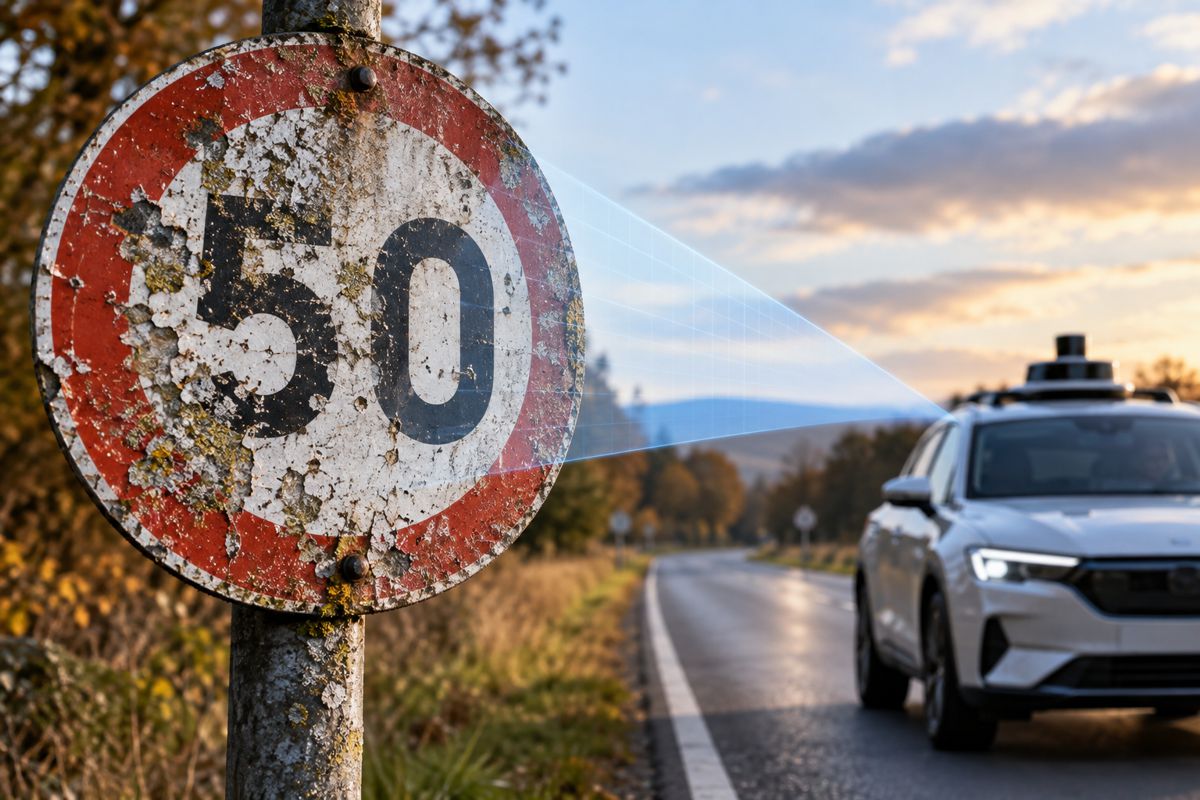
Modern vehicles already carry cameras, radar, navigation systems and increasingly sophisticated driver-assistance functions. Their fundamental limitation is physical: onboard sensors primarily understand what can be detected from the vehicle and its immediate surroundings.
ITS changes that boundary. Japan’s Ministry of Land, Infrastructure, Transport and Tourism describes the concept as networking people, roads and vehicles through information and communications technologies. Japan has considerable experience here; its Smartway development led to a vehicle-to-infrastructure communication service on expressways from 2011, providing a foundation on which more advanced cooperative services can evolve.
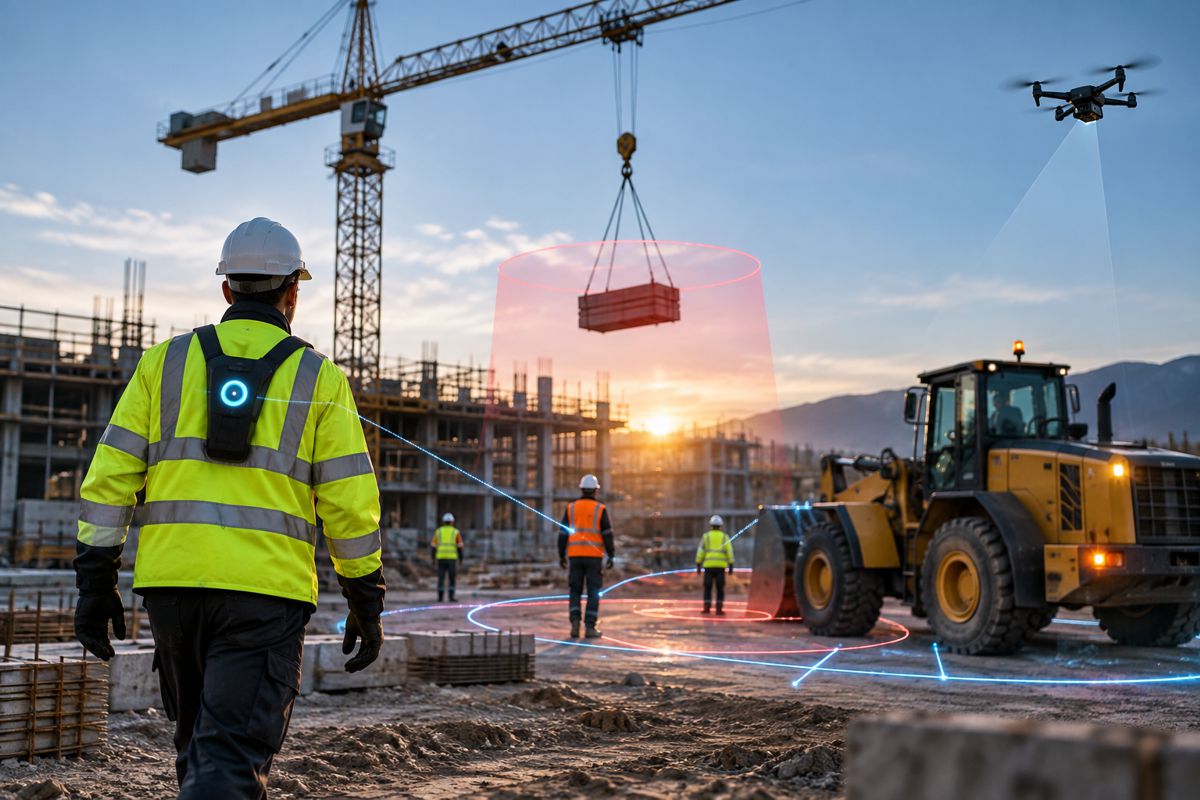
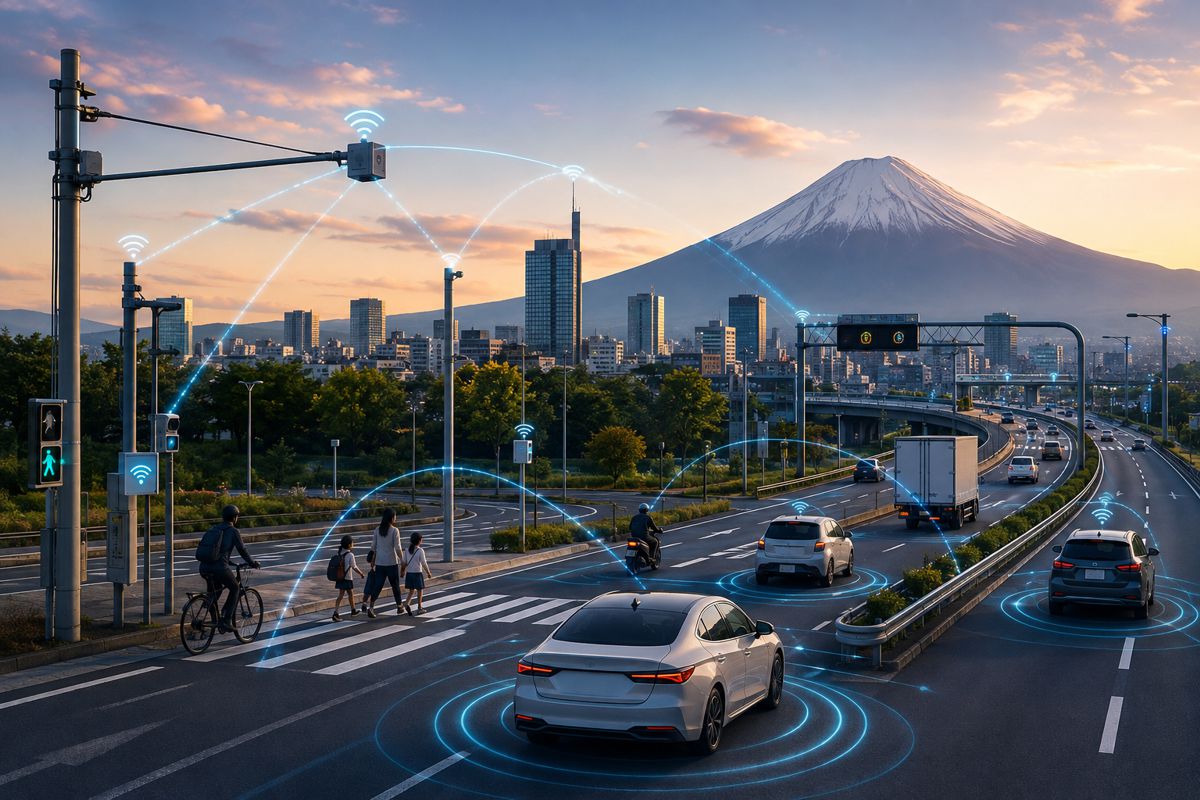
The next step is more operationally significant. Roadside equipment can provide vehicles with information about hazards beyond their sensor horizon, while vehicles can contribute observations back into the network. A dangerous location therefore stops being merely a fixed point on an accident map and can become part of a continuously observed transport environment.
For road authorities, this broadens the definition of safety infrastructure. Cameras, roadside sensors, communications equipment, positioning systems, digital maps, edge processing, traffic control platforms and data interfaces begin to sit alongside markings, signs, barriers and signals in the road-safety toolbox. Civil engineering does not become less important; its remit expands into maintaining the physical environment required for digital road operations.
Japan Is Already Moving from Discussion to Deployment
The strongest evidence supporting the Tateshina argument comes from outside the meeting itself. Japan’s Road Bureau has been developing infrastructure requirements for automated driving through a dedicated committee established to consider road structures, road-to-vehicle cooperative systems, collection and provision of road information, communications infrastructure and the rules needed to support those systems.
The programme has moved into field testing. In 2025, road-to-vehicle cooperative and driving-space demonstrations were arranged across 14 municipalities. In 2026, five areas selected through Japan’s automated-driving commercialisation programme were identified for cooperation with the Road Bureau on trials involving vehicle-infrastructure systems and improvements to the operating environment.
There is also an important freight dimension. In June 2026, the ministry sought vehicles to take part in trials on the Tohoku Expressway examining cooperative infrastructure, including merging assistance for automated trucks. A month later, Japan’s Next-Generation ITS Study Group held its fifth meeting as the government continued examining the architecture required for an automated-driving era.
That places Tateshina within a broader industrial programme rather than treating it as a standalone safety conference. Connected roads can support conventional vehicles, vulnerable road users and automated fleets using overlapping infrastructure. Investment justified initially through safety can therefore create digital capacity with wider applications across traffic management, road operations, freight efficiency and automation.
Safety Data Is Becoming Infrastructure
One of the most commercially interesting developments around Tateshina is the widening role of data. The meeting’s subcommittee structure has included work on visualising dangerous locations, supporting older drivers, improving children’s awareness and addressing bicycle and motorcycle safety. By November 2025, around 220 members from 44 companies and other entities were involved across its subcommittees.
The practical work demonstrates why collaboration matters. Previous Tateshina activities have included a driving simulator using a traffic digital twin to reproduce high-risk accident locations, and analysis of older-pedestrian accident hotspots by layering datasets from different companies. That model turns safety from retrospective accident reporting towards identifying combinations of conditions that may indicate elevated risk.
Insurance companies are particularly relevant because claims and accident information can add another layer to conventional road-authority datasets. Telecommunications businesses bring connectivity, vehicle manufacturers contribute operating data and sensor capability, while road authorities understand the physical asset and its operating environment. No individual participant holds the entire picture.
Japan is also experimenting with wider availability of ETC2.0 probe information, with the Road Bureau continuing an open-data trial during fiscal 2026. For contractors, consultants and technology suppliers, the longer-term opportunity is significant: asset management, safety engineering and network operations are converging around common datasets rather than functioning as separate disciplines.
Children and Older Drivers Expose the Limits of Vehicle-Only Safety
Tateshina’s emphasis on behavioural change prevents the connected-road argument from becoming a technology-first exercise. The 2026 meeting concentrated partly on seven-year-old children, identified by the programme as facing particularly high accident risk, alongside measures supporting older drivers. Participants considered how communications infrastructure, cyclist and pedestrian safety equipment, insurance accident data and community demonstrations could be combined.
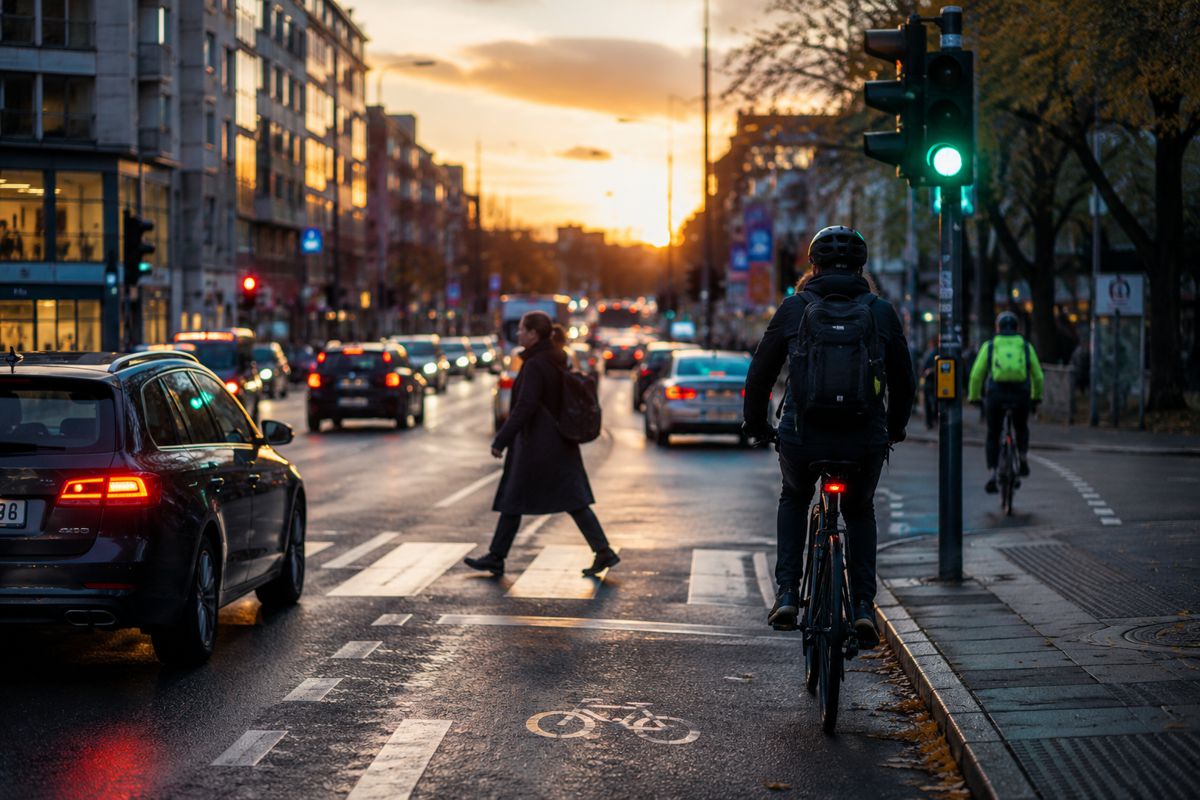
These groups illustrate why vehicle automation cannot carry the entire road-safety burden. A child stepping from behind an obstruction, an older pedestrian crossing slowly or a cyclist approaching an obscured junction creates circumstances in which additional seconds of warning can be more valuable than more sophisticated emergency intervention after the hazard becomes visible.
Infrastructure coordination can extend that warning horizon. A roadside sensor, connected signal or another vehicle may detect a conflict before the approaching driver can see it. The objective is not to replace driver responsibility or vehicle safety systems but to give both better information.
The same principle applies to education. Tateshina’s work on children has moved towards practical tools intended to involve parents and children in understanding risks encountered on school routes. That combination of behavioural intervention and physical-network intelligence is important because Vision Zero-style ambitions ultimately depend on several layers of protection working together rather than expecting any single layer to eliminate human error.
A New Procurement Category for Road Authorities
For the infrastructure market, the transition creates an emerging procurement challenge. Roads have traditionally been divided into relatively understandable packages covering civil works, electrical systems, traffic management, maintenance and increasingly communications. Cooperative ITS cuts horizontally across those categories.
A road authority procuring connected safety capability must consider the roadside hardware, communications network, data standards, cybersecurity, traffic management platform, vehicle compatibility, maintenance regime and eventual replacement cycle. The useful life of a bridge or pavement can be measured in decades, while communications and computing systems can change substantially within a fraction of that period.
That mismatch will influence contract structures. Authorities will need digital infrastructure that can be upgraded without repeatedly reconstructing the underlying civil asset, making interoperability and modularity commercially important. Suppliers capable of integrating roadside equipment, communications, data platforms and long-term support could consequently capture more lifecycle value than vendors supplying isolated components.
The shift also strengthens the argument for treating digital provisions as part of road design rather than equipment added after construction. Power supplies, communications ducts, equipment locations, sensor sightlines, positioning requirements and maintainable roadside access can all be cheaper to incorporate during a road project than to retrofit later. As automated and cooperative vehicles move into commercial service, future-readiness is likely to become a more tangible component of infrastructure value.
From Smart Roads to Cooperative Mobility
The Tateshina Meeting included manufacturers such as Toyota, Suzuki, Subaru, Mazda and Honda alongside major Japanese insurers, telecommunications company KDDI, technology businesses, bicycle manufacturers and academic institutions. Around 80 representatives attended the fourth meeting. The diversity is more significant than the headcount because it reflects where responsibility for transport safety is moving.
Historically, vehicle manufacturers built safer cars while highway agencies built safer roads. Connected mobility weakens that division. A vehicle may depend upon infrastructure-generated information; an infrastructure operator may use observations generated by vehicles; insurers can contribute risk evidence; telecommunications networks carry the messages; and contractors must install and maintain the physical systems enabling the exchange.
Japan’s Next-Generation ITS Study Group explicitly brings public administration, private-sector and academic perspectives together to consider systems and services for the automated-driving era. Its remit extends beyond solving existing transport problems towards identifying new value that can emerge from the network.
That is the broader significance of Tateshina. Zero road deaths remains the social objective, but pursuing it is helping build an industrial architecture for cooperative mobility. Roads, vehicles and users are gradually becoming parts of the same information system, creating a market that sits between traditional highway engineering, telecommunications, software, automotive manufacturing and infrastructure operations.
The Next Safety Gain Will Be Built Between Systems
Japan’s road-safety record demonstrates how far engineering, regulation, enforcement and vehicle development can move the numbers. It also shows why the final stages are difficult. The country entered 2026 with road deaths at a record low, yet still well above the previous target, while serious injuries had risen.
Reducing fatalities towards the new 1,900 target will require interventions capable of dealing with more complex and specific risks. Cooperative ITS offers one route because it expands the information available to drivers, vehicles and network operators beyond what any of them can observe independently.
For construction and infrastructure companies, that changes where future value may accumulate. Road-safety programmes increasingly require communications engineering, sensors, data management, roadside computing and systems integration alongside conventional civil works. Automated-driving programmes will reinforce the same requirements, giving governments another reason to invest in connected corridors.
The enduring idea behind Tateshina is that people, vehicles and infrastructure have to work together. In engineering terms, that now means something very literal. The safest road may no longer be the one with only the best geometry, markings and barriers, but the one capable of understanding what is happening across the network and getting that information to the right road user before an accident develops.
Key Industry Questions
- What is the Tateshina Meeting? The Tateshina Meeting is a cross-industry road-safety forum held in Chino City, Nagano Prefecture, in association with Mount Tateshina Shoko-ji Temple. The temple was established in 1970 to remember road-accident victims and pray for traffic safety. The first Tateshina Meeting was held in 2019, with subsequent meetings developing cooperation between vehicle manufacturers and organisations across insurance, telecommunications, cycling, research and other mobility sectors. Since 2023, subcommittees have provided a structure for converting discussion into practical projects.
- How many people died on Japanese roads in 2025? Japan recorded 2,547 road-traffic deaths in 2025, a fall of 116 or 4.4% from 2024. It was the lowest total since comparable statistics began in 1948. However, serious injuries increased by 278 to 27,563, illustrating why the headline fatality figure does not tell the entire safety story. Japan had also targeted fewer than 2,000 annual 24-hour road fatalities by 2025 under its 11th Traffic Safety Basic Plan, meaning further reductions remain necessary.
- What is Japan’s new road-death target for 2030? Japan’s 12th Traffic Safety Basic Plan covers fiscal years 2026 to 2030 and targets fewer than 1,900 road-traffic fatalities measured within 24 hours of an accident by 2030. The corresponding objective for deaths occurring within 30 days is approximately 2,300 or fewer. The strategy continues Japan’s long-term objective of ultimately achieving a society without traffic accidents while placing particular attention on vulnerable road users and the use of advanced technologies.
- Why does ITS matter to construction and road infrastructure companies? ITS increasingly requires physical infrastructure as well as software. Connected roads may need roadside sensors, communications equipment, power supplies, fibre or wireless connectivity, processing equipment and interfaces with traffic-management systems. Those requirements affect highway design, construction, electrical engineering and maintenance. As cooperative and automated vehicles become more common, contractors could increasingly encounter digital infrastructure requirements within conventional highway programmes rather than as separate technology projects.
- How can connected infrastructure prevent accidents that vehicle sensors cannot? Vehicle cameras and radar are constrained by visibility, range and obstructions. Cooperative infrastructure can potentially provide information gathered elsewhere, such as the presence of a pedestrian beyond an obstruction, a vehicle approaching an obscured intersection or conditions further along a corridor. Japan has already developed substantial vehicle-to-infrastructure capability through its ITS programmes and is now examining next-generation systems alongside automated-driving infrastructure.
- Is Japan already testing infrastructure for automated vehicles? Yes. Japan has conducted vehicle-infrastructure cooperative and driving-space demonstrations and continues developing technical requirements for automated-driving infrastructure. In 2026, the Road Bureau identified cooperation with five areas within a wider group of 13 regions selected for automated-driving commercialisation activity. It has also sought participants for expressway trials involving merging support for automated trucks. These programmes indicate that cooperative infrastructure is progressing from research towards practical operating environments.
- Will connected roads increase infrastructure lifecycle costs? They will add digital assets requiring maintenance, cybersecurity management, software support and periodic replacement, but lifecycle economics depend heavily on how systems are designed and procured. Installing communications ducts, power and suitable roadside equipment locations during construction can be considerably more efficient than repeated retrofits. Open interfaces and modular hardware can also allow shorter-lived digital components to be replaced without rebuilding long-life civil assets. Procurement strategies therefore need to distinguish between the lifecycle of the road and the lifecycle of its digital systems.
- What opportunities could cooperative road safety create for infrastructure suppliers? Opportunities extend beyond supplying roadside sensors. Connected corridors require systems integration, communications, traffic management, edge computing, data engineering, cybersecurity, digital mapping, electrical installations and long-term maintenance. Consultants may also find greater demand for combining conventional safety engineering with accident, vehicle and infrastructure datasets. The strongest commercial positions are likely to emerge where suppliers can demonstrate interoperability and measurable operational benefits rather than offering proprietary equipment that functions only as an isolated system.
Strategic Takeaways
- Road safety is becoming a digital infrastructure market. Further reductions in serious accidents will increasingly depend on combining conventional highway engineering with communications, sensing and real-time information.
- Japan is connecting its road-safety and automated-driving agendas. Infrastructure developed for cooperative safety can also support automated freight and passenger mobility, improving the investment case for connected corridors.
- Data is becoming part of the road asset. Accident records, vehicle observations, infrastructure sensors and insurance information can collectively reveal risks that conventional inspection cannot identify alone.
- Procurement models will need to accommodate different asset lifecycles. Civil infrastructure lasting decades must support digital equipment that may require substantially faster replacement and upgrading.
- Systems integration is likely to capture increasing value. The commercial opportunity is moving beyond individual sensors or roadside devices towards platforms capable of connecting vehicles, roads, communications networks and traffic operations.