Marek Suchocki Takes CICES Presidency With Focus on Digital Engineering
Marek Suchocki has taken over as president of the Chartered Institution of Civil Engineering Surveyors at a point when the profession is becoming increasingly entwined with digital engineering, information management and the standards connecting physical infrastructure with its growing digital counterpart.
Suchocki formally assumed the CICES presidency at the institution’s Annual General Meeting on 2 September 2026, succeeding Alex Pearsall for a 12-month term. A Fellow of CICES and member since 1998, he brings more than 35 years of experience spanning infrastructure delivery, engineering consultancy, research, operations and technology.
His presidential theme, “Innovate, Integrate, Inspire”, reflects much of that career. Suchocki has worked for organisations including British Waterways, Costain, the University of Reading, Atkins, Mouchel and Autodesk, moving between conventional engineering, digital construction and the development of standards and working practices.
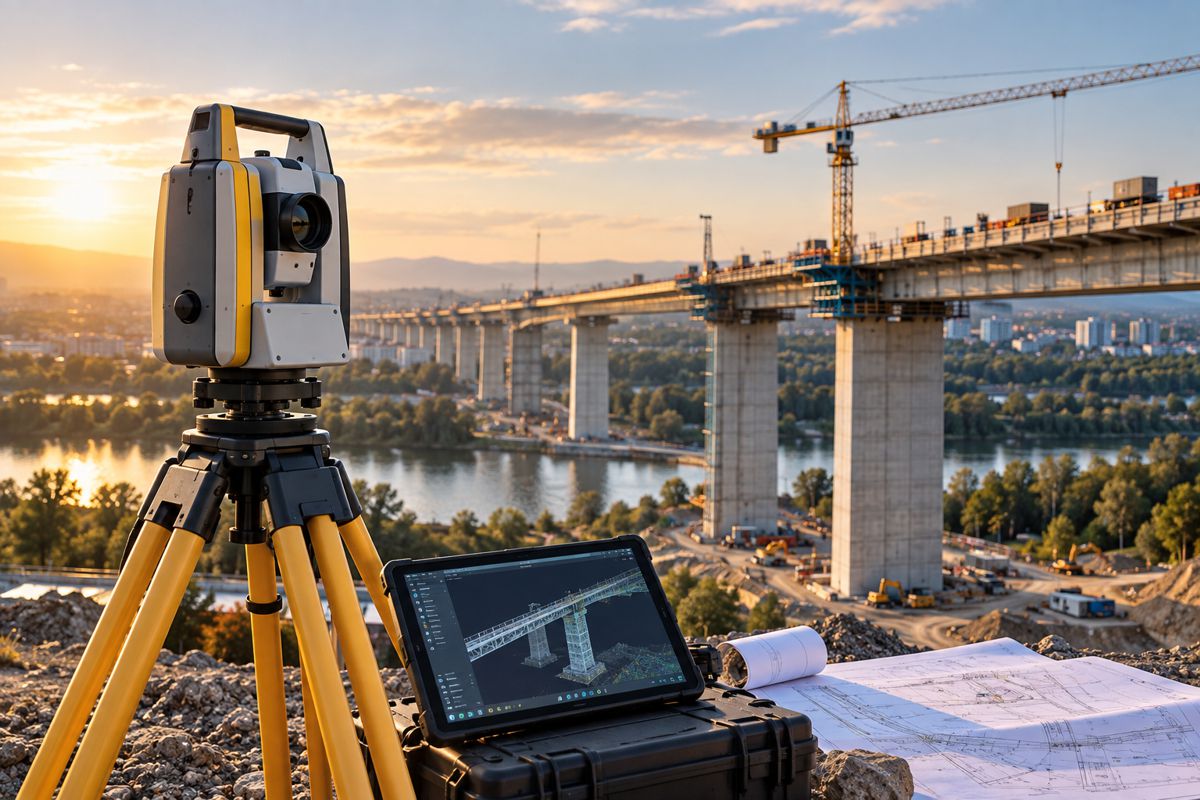
Surveying itself has followed a similar trajectory. Geospatial data acquisition now sits alongside machine control, BIM, digital twins, satellite observation and increasingly automated approaches to asset management. The boundaries between surveying, engineering, software and information management are becoming less distinct, leaving professional institutions to maintain technical competence while adapting their frameworks to technologies that continue to move quickly.
Briefing
- Marek Suchocki became president of CICES on 2 September 2026, succeeding Alex Pearsall.
- He has more than 35 years of experience across engineering, infrastructure, consultancy, research and technology.
- Suchocki has been a CICES member since 1998 and is a Fellow of the institution.
- His presidential theme for the 12-month term is “Innovate, Integrate, Inspire”.
- Technology adoption, collaboration and attracting new talent are expected to be central to his presidency.
Engineering Meets Digital Construction
Suchocki’s career gives him a broad view of that transition. His early experience included work on the canal network with British Waterways while an undergraduate, followed by roles at Costain, the University of Reading, Atkins and Mouchel. More recently, his work has concentrated heavily on digital construction and the relationship between technology, engineering organisations and standards.
He subsequently spent more than 16 years at Autodesk, working across customer success, technical account management, global business development and AEC strategy. That experience placed interoperability and information exchange alongside the more visible technologies entering construction. Surveying hardware may be advancing rapidly, but increasingly valuable data still has to move reliably between designers, contractors, surveyors, asset owners and their respective software environments. Better instruments alone cannot solve fragmented information workflows.
Suchocki has also represented CICES since 2008 on the British Standards B555 committee covering construction design, modelling and data exchange, alongside around a decade spent on the institution’s Geospatial Engineering Practices Committee. He has served on the CICES Council of Management and contributed to the development of its digital competencies, bringing standards and professional development into the same career that has exposed him directly to commercial construction technology.
Technology and Information Exchange
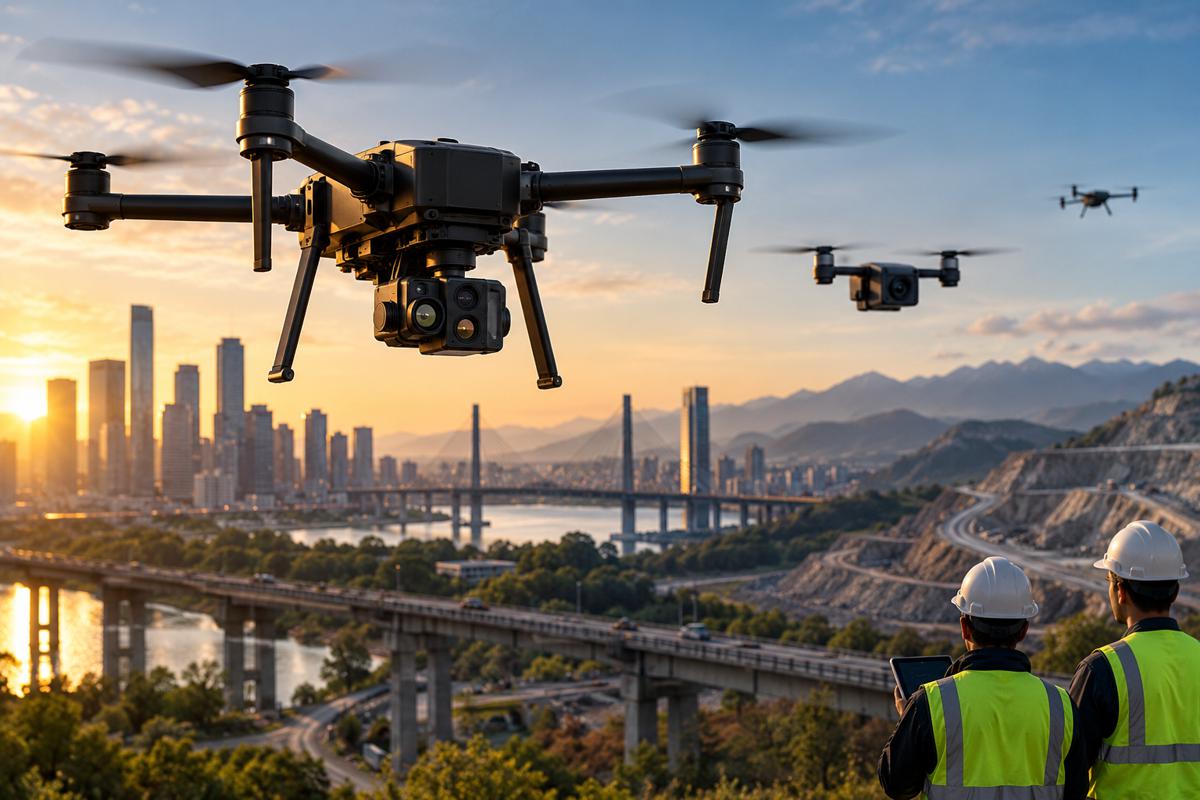
The technology available to civil engineering surveyors has expanded considerably. Laser scanning, GNSS, drones, mobile mapping, satellite observation and connected construction equipment have changed what can be measured and how quickly information can be captured. Artificial intelligence is adding another layer where large volumes of imagery, point-cloud data and asset information need to be processed or interpreted.
Integration remains a more complicated problem. Different disciplines, systems and organisations need to exchange information reliably throughout design, construction and operation, often across software platforms and contractual boundaries. Standards, data structures and professional competencies consequently sit inside the technology story rather than around its edges.
CICES also intends to make attracting new talent a priority during Suchocki’s presidency, alongside closer organisational and technical collaboration across the sector. Recruitment increasingly involves explaining a profession that looks considerably different from the one many people outside the industry might imagine. Field measurement remains fundamental, but modern geospatial and commercial management careers can also involve data science, information management, digital modelling, automation and remote sensing.
Professional Competence
Technology presents professional bodies with a harder question than simply deciding which new tools deserve attention: what should competence look like as those tools and working practices evolve?
Software can automate calculations, instruments can capture enormous datasets with relatively little intervention and AI systems can accelerate elements of processing and interpretation. None of that removes the need to understand measurement quality, uncertainty, contractual responsibility, data provenance or the consequences of an incorrect result.
Professional institutions therefore have to evolve without confusing familiarity with new technology for professional competence. CICES has already been developing its digital competencies, work to which Suchocki has contributed, and his experience with both standards development and technology adoption gives that discussion practical grounding.
The institution itself represents specialists in geospatial engineering and commercial management working across infrastructure, bringing together disciplines concerned with both the physical measurement of projects and their contractual and financial management. That breadth increasingly reflects the way infrastructure is designed, constructed and operated, with information moving between disciplines throughout the asset lifecycle.
Suchocki sees his own membership as having played an important part in validating a career that did not remain within a conventional engineering pathway: “Becoming a member of CICES was a pivotal point in my career, providing clear validation that forging my own path was both appropriate and merited. Being elected President is an exceptional honour, and it further reinforces for me that pursuing opportunities aligned with one’s own goals and beliefs is not only worthwhile but can be valued and appreciated by peers.”
CICES chief executive Simon Hamlyn points particularly to the breadth of experience behind the appointment: “Marek’s appointment as President of CICES is a proud moment for the Institution and is a fitting recognition of his long-standing commitment to civil engineering surveying. Marek’s depth of experience and knowledge across standards, digital transformation, BIM and collaboration will be invaluable as CICES continues to support its members and champion the profession across the built and natural environment.”
A Profession Extending Beyond Measurement
Civil engineering surveying is unlikely to become less technical during Suchocki’s presidency. Surveyors increasingly operate within interconnected digital environments in which the measurement itself may be only the beginning of the information chain, feeding design models, construction systems, asset records and decisions made long after the original survey was completed.
Suchocki’s career has repeatedly crossed those boundaries, from infrastructure and consultancy into research, software, standards and digital strategy. His presidency brings those strands together at CICES as the institution considers how professional competencies should develop alongside the technologies its members increasingly use.
For the profession, the longer-term challenge extends beyond adopting better instruments or faster software. As infrastructure becomes more dependent on connected digital information, surveyors will increasingly be responsible for ensuring that the information entering those systems is accurate, trustworthy and usable throughout the life of the asset.
Key Industry Questions
- Who is the new president of CICES? Marek Suchocki became president of the Chartered Institution of Civil Engineering Surveyors on 2 September 2026, succeeding Alex Pearsall for a 12-month term.
- What is Marek Suchocki’s professional background? His career spans more than 35 years across infrastructure delivery, engineering consultancy, research, operations and construction technology, with previous organisations including British Waterways, Costain, the University of Reading, Atkins, Mouchel and Autodesk.
- What is the theme of his CICES presidency? His presidential theme is “Innovate, Integrate, Inspire”, covering technology adoption, closer collaboration and efforts to attract and develop talent.
- How long has Marek Suchocki been involved with CICES? He has been a member since 1998 and is now a Fellow. His involvement has included the Geospatial Engineering Practices Committee, Council of Management and work on the institution’s digital competencies.
- What standards work has Suchocki undertaken? Since 2008 he has represented CICES on the British Standards B555 committee concerned with construction design, modelling and data exchange.
- Why is digital competency increasingly relevant to civil engineering surveyors? Modern surveying increasingly combines measurement with digital modelling, geospatial data, information management, remote sensing and automated processing. Professionals need to understand both the technology and the engineering implications of the information it produces.
- What skills challenge does CICES face? Like much of engineering and construction, the profession needs to attract new entrants while ensuring existing professionals develop competencies appropriate to increasingly digital methods of working.
- Does greater automation reduce the need for professional surveyors? Automation can reduce manual processing and accelerate data collection, but professional judgement remains necessary for measurement quality, uncertainty, data interpretation, contractual responsibility and the consequences of incorrect information.
Strategic Takeaways
- Suchocki’s presidency brings engineering, standards and digital technology experience together as those areas become increasingly difficult to separate.
- Interoperability and information exchange remain constraints on the value generated by increasingly sophisticated surveying technologies.
- Professional competence will need to evolve alongside automation rather than being defined by familiarity with individual software platforms or instruments.
- The expanding digital scope of surveying could broaden its appeal to new entrants if the profession communicates the range of modern geospatial and commercial careers effectively.
- Standards and professional institutions remain central to digital construction because connected workflows depend on trustworthy, transferable information.