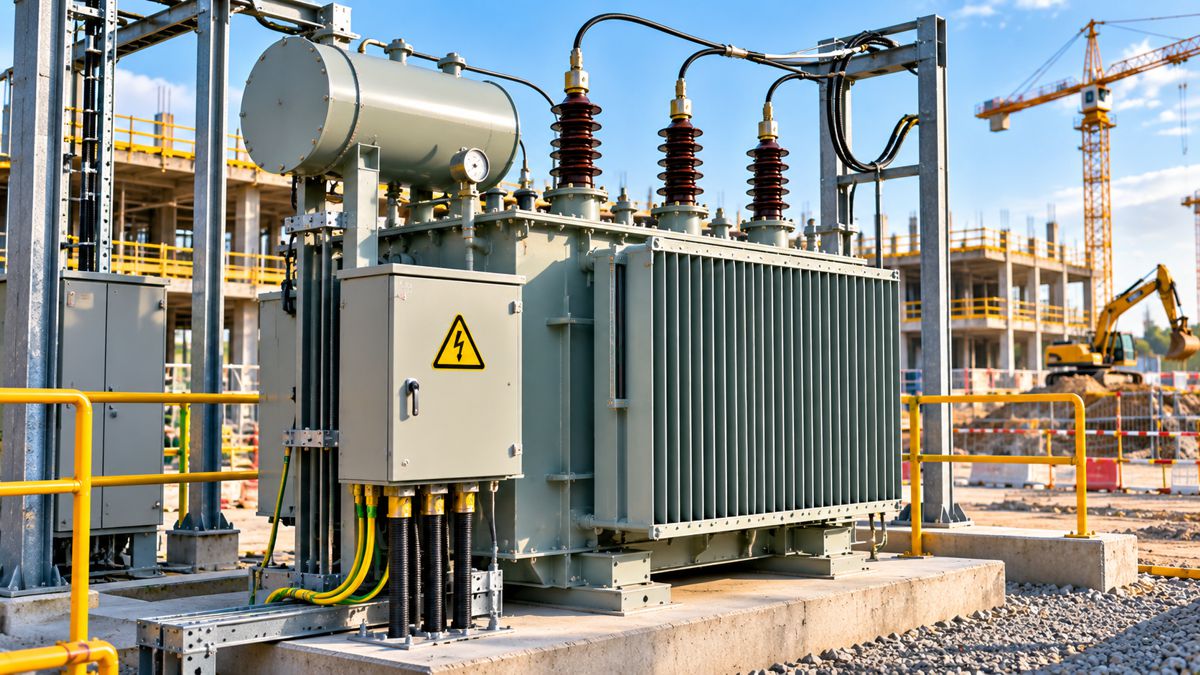
Why Renewable Energy Capital Keeps Flowing to the Same Markets
The world is not short of money for clean energy. Around $2.2 trillion is expected to flow into renewables, nuclear power, electricity grids, storage, low-emissions fuels, efficiency and electrification during 2026, almost twice the amount being invested in fossil fuels. The harder question is where that money is going.
Much of it continues to accumulate in economies where renewable projects already have access to established financial markets, predictable regulation and investors accustomed to assessing energy infrastructure. Elsewhere, development institutions and governments remain responsible for much of the financing, even where demand for new generating capacity is considerable.
New analysis from Sustainable Energy for All (SEforALL), an international organisation working in partnership with the United Nations, exposes the extent of that divide. Examining renewable energy finance across 23 economies in Africa, Latin America and Asia, SEforALL found that 88% of commercial capital committed across the sample between 2017 and 2021 went to just five markets: India, Chile, Japan, the Republic of Korea and Brazil. Five other countries attracted no commercial renewable capital at all.
Capital exists and renewable technologies have become established infrastructure assets. The difficulty is creating enough investable projects, supported by sufficiently predictable markets, for commercial money to move beyond the places it already understands.
Briefing
- Global clean energy investment is expected to reach about $2.2 trillion in 2026, compared with approximately $1.2 trillion for fossil fuels.
- SEforALL analysed renewable energy financing across 23 economies using cumulative commitments from 2017 to 2021.
- Some 88% of commercial renewable capital in the sample went to India, Chile, Japan, the Republic of Korea and Brazil.
- Bolivia, Botswana, Nicaragua, Niger and Sudan attracted no commercial renewable capital during the period studied.
- Markets attracting substantial commercial finance also recorded the greatest overall scale of renewable investment.
A World Awash With Energy Investment
The broader investment environment makes the geographical imbalance particularly striking. The International Energy Agency expects total global energy investment to reach $3.4 trillion in 2026, up 5% from 2025, with about $2.2 trillion going into clean energy technologies and infrastructure.
SEforALL points to an even wider geographical disparity. Emerging and developing economies outside China receive less than 30% of total energy investment and only around 20% of power-sector investment, despite accounting for roughly two-thirds of the world’s population.
Renewable energy therefore presents two very different investment environments. In established markets, investors can choose between technologies, projects and assets with familiar financial characteristics. Across many developing economies, projects still have to overcome more fundamental questions around financing, risk and market structure before commercial investors are prepared to participate.
That division is visible across SEforALL’s sample. Eleven of the 23 economies financed roughly three quarters or more of their renewable investment through commercial capital, with Japan and the Republic of Korea relying entirely on commercial finance in the dataset. Another 11 countries financed less than 20% commercially. Kenya, with a commercial share of 36%, sat substantially between the two groups.
The figures resemble two financing systems operating alongside one another rather than a gradual progression from development finance towards private investment.
Where the Capital Pools
The concentration becomes sharper when the absolute amount of money is considered. India, Chile, Japan, the Republic of Korea and Brazil captured 88% of all commercial renewable capital recorded across the 23-country sample, while the three largest recipients alone accounted for more than 60%.
Technology did little to change the pattern. Wind attracted the highest commercial share, followed by solar and hydropower, but investment remained concentrated in broadly the same markets.
The difference in scale was enormous. Botswana attracted $42 million of renewable energy investment during the five-year period examined by SEforALL. India attracted almost $35 billion, more than 800 times as much.
Within the sample, none of the countries at the upper end of total renewable investment remained predominantly dependent on development finance. That does not establish commercial finance as the cause of their growth. Large electricity markets, stronger financial systems, existing infrastructure, regulatory stability and pipelines of bankable projects can all support investment while simultaneously making a country more attractive to private capital.
The Role of Development Finance
Frontier and fragile markets can require substantial concessional support before private investors are prepared to participate. Development finance can absorb risks, establish projects and help create the conditions from which a commercial market can emerge.
The regional differences are substantial. Across the countries included in the study, Sub-Saharan Africa attracted approximately 59 cents of development finance for every dollar of commercial capital committed. The equivalent figure for Latin America was around six cents, while East Asia recorded none.
Withdrawing development finance from markets where commercial investors remain absent would remove much of the capital currently available. The more useful question is what that public money leaves behind.
An individual renewable project can increase generating capacity without changing the financial environment around the next development. Projects that also establish contractual precedents, strengthen local lending experience or demonstrate dependable returns can make subsequent investment easier to finance.
Successful development finance should eventually leave a market in which commercially financed projects can follow.
Infrastructure Behind the Investment
A solar or wind project needs more than panels, turbines and land. It requires grid capacity, transmission connections, roads and logistics, permitting, contracts, credible counterparties and a route through which electricity can generate predictable revenue. Financing also depends on currency exposure, political risk, interest rates and the ability of investors to recover capital over long project lives.
Weakness in any part of that environment can change the economics of an otherwise technically sound project. Two solar farms using comparable equipment can present very different financial propositions when one operates within a mature electricity market and the other faces uncertain grid access, currency volatility or an unreliable offtaker.
Declining technology costs consequently do not create equally investable projects everywhere. Transmission infrastructure can open regions to development, while clear grid-connection procedures can remove uncertainty from project schedules. Transparent procurement and dependable power-purchase arrangements make revenues easier to model, and stronger domestic financial markets can give projects access to local capital rather than leaving them entirely exposed to international financing conditions.
Roads, ports and construction logistics also enter the equation. Large wind components must reach remote sites, solar developments require substantial material movements during construction, and transmission projects can cross difficult terrain over long distances. A country’s renewable resource may be excellent while the infrastructure required to build and connect it remains expensive or inadequate.
SEforALL’s analysis is the first part of a wider series examining the conditions affecting commercial renewable investment, including financial development, policy incentives, political commitment, regulation, infrastructure and the wider business environment.
The Scale Problem
Future investment requirements leave little room for commercial capital to remain concentrated in a relatively small group of countries.
IEA analysis has estimated that annual clean energy investment across emerging and developing economies would need to rise from around $770 billion in 2022 to between $2.2 trillion and $2.8 trillion by the early 2030s under pathways consistent with sustainable development and climate objectives. Excluding China, investment would need to rise from roughly $260 billion annually to between $1.4 trillion and $1.9 trillion.
Public balance sheets and development institutions cannot realistically carry an expansion of that magnitude alone. The IEA’s climate-driven scenarios envisage private finance providing more than 70% of clean-energy investment across emerging and developing economies, particularly for renewables and energy efficiency, while public actors retain important roles in electricity grids and other areas where commercial financing is more difficult.
Reaching those investment levels will require countries that currently depend on development finance for individual projects to support much larger pipelines of commercially investable infrastructure. Investors need projects they can understand, risks they can price and enough confidence in the surrounding market to return for the next development.
Building a Commercial Market
A country can deliver renewable projects successfully with concessional or development funding without creating a broader commercial renewable market. Generating capacity increases and electricity enters the system, but the financing structure may have to be assembled again for the next project.
As markets mature, developers, banks, institutional investors, insurers, contractors and equipment suppliers accumulate experience. Risks become easier to price, financing structures become familiar and successful assets can be refinanced or acquired, releasing capital for further development.
Governments remain central to that process. They determine much of the regulatory framework, infrastructure planning and conditions under which investment takes place, while public and development finance can continue to support projects and risks that commercial investors cannot yet carry.
The $2.2 trillion expected to be invested globally in clean energy this year demonstrates the financial system’s capacity to commit extraordinary sums to the transition. Its distribution tells a less comfortable story: across SEforALL’s sample, commercial money is already financing renewable energy at scale, but overwhelmingly in a small number of markets.
The harder task now is creating many more countries in which those investors are prepared to put their money to work.
Key Industry Questions
- How much is being invested globally in clean energy? The International Energy Agency expects clean energy investment to reach approximately $2.2 trillion in 2026, against total energy investment of around $3.4 trillion.
- What did the SEforALL renewable finance analysis examine? It examined cumulative renewable energy finance commitments between 2017 and 2021 across 23 economies in Africa, Latin America and Asia, using IJGlobal and OECD data.
- Which countries attracted the largest share of commercial renewable capital? India, Chile, Japan, the Republic of Korea and Brazil collectively received 88% of the commercial capital recorded across SEforALL’s 23-country sample.
- Which countries attracted no commercial renewable capital? Bolivia, Botswana, Nicaragua, Niger and Sudan recorded no commercial renewable capital during the period covered by the SEforALL dataset.
- Does low commercial investment mean renewable development has failed? No. Development and concessional finance can be essential in frontier, fragile or immature markets. The longer-term test is whether projects and market conditions eventually support wider commercial participation.
- Why can similar renewable technologies face different financing costs? Project finance depends on much more than equipment cost. Currency risk, regulation, grid access, political conditions, interest rates, contractual arrangements, offtaker creditworthiness and expected revenues can substantially alter an investor’s assessment.
- What role does infrastructure play in attracting renewable investment? Transmission capacity, grid connections, roads, ports, construction logistics and reliable electricity-market arrangements can determine whether technically viable renewable resources become financeable projects.
- Can development finance alone fund the energy transition? The required investment scale makes that unlikely. IEA scenarios envisage private finance supplying more than 70% of clean-energy investment in emerging and developing economies, while public and development institutions continue to play important roles.
Strategic Takeaways
- The global supply of clean-energy capital is substantial, but its geographical distribution remains highly concentrated.
- Development finance remains essential where commercial investors cannot yet price or absorb project risks.
- Grid capacity, transport infrastructure, regulation and contractual certainty all influence whether renewable resources become investable projects.
- Mature renewable markets benefit from accumulated experience among developers, lenders, insurers, contractors and investors.
- The required scale of renewable development across emerging economies will depend heavily on commercial capital reaching markets where it currently has little presence.