AI Data Centres Start Following the Power
The enormous build-out of artificial intelligence infrastructure has created an awkward engineering problem. GPUs can be manufactured and servers assembled considerably faster than new electrical capacity can be connected to them.
Lektra is approaching that constraint from the opposite direction. Rather than concentrating ever larger quantities of computing equipment inside hyperscale campuses and then securing the electricity required to operate them, the US cloud company is developing distributed AI data centres that can be installed where suitable energy already exists.
Penguin Solutions has now been selected to help deploy and optimise that network, providing validated reference designs, NVIDIA-based computing hardware, systems integration and continuing technical support for Lektra’s EdgeScale AI data centres. Lektra says eight sites have already been deployed, with further locations planned. Individual installations can operate at capacities of 20 MW or less and are intended to use carbon-free distributed energy.
The concept places electricity supply much closer to the centre of data-centre planning. Instead of asking where another enormous computing campus can obtain hundreds of megawatts of additional grid capacity, developers can potentially ask where smaller pools of usable generation already exist and how much computing capacity can sensibly be placed alongside them.
Briefing
- Penguin Solutions has been selected to deploy and optimise Lektra’s distributed EdgeScale AI data centres.
- Lektra says eight sites have already been deployed, with further locations planned.
- EdgeScale installations can operate at capacities of 20 MW or less.
- Penguin Solutions will provide NVIDIA-based compute, reference designs, engineering integration and continuing services.
- The architecture is designed to place AI computing capacity close to available distributed energy rather than relying exclusively on large centralised data-centre campuses.
Power Becomes the Constraint
Data centres are concentrated electrical loads and AI is increasing their power density further. Advanced accelerators consume substantial amounts of electricity themselves, while the supporting facility also requires networking, cooling, storage, uninterruptible power systems and other infrastructure. As rack densities rise, supplying the equipment becomes only part of the engineering problem. Heat removal, electrical distribution and resilience have to develop alongside it.
The International Energy Agency estimates that global electricity generation required to supply data centres could increase from about 460 TWh in 2024 to more than 1,000 TWh in 2030. Renewable generation is expected to provide nearly half of the additional demand over the period, although natural gas and coal will continue to play significant roles.
The difficulty is not necessarily an absence of generating capacity. Connecting new generation and large consumers to electricity networks is increasingly becoming a bottleneck. The IEA’s Electricity 2026 analysis estimates that more than 2,500 GW of projects involving renewable generation, storage and large loads such as data centres are stalled in grid connection queues worldwide. Grid investment has lagged investment in generation, leaving network capacity, substations, transformers and connections as increasingly important constraints.
Demand for compute may therefore exist, investment may be available and the servers themselves may be obtainable, while the electricity connection required to operate them becomes the component with the longest delivery programme.
Distributed Compute
Lektra’s answer is to break some of that demand into smaller installations. Its architecture combines distributed energy resources with GPU computing and a cloud layer capable of managing workloads across different locations. Rather than depending entirely upon a handful of enormous facilities, computing resources can theoretically be added incrementally as suitable energy sites become available.
The company has been developing intellectual property around this relationship between energy and computing. In June 2026, Lektra announced that it had received a US patent allowance covering technology that combines its energy management system with GPU hardware, allowing distributed energy to be converted into computing capacity.
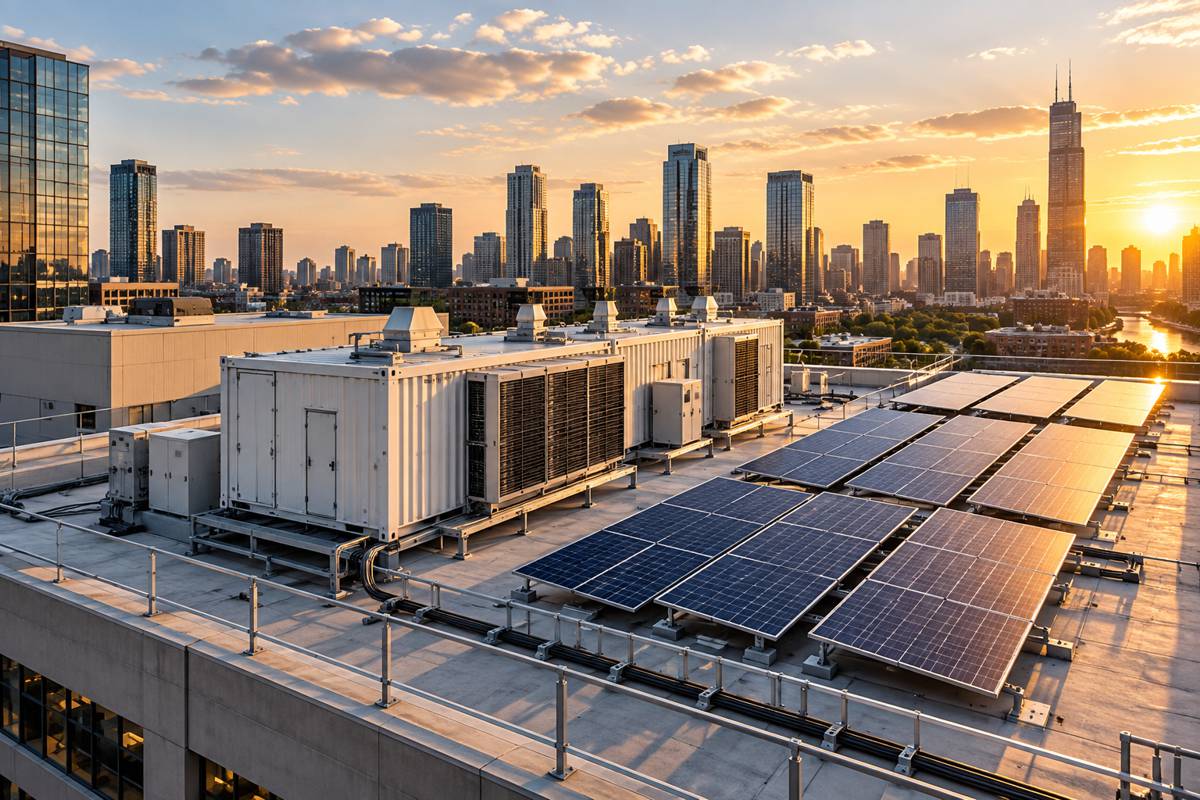
Its commercial proposition extends beyond conventional data-centre operators. Lektra is targeting energy producers and commercial solar operators as potential hosts, effectively turning an electricity-producing site into both an energy asset and a computing location. Distributed generation that might otherwise be developed primarily to sell electricity into a network or serve demand behind the meter gains another potential consumer at the point of generation.
There are practical limits. AI servers still require reliable power, cooling, physical security and high-capacity communications, while distributed infrastructure creates a different operational problem from managing equipment concentrated inside a conventional data-centre campus. Hundreds or thousands of smaller installations only become useful as a computing platform if workloads, hardware, maintenance and network performance can be managed consistently across them.
Standardising the Hardware Layer
Penguin Solutions will provide the engineering and computing layer intended to make those distributed sites repeatable. Its Full-Stack AI Factory Platform includes NVIDIA-based hardware alongside infrastructure design, integration and deployment services. Penguin is an NVIDIA AI Factory specialised partner and will also support deployment to remote Lektra locations and provide continuing services once equipment is operating.
Standardisation becomes particularly important in a distributed model. A hyperscale operator can build thousands of machines into one tightly controlled environment. A distributed network has to reproduce acceptable performance and reliability across locations that may have different electrical, environmental and communications characteristics.
Reference designs can reduce some of that variation by establishing repeatable combinations of compute, memory, networking, power and supporting infrastructure rather than engineering every installation as an individual data-centre project. At sufficient scale, the result begins to resemble an infrastructure platform rather than a collection of independent server rooms.
Building Around Available Energy
Data-centre location decisions have traditionally been influenced by telecommunications connectivity, land, taxation, proximity to customers and access to established electricity networks. The power requirements associated with AI are giving electricity availability considerably more influence over that geography.
Developers are already exploring dedicated generation, renewable power purchase agreements, batteries and other arrangements to secure supply. The IEA has also identified growing interest in on-site generation as developers attempt to work around slow grid connections. Lektra takes that logic further by treating distributed generation itself as potential AI infrastructure.
Its vision, described by the company as “Grid 2.0”, is not intended to replace central electricity networks. Instead, Lektra proposes adding computing demand directly to distributed energy resources, allowing some electricity to be consumed locally rather than depending first upon expansion of the central grid.
“Lektra is reshaping how AI infrastructure can be made more accessible and beneficial to the communities it serves. We envision a world that expands the current capacity of centralized grid systems to distributed energy production, or what we call Grid 2.0,” said Karl Andersen, Chief Executive Officer of Lektra. “By partnering with Penguin Solutions and leveraging its Full-Stack AI Factory Platform, we can deliver customer-defined GPU capacity in customer-defined geographical locations that leverage readily available energy while meeting data, model, and infrastructure sovereignty requirements.”
Data sovereignty provides another possible use for smaller geographically distributed installations. Organisations operating under requirements governing where information or models can be processed may prefer dedicated computing capacity within specified jurisdictions rather than infrastructure concentrated in a distant cloud region.
Whether the model can operate economically at large scale remains to be demonstrated. Electricity availability, utilisation rates, hardware depreciation, networking costs, maintenance and cooling all affect the economics of GPU infrastructure, and distributing hardware across smaller locations does not make those costs disappear.
An Infrastructure Experiment at Scale
The centralised data centre is unlikely to disappear because there are powerful economies of scale in concentrating computing hardware, electrical infrastructure, cooling systems, fibre connectivity and technical staff in purpose-built facilities. The largest AI training workloads also favour enormous clusters connected through extremely fast internal networks.
Distributed infrastructure can occupy a different part of the market. Inference workloads, sovereign computing requirements and applications requiring geographically dispersed capacity may have different infrastructure needs. Smaller installations can also be expanded in increments rather than waiting for an entire hyperscale campus and its associated electrical connection to be completed.
Eight deployed Lektra sites remain an early test of the model. The interesting part of the project is less its present footprint than the infrastructure proposition being tested: whether distributed energy sites can become repeatable locations for useful quantities of AI computing.
AI has created demand for computing capacity at a speed that electricity networks were never designed to accommodate. Building more generation is only part of the response. Networks, transformers, substations and grid connections have to keep pace, and in many regions they are already struggling to do so.
Distributed AI offers another possibility: move at least some of the computers towards the electricity.
Key Industry Questions
- What is a distributed AI data centre? It is a smaller computing facility located away from a single central hyperscale campus and connected with other computing resources through cloud and networking infrastructure. Lektra’s EdgeScale model places GPU capacity alongside distributed energy resources.
- How large are Lektra’s EdgeScale data centres? Lektra says its architecture supports facilities operating at capacities of 20 MW or less.
- How many Lektra sites are operating? The company says eight sites have already been deployed, with additional locations planned.
- What is Penguin Solutions providing? Penguin Solutions will supply validated reference designs, NVIDIA-based computing systems, engineering integration, remote deployment capabilities and continuing technical services.
- Why are electricity connections becoming important to AI development? AI data centres create large, concentrated electrical loads. Grid expansion and connection programmes can take considerably longer than installation of computing equipment, creating delays even where generation, capital and demand are available.
- Can distributed AI data centres operate without the electricity grid? That depends on the design of the individual installation. Distributed generation, batteries and energy-management systems can reduce dependence on central networks, but reliable computing infrastructure requires continuous and carefully managed electricity supply.
- Will distributed data centres replace hyperscale facilities? There is no evidence that they will. Large centralised facilities retain substantial advantages for workloads requiring enormous, tightly interconnected computing clusters. Distributed infrastructure could complement them for workloads suited to smaller or geographically dispersed capacity.
- Why could data sovereignty favour distributed infrastructure? Placing computing capacity within a specified country or jurisdiction can help organisations meet requirements governing where data and models are stored or processed, subject to the applicable regulatory framework.
Strategic Takeaways
- Electricity availability is becoming a location criterion for AI infrastructure rather than simply a utility requirement after a site has been selected.
- Distributed generation creates potential locations for computing capacity that may not fit the conventional hyperscale data-centre model.
- Repeatable reference designs will be important if small AI facilities are to be deployed across many geographically separated sites.
- Distributed AI still depends on substantial physical infrastructure, including cooling, communications, security, maintenance and resilient electricity supply.
- The commercial test will be whether faster access to available energy compensates for the economies of scale sacrificed by distributing hardware across smaller sites.